
Split council, settled decision
The council vote followed the release of a commissioners’ decision dated January 21, which recommended the plan change be approved.
Commissioners Vicki Morrison-Shaw and Brad Coombs concluded the rezoning was consistent with national direction, the Waikato Regional Policy Statement and Te Ture Whaimana o Te Awa o Waikato – the Vision and Strategy for the Waikato River.
They found the proposal was supported by all technical experts who appeared for both the applicant and the council.
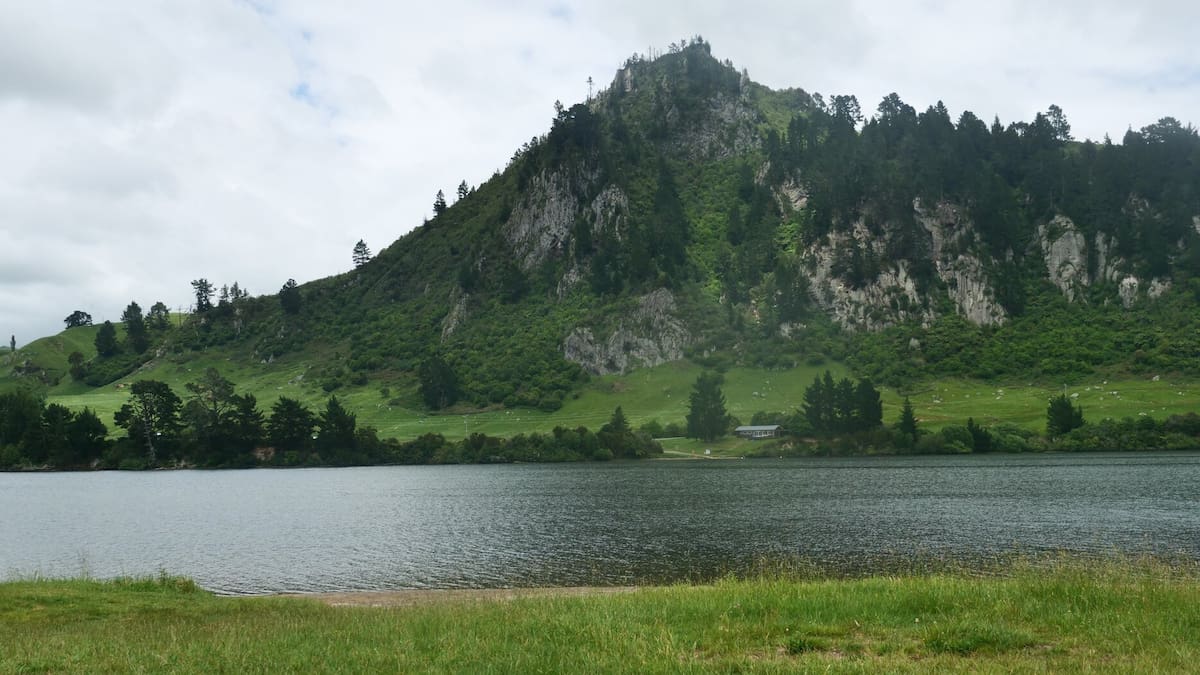
However, the council debate reflected the deep divisions that have surrounded the proposal since it was first notified, particularly in relation to cultural impacts on Lake Whakamaru.
Cultural opposition remains
Tangata whenua groups and some local residents are strongly opposed to the development and argued that the development near the lake was culturally unsafe.
At the January 21 hearing, Pouākani Trust chair Craig Ahipene told commissioners the lake covered wāhi tapu, with tūpuna buried beneath the water following the creation of the hydro reservoir in the 1950s.
“Any discharge of sewage – even a single drop – into the lake is a serious cultural desecration,” he said.
Members of Ngāti Te Kohera Hapū occupied the land, hoping to stop the development. Photo / Tom Eley
Raukawa Charitable Trust regional strategy manager Dr Andrea Julian acknowledged the applicant had engaged constructively and adopted land-based secondary wastewater treatment, but said concerns remained about the long-term certainty of dozens of individual systems.
The commissioners accepted the cultural significance of the lake and the sincerity of the opposition, but concluded the proposal met statutory requirements.
“The RMA is not a no-effects statute,” they said.
They found the wastewater standards exceeded regional requirements, including secondary treatment, disposal more than 30m from the lake and planting to aid nutrient uptake.
Landscape, ecology and mitigation
Landscape and visual impacts were also contested, with submitters describing the area as pristine and inappropriate for residential development.
Developer Johnathan Quigley is proposing a 66-home development at Lake Whakamaru in South Waikato.
Both the applicant’s and council’s landscape experts rejected that view, noting the site had long been used for plantation forestry and formed part of a working rural landscape.
The commissioners agreed, finding effects would be low and localised if development was capped at 66 lots and implemented in accordance with the structure plan.
That plan includes extensive indigenous planting, a landscaped bund, strict controls on building colour and reflectivity, and a requirement for 90% canopy cover within five years.
Ecological mitigation includes a bat management plan, lighting restrictions, pest control, a domestic cat ban and about 7.2ha of new native planting.
Traffic, access and public benefit
Concerns about traffic, lake congestion and safety – including from the Whakamaru Water Ski Club – were addressed through requirements for a safer intersection on to State Highway 30 and controls at the subdivision stage.
The development also includes gifting about 1.4ha to the council to expand the Lake Whakamaru Reserve and formalise part of the Waikato River Trail.
Tom Eley is a multimedia journalist at the Waikato Herald. Before he joined the Hamilton-based team, he worked for the Weekend Sun and Sunlive. He previously worked as a journalist in Canada for Black Press Media and won a fellowship with the Vancouver Sun.