
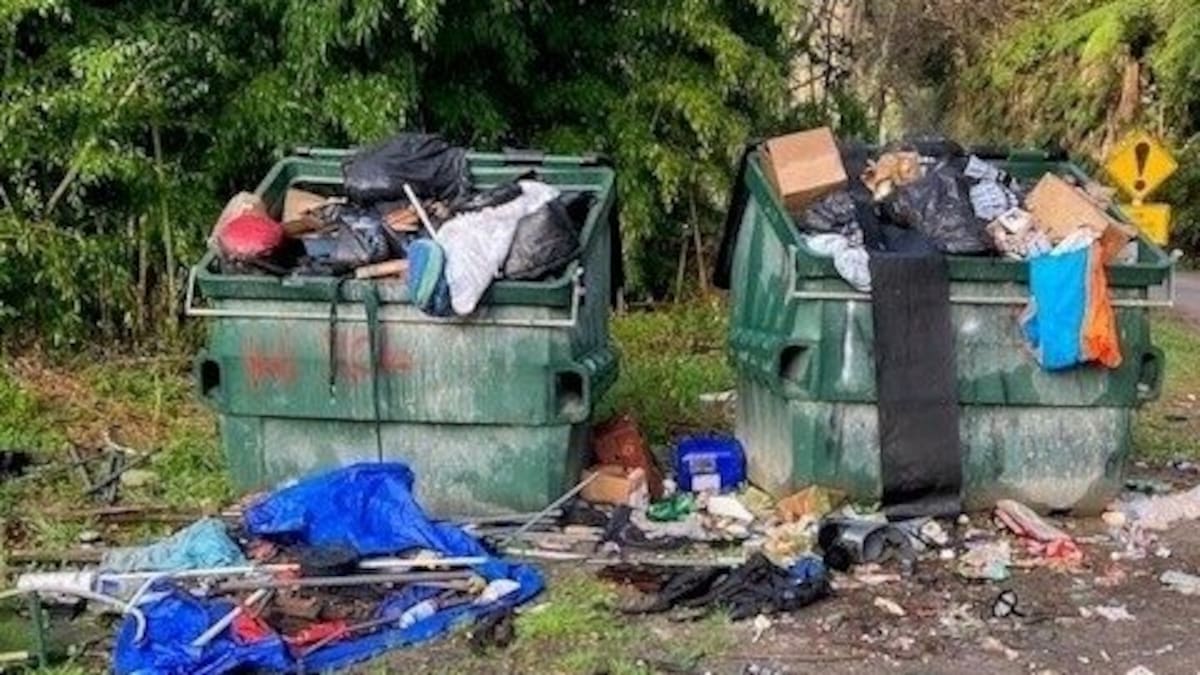
For the last half of the 2024/25 financial year, 7.94 tonnes of illegally dumped material were sent to landfill.
Glenda Brown says she is “really perturbed” by the illegal dumping. Photo / NZME
At the meeting, councillor Julie Herewini said she had twice encountered illegal dumping on the banks of the Whanganui River.
She asked if there was a council communications strategy on how to report incidents.
Sula said there was a council workshop with the Whanganui Rural Community Board next month, with a review of the rural bin service, illegal dumping, “and all the other things that go with it”.
“We are proactive in following up on any suspected illegal behaviour,” he said.
Councillor Glenda Brown was “really perturbed”.
“It’s not good enough,” she said.
“Most of us are working really hard to keep this a clean community, and doing what we need to do to help the environment.”
Mayor Andrew Tripe said the community members needed to report people.
“You can take a quick photo of their car when you see them doing it.
“It costs the ratepayers to clean up the waste.
“The sad reality is that there are people illegally dumping, and they are probably people who don’t really care.”
Sula said the council was trying to manage the clean-up of illegal dumping through its litter team.
If a contractor was required, costs ranged from $800 to $1500 each time, depending on size.
Council waste manager Morgan Harrison told the Chronicle last year that the litter team was one of only a handful in the country, and cost ratepayers about $180,000 a year to operate.
An infringement for illegal rubbish dumping is $400, the maximum the council can charge under the 1979 Litter Act.
Mike Tweed is a multimedia journalist at the Whanganui Chronicle. Since starting in March 2020, he has dabbled in everything from sport to music. At present his focus is local government, primarily Whanganui District Council.