
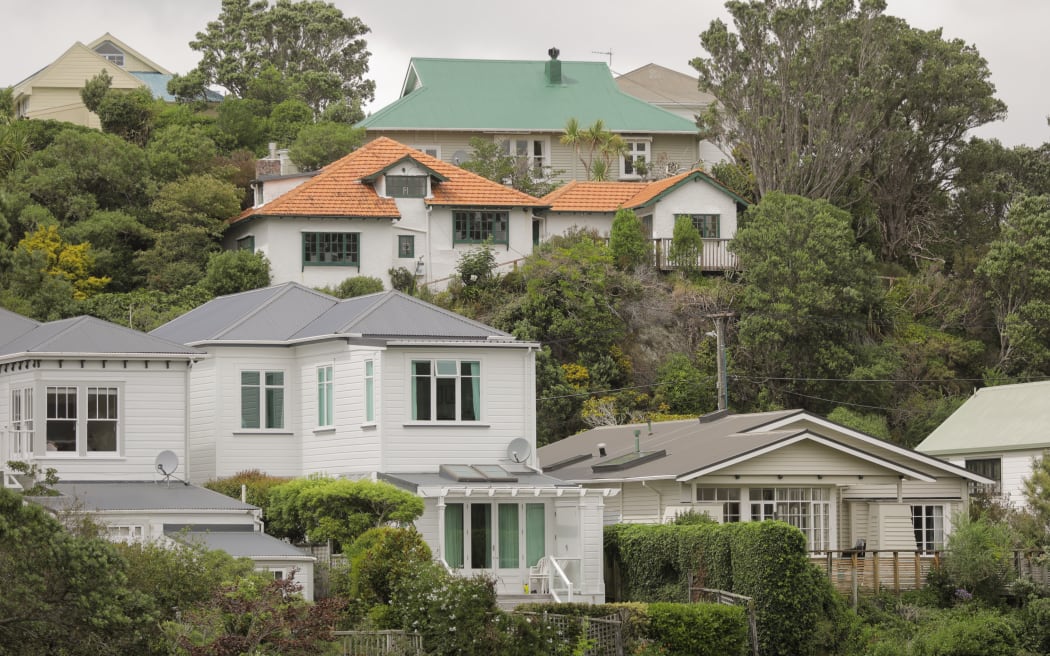
Most forecasts expect house prices to rise less than 5 percent this year.
Photo: RNZ / REECE BAKER
New Zealand’s economy is expected to continue to slowly recover this year.
But unlike previous recoveries, this time, it’s not likely to be dragged up by rising house prices. Most forecasts are for prices to rise less than 5 percent this year – and some forecasters expect half that.
Michael Gordon, a senior economist at Westpac, has issued a new report looking at whether the economy can have a sustained recovery without help from rising house prices making people feel wealthier.
He said he had encountered scepticism about whether it was possible. But he said, in part, it was already happening.
“Retail spending has consistently risen over the last five quarters, at a time when house prices were effectively flat. But it’s not certain that this can be maintained in the face of what are some still-subdued house price expectations for the year ahead.
“The recent economic literature points to a solution. There is growing support for the idea that what we observe as a ‘housing wealth effect’ is actually more of an income expectations effect, driving both spending and house prices higher.”
He said it had been clear in the past that when house prices were rising, people tended to be more willing to spend because they felt their house was “doing the saving for them”.
“We’ve noted in the past that there has historically been a strong relationship between housing wealth and household spending in New Zealand, and arguably stronger here than in other developed economies. But the relationship doesn’t hold all of the time, and especially not in more recent years, as Covid and the subsequent policy responses have led to significant volatility in both house prices and consumption.”
He said even in the absence of house prices lifting in many parts of the country, lower interest rates were having a difference in the economy. Retail sales volumes rose 0.9 percent in December, more than had been expected.
He said there was growing evidence that when people expected their incomes to rise in future they tended to both spend more money and to push house prices higher.
“The magnitude of the effect on house prices will depend on how responsive the supply side is – historically New Zealand’s housing supply has been fairly unresponsive, but there are signs that this is improving.
“All of this is not to say that housing wealth effects don’t exist. But their impact may be in amplifying the economic cycle, rather than being an essential driver of it. We feel that our household spending forecasts have been suitably tempered to match our view on house prices – spending growth of 3 percent to 4 percent over the year ahead is quite achievable in the early stages of a recovery, when the economy still has substantial spare capacity to be used up.”
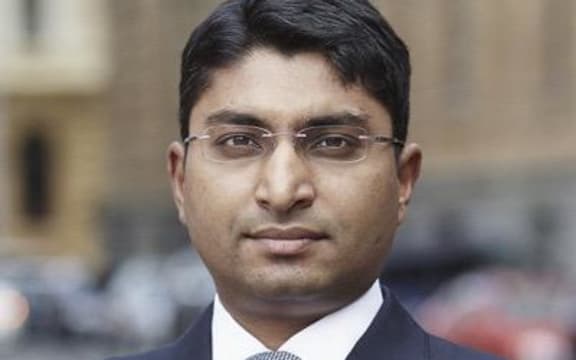
Shamubeel Eaqub.
Photo: Supplied
Simplicity chief economist Shamubeel Eaqub said there had been regions that had experienced economic growth without house price growth.
“It’s true that we are very reliant on that channel to supercharge everything … the residential property mortgage market is such a big source of capital into any kind of investments that we make. If house prices are not increasing, we just have less capital to invest. And that’s including in businesses.
“That long tail of small businesses quite often relies on borrowing against the mortgage to be able to grow their businesses. That can be one of the constraints. It absolutely doesn’t go away but does it mean we can’t have any growth without it? I don’t think so. Does it mean we might have less growth or a less rapid recovery to a more dynamic state? Very likely.”
He said there had been economic growth before house prices boomed, and some of it was very strong.
“In fact, quite a lot of the economic growth we might have had post 2000 you might argue wasn’t actually very good quality… when I look at history and I look at our regions, there are periods of history where we’ve had economic growth without house prices running away from incomes. We’ve had economic growth in our provinces that haven’t always experienced high house prices.”
He said much of the downturn had been driven by the drop in disposable income available to households as the price of essentials rose.
But there is also a whole bunch of pent up demand to do things, whether it’s to do work on your homes, to replace things, replace the car, invest in your business, whatever. People have had plans that have been postponed. Recessions tend to be less about things being killed and more about things being postponed.
“The maintenance still has to be done. The expansion will still happen if you think the customers are there. And it’s that chicken and egg. What comes first? Certainly, I think right now what we’re seeing is there’s quite a lot of growth in the provinces… we’ve had pretty good news for sheep and beef farmers as well. When was the last time that happened?
“Wool prices have been pretty good this season so far. Dairy prices plus the payout from selling off our brands businesses. There’s a fair bit of money that’s going to be floating around. I think that might act as a bit of a catalyst. And of course, that reduction in interest rates.
“The big thing that’s going to be the catalyst here, I think, is whether or not banks are out lending. That’s probably the biggest unknown… not just for the price but the quantity of credit. It’s essential debt that supercharges the cycle.”
He said even though it felt like a grinding recession, some people were doing fine.
“It’s not like everybody is experiencing this equally. I think there is a risk in thinking that’s the case. There will be some people who have been waiting to make investments. They have the resources, they have the capital. They have the plans. They might decide now is a good time to make those investments.”
Sign up for Money with Susan Edmunds, a weekly newsletter covering all the things that affect how we make, spend and invest money.