
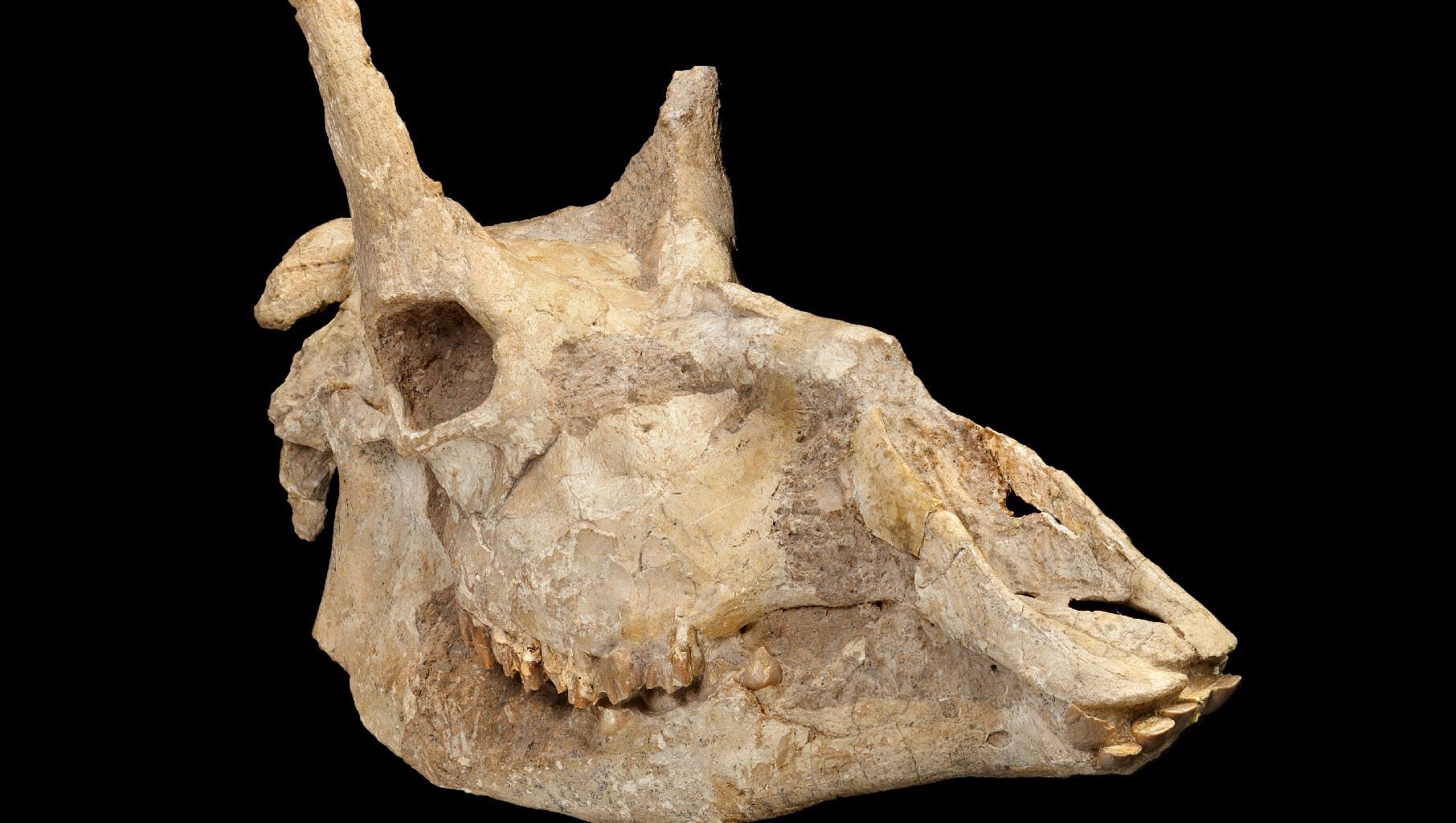
We’ve all admired the long, majestic neck of the giraffe, and the question remains: how did the giraffe get its long neck? Is it a product of an evolutionary process? Or was a process of foresight and purpose involved? Helping us understand this on a new ID the Future episode is geneticist Dr. Wolf-Ekkehard Lönnig, who challenges the traditional narrative of giraffe evolution, noting a sharp disconnect between Darwinian predictions and the fossil record. While neo-Darwinism, by default, expects a gradual, step-by-step progression of slight variations leading to the modern giraffe, the geological evidence tells a different story.
The Problem of Stasis
In Part 1, Dr. Lönnig highlights the discrepancies in the fossil record that cause the traditional Darwinian narrative to unravel. Lönnig explains that more than 25 genera of giraffes appear abruptly without clear ancestral links. These species are characterized by stasis, meaning they remain largely unchanged for long epochs of geologic time despite environmental shifts. This observed stasis in the fossil record is not just an inconvenient detail: it is as Dr. Lönnig notes the “cardinal and dominant fact” of the fossil record, directly opposing the prerequisite of “numerous, successive, slight modifications” that Darwin and his latter-day adherents must abide by when crediting a Darwinian theory with the origin of living things.
The Problem of Silos
But there’s more bad news for Darwinian evolutionary proposals. Lönnig cites leading experts to argue that giraffe relatives exist in isolated silos rather than a continuous evolutionary lineage. This means they appear independently and cannot be arranged into a clear, chronological evolutionary sequence. For this reason, even leading experts admit that a true evolutionary story for the giraffe is currently unavailable. Dr. Lönnig suggests that the similarities found across these distinct groups may point to common design rather than common descent.
Download the podcast or listen to it here. This is Part 1 of a two-part conversation. Look for Part 2 in a separate episode.
Dig Deeper