
Mapping the GPS coordinates of sharks spotted by surveillance drones has reinforced what experts already knew: nets and drum lines don’t create shark-free beaches.
Coordinates of sightings during the Queensland government’s four-year Shark Smart Drone Trial were obtained by a conservation group under right to information laws.
Andre Borell from The Envoy Foundation said the data showed a large number of shark sightings were still on the beach-side, or the “inside” of nets and drum lines.
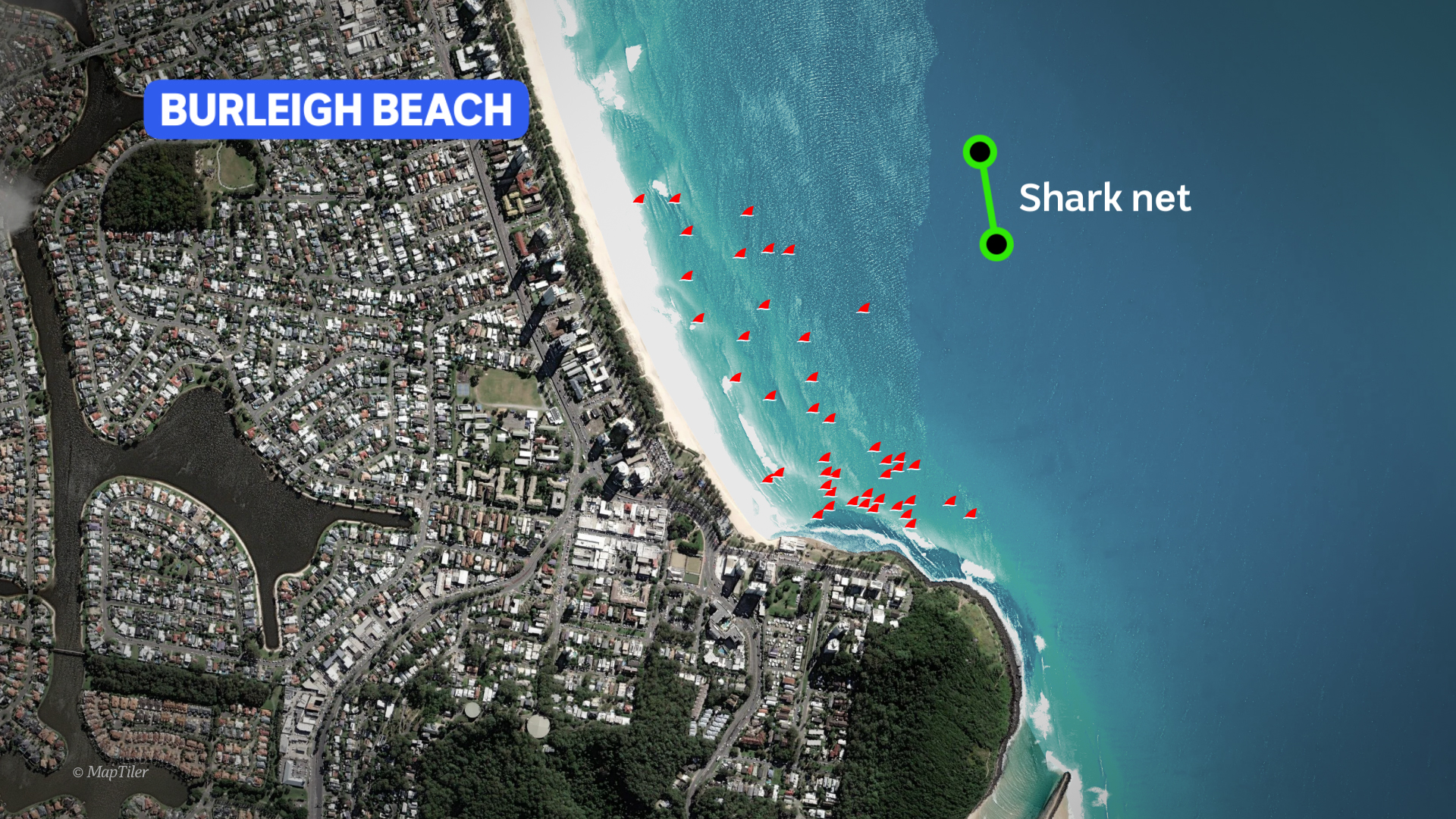 Map of shark nets at Burleigh Beach(ABC News: Peter Mullins)
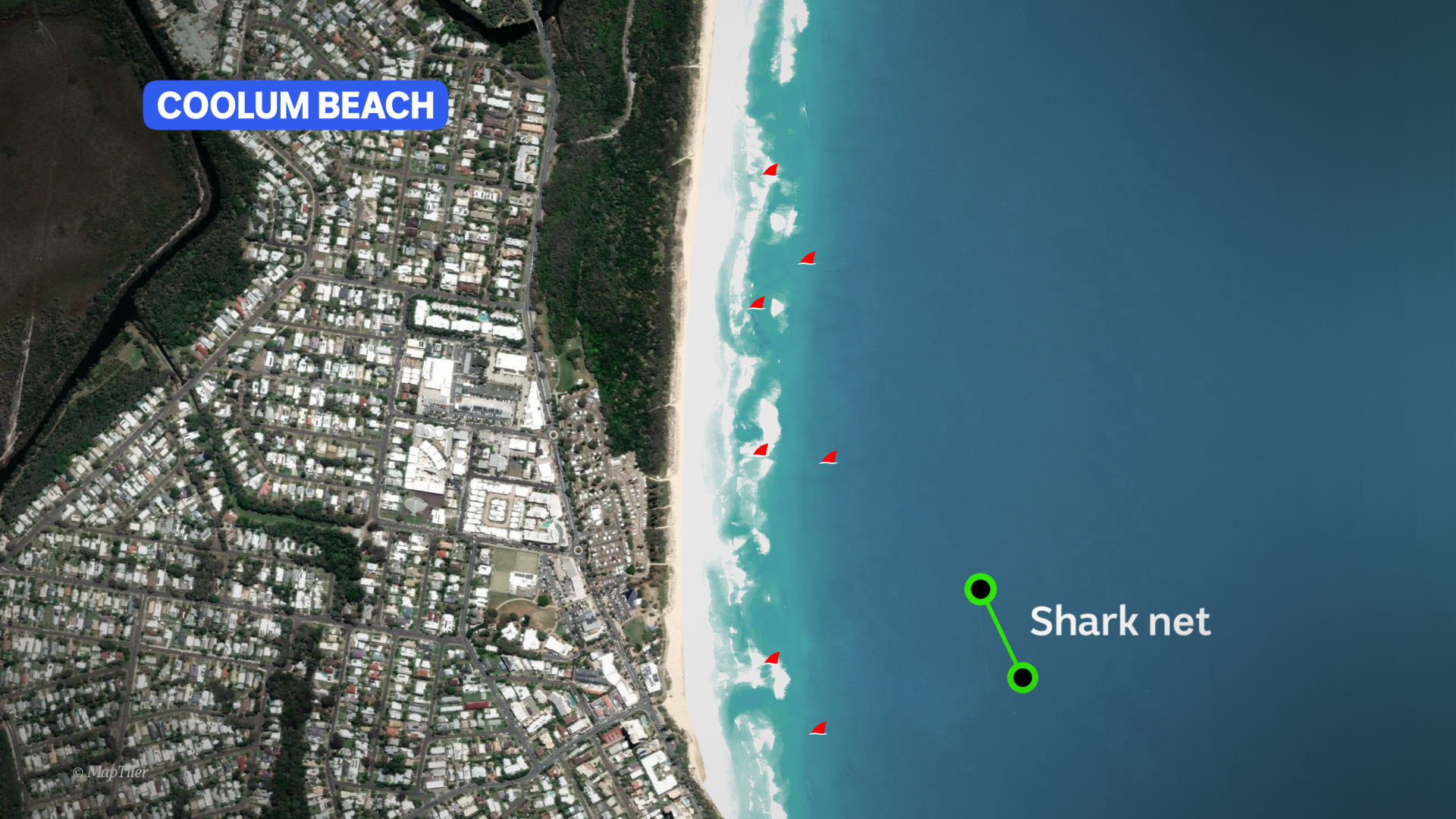 Map of shark nets at Coolum Beach(ABC News: Peter Mullins)
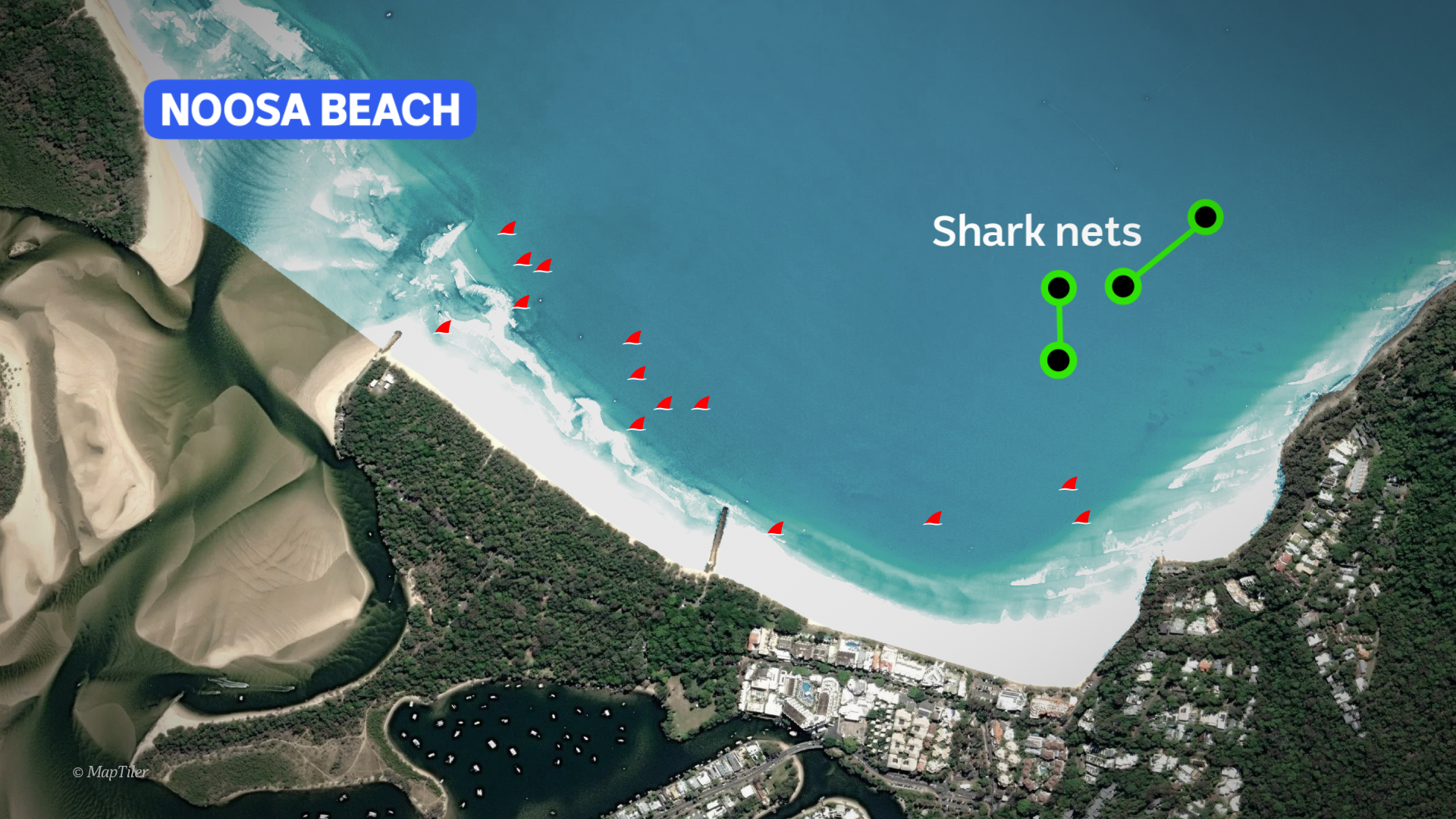 Map of shark nets at Noosa Beach.(ABC News: Peter Mullins)
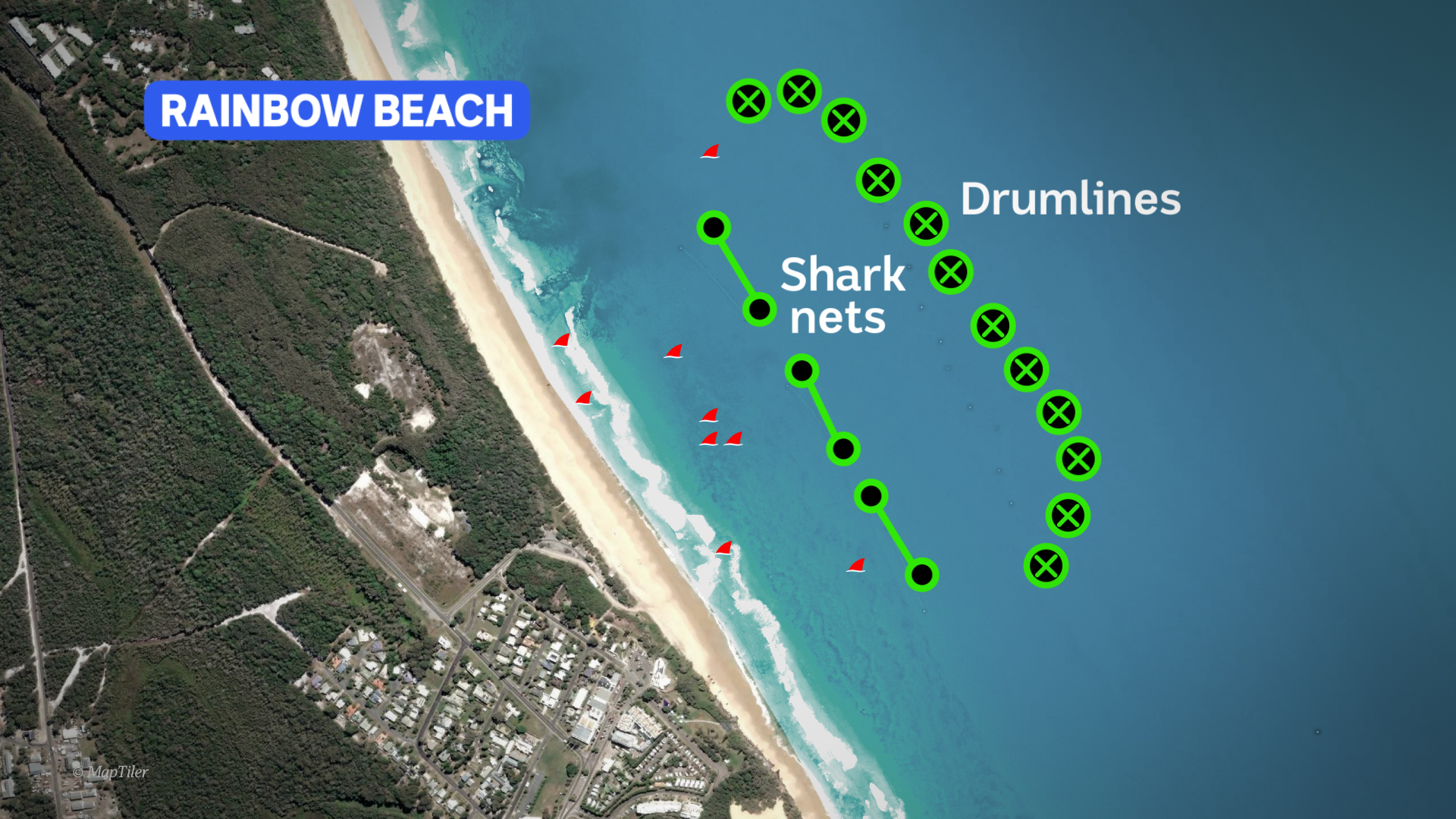 Map of shark nets at Rainbow Beach.(ABC News: Peter Mullins)
Mesh nets and drum lines are used to control sharks across Queensland.
They have always been controversial because of the indiscriminate way in which they kill.
Whales, turtles, dugongs and harmless species of shark can easily become entangled or ensnared in them.
The drone trial took place between 2020 and 2024 along 10 of the state’s most popular beaches.
The drones flew every half hour between 7am to midday on weekends, public holidays and school holiday weekdays.
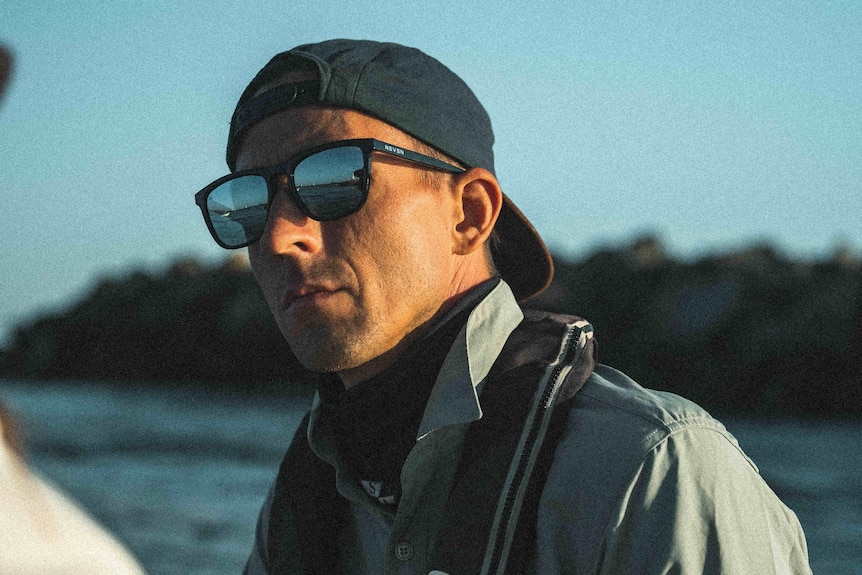 Andre Borell says he hopes the data will dispel a “potentially dangerous myth”.(Supplied: Gail Nyffenegger)
Over that time, there were 676 “shark sighting events”, with nearly 5,000 individual sharks spotted, though many were either small or members of non-target species.
While those numbers might alarm swimmers, Mr Borell is far from surprised, describing the nets as akin to “placing a ping pong net over Rod Laver Arena”.
“Not only are they comically short compared to the length of the beaches they apparently ‘protect’, but they don’t even go to the sea floor, they are only half the depth of the water,” he said.
The environmentalist and filmmaker said releasing the data was not meant to scare people. Instead, he hoped it would dispel a potentially dangerous myth.
“That false sense of security … that can change how people make decisions,” he said.
“They might venture into the ocean in conditions where maybe they shouldn’t, because they think, ‘oh, I’m bulletproof because I’m behind a shark net’.”
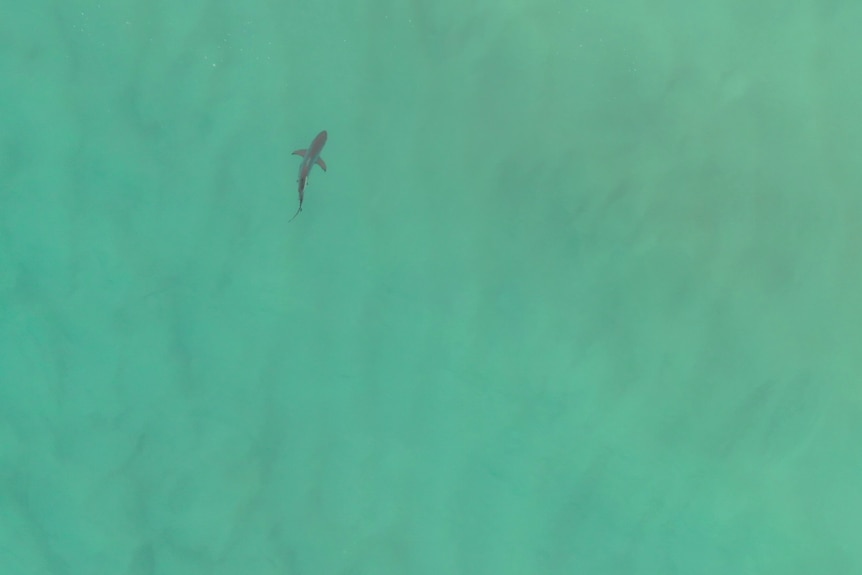 A blacktip reef shark spotted by a drone.(Supplied: State of Queensland)’Not what they’re meant for’
Dr Bonnie Holmes, a senior lecturer in animal ecology at the University of the Sunshine Coast and an expert in shark behaviour, said nets and drum lines had never been intended to create a shark-free enclosure.
“It’s essentially a shark-culling program designed to capture and remove large, potentially dangerous sharks from the population,” she said.
More than 3,400 sharks were killed by nets and drum lines in Queensland waters last year, up from 1,497 the year before.
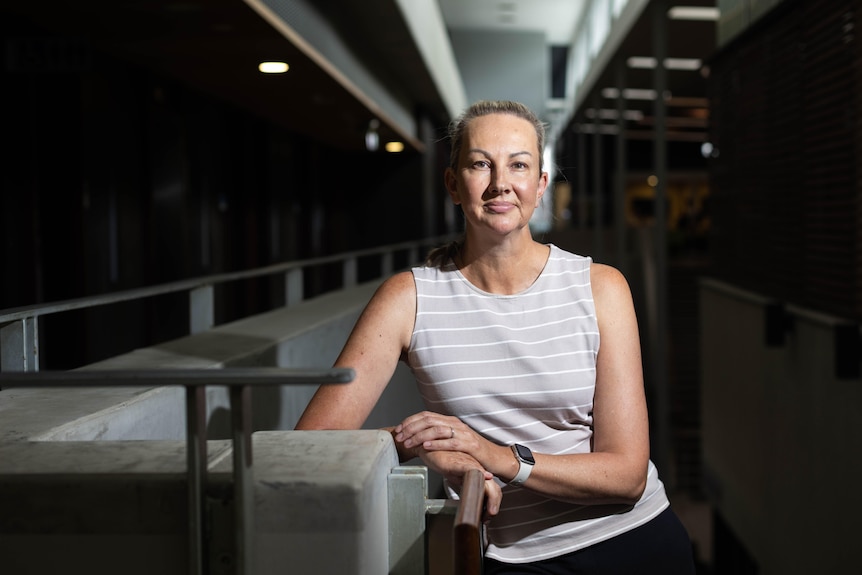 Bonnie Holmes says shark nets and drum lines were never meant to create shark-free enclosures.(ABC News: Luke Bowden)
Many of the sharks spotted by drones were either small, or members of a harmless, “non-target” species, the data showed.
Dr Holmes said it was difficult to know whether that was due to the “effectiveness'” of nets and drum lines but noted they “certainly have had an impact on the population”.
She also cautioned against attributing the dramatic increase in animals caught by shark control gear to a boom in shark populations, explaining a significant chunk of the difference was due to a nearly five-fold increase in catch off Mackay alone.
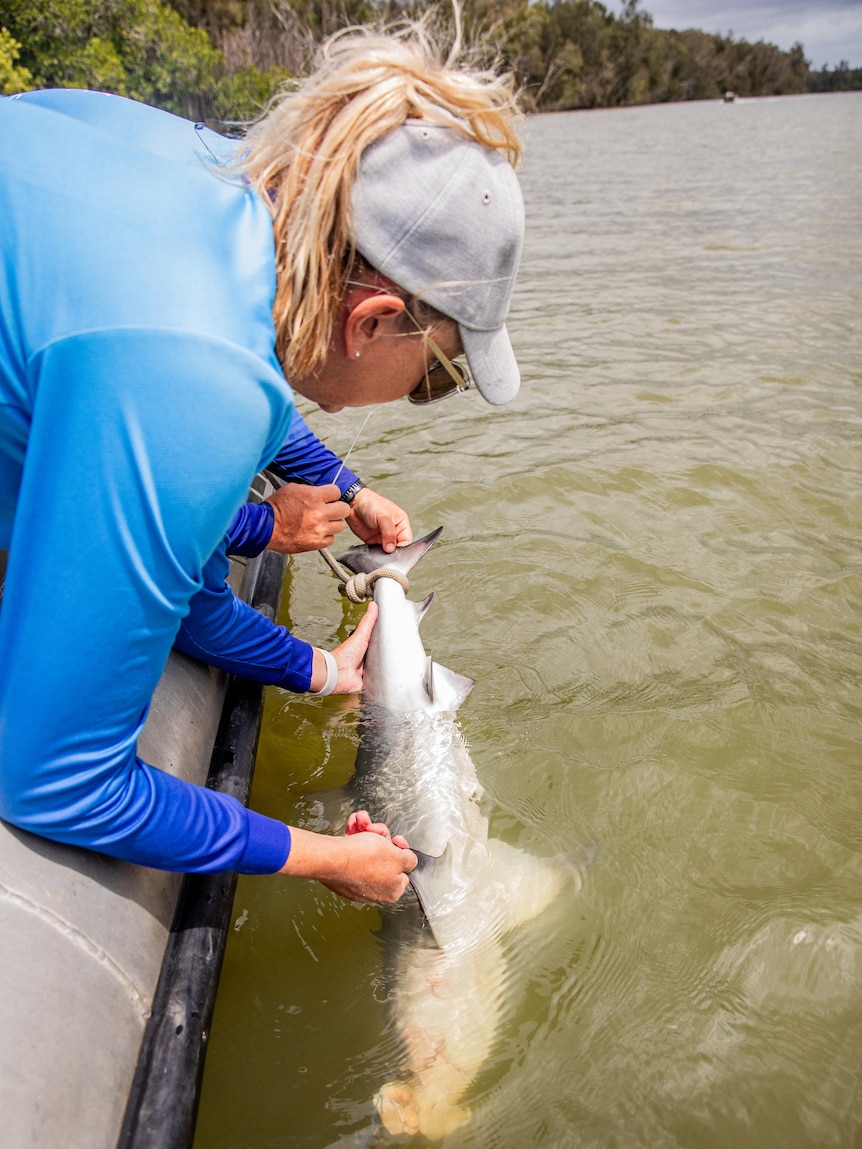 Dr Bonnie Holmes is a senior lecturer in animal ecology at the University of the Sunshine Coast, and an expert in shark behaviour.(Supplied: University of Queensland)
“They’ve shifted some gear in that area; they’re using circle hooks instead of J-hooks … they’re using different types of chain and different types of bait,” she said.
“We need to be really cautious around numbers actually increasing [versus] improvements in our fishing gear and technologies.”
‘Safety of people comes first’
A report into the drone trial, published in October, found drones spotted significantly more sharks (676) than were caught by nets and drum lines (284) during the trial period.
They also spotted 190 sharks larger than two metres, while 133 were caught by nets and drum lines.
“This was despite drones operating for only approximately 2.9 per cent of the time that … nets were deployed and 5.1 per cent of the time drum lines were actively fishing,” the report read.
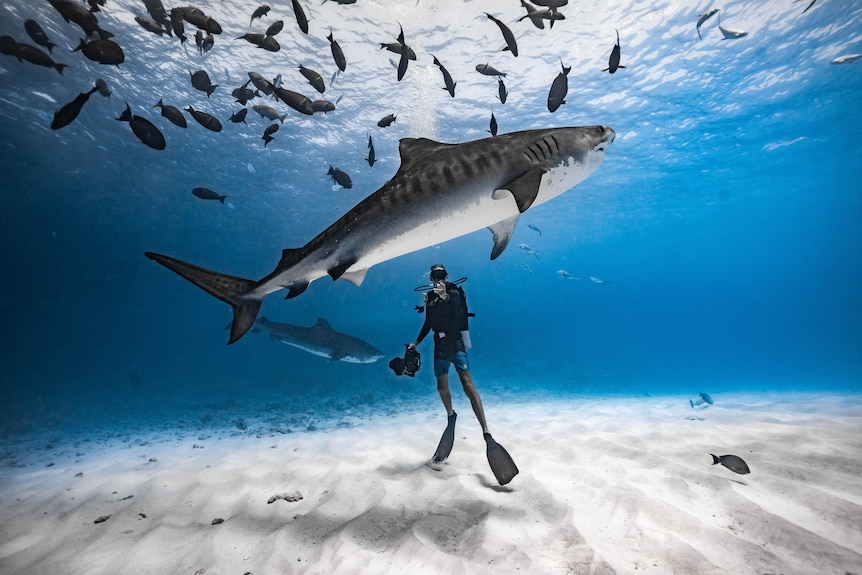 Filmmaker and environmentalist Andre Borell says current shark control methods create a “false sense of security”.(Supplied)
For Mr Borell and the Envoy Foundation, it’s clear evidence that, as well as reducing environmental harm, drones are better at keeping people safe.
“Technology is our way forward for beach safety outcomes, not hooks and nets and hoping and praying that we catch a shark that might bite someone,” he said.
The drones do have their limitations. For them to be effective, the water must be relatively clear, and they can’t yet be operated round-the-clock.
But Mr Borell said education and information around when drones are operating could resolve some of those issues.
“I’d love to see that be as common knowledge in Australia as what red and yellow flags mean,” he said.
In response to the success of the drone trial, the Queensland government has made it permanent, while expanding it to 20 beaches.
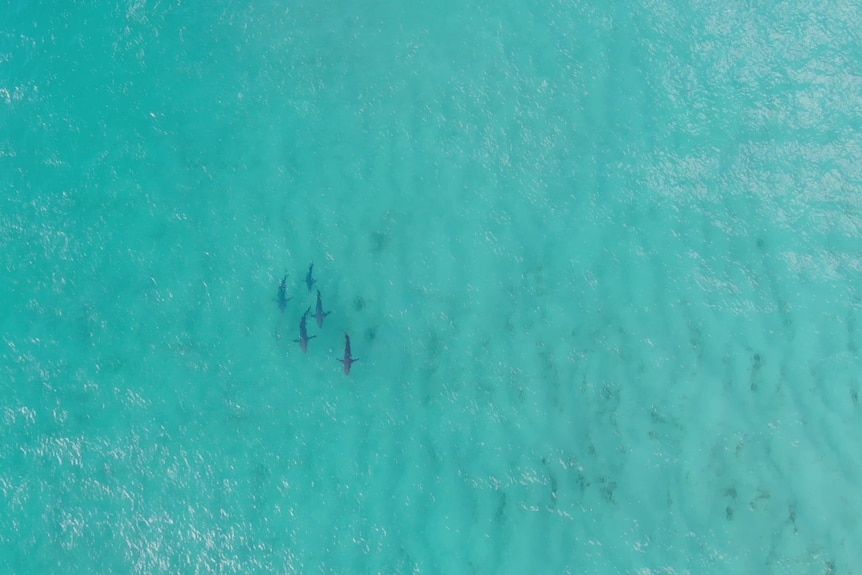 The drone report found 190 sharks larger than two metres were spotted. Here, a shiver of five whaler sharks are caught by drone footage.(Supplied: State of Queensland)
At the same time, the state government’s $88 million Shark Control Management Plan 2025-2029 also includes an increase in the number of nets and drum lines.
“Our approach to shark management is multi-pronged and utilises traditional methods like nets and drum lines, as well as modern evolving technology like drones,” Minister for Primary Industries, Tony Perrett said.
“No one method on its own will deliver safer beaches.
“The … government will always put the safety of people first.”