
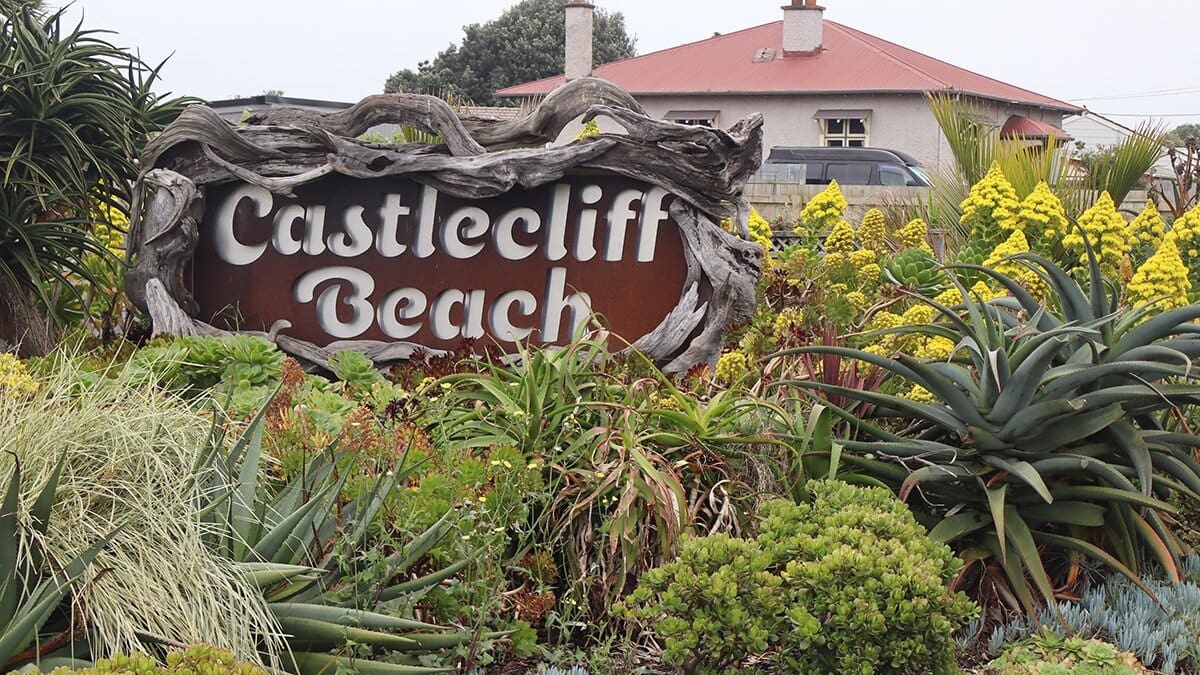
The idea of beautifying the suburb was raised eight years ago, and one of the goals was to transform the berms and traffic islands in Rangiora St.
It was obvious that the lush plantings, possible in the more fertile and sheltered upriver parts of the city, weren’t going to be viable here.
A landscape architect was commissioned, and a concept plan was submitted.
The designer picked up on the plantings of aloe and agave species in the private garden of artist Ivan Vostinar, located in Rangiora St, and incorporated them in their design. This became the theme for the garden development, led by Vostinar.
As an aside, winning the commission to create the tableware for the Hobbit films allowed Vostinar to purchase his studio on Rangiora St.
Rangiora St is a great example of a community initiative.
Progress Castlecliff, particularly through the good offices of facilitator Jamie Waugh, acted as the intermediary through the planning stages.
The Whanganui District Council provided seed funding, much of it used for developing the necessary infrastructure for the makeover.
The only plants purchased were nikau palms and Dracaena draco.
For nikau, the tough Chatham Islands form was selected as the most suitable for the harsh conditions, and it has proved a success in the salt winds and impoverished sand.
Ivan Vostinar in his personal garden in Rangiora St. The striking silver plant on the right is a form of puya. Photo / Phil Thomsen
It has also helped that Vostinar’s partner is Simone Higgie, daughter of Nicki and Clive Higgie, owners of the well-known Paloma Gardens in Fordell, Whanganui.
Higgie was most helpful in sourcing and donating many of the succulent plants.
Vertical scale was regarded as important in creating the degree of statement and vibe envisaged in the concept plan, hence the inclusion of nikau palms and Dracaena draco.
Higgie (a trustee for Bason Botanic Gardens) and Vostinar also collected fallen branches of Aloidendron barberae (previously Aloe bainesii) at Bason Gardens; the rooted plants have now become a signature feature of the street – and didn’t cost a cent.
Seeds for another striking element, Aloe thraskii, were sourced from a plant in Oriental Parade in Wellington.
Palms and succulents make a striking accent in Rangiora St. Photo / Phil Thomsen
Forms of aloe are ideal for streetside plantings, as they provide dramatic foliage without the spikes found on similar plants, such as agave.
Various species flower sequentially from autumn to spring, drawing nectar-feeding native birds, particularly tūī and silvereyes (tauhou).
Initially, Furcraea parmentieri (syn. roezlii) was used to provide a vertical accent.
Aloes and other succulents flower over many months. Photo / Phil Thomsen
However, these plants aren’t long-lived, and the skirt of dead leaves down the trunk was affecting the line of sight down the street, leading to them being de-emphasised in the landscaping programme.
The council, particularly through senior parks manager at the time, Wendy Bainbridge, understandably had some institutional guardrails.
Plantings needed to be low-maintenance, have a consistent style and include no spiky plants that could pose a hazard to passing pedestrians.
After setting these criteria, however, the council was very supportive at every stage of development.
Large Dracaena draco plants, such as the one on the right, make a dramatic statement. Photo / Phil Thomsen
Initial planting was carried out by council contractors and Vostinar, with support from Higgie.
The same goes for the ongoing maintenance, which is relatively minimal, thanks to the plant choices.
As with any garden, the plantings continue to evolve, and Vostinar is constantly considering how to ensure continuity and sustainability.
Rangiora St is fringed by succulents and nikau palms. Photo / Phil Thomsen
Osteospermum daisies have found their own way into the garden because their long season with dazzling flowers, combined with legendary toughness, makes them an ideal low-maintenance ground cover.
Feedback has been overwhelmingly positive.
The only criticism has been the relative lack of New Zealand natives.
However, it was felt during the planning stages, given the overwhelmingly harsh conditions, that tough succulents would provide the best guarantee of success, particularly in light of the desire to include strong vertical elements.
Another factor is that the sand bakes and becomes bone dry over the summer, making it very difficult to re-wet.