
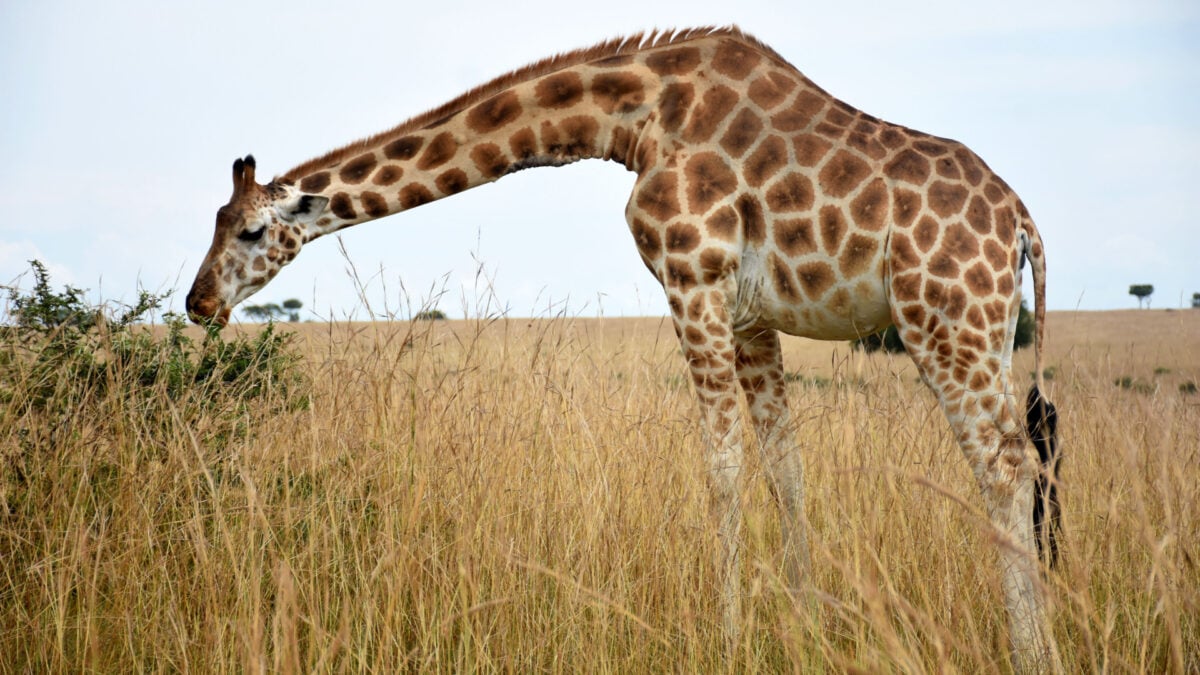
Forget khaki shorts and binoculars: Modern wildlife conservation has morphed into something that looks less like protecting elephants and more like a video game, although with more real-world consequences. With AI-powered surveillance systems, military drones circling over national parks, ex-special forces contractors hunting poachers, and vast satellite imagery, the old safari ranger clichés are all at play. This is the 21st-century battleground for endangered species, which often goes unnoticed by those normally concerned about biodiversity as we race through the Sixth Extinction.
Conservation has rebranded itself as a “crisis discipline” over the years, where every decision feels like defusing a bomb with seconds on the clock. Species extinctions loom, so much of the industry has embraced a scorched-earth mentality: deploy counter-insurgency tactics borrowed from Iraq and Afghanistan, militarize rangers into paramilitary units, and turn African wilderness into monitored conflict zones. Organizations like the non-governmental African Parks now manage a staggering 2,000-strong ranger force across the continent—a private army bigger than some nations’ militaries, as Mongabay recently reported.
But green militarization isn’t just dystopian theater. Human rights abuses are often reported, community privacy is sacrificed for mass surveillance, and local populations who are already marginalized by colonial-era conservation policies face violent enforcement. Meanwhile, the root causes of poaching, including crushing poverty, land dispossession, and historical injustice, can be sidelined in many cases. This enforcement-first approach swallowed up millions of U.S. international conservation dollars as late as 2018, and experts now warn that the recent, abrupt elimination of foreign aid pipelines since the Trump administration obliterated them will create a dangerous vacuum increasingly filled by unaccountable private sector and NGO actors.
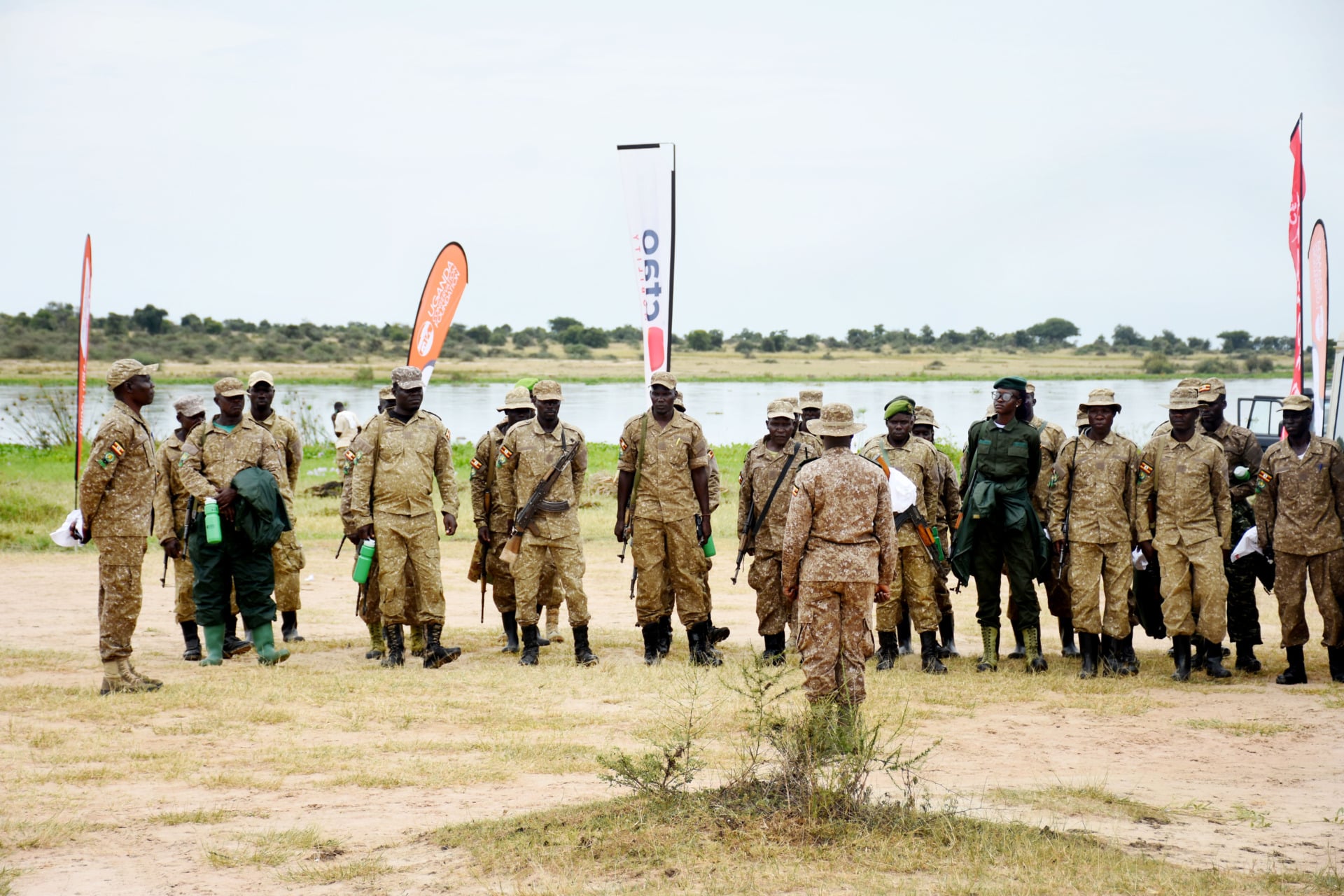 Park rangers at Murchison Falls National Park in Uganda assemble for a briefing before a joint activity during a public event inside the park / Credit: Gerald Tenywa
In the village of Huntingdon, South Africa, the tragedy often began with a sound from the sky. In research conducted near Kruger National Park, published in 2022, residents described the terror of surveillance helicopters flying so low over their homes that they woke sleeping children and shook the roofs — a signal that the village was “under the spotlight” and a raid was imminent.
For these families, technology ushered in brutality. One resident recounted that when security forces arrived, often acting on surveillance data, they would “kick your door down” and terrorize the household. And the human cost of this dragnet has been visceral: in extreme cases, residents described how suspects were “tied [by their] private parts with an elastic band” during torture sessions to extract information.
The outcome has even been fatal in some cases. “Whether you are poaching or not, as long as you are found inside the park you will be killed,” reported one resident in another piece of research published on Kruger. Technology designed to protect endangered species has helped convert some conservation areas into zones where, as some residents put it, “wildlife is valued more than human life.”
Over the course of several months, we filed scores of public records requests with the US government, interviewed dozens of officials in South Africa and Uganda, and sought input from researchers who study the militarization–and increasingly the surveillance focus–of wildlife conservation in sub-Saharan Africa. Perhaps most importantly, we interviewed people living near protected areas who have been part of the global efforts to combat wildlife trafficking, like those in Huntingdon. While much remains opaque about this story, everyone points out that the times are unprecedented, and it remains unclear how internationally funded conservation efforts will approach their work going forward.
South Africa: Green Violence and Apartheid Echoes
Passing by a college near Kruger National Park in South Africa, Anika* sees “tall poles, sleek cameras, boxes on fences… every vehicle scanned; my [truck] logged twice.” She adds, “Now I feel a low‑grade anxiety… if I drive to a community meeting about land rights, will my plate be flagged? That’s the chilling effect; you start to self‑censor your movements.” (*Not her real name; a pseudonym to protect her identity out of fear of reprisal from law enforcement.)
Meanwhile, a local community leader nearby suggests that intensified security has made some residents feel “safer and freer,” yet he warns that accountability remains elusive as suspects are often questioned and released without community feedback. This fragile peace has transformed the region into what Anika describes as a “conservation-industrial corridor.”
A lot has changed, and a lot hasn’t, since Kruger first entered the world’s stage as a conservation success story.
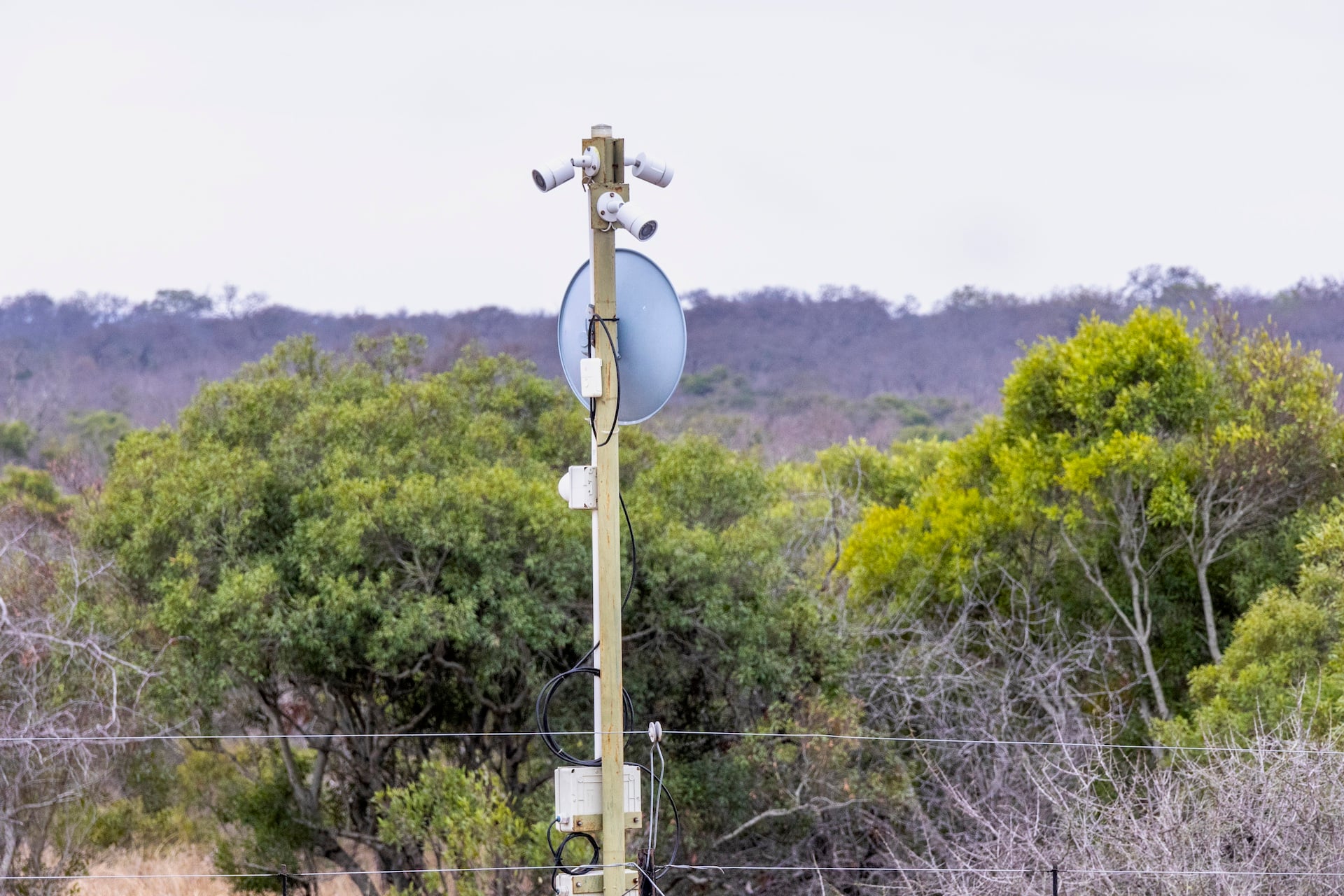 Pole‑mounted surveillance node with clustered fixed cameras, multidirectional eyes scanning along Kruger National Park electric fence © Rifumo Mathebula. Courtesy Oxpeckers
The park is inarguably a conservation success story on the African continent, hosting some of South Africa’s most iconic wildlife species. Established in 1898, Kruger is a massive, highly biodiverse South African reserve famous for its “Big Five” wildlife and world-class infrastructure that attracts millions of visitors annually. But depending on whom you speak with, it’s also a monument to state violence wearing an environmental mask. The architect of Kruger National Park’s modern anti-poaching strategy was Johan Jooste, an apartheid-era general who imported the counter-insurgency playbook perfected against Black liberation movements and aimed it at armed poachers, with reported cases of impoverished local people hunting bushmeat or just living nearby becoming targets.
That there isn’t massive outcry among international donors tells much about who conservation is really designed to protect. And while it seems that Kruger National Park and many conservation NGOs in South Africa and beyond have changed both their rhetoric and how they talk about green militarization, questions remain.
“There has been a marked improvement with regards to community engagement, [but] I wouldn’t say that the infrastructure is dismantled though,” said Annette Hübschle, a University of Cape Town researcher who has studied militarization around Kruger for many years. Hübschle added that the recent withdrawal of international donor support has accelerated a regression in strategy: “Fantastic programming involving communities, social welfare and educational initiatives have been defunded. So there has been a focus on hard power 1772305267.”
Jooste himself defended this militarized turn as a matter of necessity. In an interview with Hübschle, he argued that the rhino poaching crisis in Kruger was at a point of no return: “When you look at the figures you wonder if it might be too late for the rhino of Kruger or for the whole rhino species,” and that rangers had to be trained as a paramilitary corps to survive daily armed encounters. In a tell-all book, which was later made into a film, he insisted his campaign was professional, guided by rules of engagement, reinforced by surveillance systems, tracker dogs, and intelligence platforms. By his account, ranger services respected communities and he always instructed his rangers that “nobody can ever point a finger at you and suggest that you’ve abused or taken your authority outside the park.”
This defense stands in stark contrast to independent scholarly critique. South African conservation scholar Ashwell Glasson describes the “hybrid” nature of militarized conservation, where equipment, tactics, and mindset blur into a security doctrine rooted in colonial and apartheid legacies. “You often hear the term ‘protected area integrity,’” he explains, “but it is really a militarized ranger corps doing law enforcement to ‘protect’ those areas.” The result is a model that privileges surveillance and force over ecological work or community trust, which set the stage for Kruger’s counter‑insurgency approach.
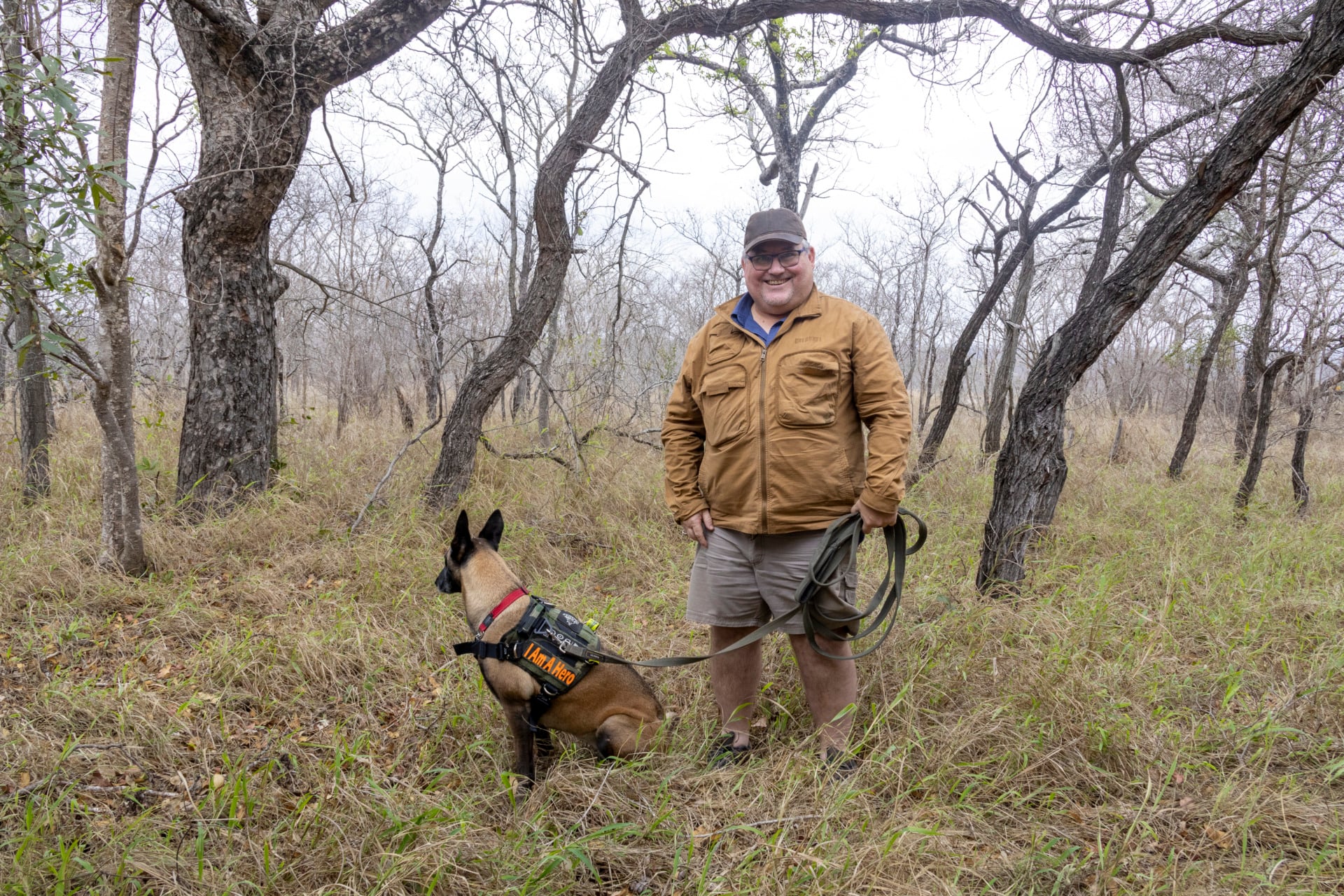 Ashwell Glasson stands with Yakos, a ranger dog wounded in anti‑poaching operations and retired due to injuries. Credit: Rifumo Mathebula
The numbers from Kruger’s neighboring communities in light of this have read like a serious indictment of protected area officials. In research published in 2022 but dating back a decade, geographer Mbuelo Laura Mashau noted that in the villages of Justicia and Huntingdon, community members living alongside wildlife for generations witnessed a culture of militarized conservation-related actions. When an animal was killed inside, Kruger armed rangers didn’t investigate; they often invaded. A staggering 88.7% of Justicia residents and 98.7% in Huntingdon report experiencing armed home raids, with security personnel ransacking houses in search of wildlife parts.
While South African law is not explicit on these matters, the country’s Criminal Procedures Act does allow for warrantless searches.
According to Mashau’s results, between 95.4% and 100% of surveyed community members in the two villages reported that anyone suspected of poaching faces systematic beatings or outright torture by security forces. Virtually everyone had witnessed or experienced this brutality firsthand in fenceline communities. In Huntingdon, 100% of respondents said that suspected poachers are killed inside the park boundaries, often with no attempt at arrest or trial.
“Despite the scale of the wildlife economy in the region, local communities, especially those in Mozambique and near Kruger’s western boundary, remain largely excluded from meaningful, long-term economic opportunities. Current conservation models largely limit local communities to low-wage roles in anti-poaching units, maintenance, and tourism services,” writes sustainability researcher Taylor Marie Oulette.
In response to detailed questions, a spokesperson for Kruger stated that “SANParks is not aware of these allegations” and that “our jurisdiction is within the boundaries of the Kruger National Park.” SANParks declined to provide comment about instances along Kruger’s boundaries after repeated requests.
Uganda: Authoritarianism and the Judicial Loophole
In East Africa, Uganda’s conservation apparatus operates in a political context human rights organizations have described as “semi-authoritarian.” Recently re-elected President Museveni’s National Resistance Movement, which has been in power since the mid- ‘80s, has long wielded the authority of park rangers as appendages of state violence. The Uganda Wildlife Authority (UWA) is an example of this, where the wildlife sector is considered an “auxiliary of the national army and therefore among the palette of armed state actors considered relevant not just for conservation, but also for regime security,” observes political scientist Christopher Day.
Uganda authorities deploy drones and AI systems like the EarthRanger software platform and the Ecoscope data visualization and exploration tool across protected areas. These were technologies that were until recently bankrolled by Western donors who handed over surveillance tools to a regime notorious for cracking down on political dissent. (A trickle still appeared to be coming in as late as 2025.)
EarthRanger is a real-time conservation management platform that aggregates data from GPS collars, radios, patrol logs, vehicles, aircraft, and sensors to display wildlife, rangers, and incidents on a live operational map, generating alerts and detailed historical records for managers. If handed over broadly to law enforcement without strict legal safeguards, clear scoping, and independent oversight, this kind of system could effectively become an always‑on, location‑tracking and incident‑logging infrastructure for people as well as animals. It could also enable targeted monitoring of communities, retrospective reconstruction of individuals’ movements, and data sharing or repurposing far beyond conservation.
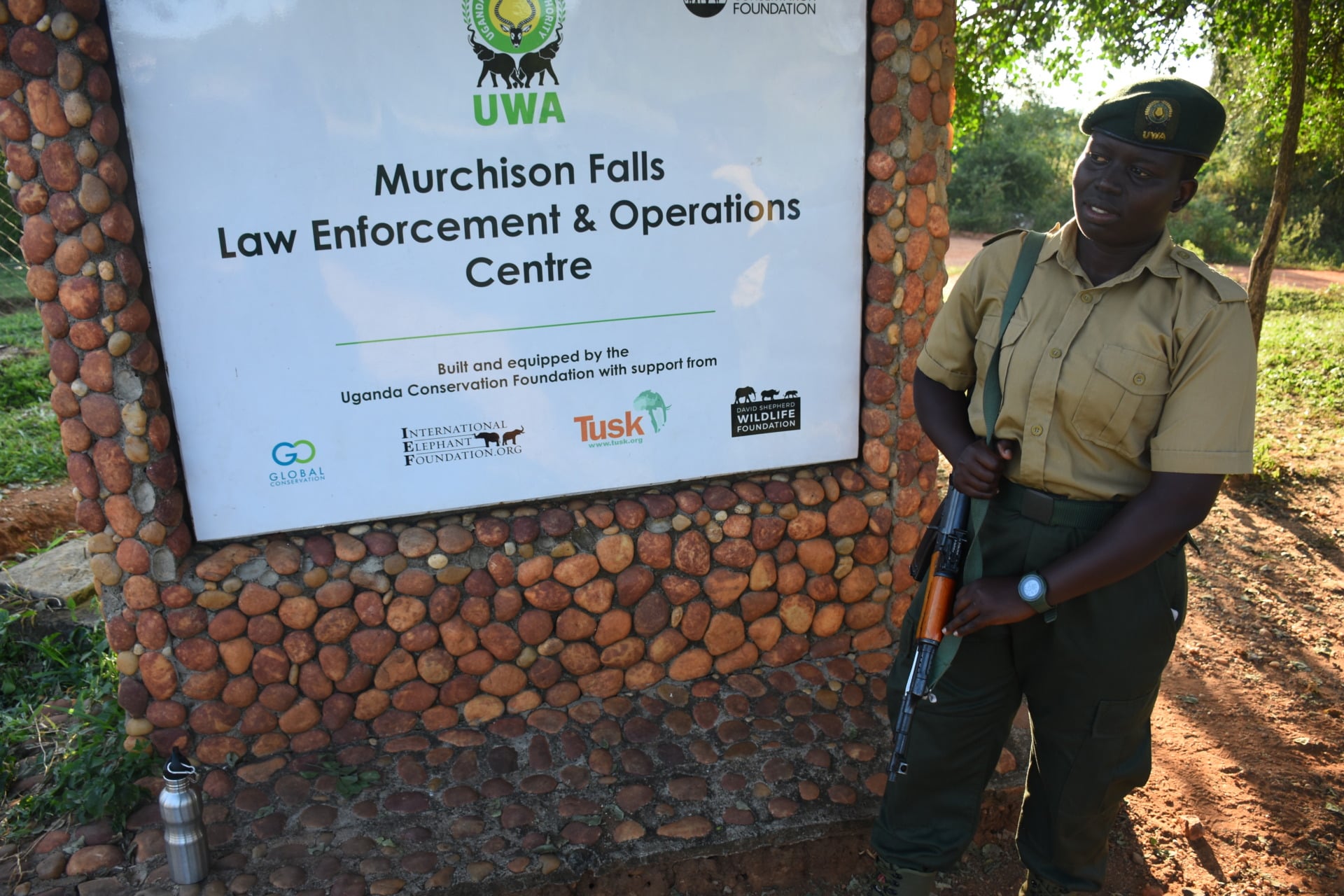 A park ranger stands guard near the entrance to the Murchison Falls Law Enforcement and Operations Centre, which houses the EarthRanger technology that Ugandan authorities use for aerial surveillance of the park / Credit: Gerald Tenywa.
EcoScope in particular is an analytics add‑on in the EarthRanger ecosystem that pulls patrol, subject, and event data from conservation systems and automatically turns them into dashboards, maps, and charts. It’s able to centralize large volumes of data, including views of where patrols go, where wildlife concentrates, or how certain incident types cluster that would otherwise require custom statistical work. However, a tool that effortlessly aggregates and visualizes historical and real‑time movement and incident data could make it far easier to profile areas and groups, identify “hot spots” for intensive policing, and reconstruct people’s patterns of life, assuming it’s fed with phone, vehicle, or camera data rather than only conservation inputs, which are often also monitored by park officials. Without strict legal limits, an EcoScope‑style system has the potential to underpin high‑resolution surveillance and data‑driven targeting.
“We cannot do conservation work [today] the way we did it 50 years ago,” says Bashir Hangi, Spokesperson of the UWA, the government agency responsible for the management and protection of wildlife in and outside protected areas. “We have had to adapt to the existing technology and even customize technology for us to do conservation work effectively.”
Indeed, much of the US government’s funding for conservation work in Uganda ended during the period that USAID was dismantled, shortly after Donald Trump took office again and Elon Musk’s DOGE went to work. By our account, this includes some $60 million of $77 million in grants (committed disbursements) and $47 million of $64 million in disbursements made available to the government between January 2020 and June 2025. Not all of these activities were financed by Uncle Sam, but most were.
The Department of State, the now-surrogate for USAID, declined to provide its perspective on these numbers.
All the while foreign governments are closing the funding taps, Uganda’s appetite for surveillance technology is rising. Documents containing budget requests for the 2026/2027 financial year, which starts in July 2026, indicate that its government intends to spend about $3 million on a helicopter to “ease aerial patrols, wildlife surveillance, animal census exercises, and rescue operations, particularly for animals caught in poachers’ snares.” Another $8.4 million will go towards constructing electric fences at Murchison Falls and Queen Elizabeth National Parks, while only $3 million is allocated for compensating victims of human-wildlife conflict.
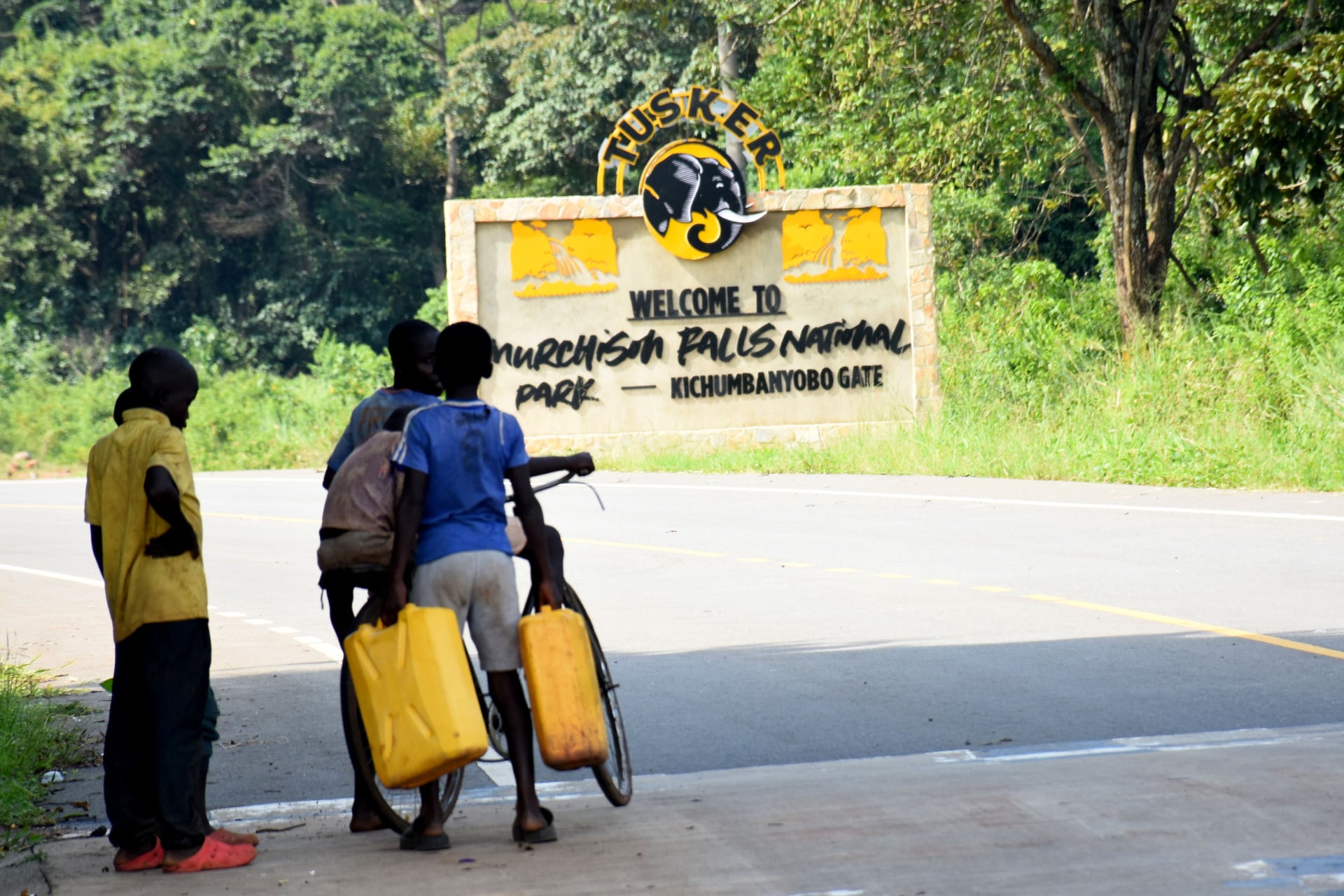 Two boys look as three others prepare to ride a bicycle with two jerrycans outside Murchison Falls National Park. Human activity near the national park is a regular cause of human-wildlife conflict / Credit: Gerald Tenywa.
The risks of military tech and surveillance incurring human costs in Uganda is perhaps starkest for Indigenous communities like the Batwa, who’ve inhabited ancestral lands since long before colonial boundaries carved up the region.
Ongoing evictions and systematic harassment by wildlife authorities have displaced thousands dating back to 2001, according to civil society and human rights organizations like Survival International. Most prominently in 2013, armed rangers conducted sweeps through traditional Batwa territories, burning their homes and arresting residents for trespassing on land their ancestors stewarded for millennia. International conservation groups like WWF funded the earliest Batwa park and often hedged on the need for poaching enforcement on their grounds.
Survival International says there are general patterns observed across the African continent. Without commenting on the specifics of the Batwa case, Paul Renaut, a campaigner for the NGO, argues that “this does not represent a substantial shift in strategy: the goal and practice of evicting Indigenous peoples in the name of conservation have existed for decades, and have long been supported by less advanced technologies (for example, night-vision goggles).”
“The use of more recent technological tools therefore reinforces long-standing strategies rather than introducing a new one,” he adds.
WWF-Uganda declined to comment for this story.
Many wildlife conservation experts, and Ugandan authorities themselves, underline that anti-poaching efforts have demonstrated notable results in the country. Inter-agency training programs and K9 detection units have successfully intercepted wildlife products at border crossings and airports, as Moses Olinga, a Uganda program manager at the International Fund for Animal Welfare, explains.
But in some ways, the battlefield has shifted to Uganda’s courts, where justice is often deferred. High-level wildlife traffickers, the kingpins moving ivory and pangolin scales by the ton, routinely escape custodial sentences through plea bargains and fines.
“Most of the suspects, especially the top guys once they are arrested… opt for plea bargaining. And in that bargaining it is basically about paying money,” says Moses. “And then somebody is able to get out of the hook. You can pay 50 million Ugandan shillings [roughly US$13,000] and walk free, your criminal network intact and operational.”
Meanwhile, villagers caught with a piece of bushmeat can theoretically receive several years in prison, given often strict interpretations of mandatory minimum sentencing guidelines.
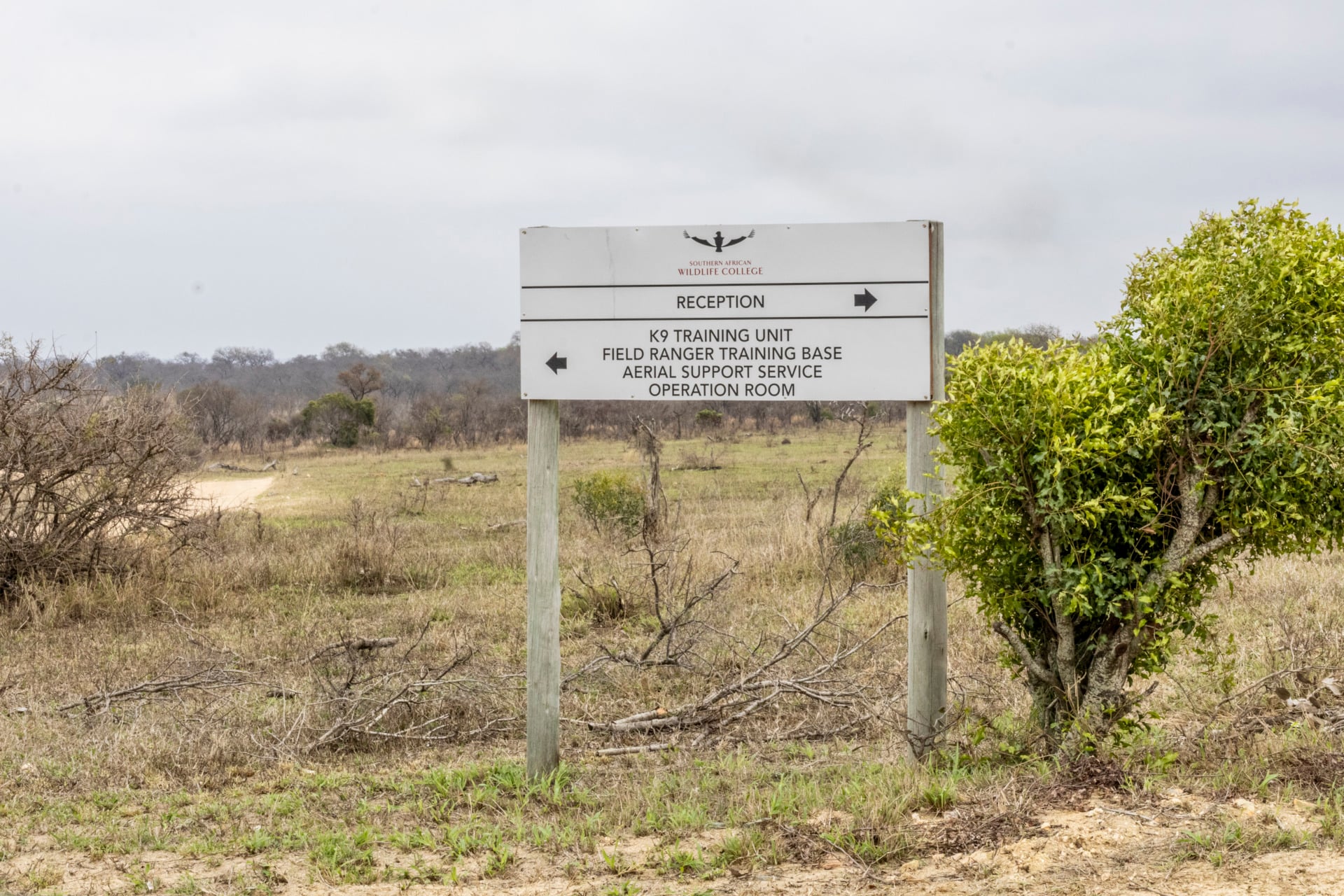 Signpost at Southern African Wildlife College points to ranger training, K9 unit, and operations. Credit: Rifumo Mathebula The Funding Black Box: Battles and Pivots
Follow the money in wildlife conservation, and you’ll often hit a wall; sometimes a bureaucratic garrison designed to stonewall transparency. The United States has bankrolled the war on poaching to staggering levels: between 2002 and 2018, the US Fish and Wildlife Service (FWS) alone dumped over $100 million into Combat Wildlife Trafficking programs around the world. But buried in the ledger is the fact that more than 90% of those funds went straight to law enforcement and protected area management, not to community-based solutions that might actually address why people poach in the first place, as was concluded by geographers Francis Massé and Jared Margulies. Boots, guns, and surveillance tech were all there.
However, FWS’s 2026 budget request signaled an abrupt end to many international pipelines, requesting $0 for the Multinational Species Conservation Fund. This effectively zeroed out dedicated funding for African elephants and rhinos, which previously received millions annually. Fish and Wildlife justified this in the document by stating it is “transferring funding responsibility for international species conservation work back to other countries,” reserving limited resources for domestic species instead.
While international grants are being eliminated, the focus on domestic “hard power” remains: in 2024, the agency’s Office of Law Enforcement claims to have conducted nearly 12,000 wildlife crime investigations, resulting in 80 years of prison time and millions in penalties. As the Trump administration requested a total of $1.1 billion for Fish and Wildlife to prioritize “energy dominance” and “timber production,” the financial support for frontline community-based conservation in sub-Saharan Africa, arguably the world’s most important wildlife hotspot, is nonexistent.
Massé suggests the potential consequence of this change is that conservation areas might once again rely on private security companies to address enforcement needs if U.S. oversight is removed. He points out that previous funding was more beneficial because it supported state institutions, such as the police, judiciary, and courts, rather than private security firms. This approach helped strengthen the government’s capacity and overall state-building efforts. The impact of the shift, therefore, is a decline in support for governmental institutions, risking a return to less-accountable private security arrangements.
A spokesperson for the U.S. Fish and Wildlife Service declined to provide comment in response to questions.
Then came the White House’s geopolitical wrecking ball in 2025 wrought by DOGE and a general disfavoring of foreign aid. (The billions that the Department of State manages in USAID’s stead pale in comparison by historic measure.) The redirection of foreign assistance and the gutting of USAID obliterated entire funding pipelines in conservation finance and in sub-Saharan Africa in particular. Conservation experts acknowledge this created a dangerous vacuum. Legitimate civilian policing and judicial capacity-building programs evaporated, forcing governments to default to what they already had on hand: unaccountable military forces with zero oversight and a track record of human rights violations.
Trying to trace where American tax dollars actually go is challenging. The federal government has turned Freedom of Information Act requests into an endurance test. Multiple of our public records requests have gone unanswered, especially at USAID, the leftover parts of which have been mostly cannibalized by the Department of State.
Ugandan conservation scientist Taddeo Rusoke explains that, from his experience working with major grants in scaling conservation education, he observed that approximately 45% of U.S. Official Development Assistance in Africa was channeled into emergency response and the peace, conflict, and security sectors. From his own field results, Rusoke estimates that militarization has eroded much of the trust built through community engagement and that enforcement‑only models achieve significantly less success without local participation.
The official contact for USAID listed on its defunct website referred usto the State Department. The Department of State did not respond after repeated attempts at seeking comment.
Meanwhile, on multiple occasions, FOIA requests to USAID (which still has staff devoted to records requests on paper) went unanswered, and in some cases the system collapsed entirely. Emails and online requests in the portal were annulled as staff were either DOGEd or became victims of reductions in force orders. (“We currently have limited capacity to respond to FOIA requests,” has been a typical understatement now.)
The Metamorphosis
As it happens, a privatized anti-poaching industry has at times morphed into mercenary outfits with limited accountability, although some organizations have begun to change tactics. Ex-military contractors from Iraq and Afghanistan arrived in African conservation zones via outfits like VETPAW at the height of the elephant and rhino poaching crisis period (2010-15) and Akashinga (formerly the International Anti-Poaching Foundation). Rosaleen Duffy, a professor of international politics, points out in her 2022 book Security and Conservation that organizations like these demonstrate the phenomenon of militarization. She argues both organizations operate with limited regulatory oversight and transform ranger training toward militarized approaches.
“Despite the proliferation of these organizations, there is no common code of practice or set of guidelines governing them,” Duffy has noted.
VETPAW did not respond after repeated attempts at seeking comment.
“We take critiques like those from Dr. Rosaleen Duffy seriously,” an Akashinga spokesperson, Erin Mullikin, said, stating that the organization has “intentionally evolved” away from a “war on poaching” framework. Mullikin added that Akashinga does not use counter-insurgency tactics and that, while they do utilize external specialists including military veterans for technical training, their operations are “intelligence-led, community-grounded, and demilitarized” rather than functioning as a private foreign-led security force.
Nevertheless, there is no uniform code of practice governing many of these kinds of operations. In South Africa and Uganda, security regulators could become more amenable to private contractors. This may be in part due to the shrinking space for conservation funds wrought by the second Trump administration’s evanition from foreign development. Notably, shoot-to-kill policies and allegations of operatives hitting and killing people have occasionally surfaced over the years, especially in private reserves near Kruger National Park.
The Surveillance State: African Parks and the Paramilitary Model
African Parks is the most recent iteration of what has been widely considered a successful green militarization approach to conservation. It’s a large NGO that claims to manage 24 protected areas in 13 countries covering over 20 million hectares; in addition to a conservation organization, it has arguably built a private army. With a 2,000-strong ranger force patrolling millions of hectares across the continent, this non-state actor wields more on-the-ground power than many sub-Saharan African governments’ environmental agencies. This is an unprecedented concentration of paramilitary authority operating under the banner of biodiversity, answerable primarily to donors rather than the communities living in its crosshairs.
The organization has won the narrative fight, as insiders put it. Scroll through African Parks’ showy annual reports, and one will find all the right buzzwords: community partnerships, local empowerment, sustainable livelihoods. But peel back the marketing veneer, and the underlying philosophy remains unchanged: heavily enforced “fortress conservation.” This colonial-era doctrine that pristine wilderness requires emptying the land of Indigenous peoples and local communities has largely abated in the past couple of decades, but its basic principle is that local people are the problem. And removal is often the solution.
“The situation is different from one country to another,” said investigative journalist Olivier van Beemen, whose book In the Name of Nature (2025) analyzes the organization extensively. “What I can say is that African Parks’ model of delegated management — in which they take over full authority from the government on part of their territory — is often perceived as ‘a state within the state.’ African Parks takes over responsibilities — law enforcement, the monopoly on violence, the right to detain people — from the national authorities inside a protected area and often in a zone surrounding it as well.”
“Core to all protected areas is legislation determined by sovereign governments, so we do not operate as an unaccountable private military entity,” a spokesperson for African Parks wrote in response to questions. Addressing criticisms of its oversight, the organization added that its “accountability mechanisms have been constructed in good faith and in accordance with international standards,” and that its grievance mechanism “integrates independent, external oversight bodies at all stages from detection to resolution of complaints.”
It’s unclear how many ex-military personnel from which countries are currently training the so-called “Thin Green Line” of African Parks. The organizations themselves won’t say explicitly. It is, however, generally known where African Parks and other related NGOs operate, but obtaining granular detail on anti-poaching operations and other enforcement is next to impossible. This is also the case in South Africa, a country with a well-funded conservation sector, and Uganda where wildlife tourism is a pillar of the national economy (African Parks does not operate in either, according to its official documentation.)
The Paradox of Security
The fatal flaw in conservation’s militarized, surveillance-heavy turn appears to be that you can’t shoot your way to sustainability. Multiple academics and human rights organizations we spoke with pointed out that the short-term success of preventing poaching and illegal wildlife harvesting (and trafficking) is often offset by the longer term distrust of authorities. This is especially the case as these institutions become more sophisticated in their use of technology and tactical applications of their operations.
“Militarization is about more than having armed park guards or armed anti-poaching patrols. Militarization is also about a kind of military mindset of us and them. There’s an enemy. Local communities, generally speaking, are defined as the enemy or as potential collaborators in a new kind of conservation surveillance,” Duffy explains. She argues that the modern tech-focused and surveillance-heavy approach is merely part of the same continuum as physical violence: “[Y]ou can do as much enforcement and surveillance as you like, but unless you address the structural reasons why people engage in crime, you’re you’re never going to get a solution.”
Treating poaching as primarily a criminal enforcement problem ignores that it can just as well be a symptom of underdevelopment, land dispossession, and structural violence that predates a decision to kill a rhino. Drones and AI surveillance systems arguably address the symptom while avoiding the disease: poverty, food insecurity, historical injustices that are a byproduct of colonial land grabs, and the deliberate exclusion of communities from resource management decisions that directly impact their survival.
The long-term math may not work in militarization’s favor. Every brutal raid, arbitrary arrest, community member beaten or killed by rangers plants seeds of resentment that may germinate for generations. Conservation organizations may be inadvertently recruiting tomorrow’s poachers and wildlife traffickers by making local populations into enemies rather than partners.
Real reform likely requires dismantling the machinery of much of the violence. This would mean binding human rights safeguards with actual enforcement mechanisms and consequences for violations. It would probably also mean mandatory independent oversight of all security actors, whether state rangers, private contractors, or NGO-funded paramilitaries, with transparent complaint mechanisms accessible to affected communities.
“I think conservation would need a completely different model. It would need to be dismantled. The big conservation organizations that fund a lot of this stuff would need a complete turnaround as well,” Duffy points out. To her, this requires a “complete overhaul” and a “decolonization of knowledge and accepting that actually people from outside don’t always know best.”
The increase in surveillance tech and green militarization runs counter to a broader movement in community-based conservation, which has ebbed and flowed throughout the African continent and elsewhere as a turn from the top-down nature of fortress conservation. Both South Africa and Uganda have had strong initiatives of this sort. In this model, local communities aren’t the enemy, they’re potential allies systematically alienated by policies rooted in colonial logic.
Until then, green militarization in its newest iteration could continue producing the exact opposite of its stated goal: more violence, less wildlife, and landscapes emptied of both biodiversity and the people who once protected them.
This story was supported by the Pulitzer Center.
Sam Schramski is a U.S.-based climate and environmental journalist and editor with a background in academic research and work on African conservation and can be reached on Signal at samschramski.25 or samschramski.com
Benon Oluka is a veteran Ugandan investigative journalist with a proven track record of cross-border collaborations and extensive experience covering sensitive stories related to the country’s military and wildlife agencies.
Tulani Ngwenya is a South Africa-based investigative journalist and associate at Oxpeckers Investigative Environmental Journalism interested in impactful narratives that engage diverse African stakeholders and drive positive social change.