
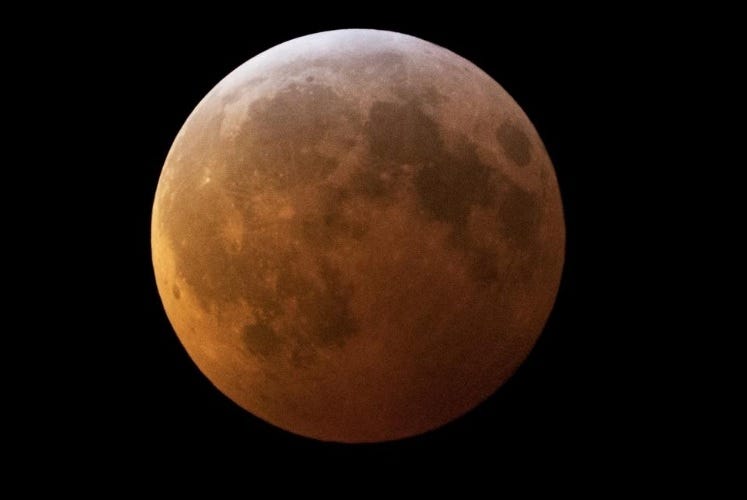
A total lunar eclipse will happen in the early morning hours of Tuesday, March 3.
You’ll have to get up early to see it.
The moon will make its way into the Earth’s shadow beginning at 3:44 a.m., but the partial eclipse, where it appears as though a bite has been taken out of the moon, will first be visible about 4:50 a.m.
By 6:04 a.m., the moon will be completely in the Earth’s shadow and will appear dark red or dark orange. That’s why it’s called a blood moon total lunar eclipse.
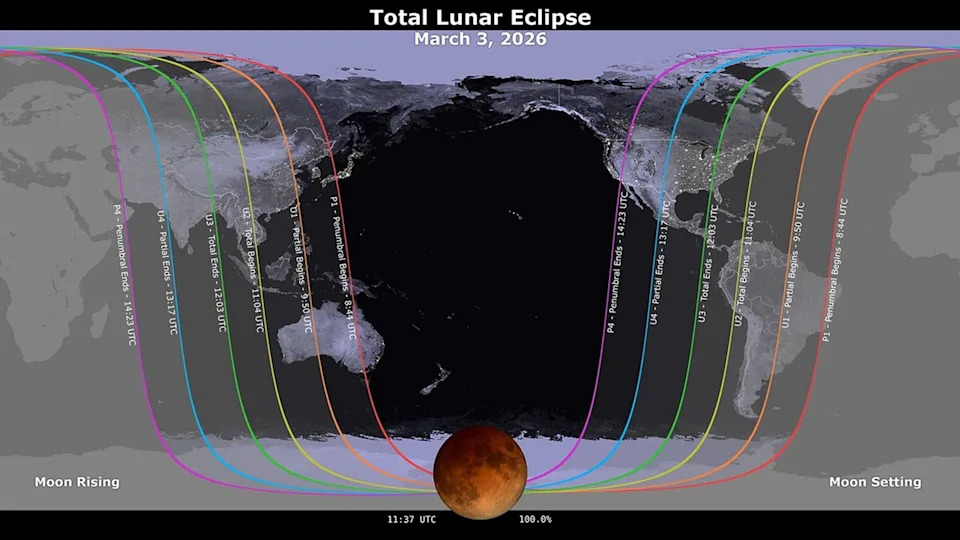
Path of the total lunar eclipse on Tuesday, March 3, 2026.
The moon will begin leaving the Earth’s shadow by 8:17 a.m., and the eclipse will be complete by 9:23 a.m.
A lunar eclipse occurs when Earth passes directly between the Sun and Moon, casting a gigantic shadow across the lunar surface and turning the Moon a deep reddish-orange. This alignment can only occur during a full Moon phase, according to NASA.
You can observe the lunar eclipse without any special equipment, NASA says, but if you have binoculars or a telescope, the eclipse will look even more spectacular. For best viewing, try to find a dark area without bright lights.
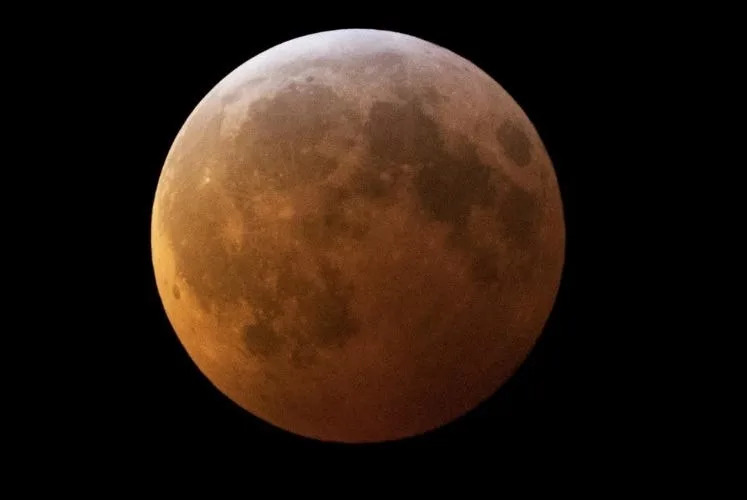
The moon during a total lunar eclipse, seen from West Palm Beach, Florida, on Monday, January 21, 2019: The eclipse or blood moon, turns red from sunlight scattering off Earth’s atmosphere.
On March 3, totality will be visible in the evening from eastern Asia and Australia, throughout the night in the Pacific, and in the early morning in North and Central America and far western South America, according to NASA.
The eclipse is partial in central Asia and much of South America. No eclipse is visible in Africa or Europe.
Jean Mikle covers Toms River, Seaside Heights and several other Ocean County towns. She’s also passionate about Asbury Park’s music scene. You can reach her at jmikle@gannettnj.com.
This article originally appeared on Asbury Park Press: How to watch the lunar eclipse and full blood moon 2026