
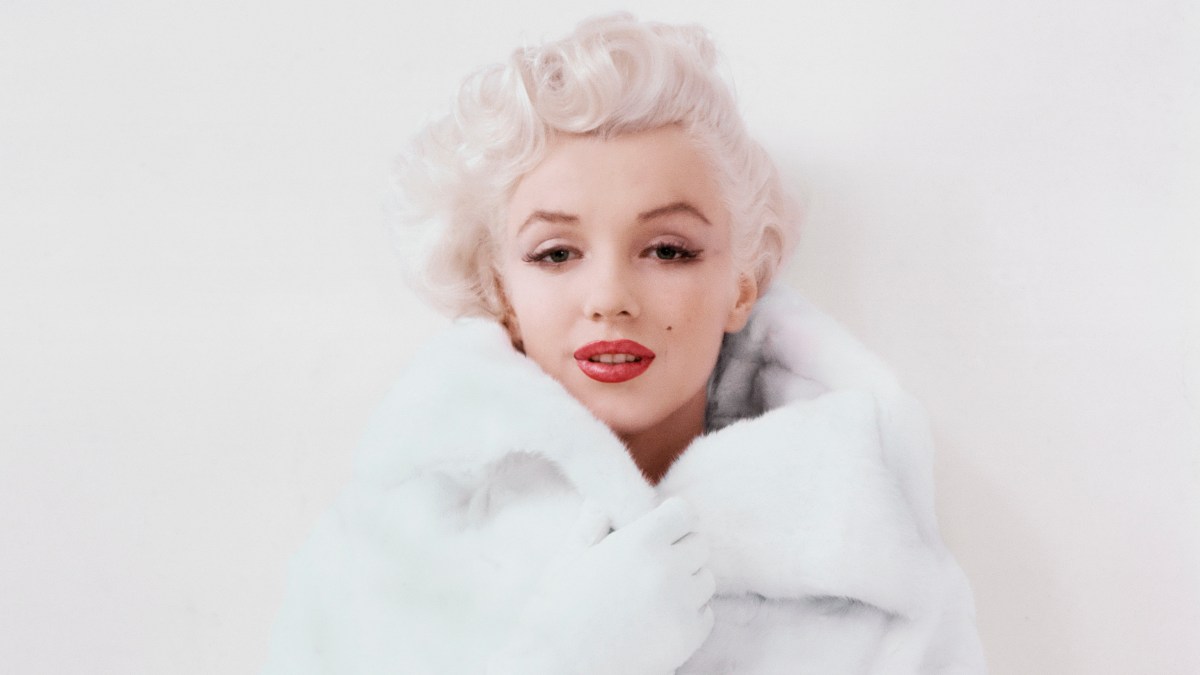
Ghostly voices — of the actress Jane Russell and the celebrated film director John Huston — are sharing secrets from the golden age of Hollywood. They are reminiscing about Marilyn Monroe, the star of Some Like It Hot, Niagara and The Seven Year Itch.
Russell, Monroe’s co-star in the 1953 film Gentlemen Prefer Blondes, remembers how when the cameras began to roll, Monroe underwent a magical transformation. “It was like a whole electric light went on,” she says. Huston, the director of The Misfits (1961), recalls the change he had seen in Monroe over the years since they had first worked together on the 1950 movie The Asphalt Jungle. “She was not the fresh little girl that I’d seen,” he says. “Very soon we were aware that she was a problem. It wasn’t drink, it was the drugs that was the problem.”
These previously unpublished memories — which reflect the star’s dramatic rise and fall — were captured on audiotape by Anthony Summers, the author of Goddess, his 1985 biography of Monroe. Although Summers interviewed more than 650 people, he used only a fraction of the recorded material in his book and in a Netflix documentary broadcast in 2022.
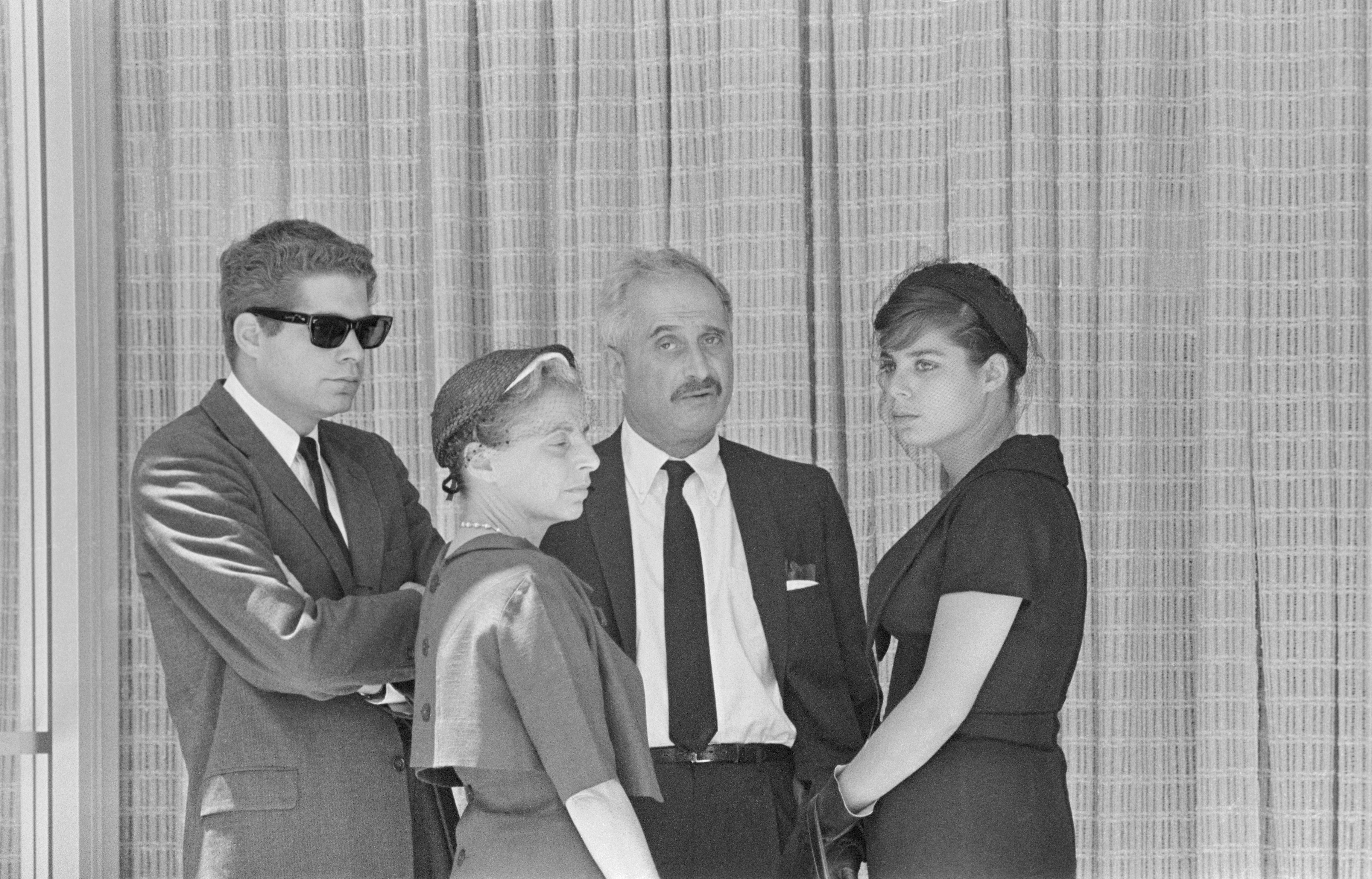
Monroe’s psychiatrist, Dr Greenson, with his wife and children at her funeral in 1962
GETTY IMAGES/BETTMANN
I first encountered Summers four years ago when I interviewed him for Sunday Times Culture about that Netflix show, soon after I had embarked on research for my own biography of Monroe. As I talked to the investigative journalist and author, I wondered about a question posed by the film star herself in her last interview: “How do you go about writing a life story?”
It was especially relevant for Monroe as she is one of the most studied cultural figures of the 20th century, the subject of an estimated 600 books, including biographies by Norman Mailer, Gloria Steinem and Donald Spoto, and featured in novels written by Joyce Carol Oates, Andrew O’Hagan and Lynn Cullen, and the soon-to-be-released Maybe Marilyn by Lois Cahall, a counterfactual novel exploring what might have happened if she hadn’t died in August 1962, aged 36.
Whereas many stars from the golden age of Hollywood have faded, Monroe continues to dazzle and fascinate. With her unique blend of innocence and sexuality, she lights up the screen in classics such as Some Like It Hot, which is often ranked as the best film comedy. There’s also something incredibly modern about her, and she has the ability to reach new generations of fans. She was one of the first stars to talk about the impact of child sexual abuse — this is back in the 1950s when it was still a taboo subject — and she had very public battles with addiction and mental illness. And the fact that she died at the age of 36 means that she will remain for ever young.
In June it will be the centenary of her birth — an exhibition at the National Portrait Gallery and a season of films at the BFI are among the events to mark it. I always intended my book to come out this year too, but when I began I was daunted and, frankly, sometimes a little terrified. What if I don’t find new material? Will the key people involved talk to me and what will they say? What will I be able to add to the story?
And so it was that I began my tentative search for documents, trawling archives for unpublished letters, diaries and manuscripts. I was fortunate that I met Summers at such an early stage in my research. He not only agreed to give me remote access to his taped interviews — copies are housed at the Margaret Herrick Library in Los Angeles — but also granted me unrestricted access to his archive, thousands of pages of documents that detail every aspect of Monroe’s short life, many of which had never been published.
The archive proved to be a treasure trove of material, particularly the files of Dr Ralph Greenson, Monroe’s last — and most influential — psychiatrist and psychoanalyst. Monroe started therapy with Greenson in February 1960 and saw him for daily sessions until her death two years later. Summers was given permission by Greenson’s widow, Hildi, to transcribe material from her husband’s files, documents that give an unprecedented insight into the troubled star.
• Marilyn Monroe: how Hollywood’s darling turned into a pill-popping mess
“The situation with her husband [the playwright Arthur Miller] has worsened again,” Greenson wrote to Dr Marianne Kris, Monroe’s therapist in New York, in October 1960. According to Greenson, the marriage broke down because of a fundamental sexual incompatibility. “He [Miller] suffered from feelings of inadequacy and she from frigidity… [Monroe] found it difficult to sustain a series of orgasms with the same individual.”
There were many reasons why her marriage to Miller imploded. She told Greenson that she felt “disappointment” and “resentment” when Miller did not support her in her work. Her addiction issues made it hard for Miller to cope with her. And Monroe’s affair in 1960 with her co-star Yves Montand on the set of Let’s Make Love also contributed. “The self-destruction [of Monroe] was terrifying, and certainly it was beyond me to master it,” Miller told his biographer. “I could never do it, but I doubt that anybody could have.”
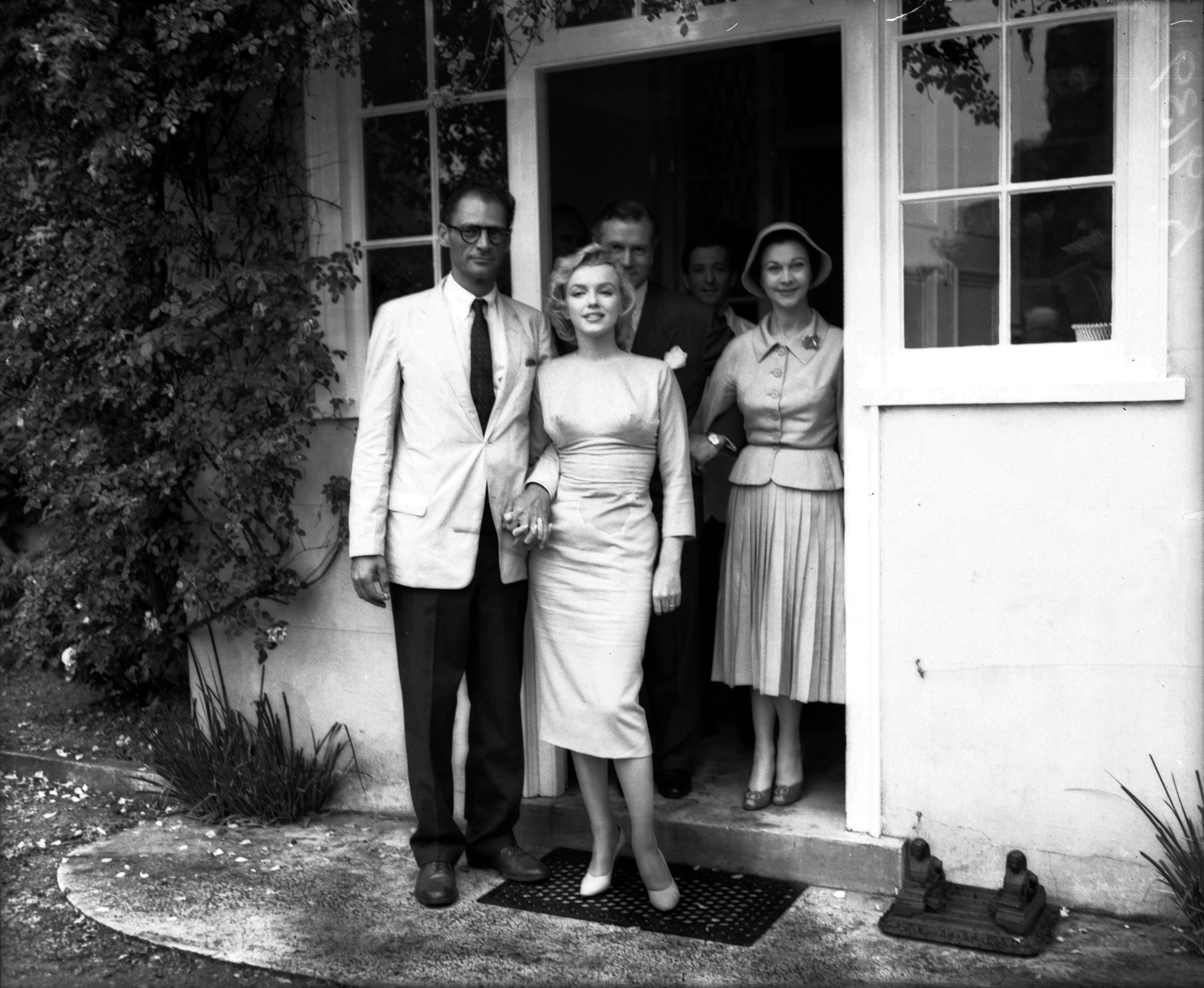
With Arthur Miller and Laurence Olivier and Vivien Leigh in July 1956
ROBERT LITTLE
Greenson also told Kris of Monroe’s mental collapse on the set of The Misfits, for which Miller had written the screenplay, and how the actress had been locked up in a psychiatric ward, during which time the medical team had tried to wean her off barbiturates. Monroe suffered, he said, from a dangerous combination of “depressive reactions” and “impulse desires”.
When conventional psychoanalysis failed, Greenson took the unorthodox decision to embrace Monroe within his own family circle. The actress had never had a family of her own: born illegitimate, she never knew her father; her mother, Gladys, was diagnosed as schizophrenic and during her time in institutions was forced to place her daughter in the care of foster families and orphanages.
• Blonde review — Marilyn Monroe biopic is a difficult but rewarding watch
After a therapy session, the doctor encouraged his famous patient to socialise with his wife and two adult children, Joan, studying art, and Danny, a medical student and later a psychiatrist. When Danny first heard that his father was treating Monroe he assumed she would be just another “spoilt rich bitch” — he had seen enough of his dad’s Beverly Hills clientele — but as he got to know her, his opinion changed.
“Although Marilyn was uneducated and unsophisticated, her instincts were always with the underdog,” Danny said in a previously unpublished interview with Summers. “She wasn’t at all like a typical Hollywood person. I never saw her in make-up — the only time I could have seen her like that was when she was in her casket. She seemed very nice, very warm, very genuine, and slightly hysterical, but that seemed to be the real her.”
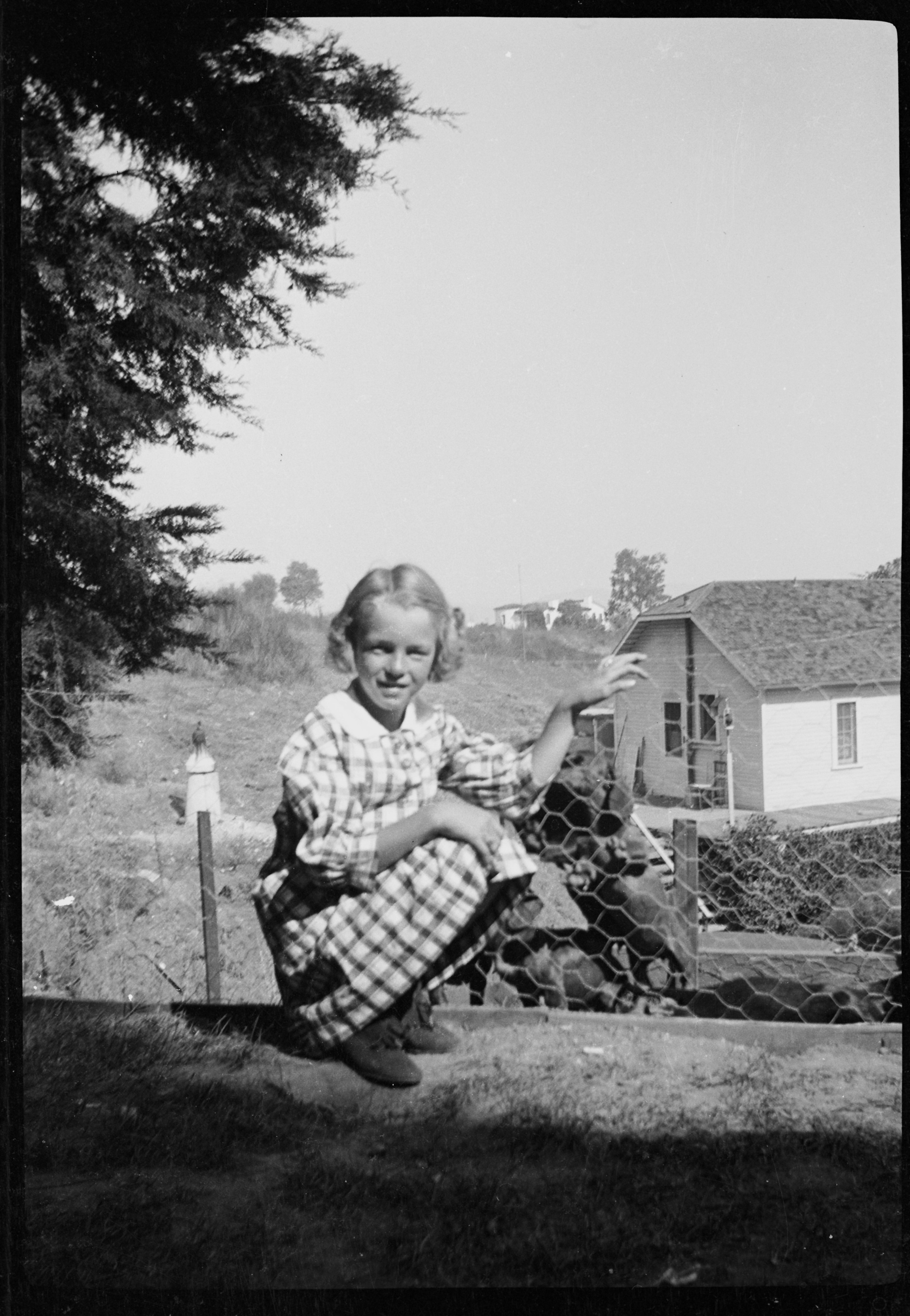
As a child, c 1933
SILVER SCREEN COLLECTION/HULTON ARCHIVE/GETTY IMAGES
As I continued to work my way through the audiotapes, I also sought out other archival sources, mostly from American university libraries. I came across some real gems, documents that cast new light on Monroe. I read my way through the unpublished memoir of Natasha Lytess, Monroe’s acting coach between 1948 and 1956, before Monroe abandoned her for the Method as taught by Lee and Paula Strasberg, an acting technique that deploys the actor’s own memories and psyche.
The manuscript, held by the Harry Ransom Center at the University of Texas at Austin, tells of the extraordinary bond between the two women: at one point Monroe and Lytess even shared a house together on North Harper Avenue in West Hollywood. Lytess saw her protégée as something of a “veiled woman” — when Monroe was being particularly guarded “she would weave her right hand back and forth like a serpent dancing in the air”. I also wanted to get to the bottom of the rumour that Monroe had relationships with women, including Lytess.
• How I tried to crack the mystery of Marilyn Monroe’s death
The more I researched, the more I uncovered things that surprised — and sometimes moved — me. Discovered in Monroe’s possessions after her death was an unfinished letter she had written to her second husband, the baseball star Joe DiMaggio, in which she states: “If I can only succeed in making you happy, I will have succeeded in the biggest and most difficult thing there is — that is, to make one person completely happy.” Although the 1954 marriage lasted only nine months, we know the two remained friends until the end.
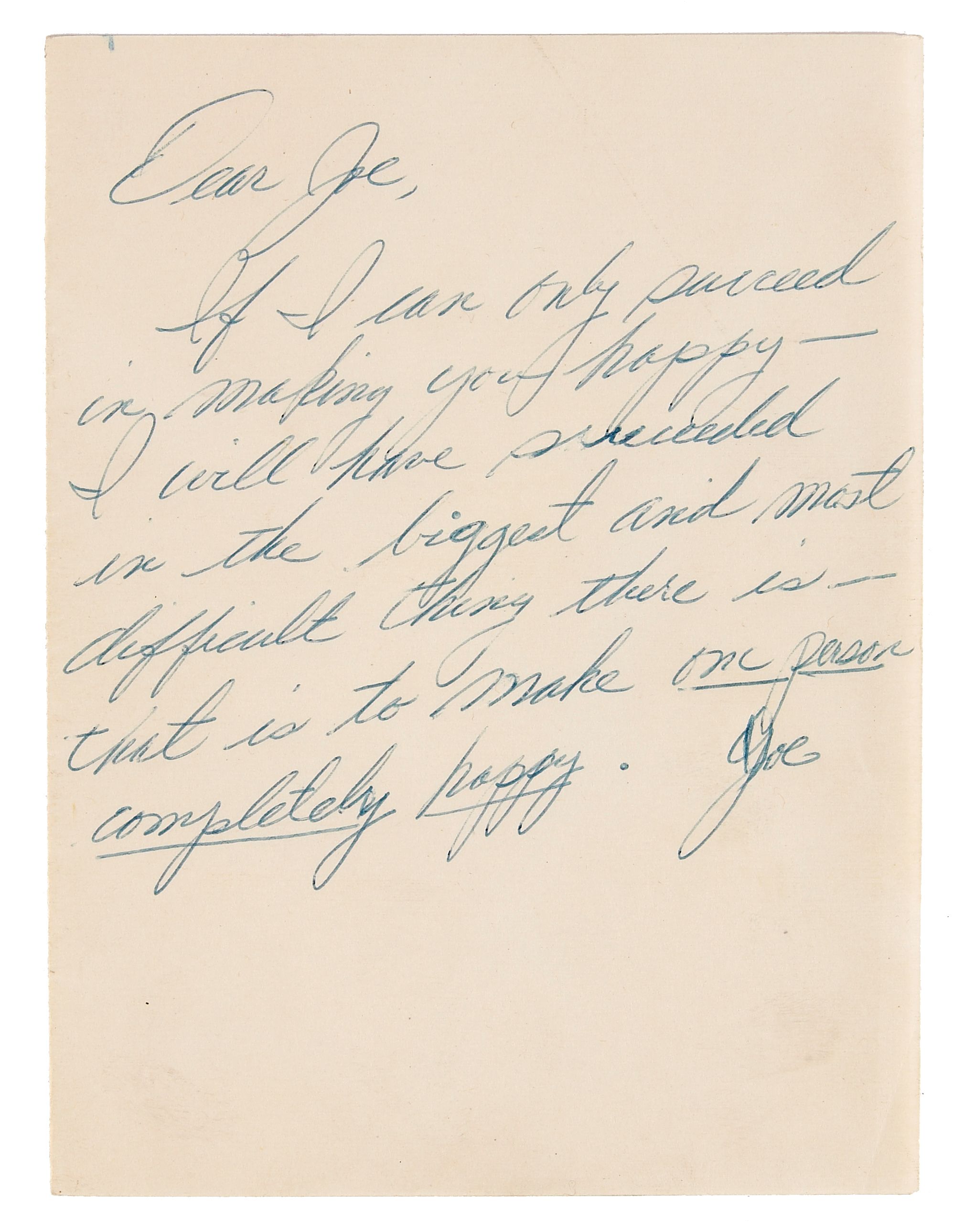
A letter Monroe wrote to Joe DiMaggio, c 1962
I learnt how Monroe had undergone a week of therapy with Anna Freud, Sigmund’s daughter, while in London filming The Prince and the Showgirl during the summer of 1956. Although it’s difficult to know exactly what was discussed, by the end of the week Freud had diagnosed the actress as suffering from “emotional instability, exaggerated impulsiveness, constant need for external approval, inability to be alone, tendency to depression in case of rejection, paranoid with schizophrenic elements”. That sentence from Freud’s notes sparked my imagination and inspired me to write a play about the encounter, which is ready to send out to theatres and producers.
I investigated the family history of the star, whose birth name was Norma Jeane Mortenson. Her maternal grandfather, Otis Monroe, suffered from mental illness; her maternal grandmother, Della, was diagnosed as having manic-depressive psychosis and died of a heart attack in August 1927 when Norma Jeane was just one. And her mother, Gladys, suffered from delusions and hallucinations. Norma Jeane’s foster mother, Ida Bolender, always believed that her charge came from what she described as “bad blood”. There is evidence that mental illness can be inherited, but was something else lurking under the surface? Gladys told her elder daughter, Berniece — Monroe’s half-sister — that Otis had died from paint poisoning. In fact, Otis suffered from general paresis, a form of neurosyphilis. It’s possible that Otis passed on the venereal disease to Della, who in turn could have passed it on to Gladys.
In addition to following the paper trail, I was keen to talk to as many people still alive who knew Monroe. Since the star had been born 100 years ago, I knew the chances were slim. But after mentioning the biography to a friend, the broadcaster Matthew Sweet, he introduced me to Angela Allen, who worked as the script supervisor — then known as the “continuity girl” — on The Misfits. Now 97, and living in London, she was as bright as a tack. However, her brutal view of the star took me aback.
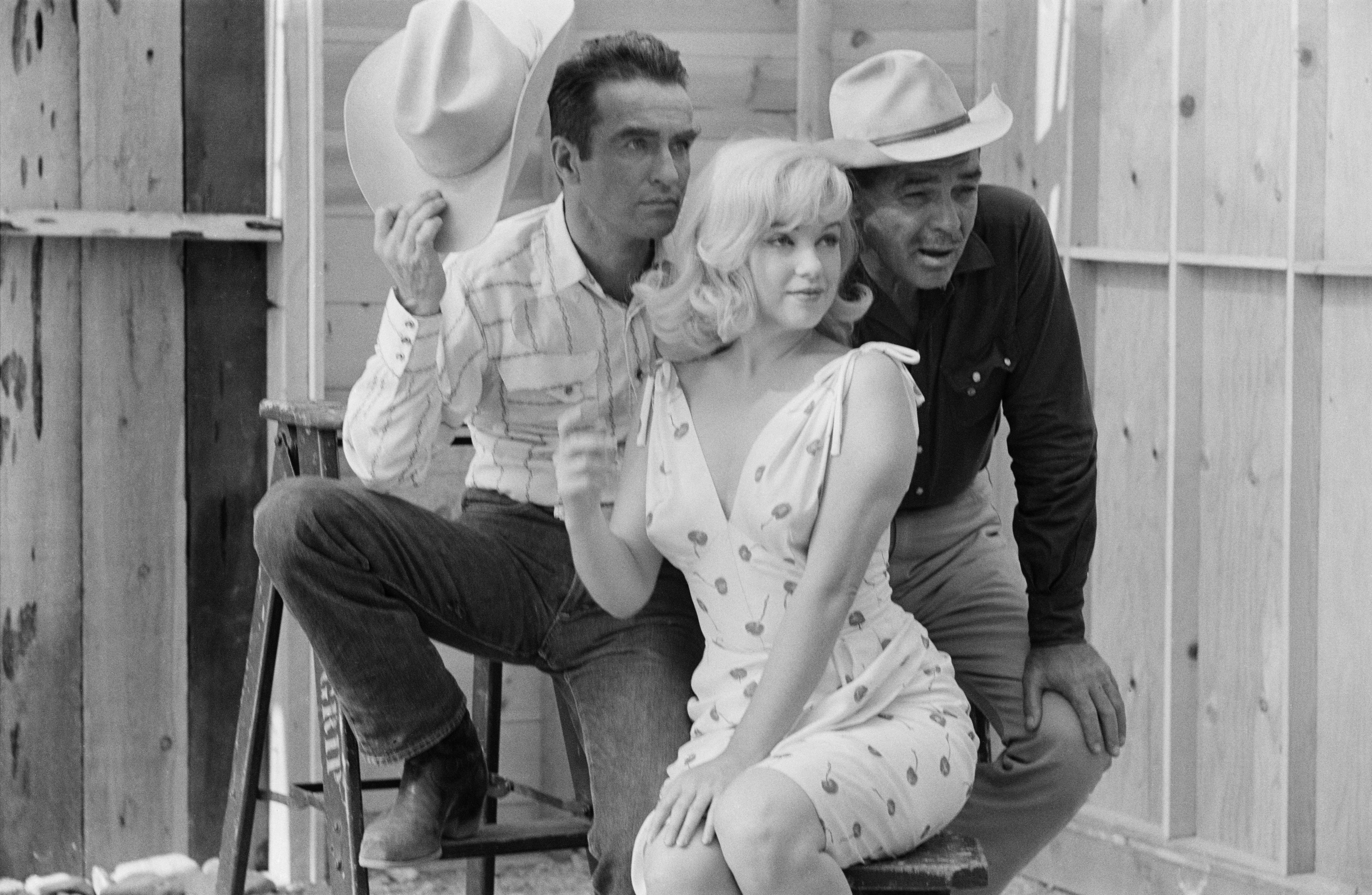
With Montgomery Clift and Clark Gable making The Misfits, 1960
ERNST HAAS/GETTY IMAGES
• On Marilyn Monroe by Richard Barrios review: it’s not about her body
“It was a very difficult shoot, and one didn’t quite realise it at the time, but we were watching the disintegration of a marriage,” she said. Indeed, Monroe and Miller divorced soon after filming finished. “One day she was being particularly bitchy. It turned out that she had accused me of having an affair with Arthur. I never confronted Marilyn about the false rumour. She had this obsession about being nude — she never wore any underwear. And I can tell you that in that sort of heat [it was filmed in Nevada], I’m glad that I wasn’t the wardrobe woman having to deal with her clothes.”
It was important for me not to paint Monroe as merely a victim, as has been the case with some biographies and biopics, such as the 2022 film Blonde, starring Ana de Armas. Monroe had, as we now say, agency; she was a survivor in a tough business, and, in 1955, was one of the first women in Hollywood to set up her own production company.
I was also keen to dispel the many myths that have built up around the star, particularly those surrounding her mysterious death. I was thrilled when I discovered a stash of documents housed in an American university library that show how, in the mid-Sixties, a shady network of right-wing individuals manufactured a conspiracy theory linking Robert Kennedy, then the attorney general, to Monroe, with the sole purpose of discrediting him. This research goes some way to prove that Monroe was not murdered by the Kennedys, as many still believe.
But there is more — much more — to Monroe than her death. My aim is to reflect her in all her dazzling complexity, which is one of the reasons why the book is written not as a simple birth-to-death narrative but in 100 “takes”. “Whichever way she died,” said the journalist WJ Weatherby, who interviewed Monroe a number of times, “there were always murderers in her life, trying to kill off 999 of her selves and leave her as a dumb blonde. They do the same today with her memory.”
It’s my aim to do the opposite.
What is your favourite Marilyn Monroe film? Let us know in the comments below
I Wanna Be Loved By You by Andrew Wilson (Simon & Schuster £25). To order a copy go to timesbookshop.co.uk. Free UK standard P&P on orders over £25. Special discount available for Times+ members. Marilyn Monroe: A Portrait runs at the National Portrait Gallery, London, Jun 4-Sep 6; npg.org.uk. Andrew Wilson will be giving talks about Monroe at the NPG and the BFI