
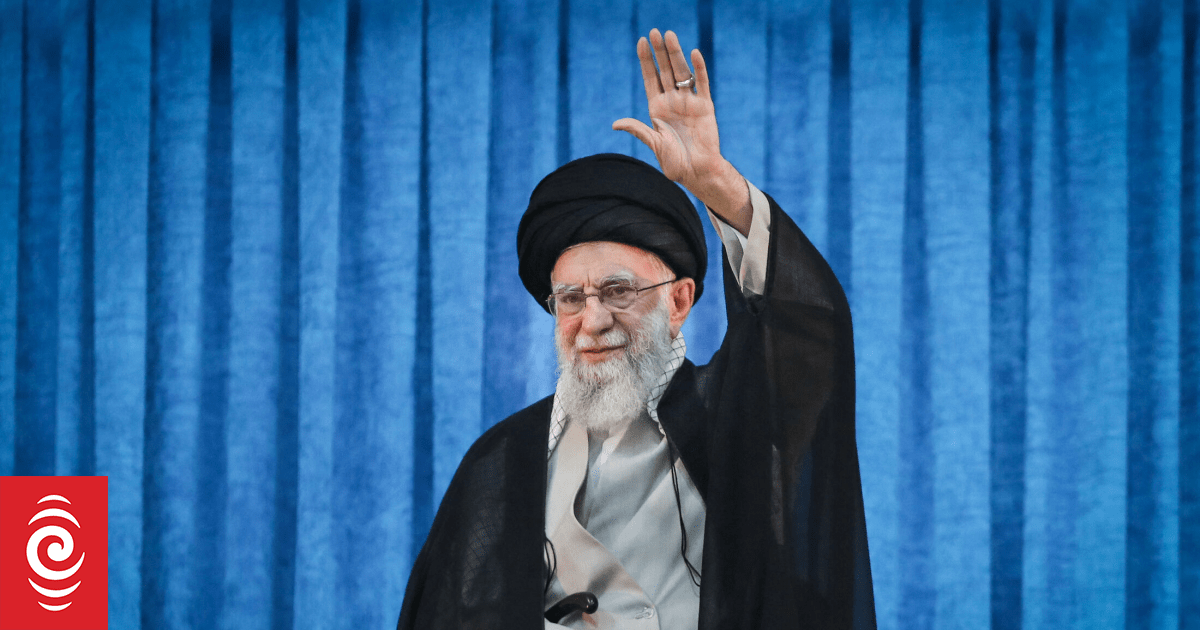
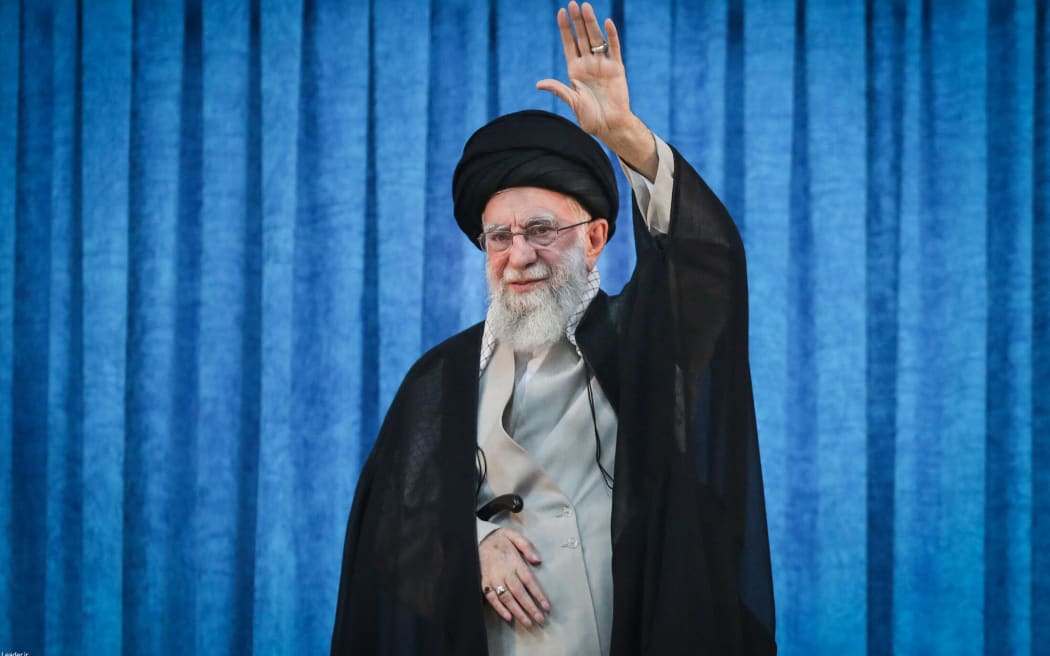
Iranian supreme leader Ayatollah Ali Khamenei.
Photo: AFP
By Stephen Collinson, CNN
Analysis: President Donald Trump placed a huge wager by launching a massive air assault on Iran, despite doing little to prepare Americans for a new Middle East war with immense risks and years of future consequences.
The death of Iranian Supreme Leader Ayatollah Ali Khamenei opens up a scenario in which Tehran’s brutal Islamist regime is overthrown, ending decades of repression that saw thousands of civilians gunned down in the streets in December and January.
“This is the single greatest chance for the Iranian people to take back their Country,” Trump wrote on Truth Social, after backing up earlier Israeli reports that Khamenei – whom he described as “one of the most evil people in history” – was killed in an air strike.
The demise of Khamenei – the successor to Ayatollah Ruhollah Khomeini, the instigator of the 1979 Iranian revolution – was confirmed by Iranian state media and is a seismic political event in Iranian history. It threatens the grip on power of hardline Islamists, who turned Iran into a ruthless theocratic dictatorship.
It also adds urgency to one of the most critical questions raised by Trump’s assault – would the removal of top leaders unleash a torrent of institutional reform or set off uncontrollable political forces that would deepen repression and tear the country apart?
Trump told NBC the attacks had “inflicted tremendous damage”.
“At some point, they’ll be calling me to ask who I’d like [as leader],” Trump said, adding: “I’m only being a little sarcastic when I say that.”
No-one needs reminding of the treacherous possibilities of foreign wars that begin with ‘shock-and-awe’ violence, but can unravel disastrously.
Many will view Trump’s impulsive attack as a reckless, imperial error. His critics in Congress are already slamming what they see as a unilateral, illegal and unconstitutional war that makes a mockery of democracy.
Iranian counterattacks against US allies in Bahrain and Qatar – and the sight of an Iranian drone crashing into a luxury hotel in a tourist area of Dubai – underscored the potential for his bet to spiral out of control, but while the Middle East usually destroys the preconceptions of outsiders, history may eventually remember Trump as the saviour of Iranians.
The combined US-Israeli attack launched from Israel and a vast US naval armada early Saturday is the most significant twist in a bitter 47-year showdown with the Islamic clerical regime. It seems to end Trump’s diplomatic quest for a deal with Iran that now looks like a ruse, as a fearsome US force gathered.
Trump’s fleeting public arguments before the strikes were incomplete and self-contradictory. For instance, he insisted that he’d already “obliterated” Iran’s nuclear facilities, which formed a key rationale for Saturday’s attack.
His claims that the nuclear programme and long-range missiles posed an immediate risk to the United States are overblown and contradict US intelligence assessments reported by CNN. The president even seemed to admit publicly that the threats were not so imminent as to justify immediate US action.
“We’re doing this not for now, we’re doing this for the future,” Trump said in a video released from his Mar-a-Lago resort in Florida early Saturday.
This is now another American operation based on questionable claims of immediate national security peril. In this, it recalls the war waged on false pretenses in Iraq that destroyed President George W Bush’s second term.
It will alienate Trump from sectors of his own MAGA movement.
“It’s always a lie and it’s always America Last,” former ally Marjorie Taylor Greene wrote on X. “But it feels like the worst betrayal this time, because it comes from the very man and the admin who we all believed was different and said no more.”
The opening Trump saw and past presidents lacked
If Trump’s decision ‘casus belli’ was impulsive, its broader rationale was familiar.
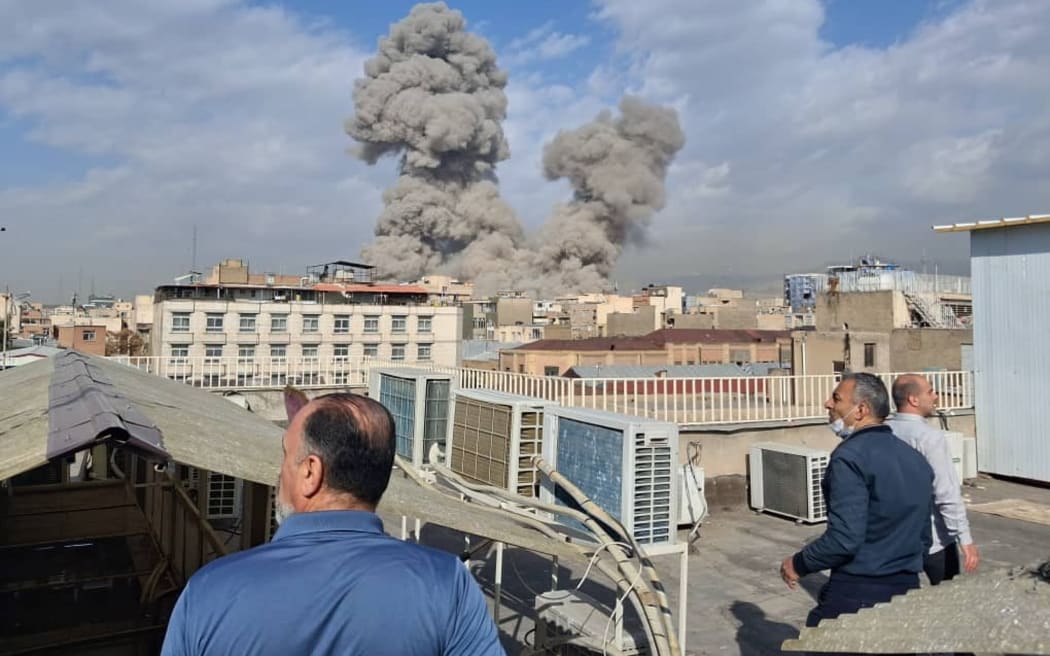
People watch as smoke rises on the skyline after an explosion in Tehran.
Photo: AP via CNN Newsource
The US and its allies have long tried to thwart Iran’s push toward nuclear weapons. They’ve also been fixated on its long-range missiles and a proxy terror network that made it a pernicious regional power, but if a crisis point had not been reached, why did Trump act now?
The new dimension in the US-Iran standoff is the weakness of the Tehran regime, which created an opening the US and Israel might rue missing, if they didn’t act.
Iran has been locked in worsening political turmoil. Khamenei’s succession process has been opaque.
Iranians are hungry and desperate, after decades of iron-fist repression. The economy is splintered by international sanctions and disruption to the most basic services, such as food and water distribution.
Israeli attacks have pummeled regional proxies like Hamas and Hezbollah that were once an insurance policy against US and Israel action.
Although Iran launched frightening counterattacks by firing missiles against Israel and US allies in the Gulf, the potential costs of a US effort to destroy the regime are perhaps lower now than they have ever been.
When Trump called on Iranians to revolt against their government in his message, he was trying to leverage these political factors to catalyse change.
“The factor that clearly seems to have changed is the level of hatred that people of Iran have for the regime, given the massacre that happened back in January,” said Alex Vatanka, a senior fellow at the Middle East Institute.
“If you’re sitting in the White House or if you’re sitting in Jerusalem, you look at this as a window of opportunity. The regime is weak.
“It’s not just the sanctions… it’s the fact that they did what they did and kept massacring their own people, and so that creates a window of opportunity.”
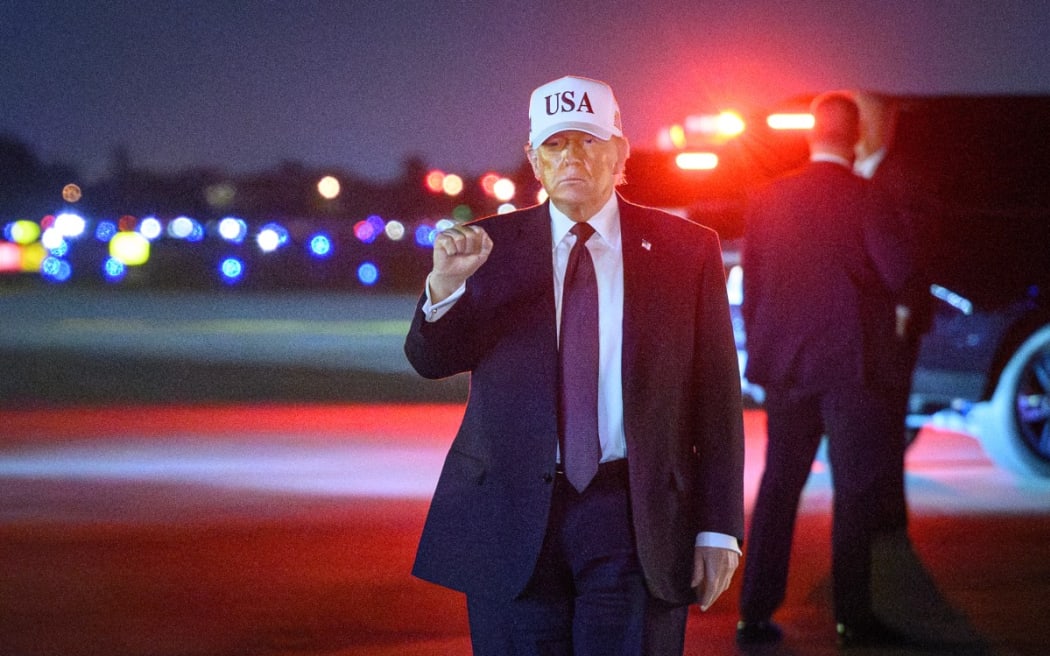
US President Donald Trump gestures as he arrives at Palm Beach International Airport, Florida
Photo: AFP/ Mandel Ngan
The president also needed to rescue himself. His repeated warnings that the US would protect protesters in Iran during the recent uprising meant that a failure to act risked deepening Tehran’s repression and shattering his own credibility.
He makes no secret of being motivated by vengeance. He had frequently warned Iran was steeped in the blood of Americans following years of terror attacks and the Tehran-backed militia killings of US soldiers during the occupation of Iraq.
More than most of his modern predecessors, Trump is enthralled by the ruthless application of American military power.
A Commander-in-Chief nearing 80 is also a man in a hurry. The chance to be the president who solved the Iran conundrum that bedeviled every predecessor since Jimmy Carter must have been tantalising, but his hubris will leave his legacy condemned by history, if he’s made a bad bet.
Consequences could linger for years
Trump has not just committed the United States to toppling a foreign government. He’s trying to end a revolution – a process that he will struggle to influence, especially in the absence of US ground troops.
Senator Jack Reed, the top Democrat on the Armed Services Committee, warned of “consequences that will outlast this presidency”.
“Against the clear wishes of the American people, President Trump has thrust our nation into a major war with Iran – one he never made a case for, never sought congressional authority for and for which he has no endgame,” Reed said.
Several key factors will shape the conflict in the short term.
Will US and Israeli strikes succeed in taking out the top level of Iranian leaders?
Now that Khamenei is dead, will Iranians heed Trump’s call to take to the streets, take over their country and end the Islamic Revolution’s stranglehold?
The possibility of a regional conflagration remains acute, but do Iran’s initial reprisals – which were alarming, but limited – betray diminished capability or a desire to keep options in reserve?
Eyes will soon turn to Trump’s staying power. The president prizes quick wins – he is adept at tearing things down, but has shown less capacity for building something in their place.
He told Axios on Saturday, that he was ready to stay the course if necessary.
“I can go long and take over the whole thing, or end it in 2-3 days and tell the Iranians, ‘See you again in a few years, if you start rebuilding [nuclear facilities]’.”
The domestic response to Trump’s move will also be important. He’s saddled with his worst-ever approval ratings before November’s midterm elections.
Polls show that majorities of Americans believe he doesn’t share their priorities.
What could go wrong?
The best day for the United States in recent wars – in Afghanistan and Iraq, for instance – has come early in a conflict where the massive, overwhelming advantage of US military force looks decisive.
Even if its regime is overthrown and top leaders are killed, a transition to a democratic, non-threatening Iran may still be a pipedream.
If the authority of central government breaks down, anarchy could erupt. Trump and Israeli Prime Minister Benjamin Netanyahu seem to have calculated this is a worthwhile risk to remove Khamenei, but it could seed decades of regional instability.
“I think the calculus is that, in some sense, stars have aligned with regard to the weakness of the regime internally – the kind of battle that it’s facing domestically, plus its regional defeats and its reduced capacity for retaliation,” said Ian Lesser, a distinguished fellow at the German Marshall Fund of the United States.
“Now, all of that may not add up to a change in the regime. This is a strong and, in some ways, resilient country, but what is the risk?”
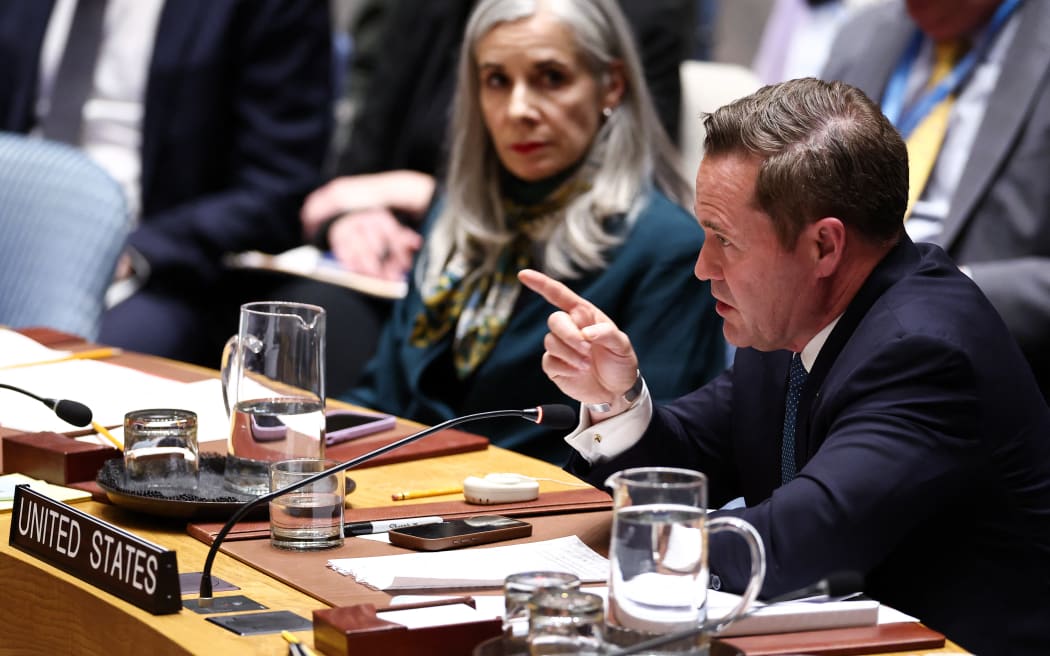
US National Security Advisor Mike Waltz addresses the Iranian delegation during a United Nations Security Council meeting.
Photo: CHARLY TRIBALLEAU
While Lesser said there was little chance of a regime worse than the current one, the danger persisted that Trump’s operation was “inconclusive, and that the regime strikes out in ways that may only manifest themselves months and years to come, in terms of support for proxies, in terms of support for state-sponsored terrorism in the West generally”.
Another danger – seen as the most likely scenario by US intelligence assessments cited by CNN – is that the clerical regime could simply be replaced by equally hardline remnants of the Islamic Revolutionary Guard Corps. A classic strongman Middle East government might mean imminent threats to the US or Israel, but it would fall far short of the popular awakening Trump hopes for.
The worst-case scenario is a disintegration of central control in Tehran over major cities, leading to armed factions creating rival fiefdoms that pose a serious risk of civil war and national fracturing. Refugee crises could follow and destabilise the region for years to come.
There’s little in Trump’s mindset or conduct that suggests he’s got the depth or staying power for such an outcome.
Still, some Republicans are adamant the US will not get sucked into another long-term conflict that would strain American resources and the public’s will.
“I don’t know why anybody would say this is going to be a forever war – I think it’s going to be pretty short,” Texas Senator John Cornyn told CNN.
Iran has a much simpler goal than Trump – an outcome that ends with the current regime in place equals victory.
“Iran has prepared itself for a long war,” an Iranian source with knowledge of the country’s military strategy told CNN’s Frederik Pleitgen.
It’s too early to predict a quagmire, but this new war already has its defining irony. Trump, who rose to power on a tide of angst over foreign wars, is now the latest president to willingly plunge into a new Middle East conflict.
“He has so much respect for American force, but that’s just part of the equation,” Vatanka said. “American force without any strategic objective in mind is essentially useless.
“You can just blow up anything you want, but doesn’t mean much. That doesn’t mean you’re going to end up with a better product.”
– CNN