
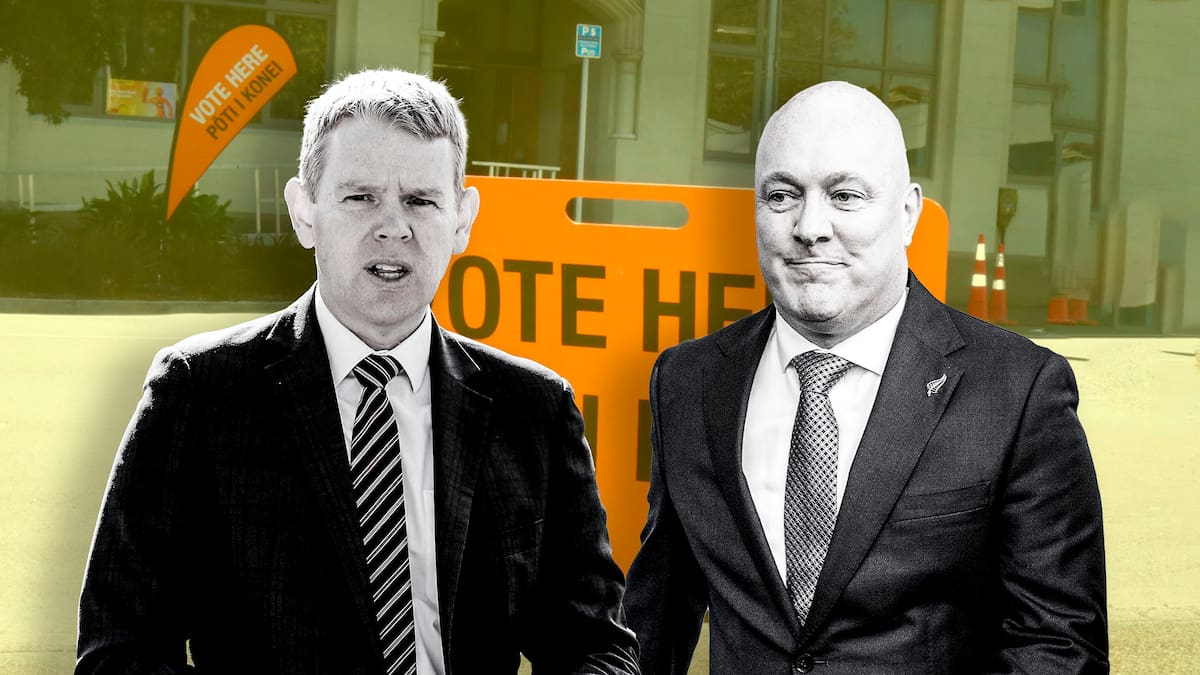
Unfortunately for Willis, it seems New Zealanders prefer a “lump of jelly” from “Chris – No Idea – Hipkins” to her party’s offerings.
While the National Party has made gains in the latest Ipsos Issues Monitor, voters clearly favour Labour on nearly every issue. That includes on the cost of living, by far the biggest issue for New Zealanders.
From education to race relations to transport, Labour is perceived by the public as more capable or equally capable on 15 of the 20 issues included.
In comparison, voters trust National on just three. It’s tied with Labour on the economy, while it leads on crime and defence/foreign affairs (though the latter is the least important surveyed issue, mentioned by just 2% of New Zealanders).
Trailing Labour, including on the cost-of-living, is an unfortunate position for National to be in at the start of an election year. Especially for a party that presents itself, rightly or wrongly, as the party of the economy.
Despite all the talk from Christopher Luxon about the economic mismanagement he claims Labour committed while in the Beehive, including the high inflation ministers attribute to the spending of the Ardern regime, New Zealanders still back the red team.
Kiwis back the Labour Party over the National Party on many key issues, according to these results. Photo / Mark Mitchell
The question is why, when there are some genuinely positive economic indicators, including higher business confidence and lower interest rates, the Government’s major party can’t capitalise.
Possibly it is a lack of confidence or trust in the people communicating that economic narrative for National. Luxon’s preferred Prime Minister rating has been consistently mediocre, but it’s not as if Hipkins’ is far superior.
Alternatively, maybe New Zealanders realise that despite the Government tying itself to lower inflation and mortgage rates, the Reserve Bank pulls the most powerful levers there.
Luxon was right this morning when he said New Zealanders are still hurting from the inflation “baked into” prices.
He acknowledged many Kiwis continue to experience tough times and even though he could rattle off some of those positive indicators, he said some people “still need to feel it”.
The trouble is the runway for Kiwis to start to “feel” the economic recovery is running out.
Willis’ description of New Zealanders as being “impatient” for expecting the Government to quickly turn the economy around won’t help.
While there is truth in what she is saying – the economy was never going to return to rock star status overnight – that may be the impression National gave voters at the last election.
National’s “Rebuilding the economy” 2023 election plan included “100 actions to end the cost-of-living crisis”. Not just soften the blow of rising prices, but to “end” the crisis.
The party so firmly stressed its economic credentials and plan to turn around the country that when it came to office, forgive the New Zealanders who actually expected that.
Finance Minister Nicola Willis said New Zealanders were “impatient”. Photo / Michael Craig
One piece of data in this latest release that may be heartening for the National strategists is the falling proportion of survey respondents choosing “none” when asked which party is best to manage certain issues.
The fact the “none” option has “significantly decreased” on the cost-of-living issue at the same time National has gained some ground may indicate some undecided voters are breaking towards the blue team.
That is where there is a warning here for Labour as well.
The tightening race on the cost-of-living issue means Labour can’t be complacent in its current position and hope to sit back and just watch the Government self-combust.
There is clearly some competition for Kiwis’ votes on economic issues.
Labour holding to a strategy of not saying or proposing much is unlikely to inspire any new support in a heated election campaign, though the party has promised more policy after the Budget.
Labour also, for all of its success in these survey results, still – on most polls – would struggle to form a Government.
While that could be somewhat attributed to needing more support from its coalition partners – particularly Te Pāti Māori – the party needs to do more to convert the confidence many New Zealanders have in its ability to manage issues into actual support at the ballot box.
Labour Leader Chris Hipkins delivered his State of the Nation address last week. Photo / Michael Craig
It’s unsurprising that these Ipsos results reinforce the conclusion that the election will be won or lost on parties’ cost-of-living initiatives.
As its own issue, the cost of living isn’t just the most important issue for New Zealanders, but it is by a country mile. The survey showed 59% of New Zealanders mentioned it as an issue. The second-biggest issue was health, but further back on 38%.
Popping into the top 10 issues for New Zealanders in this survey was petrol prices, now a concern for 9%.
This may become even more of a concern for New Zealanders, following the United States and Israeli strikes on Iran over the weekend.
Disruption to the Strait of Hormuz, through which millions of barrels of oil flow per day, could have implications for the price at the pump here.
Another issue that grew in prominence this round is immigration. It rose four spots to now be just outside the top 10 in terms of Kiwis’ most important issues.
While that may be a reflection of how much it’s been in the headlines recently – you can thank NZ First for that – don’t expect the major parties to quickly pivot to address it.
Ultimately, only 8% of New Zealanders mentioned it as an issue.
That may be large enough for a smaller party like NZ First to want a chunk of, but the divide between it and the cost of living shows where National and Labour’s focus will be.
Jamie Ensor is the NZ Herald’s chief political reporter, based in the press gallery at Parliament. He was previously a TV reporter and digital producer in the Newshub press gallery office. He was a finalist in 2025 for Political Journalist of the Year at the Voyager Media Awards.