
In a weekend marked by both triumph and turbulence for California’s commercial space sector, two rocket launches from Vandenberg Space Force Base captured the attention of space enthusiasts and industry watchers alike. As SpaceX celebrated yet another successful deployment of its Starlink satellites in the early hours of March 1, Firefly Aerospace was forced to scrub its much-anticipated Alpha rocket launch later that same day due to high winds, underscoring both the reliability and unpredictability of spaceflight on the West Coast.
SpaceX’s Falcon 9 rocket lit up the pre-dawn skies above central California at exactly 2:10:39 a.m. PST (5:10:39 a.m. EST / 10:10:39 UTC), as reported by Spaceflight Now. The mission, designated Starlink 17-23, carried 25 Starlink V2 Mini satellites intended to further expand the company’s ambitious global internet constellation. The rocket’s southerly trajectory took it over the Pacific Ocean, where the well-traveled Falcon 9 booster B1082 was tasked with yet another high-stakes landing.
This particular booster, B1082, has become something of a workhorse for SpaceX. According to Spaceflight Now, the flight marked its 20th journey since its inaugural launch in January 2024, having previously supported missions such as USSF-62, OneWeb Launch 20, NROL-145, and an impressive 15 prior Starlink deliveries. Just over eight minutes after liftoff, B1082 made a textbook landing on the drone ship ‘Of Course I Still Love You,’ stationed in the Pacific. The successful recovery not only demonstrated SpaceX’s growing mastery of reusable rocket technology but also set the stage for future rapid-turnaround missions.
The payload—25 Starlink V2 Mini satellites—was deployed successfully a little over an hour into the mission. This latest batch will help bolster SpaceX’s Starlink internet service, which aims to provide high-speed connectivity to even the most remote corners of the globe. The company’s relentless launch cadence and technical reliability have made it a dominant force in both the commercial and governmental launch markets, with each mission further cementing its reputation.
But while SpaceX was riding high on another flawless mission, Firefly Aerospace was experiencing the flip side of the spaceflight coin. Scheduled for the evening of March 1, Firefly’s ‘Stairway to Seven’ mission was set to mark a major milestone for the Texas-based company. The launch window opened at 7:50 p.m. EST (4:50 p.m. PST; 00:50 GMT on March 2), but hopes were dashed when high winds forced a last-minute scrub. As reported by Space.com, a new target date for the launch has yet to be announced.
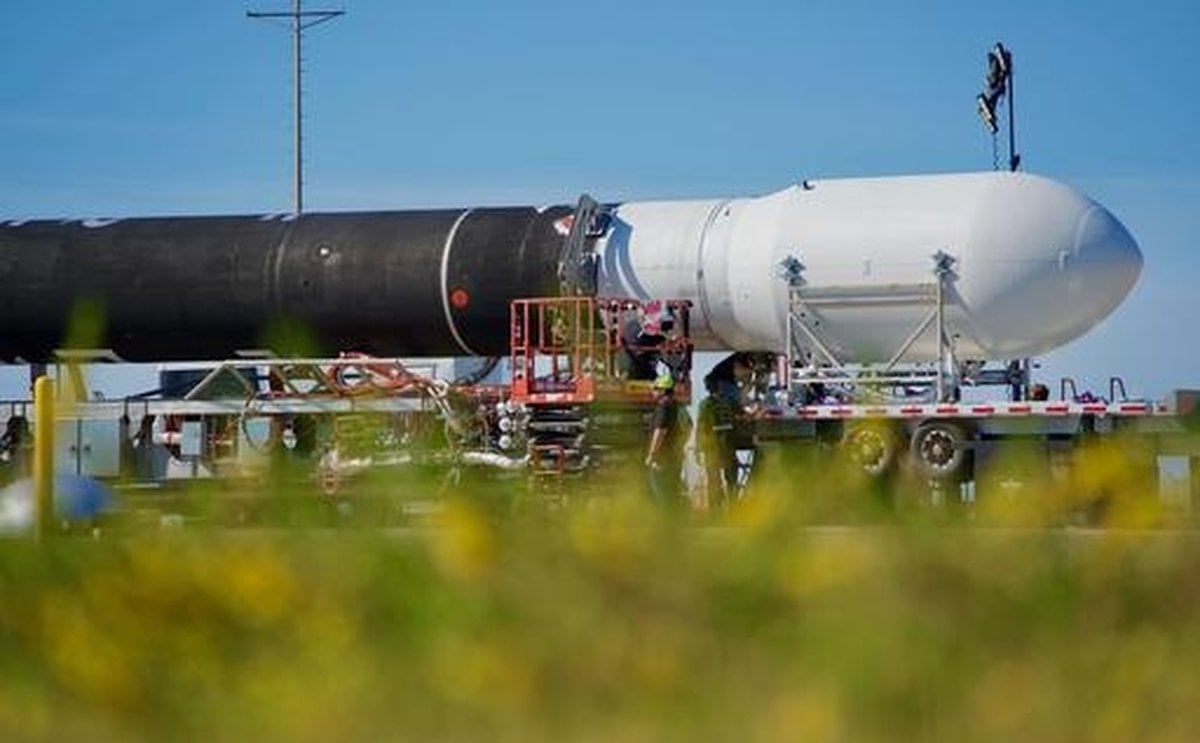
The ‘Stairway to Seven’ mission was to be the seventh flight of Firefly’s two-stage, 96.7-foot-tall (29.6-meter-tall) Alpha rocket. Unlike most commercial launches, this flight was not slated to carry an operational payload. Instead, the mission was designed as a test flight with a primary goal: to achieve nominal first and second stage performance, validating key systems before the company transitions to its upgraded Block II configuration.
Firefly’s journey to this point has been anything but smooth. The company’s previous mission, ‘Message in a Booster,’ launched on April 29, 2025, and carried a prototype satellite for aerospace giant Lockheed Martin. However, things went awry when the first-stage booster broke apart just after stage separation, generating a pressure wave that affected the upper stage’s thrust. The upper stage ran out of propellant shortly before reaching its target orbit, resulting in the loss of the payload. The setback was a stark reminder of the technical challenges that come with developing new launch vehicles.
After a thorough investigation, the U.S. Federal Aviation Administration cleared the Alpha rocket to return to flight on August 26, 2025. Yet, fate threw another curveball just a month later. The booster intended for the ‘Stairway to Seven’ mission exploded during a test at Firefly’s facility in Briggs, Texas, causing further delays and underscoring the unpredictable nature of rocket development.
The ‘Stairway to Seven’ mission, when it does eventually launch, will serve as the final flight of Alpha’s Block I configuration. Firefly has ambitious plans for its next iteration, the Block II upgrade, which is slated for Flight 8. According to Firefly’s mission description, Block II will feature a 7-foot increase in rocket length, consolidated batteries and avionics built in-house, an enhanced thermal protection system, and stronger carbon composite structures fabricated with automated machinery. These improvements are designed to boost both the reliability and manufacturability of the Alpha vehicle, positioning Firefly to compete more aggressively in the small-satellite launch market.
The timing of the ‘Stairway to Seven’ mission carries added significance for Firefly. March 2, 2025, marked the first anniversary of the company’s robotic Blue Ghost lunar lander touching down on the moon—a historic achievement that saw the first private spacecraft complete a lunar surface mission. Blue Ghost operated nominally for two weeks as planned, a testament to Firefly’s capabilities and aspirations beyond low Earth orbit.
While the scrubbed launch was a disappointment for Firefly and its supporters, the company remains undeterred. The test flight’s primary objective is to gather valuable data and validate upgrades that will feed directly into the Block II configuration. As Firefly stated in its mission materials, ‘Flight 7 will test and validate key systems ahead of Firefly’s Block II configuration upgrade on Flight 8 that’s designed to enhance reliability and manufacturability across the vehicle.’
For those watching the broader commercial space race, the events of March 1 serve as a vivid illustration of the sector’s current state: established players like SpaceX continue to rack up successes with clockwork regularity, while emerging competitors like Firefly Aerospace face the daunting realities of rocket development, where progress is often measured in hard-earned lessons and incremental gains.
Yet, the fact that both companies are launching—or attempting to launch—from the same California base within hours of each other is itself remarkable. Vandenberg Space Force Base has become a focal point for U.S. commercial space activity, with its facilities supporting a growing roster of private operators and government missions. Each launch, successful or not, contributes to a rapidly evolving ecosystem that is reshaping humanity’s access to space.
Looking ahead, SpaceX is expected to maintain its rapid-fire launch schedule, continuing to build out the Starlink constellation and support a variety of commercial and governmental clients. Firefly, meanwhile, will regroup and prepare for its rescheduled test flight, with an eye toward proving the reliability of its Alpha rocket and rolling out its Block II upgrades.
In the end, the weekend’s launches from Vandenberg encapsulate the spirit of modern spaceflight—a blend of routine excellence, bold experimentation, and the ever-present risk of the unknown. For the teams at SpaceX and Firefly Aerospace, the journey is far from over. If anything, it’s just getting started.