

Photo: RNZ
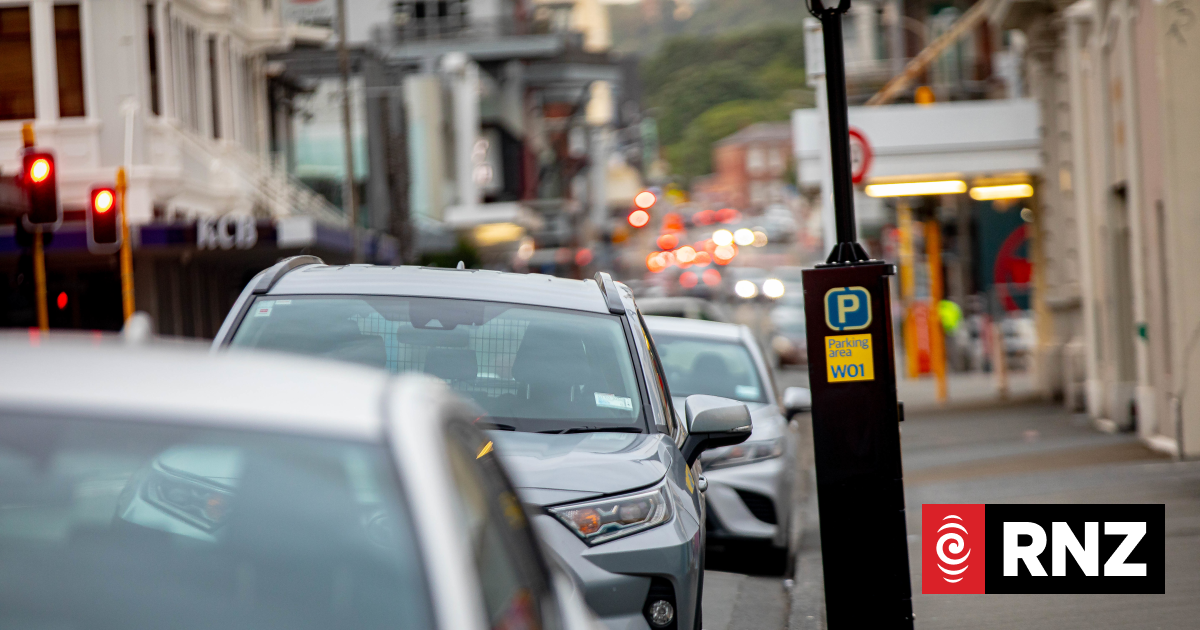
A Wellington business owner is accusing authorities of failing to do their jobs and allowing the owner of car parked illegally on Tory Street to do so on a semi-permanent basis.
The businessman, who RNZ agreed not to identify, said he first noticed the car parked illegally in the time restricted on-street parking spaces about a year ago and it had become a fixture ever since.
“So, a couple of months into it I went, ‘nah, this is not quite right’. I called the council. The council said that they would look into it.
“It’s quite clearly not paying for tickets, and it’s quite clear they didn’t have a warrant or registration. The council was ticketing it every second day. So we’re talking about $400 a ticket, maybe $500 a ticket.”
Metered parks cost $5 per hour between 8am-8pm in Central Wellington and most were limited to 120 minutes 8am-5pm, and 180 minutes from 5-8pm. At the weekend the fee dropped to $3 an hour while most metered parks were limited to 180 minutes 8am-8pm. There was no charge or time limit on public holidays.
Annoyed at losing potential customers because the car park was occupied, the businessman went to the council offices in August in an attempt to meet with someone about the problem, but was asked to leave the building after becoming upset which he apologised for.
He took the issue up with council via email, as instructed.
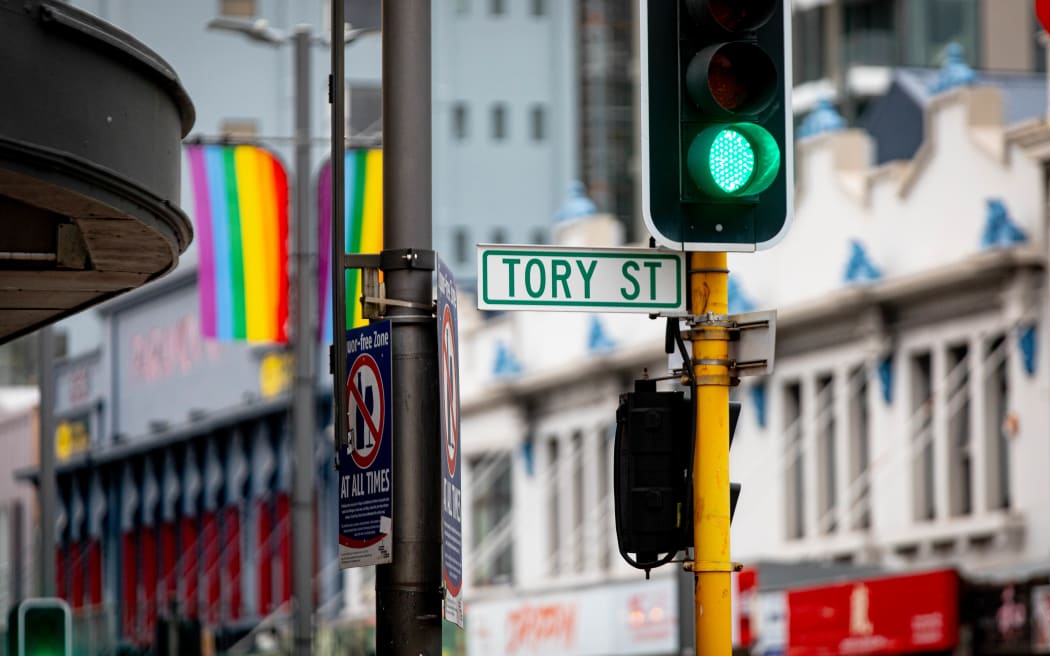
Tory Street, Wellington.
Photo: RNZ
In December, the Office of the Mayor thanked him for bringing the matter to its attention.
“We understand the seriousness of your concerns.
“Please be assured that we have discussed this with officers who have advised the situation is sensitive and is currently being handled by the appropriate authorities, including the police and MOJ (Ministry of Justice).
“We appreciate your patience and cooperation while the process is underway while the police and Ministry of Justice decide the best course of action.”
The businessman replied that he was “at the end of his patience” pointing out that the offending car now appeared not be be getting ticketed at all, and demanded to know if parking officials had been told not to ticket the vehicle.
The Office of the Mayor responded about three hours later.
“We have discussed this with officers and can advise that the parking team have not been instructed to avoid issuing tickets to this vehicle and they will follow up on the points you have raised regarding instances where tickets were not issued.
The office said parking services had been in contact with the Ministry of Justice as a number of outstanding tickets were currently with it for enforcement.
“They have broader enforcement powers than council, including the ability to clamp or seize vehicles,” the Office of the Mayor said.

A number of tickets have been issued for the vehicle.
Photo: RNZ
“MOJ has indicated they will look to act in early to mid-January in relation to this vehicle as unfortunately, based on repeated behaviour from the vehicle owner, standard council measures such as ticketing or towing have not proven effective as a deterrent in this instance.
“I understand this may not be the immediate response you were hoping for. However, in this case, the best approach is to allow the Ministry of Justice and police to determine the appropriate course of action.”
The businessman, who said he owned three businesses in the city centre and paid a combined $17,000 in rates, understood the car owner was a difficult personality but was fed up and wanted the situation resolved.
“This is an issue for the council. I have no issue with the car owner. I have an issue with the council not doing their job.”
In a statement, the Wellington City Council said it was aware of the vehicle and the fact it had been parked in violation of restrictions that applied in the Tory Street area of the city.
“We can confirm the vehicle has been ticketed on multiple occasions.”
Council said parking wardens were only able to get a vehicle towed if they believed, on reasonable grounds, the vehicle was causing an obstruction, or removal was desirable in the interests of road safety or for the convenience or in the interests of the public.
“The vehicle concerned has been towed on several occasions, however council does not have the legal power to clamp, impound, or otherwise hold the vehicle. Council will continue to enforce this vehicle within the powers that it has at its disposal.
“A number of tickets issued to this vehicle remain unpaid and have been lodged with the Ministry of Justice for collection, who do have the legal powers to clamp, impound and dispose of the vehicle to allow for the full or partial recovery of unpaid fines.”

The tickets issues remain unpaid.
Photo: RNZ
The WCC said questions about how many tickets had been issued to this vehicle, over what timeframe and amounting to how much in dollar terms would required a Local Government Official Information Act request.
RNZ has been unable to determine what, if any, enforcement actions are being taken beyond what the council has done already.
Police said they had no information indicating they were involved with the vehicle and pointed out parking was a Wellington City Council matter.
Ministry of Justice group manager national service delivery, Tracey Baguley, said the ministry couldn’t comment on the infringements issued in this case, as these were issued by the Wellington City Council and questions should be referred to it.
“When an infringement is not paid to the issuing authority by its due date, it can be transferred to the courts and becomes a fine.
“The ministry is also unable to provide you with specific information relating to an individual fines, as a person’s fines profile, and the actions taken to collect outstanding fines, is court information.”
Baguley encouraged RNZ to apply for court documents related to the vehicle but these require applicants to know the case number or full name of the defendant which the council, police and MOJ could not provide.
The Wellington District Court did not respond to an RNZ email regarding any potential action against the owner of the vehicle using the registration number to identify the vehicle.
Meanwhile, Baguley at the Ministry of Justice, provided general information on the role of the courts in this process.
When an issuing authority like a local council issued a ticket (called an infringement fee) the individual it was issued against was given 28 days to either dispute the infringement or pay it directly to the issuing authority, she said.
If the individual did not pay the fee in that timeframe, the issuing authority sent a reminder notice.
Baguley said if a further 28 days passed after this reminder, and the infringement remained unpaid, then the issuing authority could file the infringement with the district court for collection.
“When this happened, the infringement fee becomes a court fine. The court will issue a notice of the fine to the individual, giving them a further 28 days to make payment.”
If the fine was not paid within that timeframe, and the individual did not reach a payment arrangement with the court, then the court could take enforcement action to resolve the overdue balance, Baguley said.
This could include:
seizing and selling vehicles or other property;
clamping vehicles;
suspending driver licences;
making compulsory deductions from the offender’s income or bank account;
summoning the individual to court;
issuing warrants to arrest.
None of which impressed the businessman.
“Yeah, it is difficult, but that’s why we have the police. And that’s why we have what we have parking wardens. You know, people just have to do their jobs. When people come into my place of business, if they’re unhappy, we try and look after them as best we can.”
Sign up for Ngā Pitopito Kōrero, a daily newsletter curated by our editors and delivered straight to your inbox every weekday.