


A navy vessel is seen sailing in the Strait of Hormuz, a vital waterway through which much of the world’s oil and gas passes on 1 March, 2026.
Photo: SAHAR AL ATTAR / AFP
A spike in the price of LNG because of conflict in Iran shows how risky the government’s plan to import the fuel as a back-up is, experts say.
The government said last month it would proceed with plans to build a liquefied natural gas (LNG) import facility in Taranaki, with the cost spread across all electricity users through a levy.
Energy Minister Simon Watts said that it would result in overall savings to households, because it would help to lower electricity premiums during dry years.
Traffic through the Strait of Hormuz – a crucial shipping route connecting the Persian Gulf with open ocean – has ground to a halt since the US and Israel launched strikes on Iran.
Alan Brent, chair of sustainable energy systems at Victoria University, said the strait was a “key choke-point” for the global energy market and its closure had prompted price spikes for many different fuels.
“LNG has been slower to respond than crude oil but it is up more than one percent already, just in the last few hours,” he said.
“The commentary that’s coming through is that they’re expecting this to be quite significant, especially for LNG.”
More than 100 billion cubic litres of LNG moved through the strait every year – roughly 20 percent of the global LNG trade, Brent said.
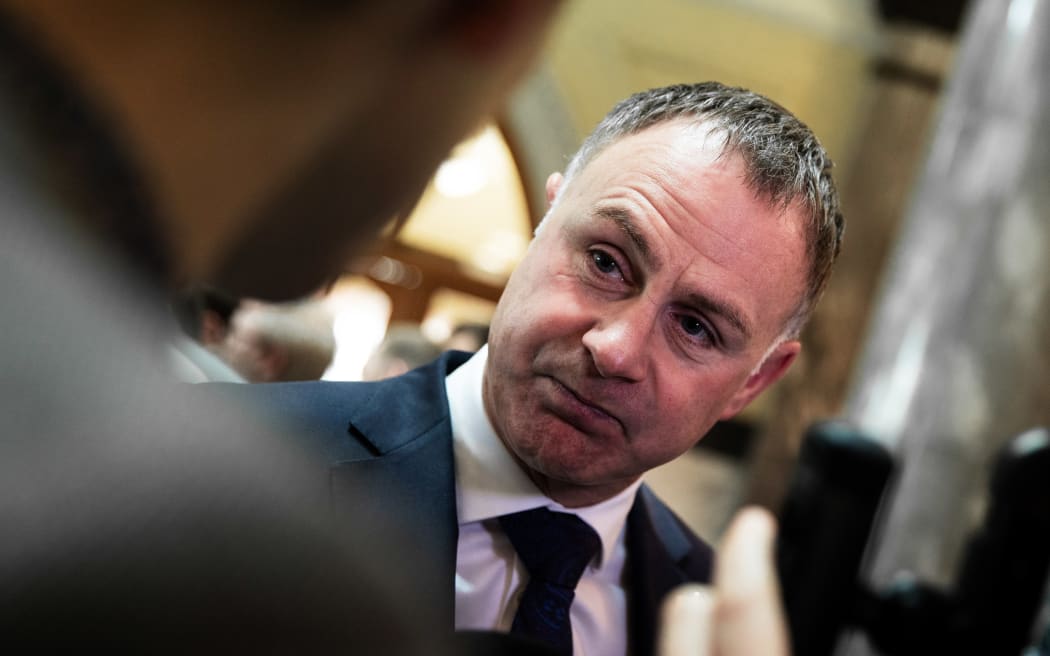
Energy Minister Simon Watts.
Photo: RNZ / Samuel Rillstone
Goldman Sachs forecast price rises of 130 percent – more than double – if the disruption continued throughout March.
Both a Cabinet paper and a report commissioned by the four electricity gentailers warned that exposure to price shocks was a risk of proceeding with LNG imports.
“LNG-dependent markets saw extreme spikes in 2022 when Russia invaded Ukraine … illustrating the volatility imported into domestic bills,” the gentailer report said.
The government’s plan has been widely criticised, with even a report it commissioned last year finding that LNG should only be used as a last resort.
Energy advocates have pushed for the government to pursue alternatives, saying even burning a stockpile of coal at Huntly would be preferable.
Independent climate policy analyst Christina Hood said New Zealand already experienced the effect of petrol price shocks during periods of geopolitical turbulence.
“It’s a huge risk for the New Zealand economy to be exposing even more of our energy system to volatile international prices,” she said.
“That really worries me, and that risk analysis does deserve a re-think and we should be pivoting towards more stable, domestic energy sources.”
The government’s own analysis had found that using biomass pellets at Huntly was cheaper and had benefits for the local economy, she said.
That option was ruled out because, according to that analysis, it would take the longest to deliver.
Infometrics chief executive Brad Olsen said that “very quickly, the risks outlined around LNG access have come true”.

Infometrics chief executive Brad Olsen.
Photo: RNZ / Samuel Rillstone
“Current events make it harder to immediately buy into why this LNG facility is likely the best option, because it has potentially fallen over at the first hurdle.”
It was true that high prices might not persist, he said.
“But if the whole idea of the LNG facility was to provide that short-term relief, well, if New Zealand hit a dry-year time and something’s happening in the Starit of Hormuz, then you’ve got a very expensive white elephant that might be sitting there.”
There was still time for the government to pivot to a different solution.
“From what I understand we haven’t signed commitments,” Olsen said.
“If there’s some real feeling of need around emergency supply in dry years, I do wonder if water take around the hydro lakes is a much more readily accessible option.”
There were environmental concerns to factor into that alternative, he said.
“But if you want to get stuff done quickly, then using the water in the lakes that’s already there … is going to be a lot easier.”
The government should also be telling those gentailers in which it held a majority stake to not return such a large dividend to the Crown, and instead invest it into renewables and other options to provide security of supply, he said.
Energy Minister Simon Watts’ office has been approached for comment.
Sign up for Ngā Pitopito Kōrero, a daily newsletter curated by our editors and delivered straight to your inbox every weekday.