
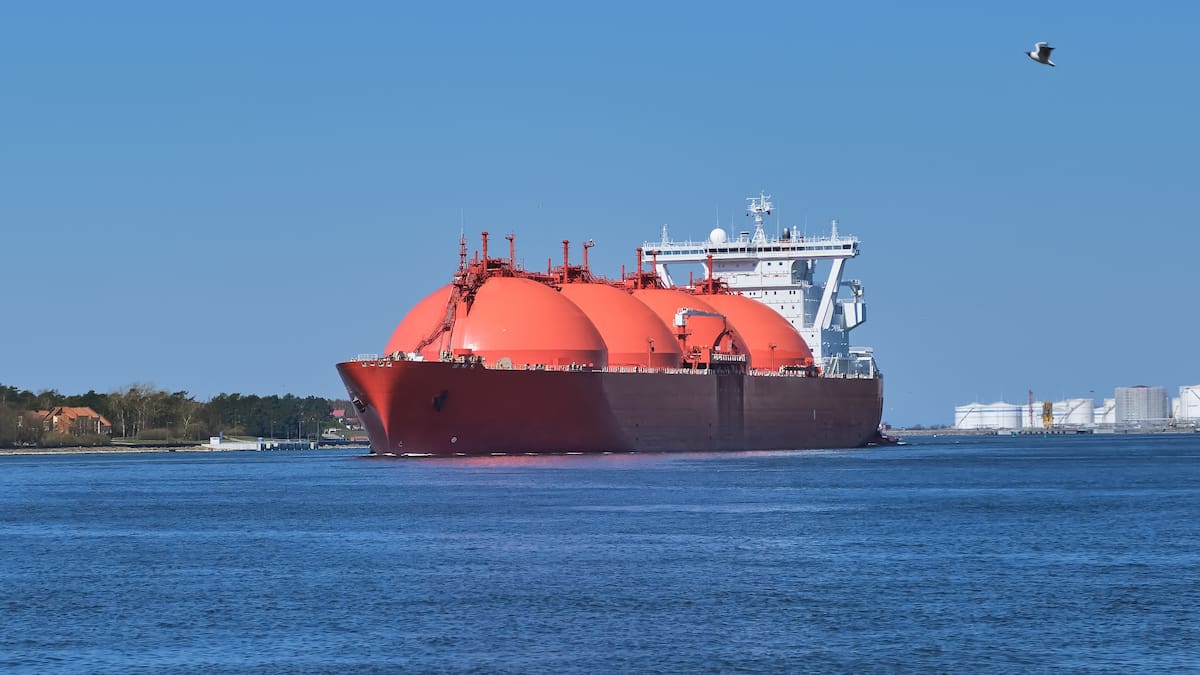
The energy industry sees the initiative as providing insurance for a renewables-dominated electricity sector that is prone to dry-year risk.
But Frontier Economics – in a Government-commissioned report released last year, said an LNG terminal would be a last resort.
Basil Sharp, emeritus professor of energy economics at the University of Auckland Business School, said the Port Taranaki plan lacked detail.
If the facility was to be used as an insurance policy, then that implied it would be reliant on the spot LNG market, with all its inherent volatility.
“If you’re buying on the spot market, then you’re exposing yourself to risk, as opposed to having a long-term contract that you could secure supply from.
“This latest episode in the Gulf just reinforces the distribution of risk associated with that sort of an arrangement,” he told the Herald.
“You’re just exposing yourself to risk, and of course it’s not only the risk in getting access to LNG, it’s getting access to specially designed ships that transport LNG across the water,” Sharp said.
The closest source of gas is Australia.
“Australia has invested heavily in the development of those gas fields, and as a producer they’re going to want some security with respect to buyers.
“So they’re not going to be all that interested in itty bitty spot market stuff that New Zealand’s going to want.”
John Carnegie at Energy Resources Aotearoa said the conflict highlighted the fact that a significant part of the world’s energy security still heavily relied on exports through the Strait of Hormuz.
Energy Resources Aotearoa – which represents the big energy companies – has previously said disruptions to these flows could significantly tighten the global market.
The continuing conflict in the Middle East highlights that a significant part of the world’s energy security still heavily relies on exports through the Strait of Hormuz, where around 20% of global LNG supply transits.
“While LNG will act as an insurance policy for New Zealand’s energy security, it could expose us to international prices and global events beyond our control, underscoring the importance of also investing in domestic gas supply and renewable generation as the foundation of a resilient energy system,” Carnegie said.
Meanwhile, Capital Economics said that if oil stays near US$70-US$80 per barrel, developed market inflation would be muted.
“But if prices climb to US$90-US$100, developed market inflation could rise up to 0.7 percentage points and we would probably shave a few tenths from 2026 GDP growth forecasts,” it said.
London’s Financial Times said analysts in Europe and Asia warned that soaring natural gas prices posed the biggest threat so far to the global economy from the widening Middle East conflict.
“Global gas markets could face a crisis well beyond the scale of oil markets,” Saul Kavonic, an analyst at MST Financial, told the FT.
Europe’s gas benchmark, TTF, rose as much as 50% before closing 39% higher at €44.51 per megawatt hour (MWh), in the biggest daily percentage move in more than four years.
Jamie Gray is an Auckland-based journalist, covering the financial markets, the primary sector and energy. He joined the Herald in 2011.
Stay ahead with the latest market moves, corporate updates, and economic insights by subscribing to our Business newsletter – your essential weekly round-up of all the business news you need.