
But the employment figures are worse, with warnings the labour market shows “no sign of picking up”.
“We lost 2.8% of jobs over the past year,” Infometrics principal economist Nick Brunsdon said of Wellington City’s employment numbers, while the national average was down 1.2%.
The number of people on the Jobseeker Benefit had climbed to 7290, the highest in at least 10 years.
Brunsdon warned while signs of the long promised green shoots are starting to emerge, Wellington’s economy is not expected to bounce back quickly.
“We would expect it’s going to take a few quarters for that to flow through,” he said of the employment and business figures.
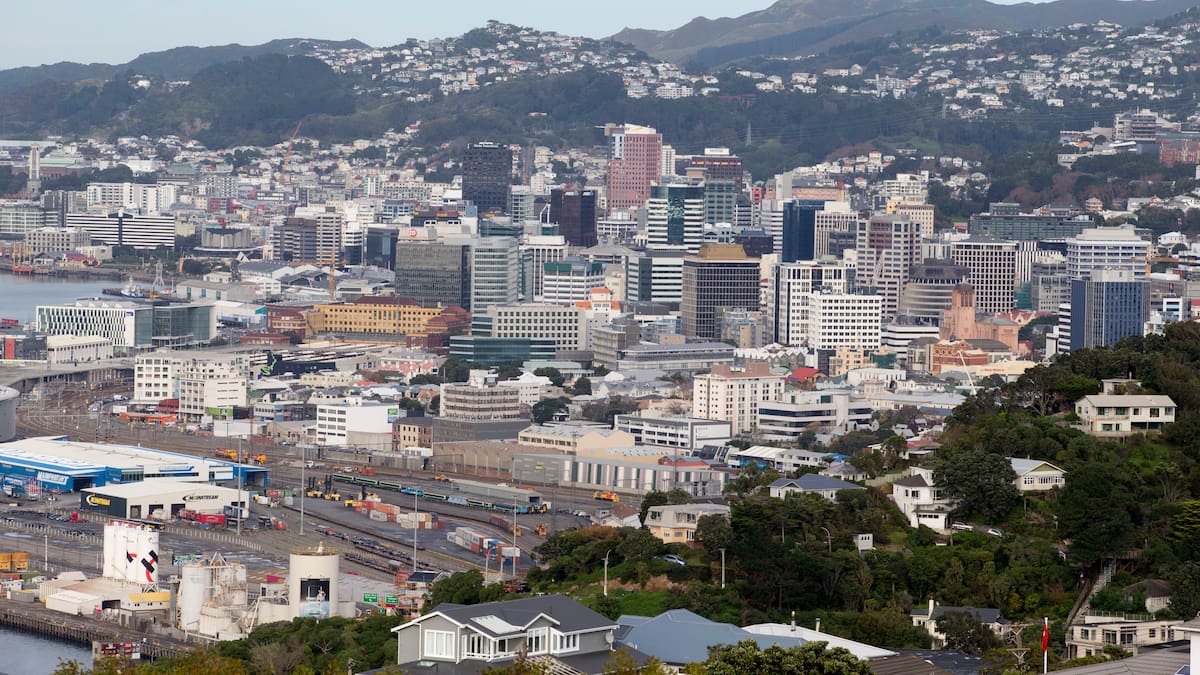
Employment in Wellington City was down 2.8% for the year to December 2025. Photo / Mark Mitchell
“We have seen some sort of almost structural changes in how the public sector works and also not only for public sector employees, but also for the private sector, the consultants, the labour hire businesses that wrap around the public sector,” Brunsdon said.
“It’s sort of an almost structural adjustment to that new normal of a slightly smaller public sector.”
The report stated despite “various indicators recording better outcomes, the economic recovery remains patchy and unconvincing in many industries”.
Last year’s four quarters measured together have the Wellington economy contracting by 0.4% last year, the new figures show.
It comes off the back of Stats NZ data showing there are nearly 10,000 fewer jobs in Wellington than at the last general election.
Asked about the capital’s shrinking economy Economic Growth Minister Nicola Willis said “there’s no disputing that Wellington has been hard hit by the economic downturn.”
Willis pointed to initiatives the coalition has undertaken to turn it around, saying the Government was making “significant investments in the capital”.
“They include expanding Wellington Hospital and investing in the film sector, major local roading projects and building work on local schools,” Willis, a lifelong Wellingtonian, said in a statement.
Economic Growth Minister Nicola Willis said her Government has made significant investments in the capital, but admits it has been hit hard. Photo / Mark Mitchell.
Willis also pointed to policy changes to support housing development and the return of international students.
Brunsdon said the cuts to the public service were largely responsible for the capital’s economic predicament.
He compared the city’s response to the structural change in the public service to like a large factory closing down in a small town.
“Normally when we look at these small towns there’ll be a bit of a bit of a drop as the jobs that were in that factory fall away, and then if the town has good fundamentals, then over time new industries pop up and grow from there,” he said.
“I imagine that will be the case in Wellington, there’s an awful lot of talent, it’s a great city, and that’s going to be an attractive position for businesses to grow from in the future.”
Wellington Chamber of Commerce and Business Central chief executive Hayley Horan insisted conditions were starting to improve for local businesses, even if slower than previous recoveries.
Horan said the chamber is hearing “realistic optimism” from the capital’s business community.
“There’s no glossing over the challenges of the past few years, but we are seeing a steady and genuine lift in business confidence,” she said.
“Many organisations are investing and hiring again, even if with slightly more caution than in previous cycles.”
Horan, who started at the organisation in November, said the upcoming general election spelt uncertainty for the local economy.
“With an election year ahead, there is understandable concern around continuity, businesses want to see strong bipartisanship on key issues such as infrastructure to ensure momentum isn’t lost.”
Ethan Manera is a Wellington-based journalist covering Wellington issues, local politics and business in the capital. He can be emailed at ethan.manera@nzme.co.nz.