
Photo: RNZ / Mark Papalii
The government is brushing off accusations of naivety from the opposition over plans to pursue a liquefied natural gas (LNG) terminal as prices spike worldwide.
The Strait of Hormuz, a key shipping route connecting the Persian Gulf with open ocean, has effectively closed, after Iran said it would attack any ship trying to pass through.
QatarEnergy has suspended production of LNG, prompting prices to rise by around 50 percent in Europe, and nearly 40 percent in Asia.
Qatar supplies 20 percent of the world’s LNG.
The New Zealand government is proceeding with plans to build a billion dollar LNG import facility in Taranaki, as a back-up to address dry year risk.
The Frontier Report, commissioned by the government last year to look at the electricity market performance, said it would make “no economic sense” to develop a LNG terminal just to meet dry year risk.
The report said it should be considered as a last resort, “recognising that doing so exposes New Zealand to the global price of gas, which would have implications for the competitiveness of industry with high gas demand”.
Labour’s energy spokesperson Megan Woods said the global spike in LNG prices was the concern Labour had been warning the government about all along.
“It exposes New Zealand to this volatility around pricing around the world. We’ve got domestic, made-at-home solutions, where we use the resources we have here in New Zealand that really could give us this independence,” she said.
“What they’re doing is exposing New Zealanders to potentially very high energy bills, whether that’s for households or for businesses.”
She said it was “naive” to rely on LNG.
“New Zealanders are being put at risk, New Zealand households and businesses, from high energy prices if we rely on this form of energy, which has such volatile price spikes that we’re seeing today.”
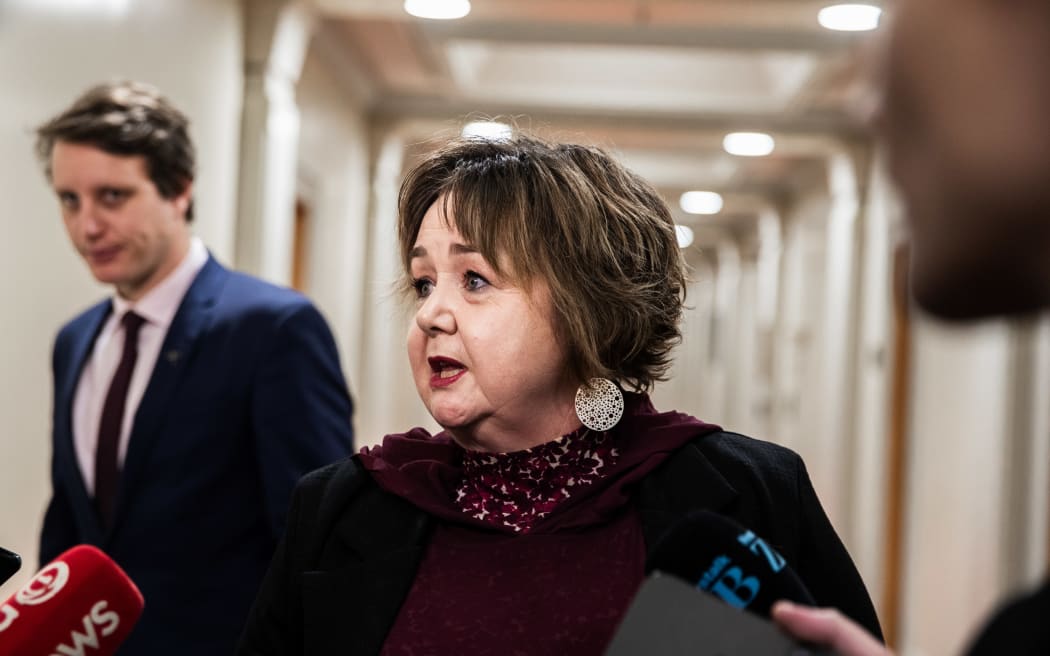
Megan Woods says it’s naive to rely on LNG.
Photo: RNZ / Samuel Rillstone
Woods would not go into questions over whether Labour would rip up a contract if it was signed before the election.
Labour leader Chris Hipkins has previously said if Labour entered government before a deal was done it would not go through with it.
Green Party co-leader Chlöe Swarbrick also said the party’s “fears and concerns” were being realised.
“What the government has exposed New Zealanders to by committing the better part of a billion dollars to this project is vulnerability to international supply chain shocks, which is exactly what we are currently seeing playing out as a result of what’s occurring with America’s aggression in the Middle East,” she said.
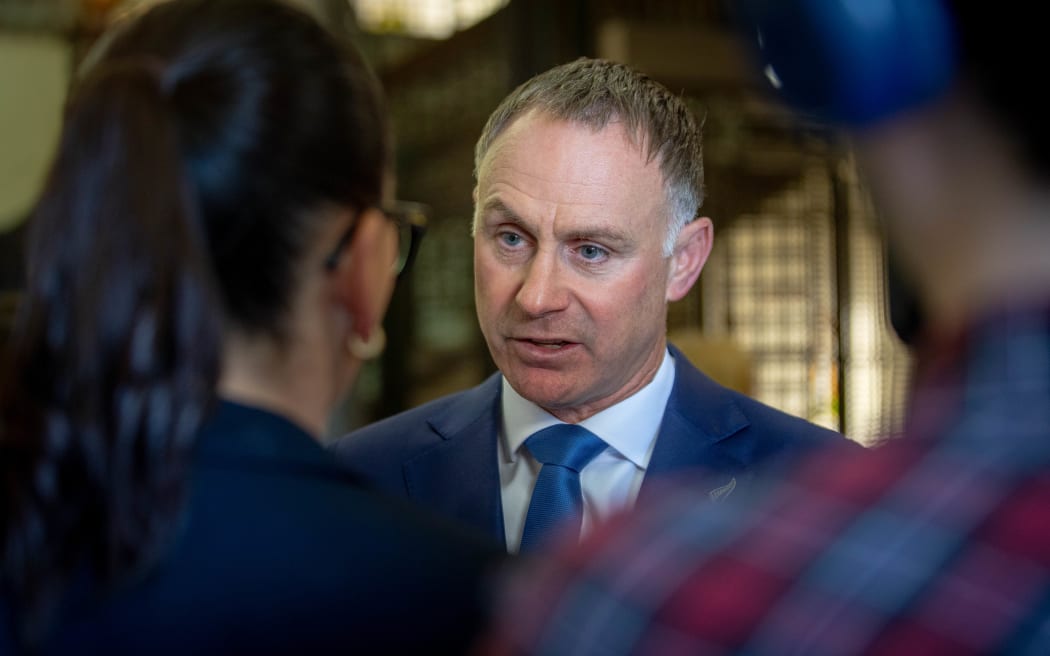
The energy minister Simon Watts said the government had taken steps to look at increasing security of supply, particularly around fuel sources that were based in New Zealand.
“The impact of volatility in international markets will play through. But in the context of where we are here in New Zealand, we have appropriate stores in place to deal with aspects of volatility.”
Asked later about Woods’ comments around naivety, Watts said future energy prices in 2027, 2028, and 2029 were all down following the government’s announcement.
“I think the announcement that we’ve made in regards to building an LNG capability to import fuel that we don’t have is the complete opposite of naivety. We don’t have LNG fuel sources in a dry year, and that’s why power prices have been spiking, and that’s what we’re looking to alleviate,” he said.
“Our major problem is we don’t have enough gas in the country to make electricity in a dry year. We solve that through importation, and we’re going to look to increase rooftop solar and battery across the board, because that’s positive as well. We want both.”
Oil prices have also risen, which the Finance Minister said the Treasury and Reserve Bank were monitoring closely.
Nicola Willis said while oil prices had risen, it was at a “far smaller level” than when Russia invaded Ukraine.
“New Zealand has very good fuel supplies. We regulated last year to ensure we have 28 days of fuel already in the country, which of course was purchased at prices a month ago, so we wouldn’t expect to see immediate impact at the pump,” Nicola Willis said.
Willis defended the LNG plans, as “ensuring that we can generate electricity when the lakes are low and the sun isn’t shining” was critical for affordability and security.
“I’m actually living in the real world,” she said.
Sign up for Ngā Pitopito Kōrero, a daily newsletter curated by our editors and delivered straight to your inbox every weekday.