
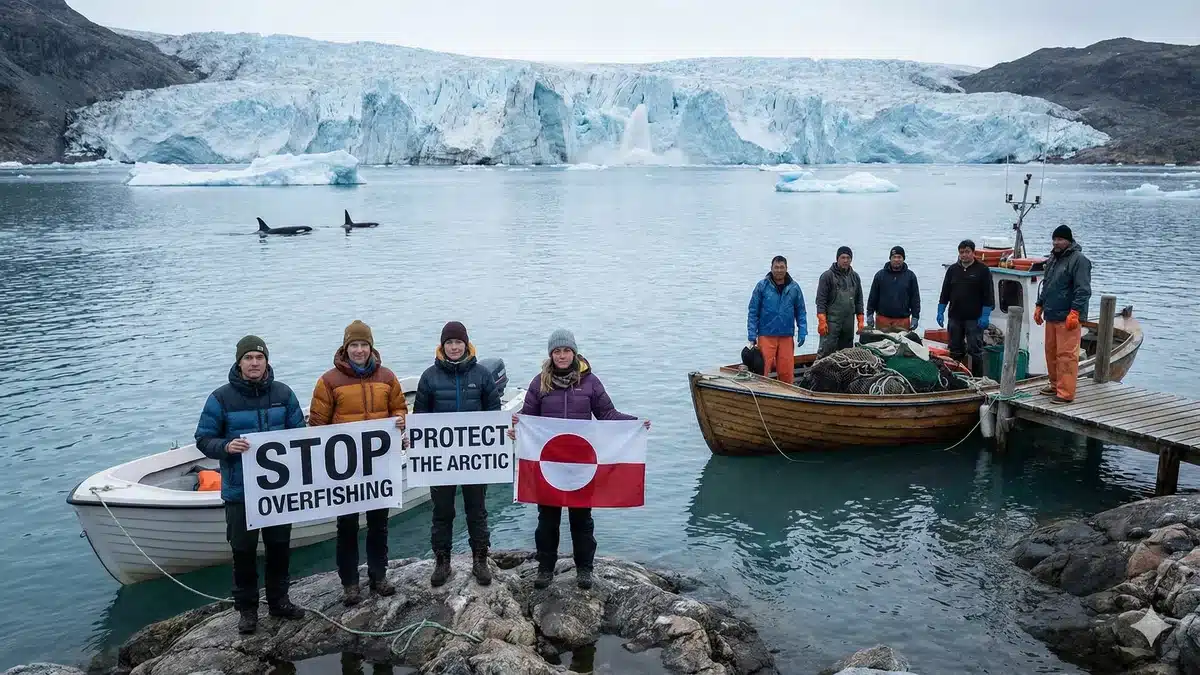
On the west coast of Greenland, a dramatic situation is unfolding that has caught the world’s attention. This isn’t just another climate change story—it’s a compelling narrative of nature’s unpredictability and humanity’s struggle between economic gain and ecological responsibility. Scientists are ringing alarm bells about a potential ecological collapse, while fishermen boast of unprecedented catches, and the government in Nuuk grapples with the implementation of drastic measures. What could possibly be causing such a profound impact on this Arctic region? The answers lie in a chain of events no one saw coming.
The Melting Arctic: A Catalyst for Change
Imagine standing on the shores of Greenland, where once-thick ice sheets are now replaced by expanses of open water. Satellite images paint a stark picture, revealing a reality that seemed distant, yet is now alarmingly present. The ice is melting sooner than ever before, sparking dramatic shifts in marine habitats. A Danish-Greenlandic research team has meticulously documented these changes, observing rising temperatures in coastal waters and shifting current patterns. But what’s at stake as this icy fortress begins to crumble?
The Unseen Impact on Marine Life
These physical changes are reshaping life in the sea. Schools of herring and mackerel, attracted by warmer waters, are venturing into territories previously beyond their reach. Traditional hunting grounds are shifting, bringing top predators along with them. Residents of towns like Maniitsoq and Paamiut are witnessing sightings that their grandparents never imagined. But what does this mean for the marine balance that has existed for centuries?
Biologists warn of a critical threshold in the Arctic ecosystem. Ancient protective mechanisms are failing, seal migration patterns are altering, and fish stocks are behaving unpredictably. The speed at which nature is reorganizing itself is outpacing scientific models. Could these changes be irreversible?
Economic Boom Meets Ecological Responsibility
In ports from Nuuk to Qaqortoq, there is a mixed atmosphere of excitement and unease. Small trawlers are returning with overflowing holds, crews working double shifts, and previously idle boats are hastily put back into action. For families struggling financially each winter, the current situation seems like an unexpected bounty. The local economy is experiencing an adrenaline rush akin to a gold rush. But how sustainable is this newfound prosperity?
The Double-Edged Sword of Economic Prosperity
Harbor officials are recording an unprecedented increase in landings. Ice factories are operating around the clock, cold storage facilities are at capacity, and equipment vendors are struggling to keep up with demand. Fishermen exchange GPS coordinates and share shaky videos of dense fish schools fleeing orcas. The atmosphere is charged, almost defiant—no one wants to miss out on this opportunity. Yet, lurking beneath this economic dynamism is a fundamental question: How long can this continue?
Environmental organizations, such as Greenpeace Nordic, are adamant, calling for an immediate halt to fishing in the affected zones. Their argument is compelling: An ecosystem in shock cannot withstand industrial exploitation. Young activists are organizing protests, highlighting the link between short-term enrichment and long-term destruction. But will their voices be heard?
Between Emergency Declarations and Daily Realities
Nuuk’s hastily passed regulations reveal the complexity of the situation. On paper, the measures seem balanced, but in practice, they create gray areas and contradictions. Captains report routes running just outside restriction zones and ethical dilemmas arise as exhausted orca groups appear in fishing waters. What happens when regulations clash with on-the-ground realities?
Stories from the Frontlines
In Sisimiut, a fishing crew recounts a day when their sonar painted a picture black with fish. Following a dramatic orca and mackerel chase, they hauled in nets for hours. The captain described it as “three seasons in a day”—a phrase that spread like wildfire. Such stories fuel hopes of quick riches but obscure the fragility of the system. Can the lure of instant wealth overshadow the pressing need for sustainable practices?
In a crowded meeting room in Nuuk, a young activist tried to convey the planetary dimension to seasoned fishing representatives. Her words were poignant: Every extra net is like dipping into an already empty savings jar. The orcas, she argued, are not a gift but a warning signal. Silence followed her presentation, heavy with unspoken questions. No one wants to be seen as an environmental sinner, yet winter preparations and debts urge otherwise. What choice will prevail?
The Broader Implications of Arctic Changes
The events in Greenland are more than a regional crisis. They serve as a harbinger of what many coastal regions worldwide will face as climate changes accelerate. The question is not whether similar situations will occur elsewhere, but when and how societies will respond. Has Greenland become an unintended testing ground for global climate resilience?
Striking a balance between economic necessity and ecological foresight is no easy feat. In family discussions and political negotiations, society is currently debating which priorities should guide us when familiar structures crumble. The decisions made now are setting precedents for future crises in Alaska, Norway, Canada, and other Arctic neighbors. When standing on a Greenlandic quay, watching the dark fins slice through ice-free waters, one witnesses a fundamental crossroads. How will these “Orca moments” shape our collective future?
Greenland offers a blueprint—with all its contradictions, hopes, and risks. As the world watches, we must decide if we can set aside short-term temptations for the sake of long-term survival. Are we ready to heed these warnings?