
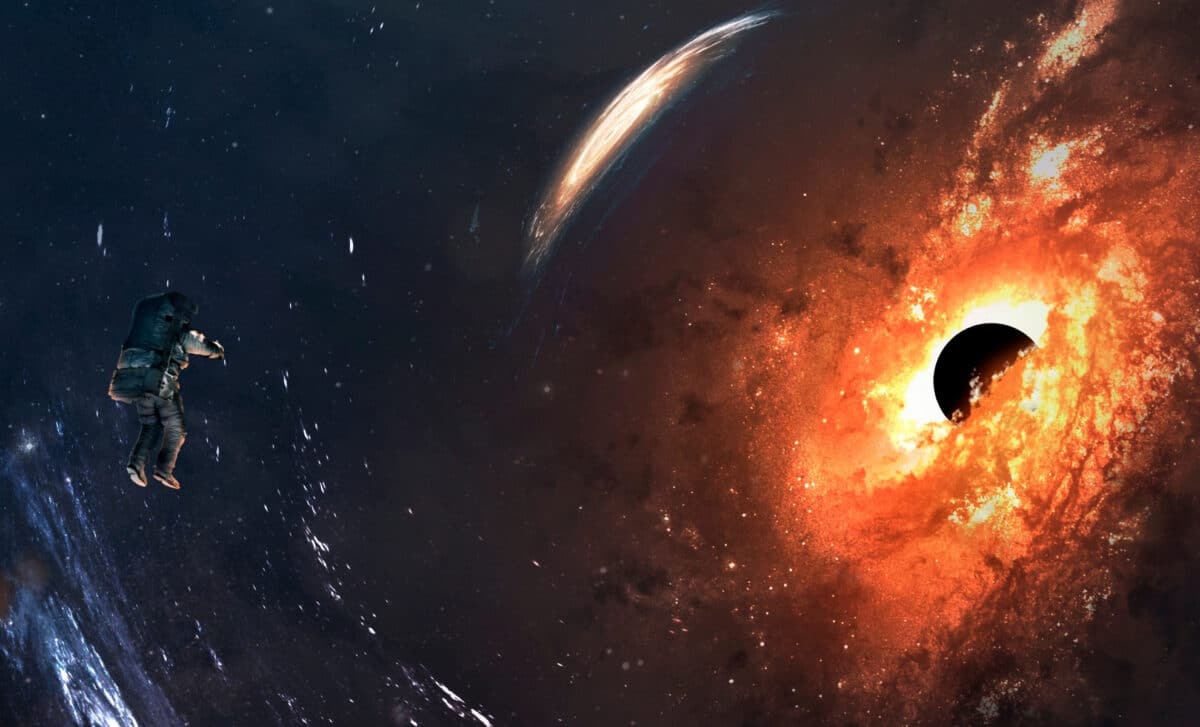
Cosimo Bambi, an astrophysicist from Fudan University in China, knows the idea sounds unhinged. But he also remembers when people laughed at the notion of spotting a black hole’s silhouette or catching a gravitational wave. On April 10, 2019, the Event Horizon Telescope published the first-ever image of a black hole, the supermassive version at the core of Messier 87. Three years later, they did it again with our own Sagittarius A*. We can see them now, Bambi argues, so visiting them is the logical next step.
The question, of course, is where to go. Sagittarius A* sits 26,000 light-years away. Theclosest known stellar-mass black hole, Gaia-BH1, is still a crushing 1,560 light-years from us. Bambi, however, suspects we might not need to travel that far. He suggests there could be smaller black holes hiding much closer, maybe as near as 20 to 25 light-years away.
That is speculation, but it is not pure fantasy. In 2023, a team of researchers from the University of Padua in Italy and the University of Barcelona in Spain found that stellar-mass black holes could exist in the Hyades open cluster, a loose swarm of stars about 150 light-years from Earth. According to the team, their simulations could only match the mass and size of the cluster by including black holes in the mix.
The Paperclip That Could
A ship heavy with fuel will never reach those speeds, so Bambi borrows an idea already floating around the Breakthrough Starshot initiative. Instead of a traditional spacecraft, he envisions micro-probes with microchips on board, tiny things that weigh no more than a paperclip. These nanocrafts would attach to light sails, thin sheets designed to catch photons rather than wind.
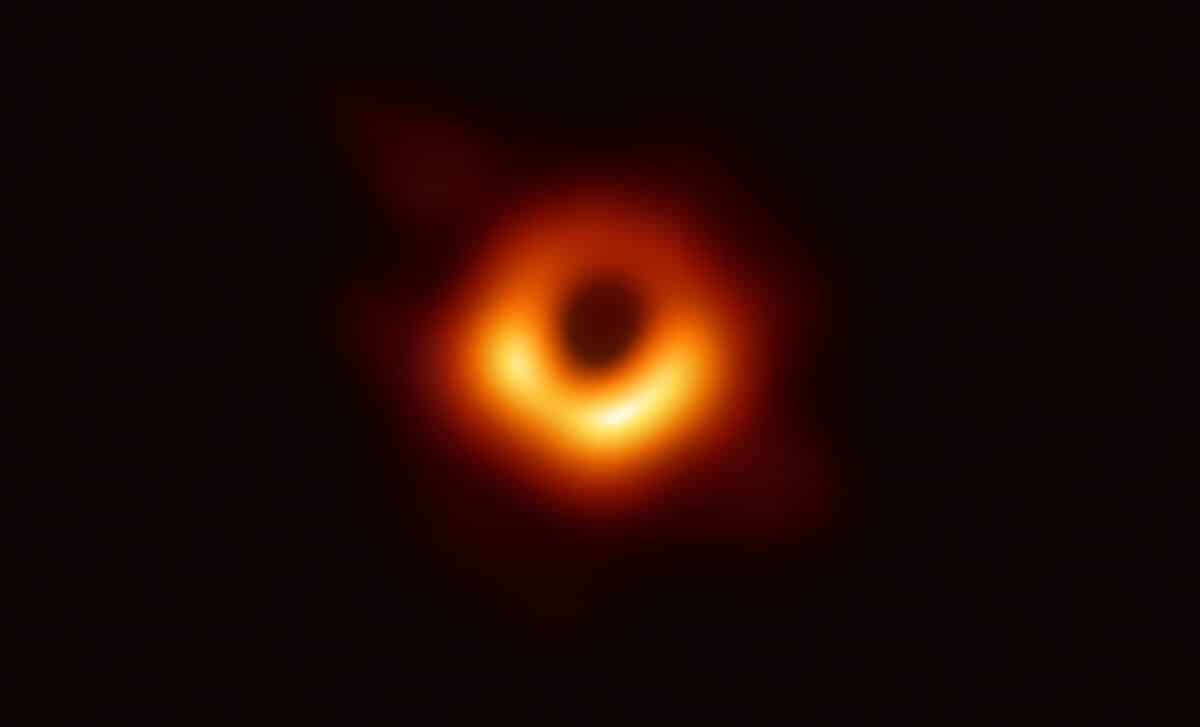 Black hole – © Event Horizon Telescope Collaboration / EurekAlert
On the ground, a powerful laser would lock onto those sails and push. With no fuel to haul and no engine to fire, the probes would just keep accelerating. Bambi is aiming for speeds around 100 million miles an hour, roughly one-third of the speed of light. At that clip, the little probe could cross distances that would take centuries for conventional rockets.
Generations in the Dark
If Bambi is right and a black hole sits 20 to 25 light-years away, the math gets interesting. At one-third light speed, the trip takes about 70 years. But the mission does not end when the probe arrives. Once it flies past the black hole or dives into its vicinity, it has to send the data home. That information, traveling at the speed of light, takes another 20 years to reach Earth. The people who build the thing will never see what it finds.
If the closer black holes turn out to be a mirage, the Hyades cluster becomes the next candidate. According to the University of Padua in Italy and the University of Barcelona in Spain, those potential black holes sit about 150 light-years out. At the same speed, the journey stretches to at least 420 years. That is no longer a mission. It is a message in a bottle launched across centuries, aimed at descendants who might still be listening.
Thirty Years to Crazy
None of this happens tomorrow. The laser needed to push a sail to relativistic speeds does not exist. The paperclip probes with enough computing power to photograph a black hole and phone home do not exist either. Bambi, however, thinks the timeline might be shorter than it looks. He believes the necessary technology, driven by cheaper components and relentless miniaturization, could evolve within 30 years.
He knows how it sounds. In a recent press release, he admitted the whole thing may read like science fiction. But he pointed back to the things people once declared impossible. They said we would never detect gravitational waves because they are too weak. We did, 100 years later. They said we would never observe the shadows of black holes. Now, 50 years later, we have images of two. For Bambi, visiting one is just the next item on a very long list, the kind of item that only looks crazy until it is done.