
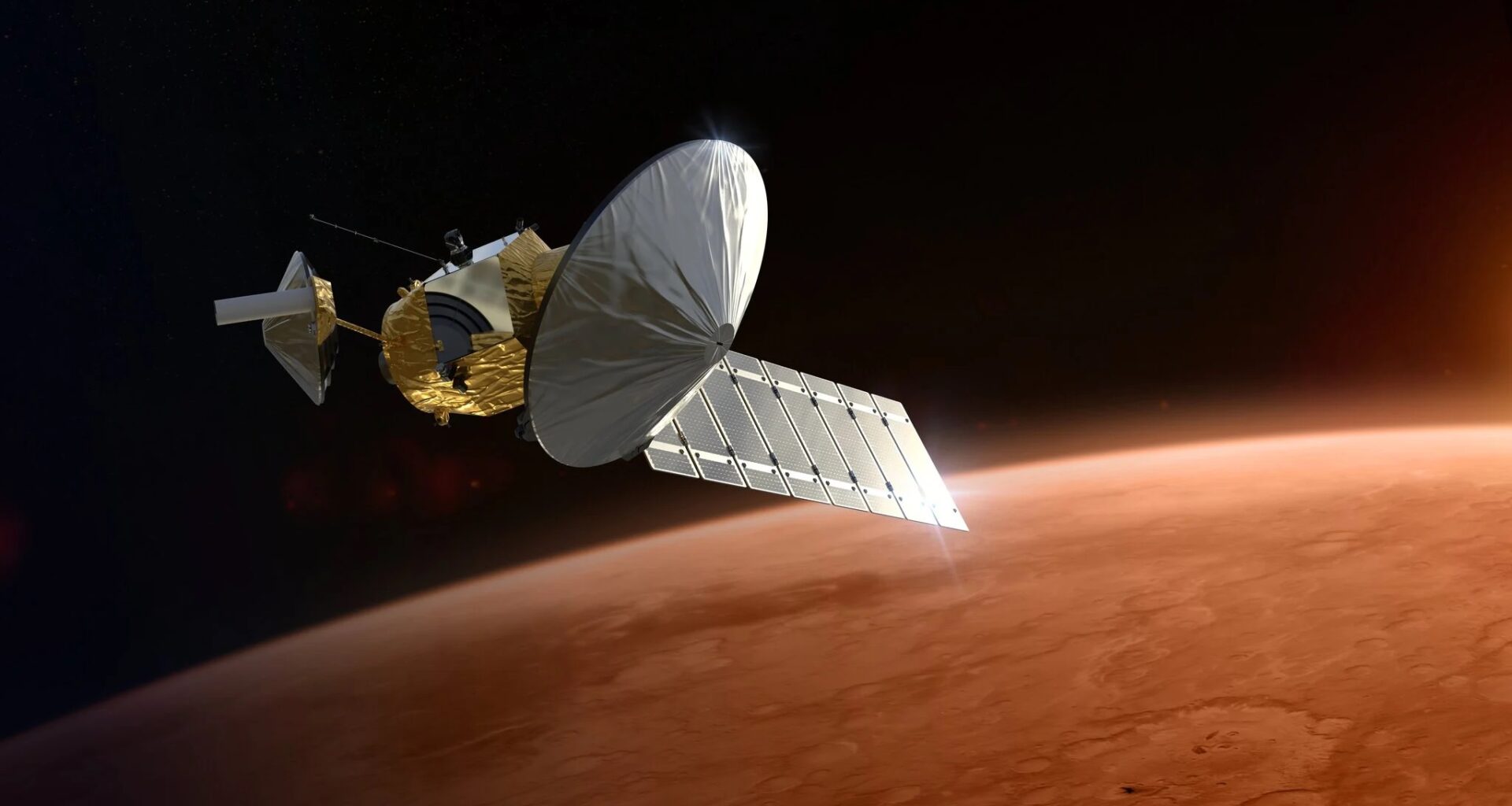
NASA is moving forward with a $700 million Mars Telecommunications Network (MTN) mission designed to provide continuous communications and navigation services for spacecraft at Mars through at least 2035. The effort aims to stabilise and modernise relay capabilities around the Red Planet as existing orbiters age.
Rocket Lab has stepped forward with a proposal for a dedicated Mars Telecommunications Orbiter (MTO), featuring laser communications and an areosynchronous orbit architecture intended to meet NASA’s requirements while easing mounting pressure on deep space relay infrastructure.
NASA’s Mars Telecommunications Network
Unlike traditional Mars orbiters, the MTN spacecraft is being developed primarily as a communications relay rather than a science mission. Its core objectives focus on returning data from surface missions, providing navigation support, and ensuring reliable communications during critical entry, descent, and landing (EDL) operations.
The spacecraft is expected to operate through at least 2035, gradually replacing ageing assets that currently handle most of the relay workload.
Budget and schedule constraints stem from the 2025 “One Big Beautiful Bill,” which allocated $700 million for the mission. The legislation requires NASA to award the contract by the end of fiscal year 2026 and target launch during the 2028 Mars window. Internal planning documents note that science payloads from NASA’s Science Mission Directorate are “not precluded,” but make clear that additional instruments must not jeopardise the schedule.
Deep Space Data Bottleneck
The MTN mission addresses a growing capacity crunch in NASA’s deep space communications network. The Deep Space Network (DSN) is already oversubscribed, while data traffic from Mars continues to rise.
The reported loss of contact with NASA’s MAVEN orbiter in late 2025 further exposed the fragility of the system. Relay responsibilities shifted more heavily onto older spacecraft such as Mars Odyssey, increasing concerns about single points of failure. Many high-value surface missions depend on these orbiters to transmit scientific data back to Earth. This makes communications reliability a critical issue.
Rocket Lab’s Mars Telecommunications Orbiter Proposal
Rocket Lab says its Mars Telecommunications Orbiter is specifically designed to meet MTN requirements and the tight 2028 deadline. The company proposes placing the satellite in areosynchronous orbit at roughly 17,000 kilometres above Mars. From that altitude, the spacecraft could provide near-continuous coverage over a designated region. It is a major improvement over the brief relay windows typical of low-Mars orbiters.
The design relies on optical laser communications rather than traditional radio frequency links. According to Rocket Lab, this approach could deliver an order-of-magnitude increase in data throughput. It would also reduce spacecraft size and power demands.
Beyond robotic missions, the company positions the orbiter as long-term infrastructure capable of supporting future human exploration. High-bandwidth, low-latency communications would be essential for crewed missions, surface operations, and real-time data exchange between Mars and Earth.
Published by Space Enthusiast
An amateur rocket enthusiast with a keen interest in all space-related activity. Looking forward to the day when the UK starts launching rockets into space and I’m able to watch launches (from a safe distance of course).