

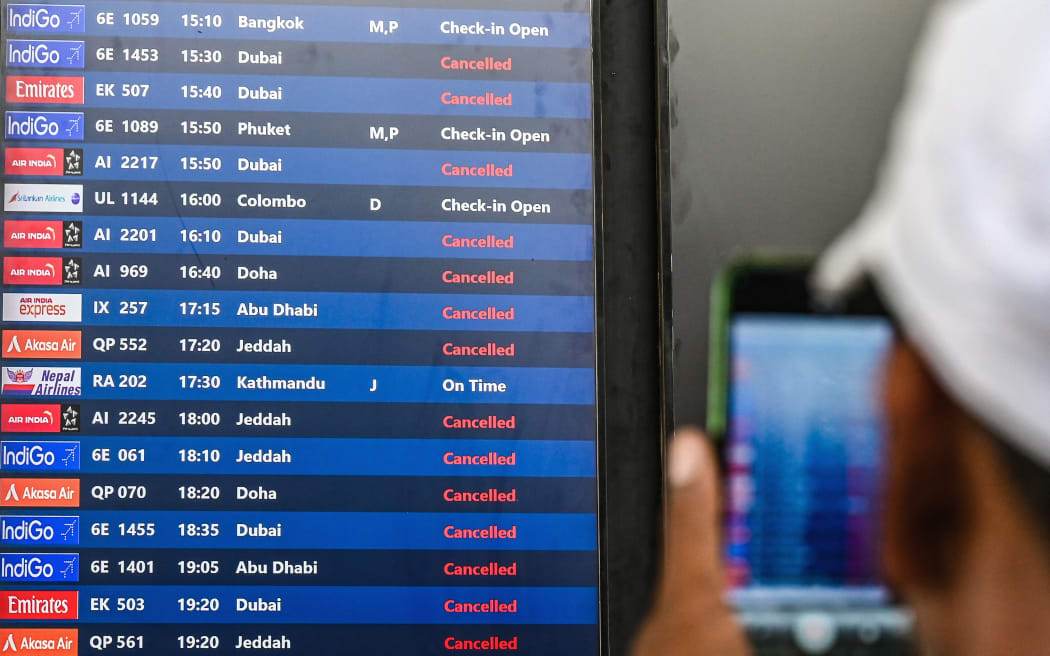
Travellers and New Zealand citizens throughout the Middle East have been affected by the conflict with Iran.
Photo: PUNIT PARANJPE / AFP
Explainer – The world is an increasingly dangerous place. What do you do if you’re caught up in a conflict like the one raging in Iran and the Middle East?
The US and Israel launched attacks on Iran over the weekend, killing Iran’s supreme leader Ayatollah Ali Khamenei and leading to retaliatory strikes on multiple countries in the region.
Large sections of airspace over the Middle East have been closed, and while some flights have resumed, hundreds of thousands of travellers still face delays.
Meanwhile, New Zealand citizens caught in the conflict zone may be desperately trying to get out and the Ministry of Foreign Affairs and Trade has warned them to shelter in place.
What if you’re travelling, about to travel or stuck in a country where conflict has broken out? Here’s what you need to know.
What can the government do?
MFAT works to assist New Zealanders overseas who might get into trouble, ranging from illness to evacuation from natural disasters to helping crime victims.
Its SafeTravel website allows the government to reach out directly to Kiwis they know are in danger zones.
“All New Zealanders living or travelling overseas should register with SafeTravel, whatever their destination, as that means we can send you updates about the places you’re in or communicate with you if an emergency happens,” an MFAT spokesperson said.
“You can register at any time, but it’s best to register before you travel.”

Photo: Screenshot
Why is registering with SafeTravel important?
It’s the government’s primary way to contact travellers in danger zones.
As of Monday, there were currently more than 1800 New Zealanders registered in the Middle East with SafeTravel, with the bulk of those – 1091 – being in the United Arab Emirates.
There are 26 registered in Iran, and 71 in Israel or the Occupied Palestinian Territories.
However, there are likely to be many more who aren’t registered, Prime Minister Christopher Luxon said Monday.
“In reality, the number of New Zealanders in the region is likely to be much higher. We therefore urge people to register on SafeTravel as soon as possible so that we can communicate with them directly.”
MFAT told RNZ that as the weekend conflict erupted, SafeTravel messages were sent to New Zealanders in 10 Middle East countries – Bahrain, Egypt, Iran, Iraq, Israel, Jordan, Kuwait, Lebanon, Qatar and the UAE.
It’s possible the government can arrange repatriation flights to get New Zealanders out of war-torn regions, as it did last year when the Defence Force sent a plane to assist those stranded in Iran and Israel during earlier conflicts.
Stephen Hoadley, a former Auckland University professor of political science, told RNZ in an interview last year that registering travel in advance can make it easier for families to know what’s happening with their loved ones.
“About half of New Zealanders never bother to register in a foreign country and of course they’re vulnerable, more at risk because MFAT cannot contact them, their families cannot contact them often and then the families will ring up the Minister of Foreign Affairs desperate to contact their son, daughter, brother, sister in a war zone and this puts a lot of pressure on the minister, the ministry, the bureaucrats and others.”
The Middle East is far from the only hot zone in an increased time of global conflicts. Just last week, MFAT issued a warning to “exercise increased caution” to New Zealanders in Mexico after the death of a local drug lord led to violence throughout the country.

The Middle East is home to the world’s busiest airport, in Dubai.
Photo: Screenshot
What can I do if my flights are affected?
Doha and Dubai, which have been closed during the crisis, are some of New Zealand’s biggest transit destinations for travel to Europe and elsewhere. Dubai is the busiest airport in the world.
“I would say that there are thousands (of New Zealanders affected),” Travel Agents Association chief executive Julie White told Morning Report this week.
Auckland Airport told RNZ travellers should check with their airline.
“Airlines will be working to rebook affected travellers. We encourage anyone due to travel through the Middle East in the coming days to check directly with their airline or travel agent for the latest updates. Other international flights are operating as scheduled.”
“If your journey has been impacted, we recommend you reach out to the airline scheduled to operate your flight, who will be able to discuss your rebooking options,” Air New Zealand also said in a statement.
Air NZ said it is allowing people to make changes to dates of travel or reroute, and no penalty fee, service fees or fare difference will apply if changed by Sunday, 8 March.
White said the disruption from the airspace closures will have ripple effects.
“It doesn’t just impact the Middle East, it will have onward effects with other regions. Travellers should expect delays in other areas.”
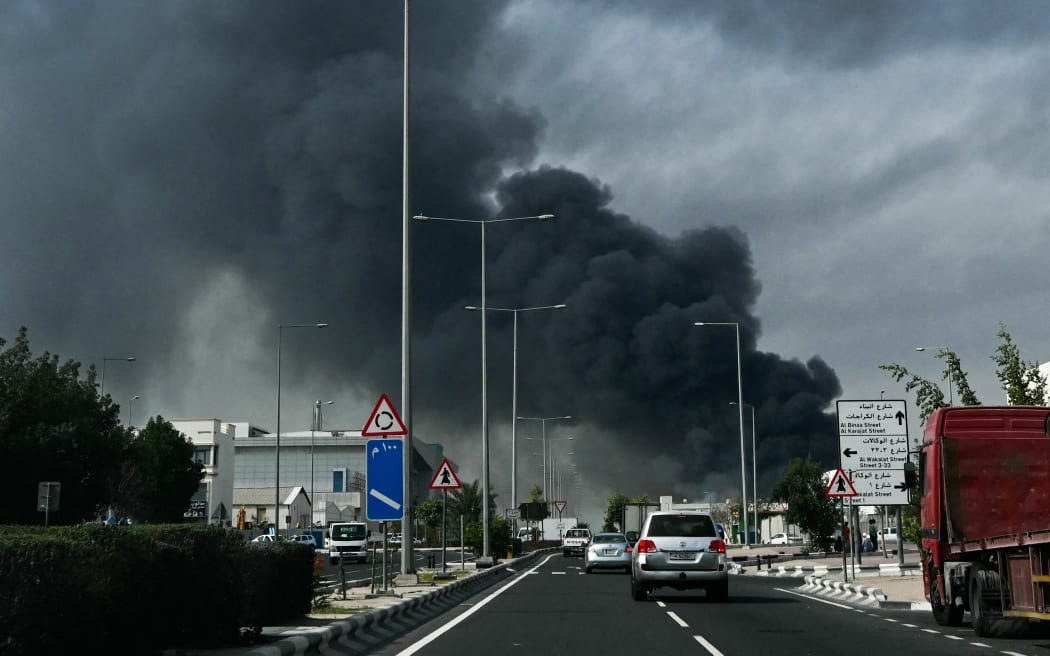
Thousands of New Zealanders are believed to be in the Middle East and places like Doha, Qatar, which was struck during an attack.
Photo: MAHMUD HAMS / AFP
What if you get caught up in a war zone right now?
Hundreds have been killed in Iran, Lebanon and elsewhere as the US/Israel-led military action continues.
“Our advice to them is to follow the advice of local authorities, including shelter in place recommendations,” Luxon said.
MFAT warns people in places of conflict to “do everything you can to stay safe”.
If you have to venture outside, stay alert, avoid large crowds or protests, and if you see large groups of police or armed forces, leave the area.
“Try not to stand out or draw attention to yourself” and avoid taking photos of local authorities or demonstrations, it warns.
Be ready to shelter in place and gather supplies, but also have a “go bag” ready in case you need to evacuate immediately.
Be aware of what’s going on in the countries you are visiting
SafeTravel’s website has a list of countries around the world and what their current advice level is.
Twenty-seven countries are currently on SafeTravel’s highest alert status of “Do not travel”, including much of the Middle East, but also countries such as Russia, Haiti, Venezuela, and several African nations.
Eight countries were added to that designation this week, Luxon said.
“New Zealanders in these areas should know that consular assistance may be limited or not available,” MFAT warns.
“That means the New Zealand government may not be able to help you if you are detained, injured, or otherwise prevented from leaving these areas.”
The government has long told New Zealanders in Iran to leave, a message Foreign Minister Winston Peters reiterated on Sunday.
“It will be very difficult in the risky cities. But if you’re out in the countryside and can get away, give it a go. Otherwise, try and stay safe, stay inside, and we’ll see how things develop. But it’s very, very difficult for us, this far away from personal circumstances, to tell people what to do,” he said.
“Mind you, we’ve been telling them for weeks to get ready, just in case this happened. Maybe next time, listen to the government of New Zealand, who does care what their future might be.”
A repatriation flight was possible, “if it comes to that,” but it was too risky at the moment.
Getting a New Zealander out of a war zone could cost as much as $1 million if they’re injured, the Detail reported last year.
Will travel insurance protect me?
Unfortunately, travel insurance policies typically do not cover travel affected by war.
“Travel insurance can help with many unforeseen situations, but it doesn’t respond to every type of global disruption,” a spokesperson for the Insurance Council of New Zealand told RNZ.
“Where travel disruption, such as airline cancellations, delays or rerouting, is linked directly or indirectly to war or armed conflict, policy exclusions are likely to apply. This can be the case even if travellers are not heading to the conflict zone itself but are affected while travelling through the region.
“Some insurers may also limit or decline cover for destinations affected by active conflict, reflecting the increased and unpredictable risks involved. Ultimately, decisions about cover depend on individual policy wordings.”
Every insurer and policy can be different, so travellers are urged to contact their insurer directly.
However, it’s still recommended to always get travel insurance, the ICNZ spokesperson said.
“We would encourage anyone travelling overseas to consider taking out travel insurance, as it can provide valuable cover for a range of unexpected events such as medical emergencies, lost luggage, or some types of cancellations and delays.”
“We strongly advise New Zealanders to get comprehensive travel insurance before heading away,” MFAT also said.
It said medical emergency costs can “range from NZ$3000 to $30,000 or higher depending on where you are and what you want to happen”.
What if I’ve got travel planned in the near future?
If you’ve got travel booked in the coming months that you’re concerned about, your first port of call is either with your travel agent or with the airlines and accommodations you may have booked yourself.
If you cancel your plans yourself, you may find you’ll have to pay cancellation fees or other fees, so it’s best to check the details with the airline.
“It’s a case of, I hate to say it, wait and see,” White said.
Sign up for Ngā Pitopito Kōrero, a daily newsletter curated by our editors and delivered straight to your inbox every weekday.