
GSMArena Team,
3 March 2026.
1. Introduction, specs, unboxing2. Design, build quality, handling3. Our lab tests – display, battery life, charging speed, speakers4. Software, performance5. Camera – photo and video quality6. The competition, our verdict, pros and consTecno Camon 50 Ultra specificationUser opinions and reviewsReview comments (19)
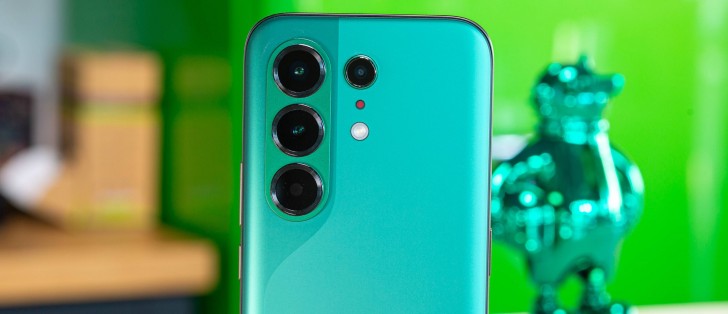
Competent camera setup for the price, standout selfies
Apparently, Ultra is no Premier, so the Tecno Camon 50 Ultra takes a step back in the camera system compared to the Camon 40 Premier, but it still packs a fairly comprehensive imaging setup with a triple rear camera and a nice selfie shooter.
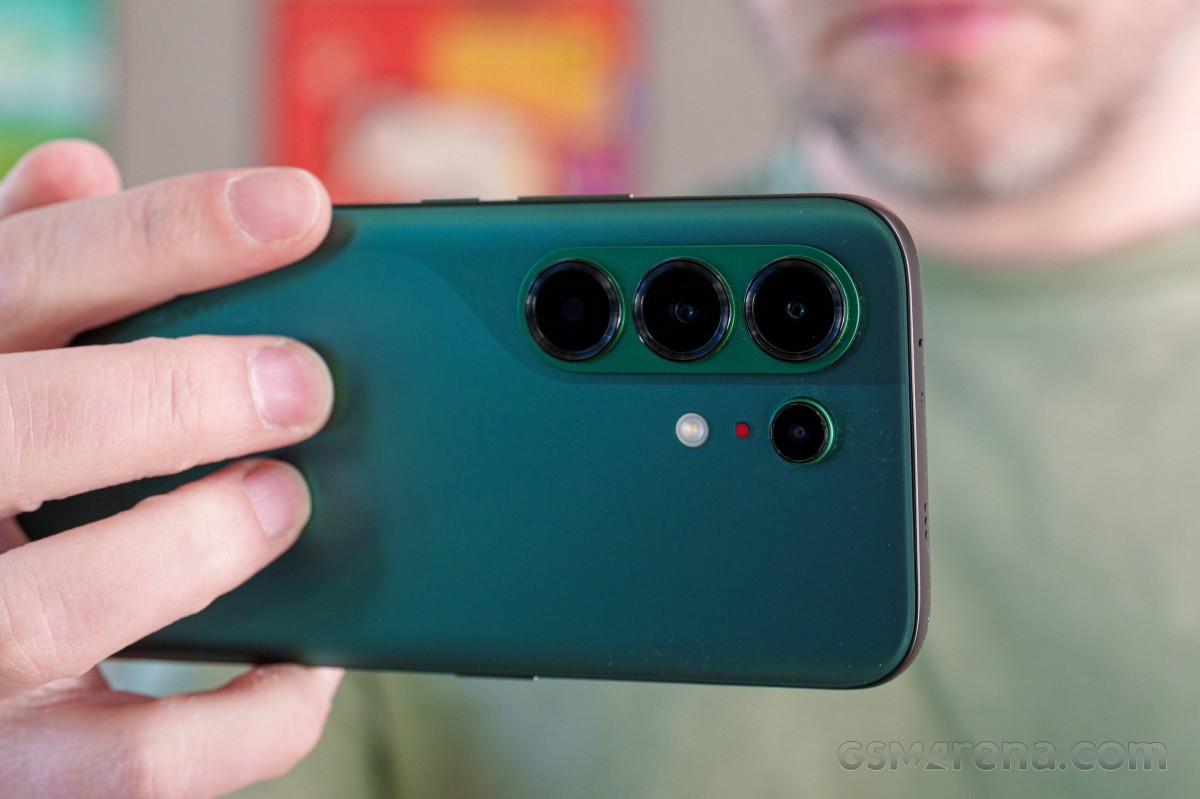
On the back, you get two 50MP imagers, one for the main wide camera and one for the telephoto. The ultrawide camera is based on a more modest 8MP sensor, while the 2025 Premier had another 50MP unit. On the front, it’s another 50MP sensor, same as that on last year’s ultimate model.
Tecno did bring some changes to the new model, the main camera replacing one Sony sensor for another of the same optical format. Similarly, the telephoto is sort of the same yet different – a marginally smaller OmniVision sensor replaces the Samsung JN1 on the 40 Premier, but the focal length remains the same at 70mm. The ultrawide is a bit of a downgrade indeed – it’s not just the resolution that’s being slashed, but you’re also losing the autofocusing capability.
Now, there might be a Premier model for this generation somewhere down the line, so that’s why Tecno is opting for a toned down setup, or it might be a matter of reassessing the lineup – either way, the ultrawide isn’t particularly remarkable, the other two don’t look too shabby.
There’s no need for excuses on the front – the selfie camera is a pretty solid piece of kit. It’s seemingly not the exact same setup as on the 40 Premier, with a wider 20mm lens replacing that model’s 24mm optics – wider is nicer, we reckon, plus it’s still got AF. There’s a high-res 50MP sensor on this one too.
Wide (main): 50MP Sony LYT-700C (IMX 896, 1/1.56″, 1.0µm-2.0µm); 23mm, f/1.8, OIS, PDAF (10cm – ∞); 4K30/1080p60 video recording.
Telephoto: 50MP OmniVision OV50M (1/2.88″, 0.61µm-1.22µm); 21mm, f/2.2, PDAF (33cm – ∞); 4K30/1080p60.
Ultrawide: 8MP GalaxyCore GC08A8 (1/4.0″, 1.12µm); 14mm, f/2.2, fixed focus; 1080p30.
Front camera: 50MP Samsung ISOCELL JN1 (S5KJN1, 1/2.76″, 0.64µm-1.28µm); 20mm, f/2.4, PDAF; 4K30/1080p60.
Daylight photo quality
Main camera
In broad daylight, the Camon 50 Ultra takes very good photos with its main camera. They have great dynamic range, the white balance is on point and colors are vibrant, but not extremely so. There’s no noise, and detail is rendered well. Nothing troubling, and pretty much praiseworthy performance.










Daylight samples, main camera (1x)
Human subjects look great too. Exposures are well judged, skin tones are lively, with no weird casts, facial detail is great. Portrait mode at 24mm comes with slightly too much background blur and minor imperfections in the generally good subject separation. The 35mm mode brings a bit of softness to the subject, but it’s not too bad.












Human subjects, main camera: Photo mode, 1x • Portrait mode, 24mm • Portrait mode, 35mm
The 50MP shots exhibit heavy sharpening and there’s no real extra detail underneath.




Daylight samples, main camera (1x), 50MP
The 2x zoom level is giving us pretty great shots… some of the time, at least. Well-lit scenes have excellent detail in general, though even then shadows can be noticeably murkier. Dimmer indoor scenes are softer altogether, but still not half bad.










Daylight samples, main camera (2x)
2x zoom from the main camera is your best bet for closeups, thanks to the 10cm close focusing and the solid pixel-level quality.




Close-up samples, main camera (2x)
2x portraits are solid too, though skin texture isn’t quite as fine as it is at 1x.








Human subjects, main camera: Photo mode, 2x • Portrait mode, 50mm
Telephoto camera
The 3x telephoto camera returns okay results, but it can be a little weird. We had more than one outdoor daylight scene that ended up on the blurry side of average, with detail rendered in that characteristic watercolor-like way that we get from some Quad Bayer sensors at nominal resolution. Other similar scenes didn’t have that look, though even then detail is a little… midrange-looking – it’s not the sharpest, and things can be a little gritty.











Daylight samples, telephoto camera (3x)
Here’s a handful of closeup attempts with the telephoto – the reproduction ratio isn’t too impressive and quality isn’t great either.




Close-up samples, telephoto camera (3x)
It’s a similar story with human subjects – the photos are alright, but they won’t be winning any contests for detail clarity.








Human subjects, telephoto camera: Photo mode, 3x • Portrait mode, 70mm
Here’s a handful of full-res shots from the telephoto – they’re not good, but then you shouldn’t really expect them to be.




Daylight samples, telephoto camera (3x), 50MP
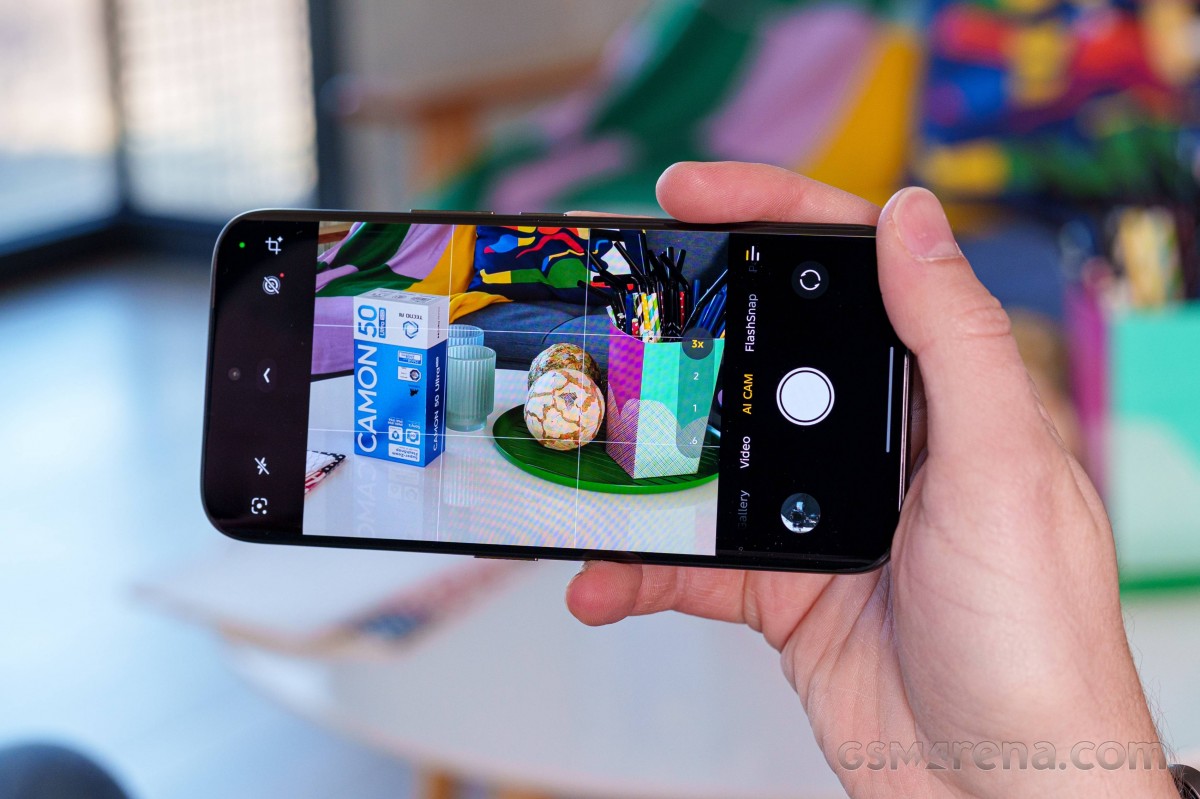
Tapping on the 3x button in the viewfinder will cycle between the native 3x 70mm zoom level, 85mm, and another preset – 117mm that translates to 5x zoom. Photos at this zoom level are pretty soft, but we’d probably still label them usable, depending on your use case.






Daylight samples, telephoto camera (5x)
Ultrawide camera
The Camon’s ultrawide camera isn’t anything too fancy, but it does capture decent 8MP shots. It can be a little too contrasty for its own good and shadows can be a touch soft and grainy, but ultimately, it’s not bad for the class.










Daylight samples, ultrawide camera (0.6x)
Selfies
What’s properly good – for the class, but also pretty much in absolute terms as well – are the selfies. You get excellent detail and lively colors with great skin tones. Then there’s the autofocus for weird angles on top of a nicely wide field of view to begin with.








Selfie samples
Low-light photo quality
Main camera
In the dark, the Camon 50 Ultra’s main camera remains poised and captures very good photos. They are a little heavy on the sharpening, yes, but they pack plenty of detail. Dynamic range is great, the auto white balance is mostly accurate and colors maintain a likeable level of pop.










Low-light samples, main camera (1x)
The 2x zoom level will get you usable results, so long as your intended use doesn’t involve pixel-peeping. Global properties are as good as they are at 1x, but detail is soft and aggressively sharpened at the same time.








Low-light samples, main camera (2x)
Telephoto camera
The telephoto camera’s 3x photos aren’t exactly top-class – darker scenes can be mushy and desaturated and detail in better lit areas can be a little coarse. Also, the auto white balance was occasionally further off the mark than we’re used to. A bit of a shaky performance here.











Low-light samples, telephoto camera (3x)
With that in mind, don’t expect miracles at 5x zoom – the photos are usable in a pinch, but nowhere near high-quality.








Low-light samples, telephoto camera (5x)
Ultrawide camera
The ultrawide camera’s low-light photos are quite soft, so they don’t stand up well to close examination. From afar, you may appreciate the bright exposures and good dynamic range, and colors are typically good too.








Low-light samples, ultrawide camera (0.6x)
Photo quality verdict
When it comes to photos, the Camon 50 Ultra’s camera system is somewhat mismatched. On the positive side you have the main camera that’s very good in daylight and at night, and the selfie camera that delivers standout results. On the other hand, you have the telephoto, that’s better on paper than it is in practice, and an ultrawide that’s as modest in its results as it is in specs.
Video quality
The Tecno Camon 50 Ultra can record video up to 4K30 with the wide and the telephoto cameras on the back, as well as the selfie camera. All three of these can also do 1080p at up to 60fps, if you’re willing to trade resolution for frame rate. The ultrawide camera maxes out at 1440p at 30fps – no 6-fps mode on it. There’s no Pro video mode and no 24fps mode either.
There’s a standard tier of electronic stabilization that’s available in all quality settings and can be turned off, and then there’s the Video steady mode that records in 1080p30 at 1x and 0.6x zoom. In our experience the regular stabilization worked really well – it irons out walking shake and creates smooth pans.
You can check out the playlist below, which includes multiple video samples.
Main camera 4K videos at 1x zoom are alright, but nothing too special. Detail is soft-ish and contrast is too high, though colors are generally good. The telephoto clips are also too contrasty for our liking and similarly detailed as the main camera’s. The ultrawide’s footage has a distinct low-end look with limited dynamic range and general softness.




Tecno Camon 50 Ultra video screengrabs, daylight: 0.6x • 1x • 2x • 3x
With that in mind, the ultrawide is almost surprisingly good at night – context matters, of course, and shadows are soft and noisy, but it’s decently usable footage we’re looking at. The main camera is also not too shabby in the dark, though it’s not too hot in terms of dynamic range and you can expect blown highlights to go with the pretty good detail you’d be getting. The telephoto’s clips are also pretty harsh with their highlights and noisy in the shadows, yet somehow not entirely throwaway quality.




Tecno Camon 50 Ultra video screengrabs, low light: 0.6x • 1x • 2x • 3x
Video quality verdict
The Camon 50 Ultra’s video recording capabilities aren’t overly extensive, but it covers the basics with 4K on three of its 4 cameras. Daytime video quality is alright from the main camera and the telephoto and hard to like on the ultrawide, but all three cameras do decently at night, somehow. Stabilization is thoroughly good too.