
I asked what I consider to be the central question when every peaceful mechanism has failed – when UN resolutions, special rapporteurs, Human Rights Council sessions and diplomatic negotiations have not dismantled the regime’s coercive machinery: “What is left to save us?”
Samira Taghavi is an Iranian New Zealander and barrister based in Auckland. Photo / Dean Purcell
The doctrinaire response was that apparently only a toothless cycle of failed steps is available – and its inefficacy is just how life is.
As for the breach of international law argument, it is not unusual for non-legally qualified people, like Clark, to assume that certainty lies in the legal texts, from which they take strength. But going deeper, it is very arguable that the American/Israeli position is legal. Even so, using legal text as the reason not to save people is unredeeming.
When I pressed on how international actors should weigh external legality against internal regime brutality, there was no substantive answer, but instead vague confidence expressed in the ballot box.
In Iran, however, electoral candidates are vetted ideologically and reformers disqualified, dissenters are imprisoned, protesters are shot (often with the intention of permanently blinding them) and political participation is tightly controlled – decisions ultimately lying with the Supreme Leader. To suggest that voting is the pathway to change under such conditions betrays ignorance (or forgiveness) of the authoritarian reality.
The cumulative message of that discussion, whether intended or not, was that war breaches territorial “sovereignty”. For those living under the regime, that translates into a stark conclusion: endure, survive if you can and hope the system evolves, with no actionable pathway offered for dismantling the repression.
It is easy to give talks about human rights. It is far more difficult to confront the enforcement question when diplomacy and negotiation have repeatedly failed to constrain the Islamic Revolutionary Guard Corps (IRGC). Diplomacy has been attempted for decades.
Agreements have been signed and abandoned. Sanctions have ebbed and flowed. Throughout it all, the IRGC has remained the regime’s enforcement arm, crushing dissent at home, exporting terrorism abroad and enriching itself – massively – along the way.
Clark acknowledges that the regime is a vicious theocracy, yet her strongest condemnation is reserved for those who have targeted its leadership structure, rather than for that structure.
If she believes deeply in international law and human rights, a more constructive intervention would have been to ask why New Zealand has not yet designated the IRGC as a terrorist organisation, as have other democracies. A “principled” human rights stance would begin there.
Prime Minister Christopher Luxon and Foreign Affairs Minister Winston Peters issued a joint statement condemning Iran’s retaliatory attacks. Far from “disgraceful”, it was, on the contrary, measured and arguably adequate. From an Iranian perspective however, it could have gone further by condemning regime brutality and celebrating foreign intervention.
While the weakening of the regime’s command structure may not guarantee democracy for Iranians who have endured imprisonment, torture, exile and the loss of loved ones, it represents a shift in the balance of power that decades of performative “talkfest” diplomacy have failed to achieve.
It brings closer the possibility of something better than it has been in 47 years. To frame that moment solely as a violation of “sovereignty” is to elevate territorial “integrity” above human rights and freedoms.
Such an argument is a hypocritical inversion of the progressive position on Māori or Gazan “sovereignty”, which focuses on populations “oppressed” by coloniser governments, within national borders.
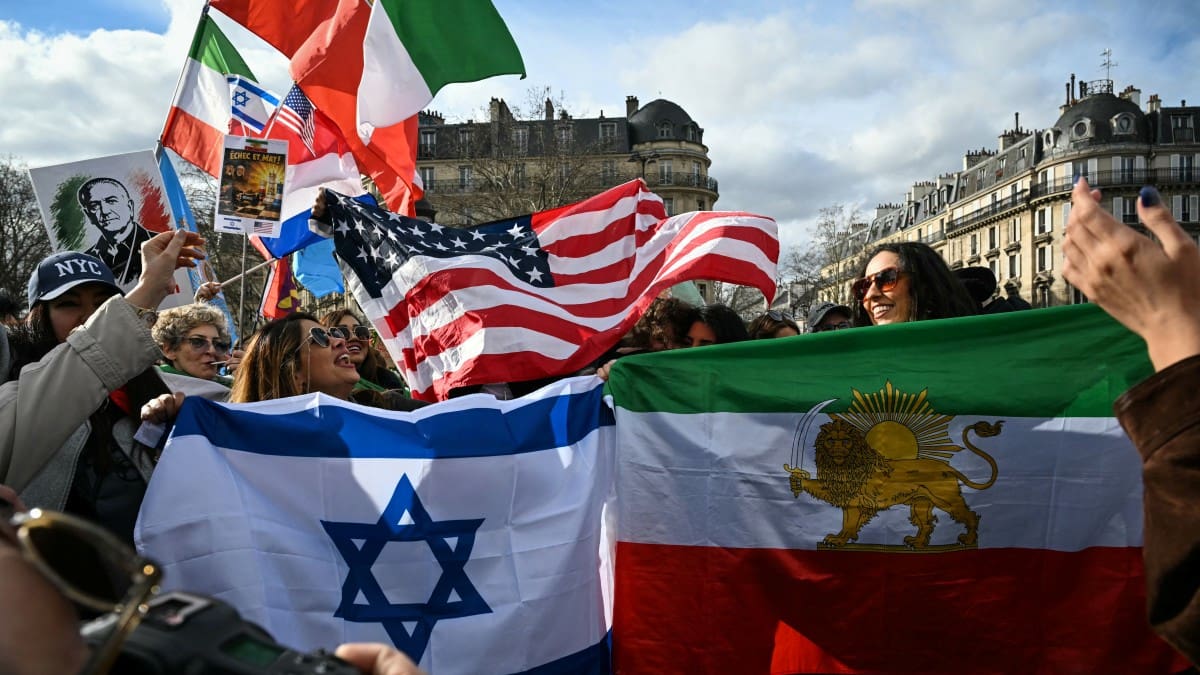
One also notes the near silence of the international and domestic left-wing “keffiyeh crew” as to the suffering of Iranians as compared to its great progressive concern for Gaza. Obviously, the desire of the western left in protecting the mullahs is largely explained by a common ideological core belief; anti-Americanism.
If international law is to mean anything, it must be capable of confronting the structures that violate it. Otherwise, we are not defending human rights; we are defending only the comfort of inaction – a true disgrace to the imprisoned nation of Iran.
Catch up on the debates that dominated the week by signing up to our Opinion newsletter – a weekly round-up of our best commentary.