
The attack referred to Edmonds’ remarks, which suggested returning the Reserve Bank to a dual mandate, which tasked the bank with fighting inflation and achieving maximum sustainable employment.
New Zealand’s Reserve Bank has tended to have a single mandate, focused on fighting inflation, but Labour introduced a dual mandate in 2018. The coalition repealed it in 2023.
Edmonds did not confirm Labour would campaign on that policy, but her remarks suggested that it would be very likely.
“I am seriously considering about whether we should bring that back,” she said, when asked about the dual mandate.
“It was there for a reason,” Edmonds said.
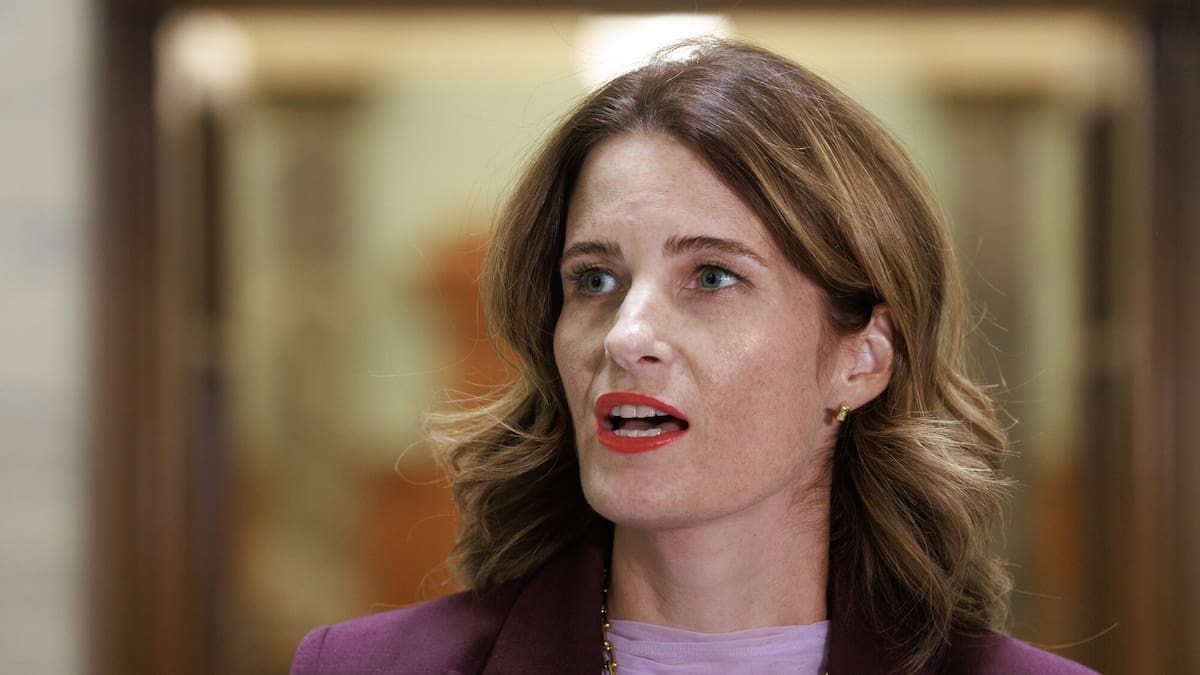
Labour’s finance spokeswoman Barbara Edmonds. Photo / Marty Melville
Seymour attacked the same remarks as “déjà vu economics”.
Edmonds, on her way into Labour’s caucus meeting a little later, defended the dual mandate.
Asked what she made of the attack that Labour would tolerate slightly higher inflation in the interest of getting unemployment down, Edmonds said: “Well, if they want to tolerate higher unemployment when there was a chance for the Reserve Bank to hypothetically drop interest rates faster [under a dual mandate], then I think they’ve got the wrong end of the stick.”
“For us, the unemployment rate being at the rate it is with 165,000 people wanting to work, that is not a situation that we want for Kiwis who are struggling to find work,” Edmonds said.
Asked whether the dual mandate might see lower interest rates but higher inflation, Edmonds said, “we’re already above the [inflation target] band right now … all of that needs to be taken into consideration”.
Pay equity
Willis and Seymour also attacked Edmonds’ remarks on pay equity, with Willis saying Edmonds “seemed to suggest that she’s got a plan to find a forest of magical money trees”.
Labour has committed to restoring the scheme to the settings it had before reforms last year.
Treasury’s costings from the Budget said the changes would save the Government $12.8 billion over four years.
Edmonds did not articulate how she would meet this bill when speaking to the Herald.
“It’s a really big bill,” Edmonds admitted.
“But everything is a big bill, right – you have to make choices,” she said.
Willis said Edmonds’ remarks were “not credible”.
Seymour’s remarks warned that if Labour were required to borrow to fund the pay equity promise, debt servicing costs would rise for the Government and households.
“[Edmonds] may be able to fool herself, but she won’t fool the debt markets, and one way or another New Zealanders will pay.
“We’re just left to wonder whether it will be through higher interest rates, higher taxes, cuts to services, or a combination of all those.“
Interest deductions and investment boost
Edmonds would not say whether Labour would reinstate a ban on allowing landlords to deduct interest costs from their tax bills, a move which would have the effect of increasing landlords’ tax bills.
“We’ll make our decisions and announce them,” Edmonds said, when asked about Labour’s plans.
Remarks from Labour leader Chris Hipkins suggested that if the old regime were brought back some interest costs could still be deducted, making it less onerous than the regime Labour legislated when last in office.
Act leader David Seymour weighed in on the interview. Photo / Mark Mitchell
The policy was controversial at the time it was introduced in 2021, with the Inland Revenue Department (IRD) and the Ministry of Housing and Urban Development both opposing it, warning of its effects on the tax system and a potential disincentive to building homes.
Treasury supported the measure, saying it might bring down house prices and “in the absence of a comprehensive capital gains tax” the rule acted “as a means of taxing more economic income from residential property investment”.
Unlike in 2021, Labour is now saying it will introduce a capital gains tax, which may weaken Treasury’s enthusiasm.
The coalition reversed that policy, which has had the effect of lowering landlords’ tax bills.
Willis and Seymour have defended the move, saying that by some measures, rents have reduced as a result of increased rental competition forcing landlords to pass their lower costs on to renters.
Willis said Edmonds’ remarks showed “Labour wishes to impose additional taxes on homes, again, an experiment under the last Labour Government that led to a period of record rent hikes, which have now stabilised with the return of interest deductibility”.
Seymour said Edmonds wanted to “recommence the war on landlords by banning interest deductibility again”.
“Labour’s policy is a tax on rentals that will be paid by renters. Restricting interest deductibility will squeeze household budgets, leaving less for food on the table,” Seymour said.
Edmonds would not be drawn on her plans for the Government’s $6.6b Investment Boost tax incentive, which allows firms to accelerate depreciation on their capital investments.
She said “no decision” had been made on whether to retain or scrap the scheme.
Treasury is broadly supportive of the scheme, saying it will slightly increase economic growth and boost wages and employment over 20 years.
“The analysis is very clear that the Investment Boost policy is bringing forward investment decisions, which are supporting productivity,” Willis said.