

Listen to this article
Estimated 4 minutes
The audio version of this article is generated by AI-based technology. Mispronunciations can occur. We are working with our partners to continually review and improve the results.
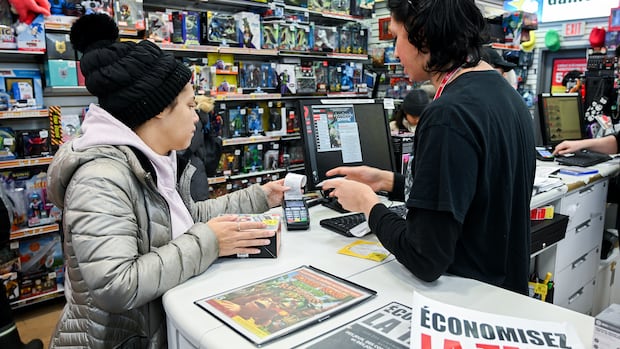
Undercover language inspectors are heading back into Quebec stores, bars and restaurants to check if customers are being greeted and served in French.
Quebec’s language watchdog did a similar survey three years ago and this time around, 7,800 businesses can expect a visit.
The Office québécois de la langue française (OQLF) says it is conducting this operation in key areas, with about half the visits being in Montreal.
According to OQLF spokesperson François Laberge, the study is part of the agency’s regular research programming as the Charter of the French Language mandates the office to monitor the evolution of Quebec’s linguistic situation across the province.
Laberge said the study will contribute to the 2029 report to the minister of the French language. The research and publication process takes several months, he added.
The study follows similar research conducted in 2010, 2017 and 2023 and aims to evaluate the availability of French in businesses. Observers will enter stores incognito to record both the language of greeting and the language used to serve customers.
Laberge said the study is not intended to penalize the businesses visited, and businesses will not be identified in the report.
The research territory includes the island of Montreal — divided into five zones — as well as parts of the South Shore, Quebec City, Gatineau, Laval and Sherbrooke. Laberge said these areas were selected to allow comparisons with previous studies conducted in the same locations.
Quebec merchants face challenges
A group that advocates for retail stores in Canada says business owners operating in Quebec are facing much bigger challenges than those in the rest of the country.
Michel Rochette, Quebec president of the Retail Council of Canada, said while the OQLF has been helping merchants adapt to the Legault government’s language reform, known as Bill 96, he said it’s difficult to deal with the language laws and everything else that comes with running a business.
“In Quebec, we are facing a lot of regulations and most of them are unique in the world,” he said, citing everything from the right to repair to price displays.
The deadline to conform to the law has also proved challenging. Rochette said the bill was adopted in 2022 and merchants were told they had three years to comply with regulations surrounding marketing, signs and more. But the full extent of the regulations wasn’t revealed for another two years.
“The problem is, they started to calculate the years in 2022,” he said. “So when everything was unveiled a year ago, we were already late.”
Toby Lyle, Burgundy Lion Group co-owner, said the goal is to make sure customers feel welcome. If an employee speaks Mandarin and so does the client, he would hope they can speak in Mandarin together without consequence, he explained.
“You want to make the customer feel comfortable,” he said.
He said at least half of his business in the summer is American tourists, or Canadians from outside Quebec. He said “bonjour/hi” is the standard greeting at his business.
Similar survey found French greeting decline
The OQLF conducted a similar survey in 2023 and found the French-only greeting rate dropped from 84 per cent in 2010 to 71 per cent on the island of Montreal.
Between 2010 and 2023, the rate of greeting in English increased by five percentage points, rising from 12 per cent to 17 per cent, the survey found.
In 2023, the highest rate of greeting in French was recorded in the island’s east at 91 per cent, while the lowest rate was in those located in the west at 49 per cent. Meanwhile, 31 per cent of businesses in the west greeted in English, but only seven per cent in the east.
Back in 2019, when Simon Jolin-Barrette was immigration minister, he said he was contemplating taking steps to ensure “bonjour” is the default greeting in Quebec’s stores and businesses.
Later, the government clarified it had no plans to force businesses to greet customers in French only, implying the standard “bonjour/hi” used in many Montreal businesses is acceptable.