
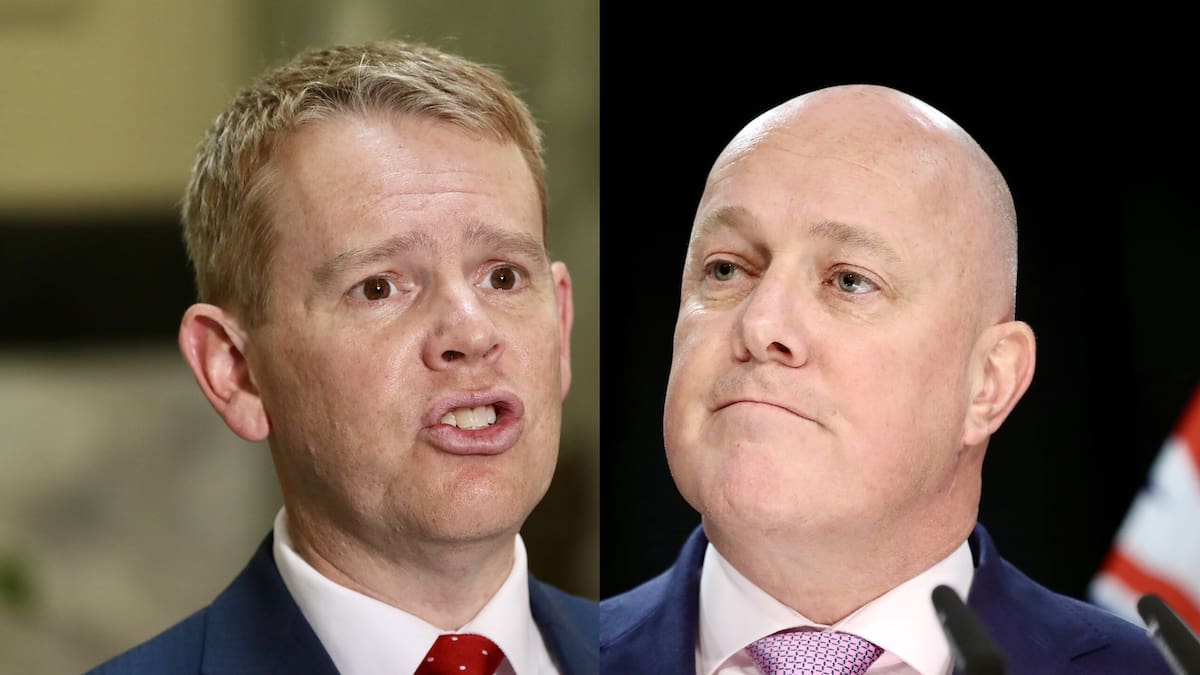
Luxon opened bluntly: “I’m here today to talk about the economy – and almost nothing else.”
“We are going for growth.”
On that, he is right. Living standards depend on growth. Elections are usually decided by the economy.
The Prime Minister then listed 37 initiatives – from Resource Management Act reform to more Eden Park concerts. It was comprehensive and relentless. It lacked hierarchy.
If the economy grows and voters feel it in wages, mortgages and prices, the Government will be re-elected. If growth stalls, it will lose.
If the economy is neither hot nor cold, then the campaigns will decide.
Buried in Luxon’s address was the outline of a strong speech, obscured by detail. Last year was meant to be the year of growth. That required explanation.
All three speeches lacked empathy. A good speech should make an audience laugh, reflect and occasionally be moved. These were competent briefings, not memorable addresses.
Luxon leans heavily on superlatives – “exceptional”, “extraordinary”, “tremendous”. Hyperbole invites doubt. Understatement persuades.
His closing drifted into a series of “I want” declarations. Voters are less interested in what Luxon wants than in what New Zealand can achieve.
I rated his speech six out of 10 for policy and four out of 10 for politics.
Hipkins delivered a technically stronger address.
His core line was simple: “New Zealanders were promised the cost of living would be fixed. Two years later, it’s worse.”
Hipkins is effectively counting on continued economic weakness. He has made “affordability” the centrepiece of Labour’s pitch.
Affordability is not a policy. It is an outcome. It follows from growth, supply and fiscal discipline. It cannot be achieved by declaration.
He said Labour “tried to do too much, too fast”. In truth, Labour inherited strong public finances and left deficits and recession.
The Ardern–Hipkins Government has few enduring achievements. Gestures were mistaken for outcomes.
Hipkins made no acknowledgement that Labour’s ban on offshore gas exploration has contributed to rising energy costs – central to today’s affordability crisis. Opposing a liquefied natural gas (LNG) terminal means domestic gas will run out.
As supply tightens, electricity prices will rise.
I declare an interest. My home uses gas. Converting will cost thousands that I will never recover. Multiply that across households and industry and the cost runs into billions.
Removing a major energy source from a modern economy will be a huge economic shock.
Hipkins says New Zealand can become a “renewable energy superpower”. It is a slogan, not policy. There is no example of a wealthy nation that has chosen to make itself energy-scarce.
Luxon failed to acknowledge that National is spending and borrowing more than promised. Hipkins went further. Rather than explain how Labour would close the deficit, he proposed a Future Fund and a Climate Fund – presented as if they were new money.
They are not.
A fund is not savings unless the money exists. When the Crown is running a deficit, setting money aside means increasing borrowing.
Every dollar put in a “fund” must be borrowed. Shifting money between columns of the Crown accounts does not lower the debt.
Labour suggests State-Owned Enterprises (SOEs) would help capitalise these funds. As the former Minister of SOEs, I know the books. KiwiRail cannot fund new rail ferries. Air New Zealand has required repeated financial support. There is no hidden surplus waiting to fund infrastructure.
Hipkins still confuses intentions with results. Announcing a fund is not the same as funding it.
I rated his speech two out of 10 for policy and eight out of 10 for politics.
Seymour’s address rested on three ideas: equal rights, positive-sum thinking and smaller government.
He listed Act’s claimed successes – from school-lunch savings to regulatory reform and funding new cancer medicines.
Seymour alone addressed long-term structural pressures such as demographic change and the size of government.
His remedy: equal citizenship, personal responsibility, less red tape and a leaner state.
He proposes reducing the number of ministers from 30 to 20 and cutting ministries from 41 to 30 – abolishing what he calls vanity portfolios.
It is unlikely to win applause from politicians seeking office.
I rated his speech eight out of 10 for policy and six out of 10 for politics.
Each leader offered a route to victory.
Luxon needs growth to arrive.
Hipkins needs it to fail.
Seymour seeks a different agenda.
But the election may turn on something simpler: what we pay when we switch on the lights – and whether they still come on.
Catch up on the debates that dominated the week by signing up to our Opinion newsletter – a weekly round-up of our best commentary.