
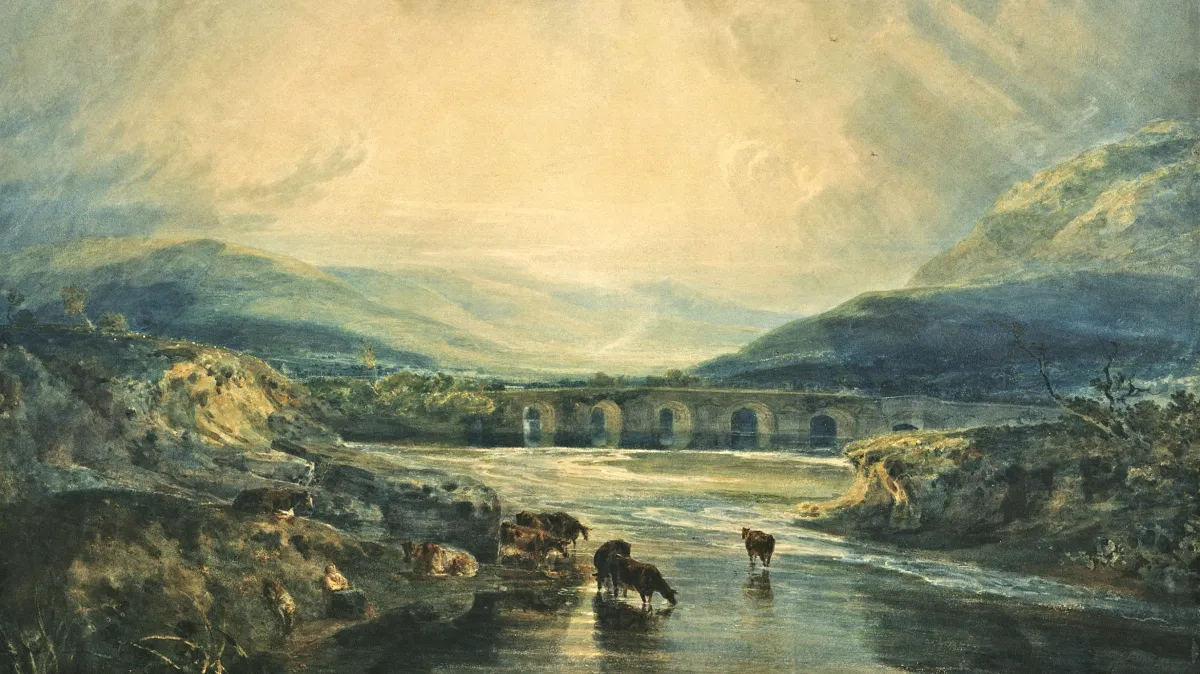
The painting which kickstarted JMW Turner’s career is to be shown publicly for the first time since the end of the 18th century.
Abergavenny Bridge (1798) was displayed just once at the Royal Academy in 1799 before being bought by a private individual. Over the next two centuries it was owned by a handful of other British collectors.
The watercolour is especially significant because it is the one which helped Turner be elected, at 24-years-old, as the youngest ever Associate Royal Academician. He became a full RA three years later.
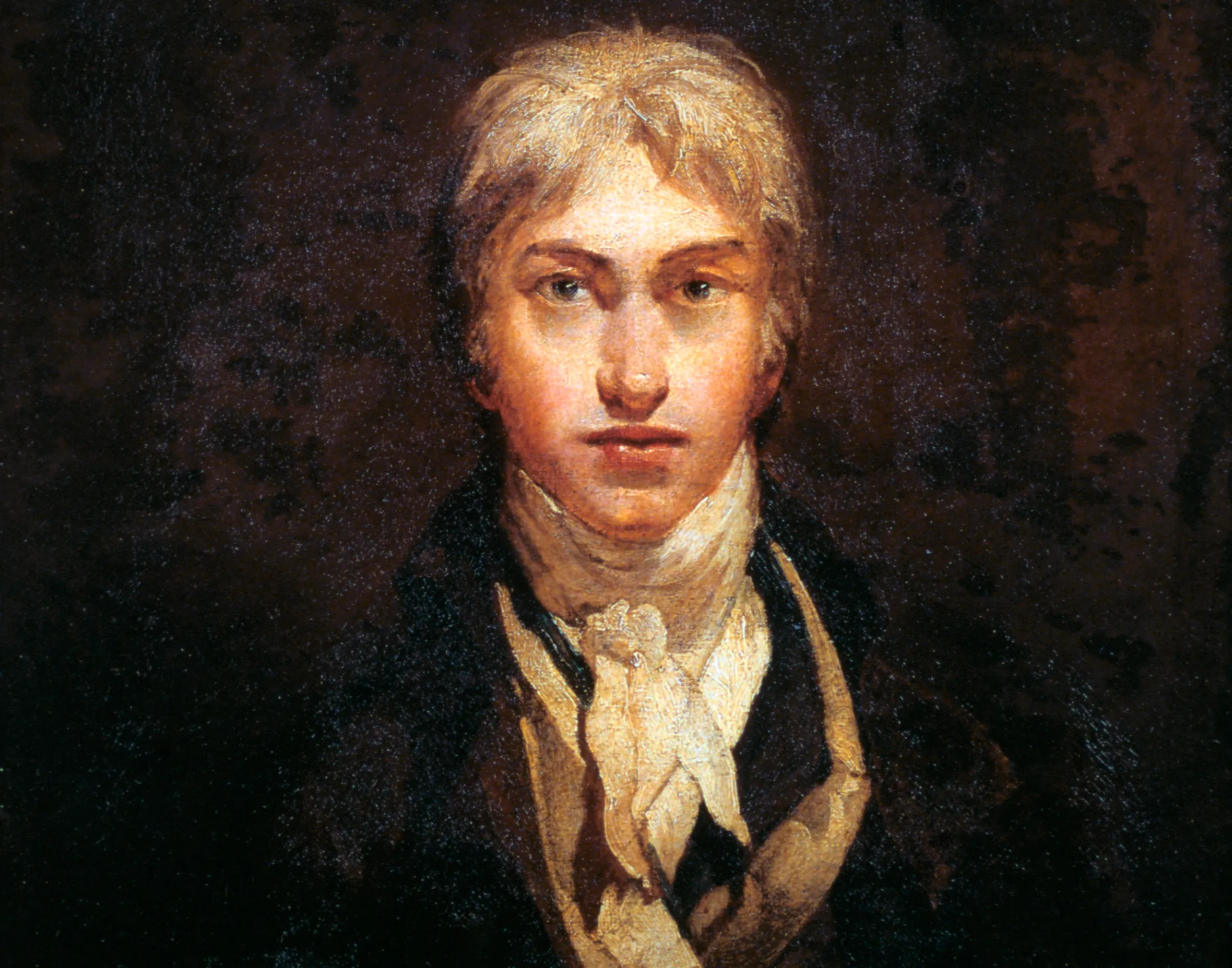 Self-portrait of JMW Turner, 1799, aged 24. Abergavenny Bridge was exhibited at the Royal Academy the same yearART MEDIA/PRINT COLLECTOR/Getty IMAGES
Next month Abergavenny Bridge, Monmouthshire: Clearing up after a Showery Day, to give the painting its full title, will be shown at an exhibition at Gainsborough House’s museum and art gallery in Suffolk after its owner for the past 34 years agreed to its first ever loan. He paid £71,500 for the mid-sized watercolour in 1992, which is now worth significantly more.
Emma Boyd, Gainsborough House’s curator, said: “It’s a watercolour, which made Turner’s career. It’s really surprising when something like this turns up.”
In summer 1798 Turner spent six weeks sketching in Wales, starting from Bristol where he had stayed a few days with the Narraway family, who were friends of his father.
Boyd has read a letter, written by John Narraway’s niece, Ann Dart, stating: “Turner went from my uncle’s house on a sketching tour of Wales. My uncle gave him a pony and lent him a saddle, bridle and cloak. But these he never returned.” Turner’s excuse might have been that he was then impecunious.
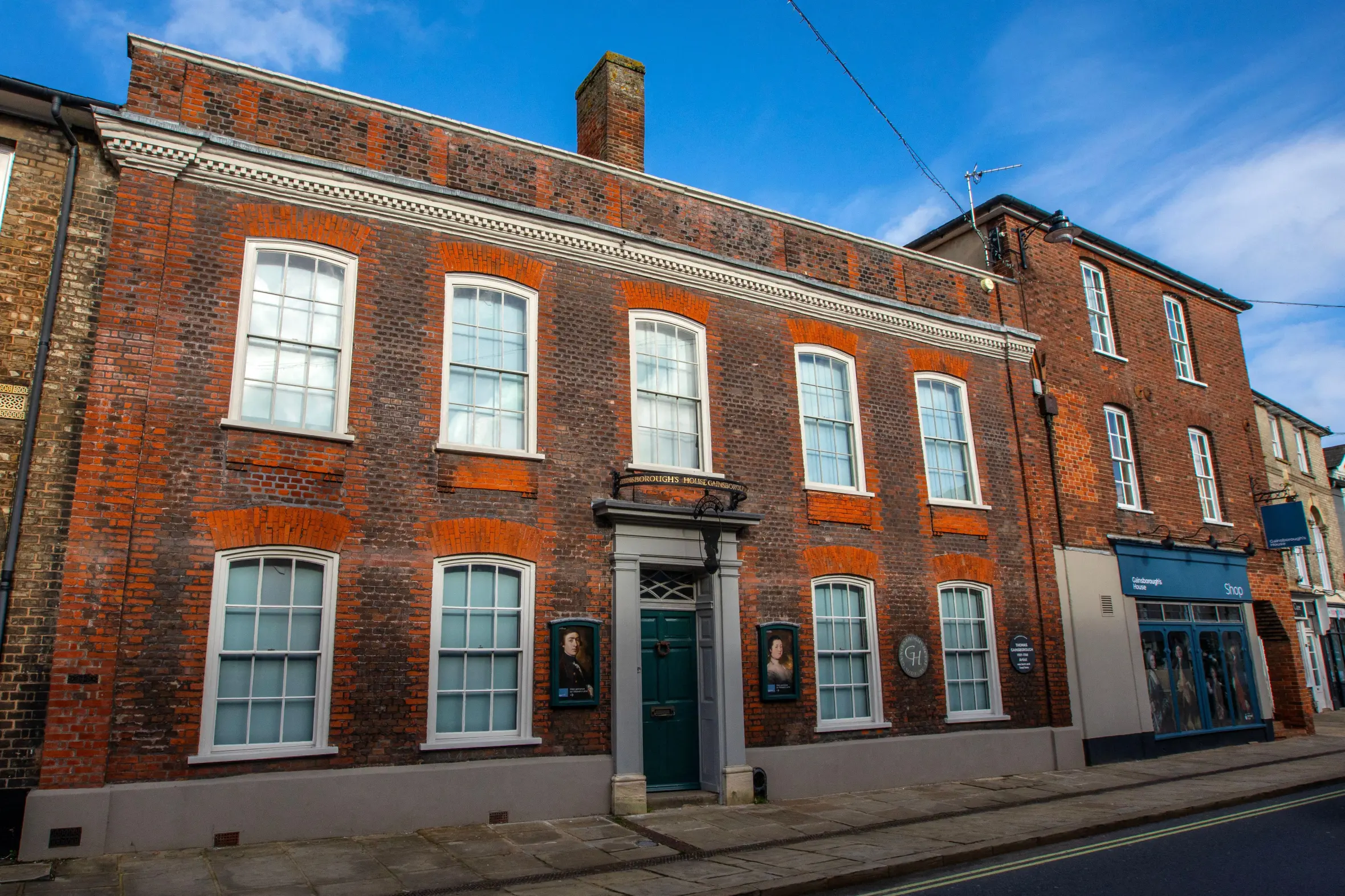 Gainsborough’s House, SuffolkAlamy
There is now very strong evidence that this watercolour of Abergavenny Bridge persuaded senior Royal Academicians to make the young Turner an associate member — the first stepping stone in his stellar career. Joseph Farington, a leading RA and fan of Turner, wrote in his diary on September 26, 1798, that “[William] Turner called on me. He has been in south and north Wales this summer — alone and on horseback — out 7 weeks — much rain but better for effects. I mentioned election of Associates to him. He should have my vote.”
It is significant that Farington, himself a noted landscape artist, wrote about “rain effects” as Turner’s works later became synonymous with weather, clouds and water.
On March 13, 1799, Farington made another diary entry, writing: “Turner I called on and saw his drawing of Abergavenny Bridge, made for Lawrence.” In other words, Turner’s Abergavenny Bridge had been commissioned for Sir Thomas Lawrence, then England’s most successful portrait painter and a distinguished RA. Records from 1799 show that Lawrence was the first to purchase the watercolour.
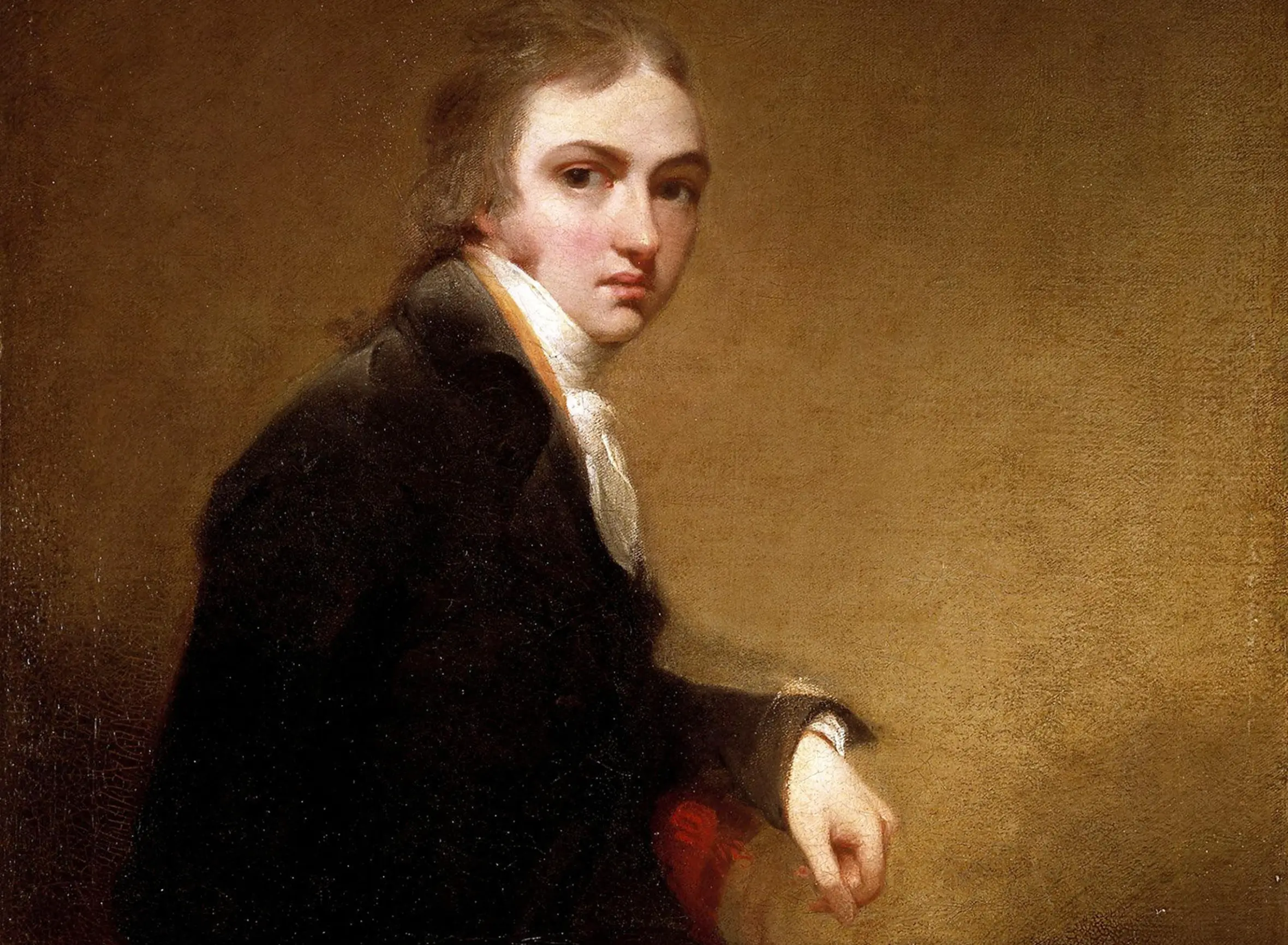 Sir Thomas Lawrence, self-portrait, 1788Alamy
Ian Warrell, an author who specialises in Turner’s works, said: “It’s really nice to go back and find this missing piece in Turner’s career. It solves a puzzle.”
The Gainsborough’s House exhibition, Gainsborough, Turner and Constable: Inventing Landscape opens on April 25. It includes three more Turner watercolours, including one of Brighton from the mid-1790s that has not been displayed before.
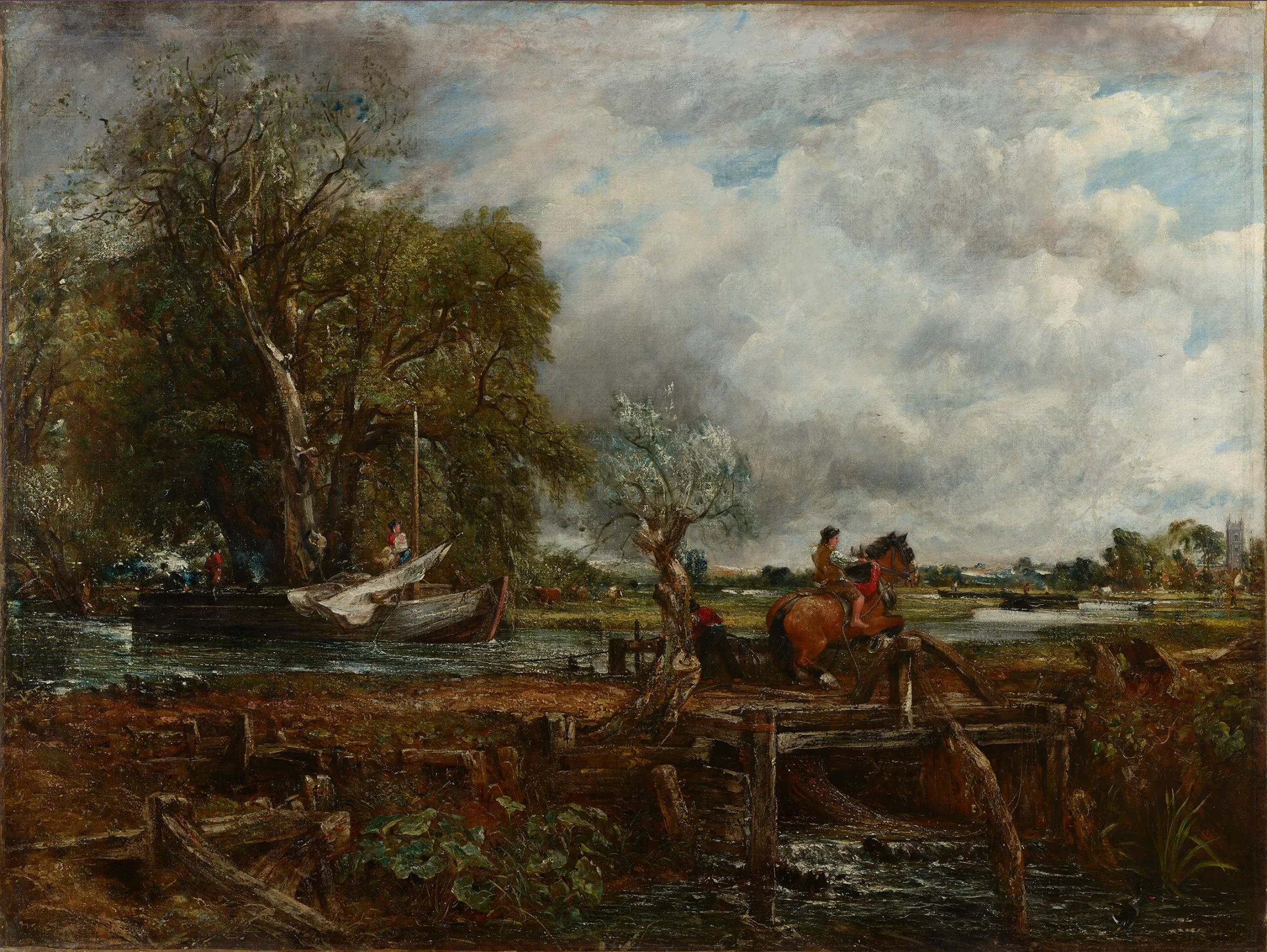 The Leaping Horse, by John Constable will also feature in the exhibitionROYAL ACADEMY OF ARTS
Among other works will be Thomas Gainsborough’s oil Landscape with Cattle, A Young Man Courting a Milkmaid, not seen in the UK since 1952, and John Constable’s The Leaping Horse, being shown for the first time in Suffolk, the county in which it was painted. There are also some contemporary landscapes of Wales by David Dawson and of East Anglia by Kate Giles.