
“We are facing new circumstances … and we have to look at them with new eyes.”
It was a clear articulation of restraint in uncertain terrain. And it is the tone New Zealand needs.
Prime Minister Christopher Luxon had earlier said New Zealand was “not best placed” to judge the legality of the strikes – a defensible position given limited intelligence access. But his subsequent “any action” remark, later described as a misspeak, blurred that message.
In fast-moving crises, phrasing matters. The public looks for consistency.
Peters’ comments restored that clarity. His point was not to side with Washington, nor to excuse Tehran. It was to underline that legality is not determined by talkback or by political instinct. It is tested through enforceable international mechanisms – and those mechanisms are strained in conflicts such as this.
The contrast was instructive.
Other party leaders have weighed in on the debate.
Green Party co-leader Marama Davidson said the Prime Minister should show “moral courage” and declare whether the war was illegal. Act leader David Seymour countered that legality was determined by courts “in full knowledge of the facts”, not by political grandstanding. His focus, he said, was the safety of the Iranian community in Aotearoa and New Zealanders in the region, alongside the rapid resumption of trade.
Trade Minister Todd McClay confirmed a “reasonable” number of New Zealand containers were caught up in the disruption around the Strait of Hormuz, part of roughly $3 billion in trade linked to the region. The full inflationary effect, he cautioned, remained unclear in these early days.
The global temperature is rising. That makes discipline at home more important, not less.
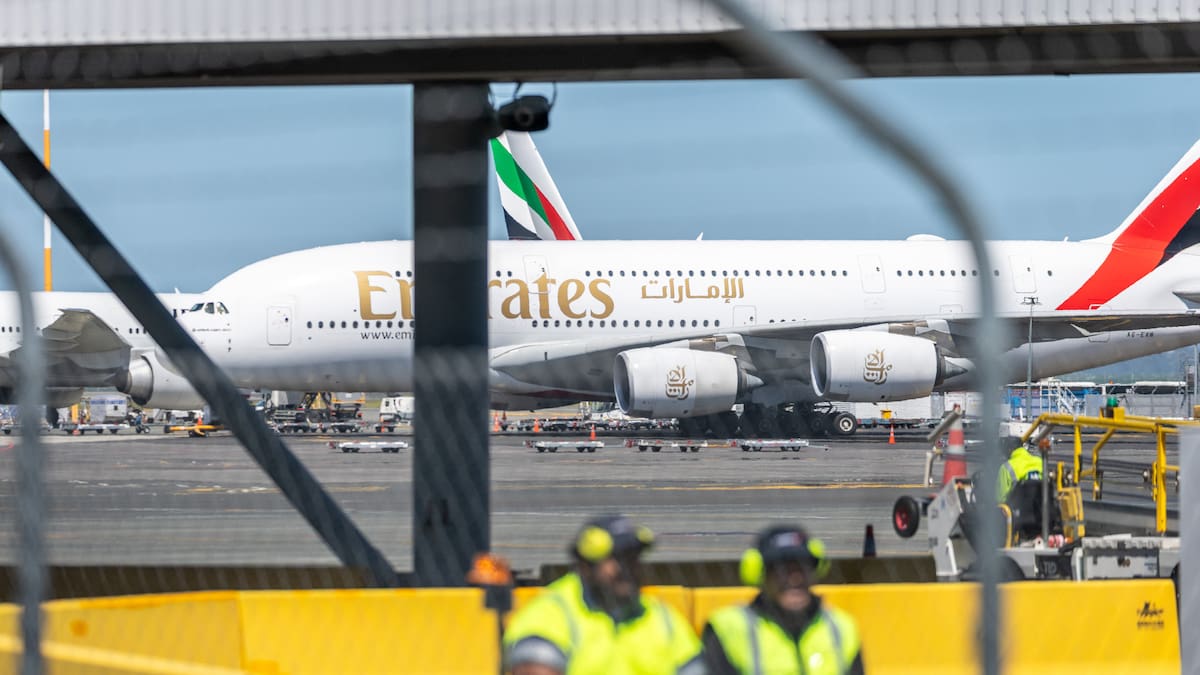
Airspace closures have delayed flights to and from Auckland by Emirates and Qatar. Students have been stranded in Dubai. SafeTravel registration issues have added frustration.
Around 4000 TEU of dairy, meat, and horticultural exports are affected by the Hormuz route suspension. Red meat exports alone total $11.7b annually, including $298m to GCC markets last year. Some cargo can be rerouted through Asia, though at a higher cost and with longer transit times.
This is disruption. It is not collapse.
The Government cannot shape battlefield outcomes, but it can shape how New Zealand responds.
That was the essence of Winston Peters’ intervention on Wednesday – a reminder that legality is not declared on cue, and that restraint is not weakness.
In uncertain times, that is the leadership the moment demands.