
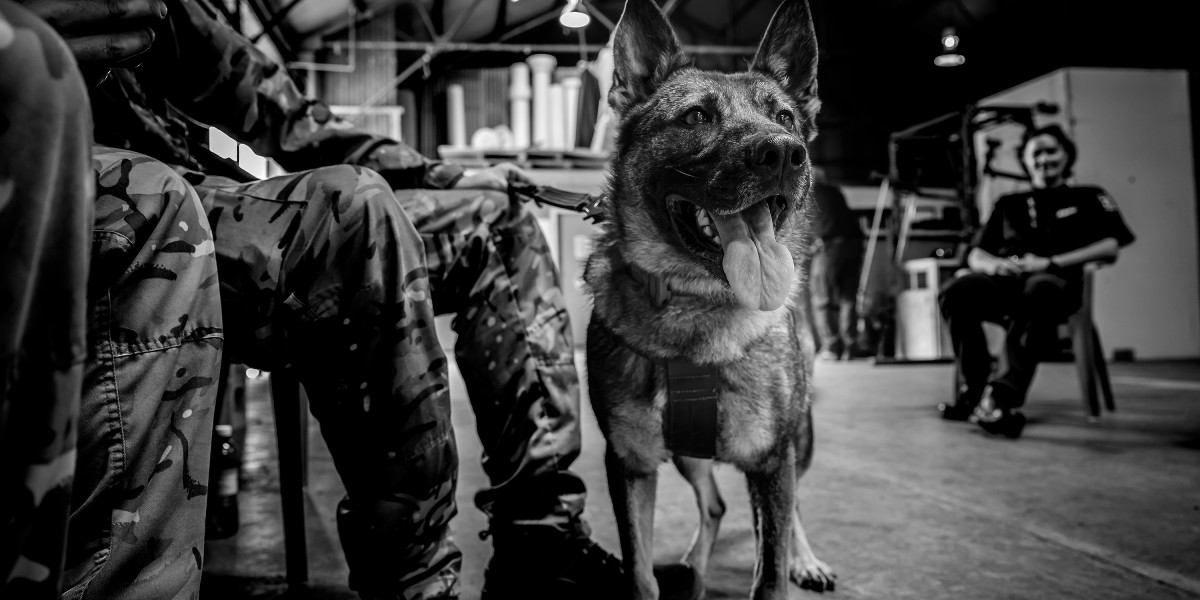
While the dogs are being tested, Sarah Thomas of Pet Transport is on site with a veterinarian, already starting the process to safely ship the Australian dogs back home. Pet Transport, a 50-year-old business, is the official pet transporter for the New Zealand Defence Force. Sarah came to the business in 2014 after her father bought it in 2002. She’s now a company director.
Importing an animal between countries is not for the faint-hearted. There are blood tests, vaccinations, and records needed for dog dimensions, microchip numbers and history of other overseas travel, all to comply with Ministry for Primary Industries requirements.
“The import regulations are pretty strict,” she says. “The main difficulty we were dealing with for six dogs is that they come from multiple barracks across Australia, which meant different points of contact.
We needed them all to attend vet appointments and get the requirements done on time. For us, it’s getting hold of the right people and make the information understandable for them, because it can be quite confusing if you’ve not done it before.
It’s a well-worn procedure for her. She’s organised the transportation of Royal New Zealand Air Force dogs to Australia for Exercises Pitch Black and Talisman Sabre. In 2024 NZ Army personnel and dogs were transported to Samoa for security work alongside NZ Police dog teams for the Commonwealth Heads of Government Forum.
Outside of Defence, she’s handled the passage of New Zealand conservation dogs to other countries and even transported hunting dogs for pig eradication programmes in Guam. Having good networks in this industry is essential, she says. It also helps that Australia and New Zealand are rabies-free.
“The New Zealand Government is very understanding when it comes to the movement of military dogs and police dogs. They just don’t want any kind of biosecurity risk. So I’m using the relationships we’ve built up over the years to support these shipments and make sure it all works.”
Learning how to import dogs is another big output for this exercise, says Alan. It’s a chance for the Australian Defence Force to practise the procedure.
“Interoperability between the New Zealand Defence Force and with our main ally and partner government agencies, has been invaluable. It’s opened something of a Pandora’s Box – in a good way – about where we can take this sort of training to in the future.”
“We’re all in the same fight to make our countries as safe as possible and be ahead of the curve.”