
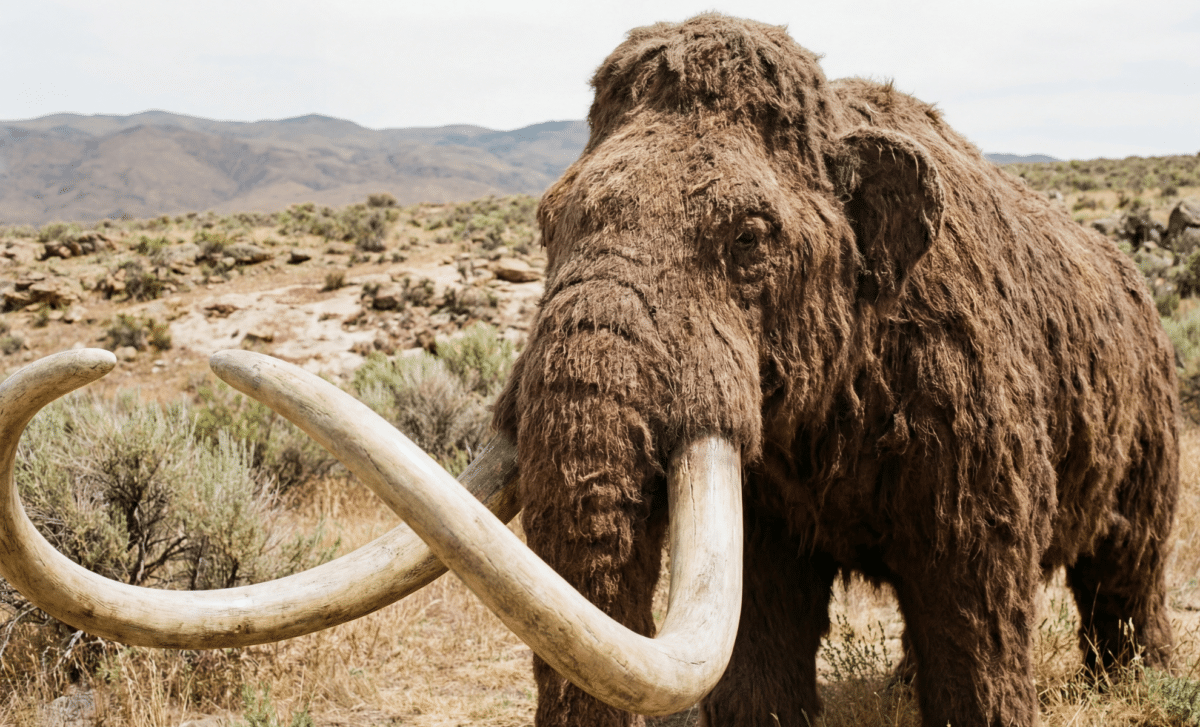
The woolly mammoth, a magnificent giant that once roamed the Arctic landscapes, could soon be returning to life, thanks to a remarkable scientific effort led by Colossal Biosciences. The company is working on genetically engineering Asian elephants to carry mammoth-like traits, with the goal of resurrecting the woolly mammoth. This endeavor, described as a potential game-changer in conservation, aims to bring back an extinct species and restore a critical ecological balance in the Arctic.
The Technological Breakthrough Behind Woolly Mammoth De-Extinction
Colossal Biosciences has made strides in advancing the technology necessary for the resurrection of the woolly mammoth. Their breakthrough involves editing the DNA of the Asian elephant, which is the mammoth’s closest living relative. By altering specific genes, scientists hope to recreate traits that are emblematic of the woolly mammoth, such as its thick fur, cold-resistant fat storage, and small ears. With the mammoth’s closest genetic link being the Asian elephant, Colossal’s research utilizes CRISPR and other advanced gene editing tools to make precise changes to the elephant genome. This careful editing allows the team to engineer a creature that possesses mammoth-like features, mimicking the extinct species’ ecological role and behavior.
As Dr. Beth Shapiro, a key scientist behind the project, emphasized: “The same technological advances that allow us to introduce the genes of mammoths into the genome of an elephant can be harnessed to rescue species teetering on the brink of extinction.” This statement captures the dual purpose of the project, not just bringing back an extinct animal, but also potentially saving endangered species by applying these innovative genetic techniques to living creatures facing extinction.
The Role of Woolly Mammoths in Their Ecosystem
Woolly mammoths were not just a part of their ecosystem, they actively shaped it. These ancient creatures played a critical role in maintaining the mammoth steppe, a vast grassland ecosystem that stretched from Europe to Siberia. They uprooted shrubs and small trees, ensuring that the vast grasslands remained open and maintained the biodiversity of the region. As herbivores, they also helped disperse plant seeds across the landscape, supporting the growth of various plant species.
The mammoths’ role as “ecosystem engineers” was so significant that scientists believe their extinction led to the transformation of large parts of the Arctic from grasslands into tundra and forests. Colossal Biosciences has suggested that reintroducing mammoth-like creatures into the Arctic could help reverse some of the ecological damage caused by their extinction. The theory is that these creatures could help maintain the ecosystem balance, prevent the encroachment of forests, and reduce the thawing of permafrost, a key factor in climate change.
The Scientific Journey from DNA Extraction to Cloning
The journey to revive the woolly mammoth is a long and complex one, involving multiple stages of advanced genetic research. The first step involves extracting ancient DNA from preserved woolly mammoth remains found in permafrost. These DNA samples, some dating back as much as 1.2 million years, are invaluable because they contain crucial genetic information that scientists can use to identify which traits made the mammoths so uniquely adapted to the cold Arctic climate.
Colossal’s team has worked tirelessly to reassemble these ancient DNA fragments, creating an accurate genetic map of the woolly mammoth. Once these genetic blueprints are in place, scientists use sophisticated gene editing techniques like CRISPR to make precise modifications to the Asian elephant’s genome. This step is critical, as it involves ensuring that the edited genes are incorporated correctly and function as intended. The final stage of the process involves cloning, creating an embryo that carries the edited DNA, before it can be implanted into a surrogate Asian elephant to carry the pregnancy to term.