
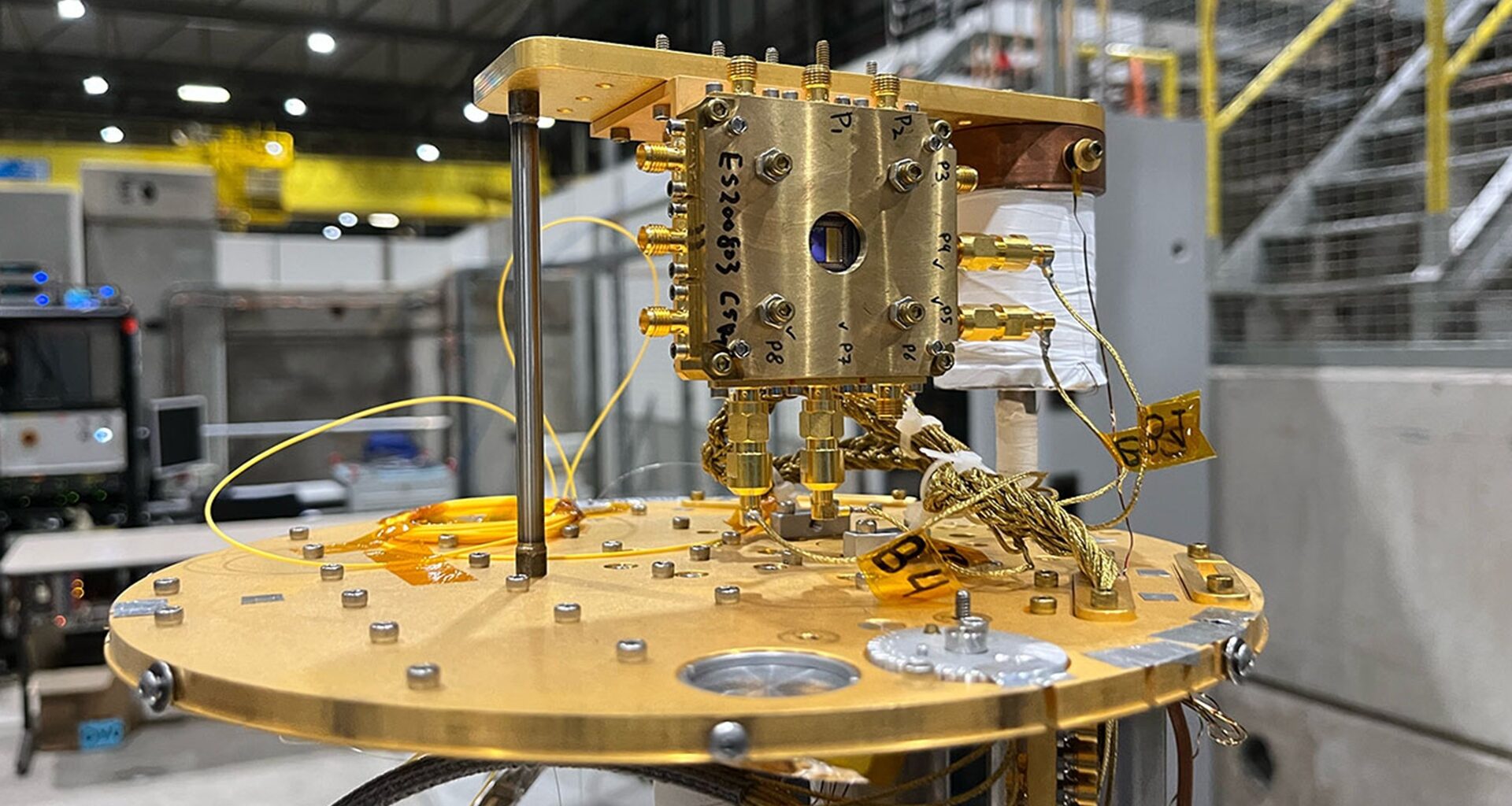
Researchers in the US have revealed that an emerging class of quantum sensors, called superconducting microwire single-photon detectors (SMSPDs), could spot high-energy particles and dark matter with exceptional precision.
The study was led by Illinois’ Fermi National Accelerator Laboratory (Fermilab), and was carried out at CERN. It brought together collaborators from NASA’s Jet Propulsion Laboratory, Caltech, and the University of Geneva in Switzerland.
For the project, the team used SMSPDs to improve particle detection efficiency and timing. These characteristics are reportedly essential for future accelerator-based experiments and dark matter searches.
Cristián Peña, PhD, a scientist at the Fermilab Quantum Institute, who headed the study, highlighted why the findings matter. “This research is significant because it shows improvement from our initial measurements using SMSPDs for charged particle detection,” he explained.
Tracking particles
Earlier findings proved that SMSPDs can sense individual charged particles such as electrons, protons and pions. In contrast, the current research improved both detection efficiency and timing resolution by using a thicker tungsten silicide film.
According to the researchers, increasing the wire’s thickness enhanced its ability to absorb energy from high-energy charged particles. “For the first time, we used SMSPDs to measure the detection efficiency of muons, potentially expanding their use for new avenues of exploration,” Peña added.
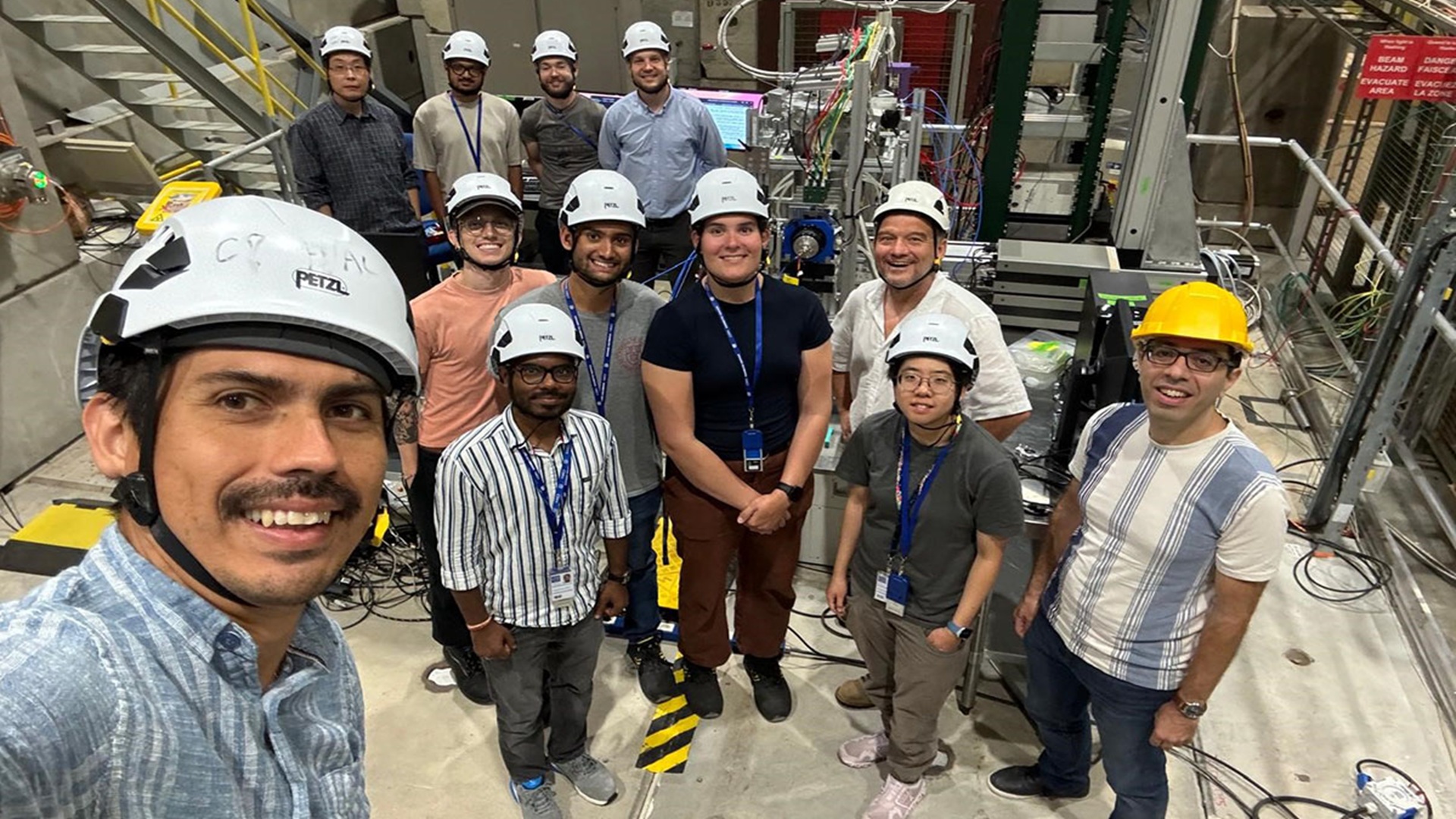 The researchers tested superconducting microwire detectors for efficient high-energy particle detection at CERN’s test beam. Credit: Cristián Peña, Fermilab
The team is now exploring the feasibility of using muons, one of the fundamental subatomic particles, in a future high-energy muon collider. Muons are 200 times heavier than electrons. Their unique properties and behaviors make them useful for studying fundamental forces and particles.
Future particle experiments will need powerful colliders that generate millions of events per second. This means that new detectors must be capable of detecting and tracking individual particles in both space and time with increasing precision.
According to the research team, SMSPD sensors, called 4D sensors as they can achieve better spatial and time resolution all at once, show strong potential to meet this demand.
Exploring dark matter
In comparison with superconducting nanowire single-photon detectors (SNSPDs), SMSPDs offer a larger active area, which increases their ability to detect and track charged particles more effectively.
This, as per the team, makes them promising candidates for future accelerator-based experiments, and for dark matter searches, as research into the technology continues to advance rapidly.
“We are continuing to make strides in developing these sensors with greater precision and greater efficiency to meet the needs of next-generation particle accelerators,” Si Xie, PhD, a physicist at Fermilab and joint appointee at Caltech, pointed out.
“We still have a lot of work to do, but this research shows we are progressing very well,” Xie elaborated in a press release. “We are excited to continue studying and improving these devices so they can help facilitate new physics discoveries.”
In a parallel effort, in a separate project, some of the same researchers carried out the first detailed temperature-dependent study of an SMSPD sensor array to use in low-background dark matter detection experiments.
“We are thrilled to have assembled a world-class team across several institutions to push this emerging research to the next level,” Peña concluded.