
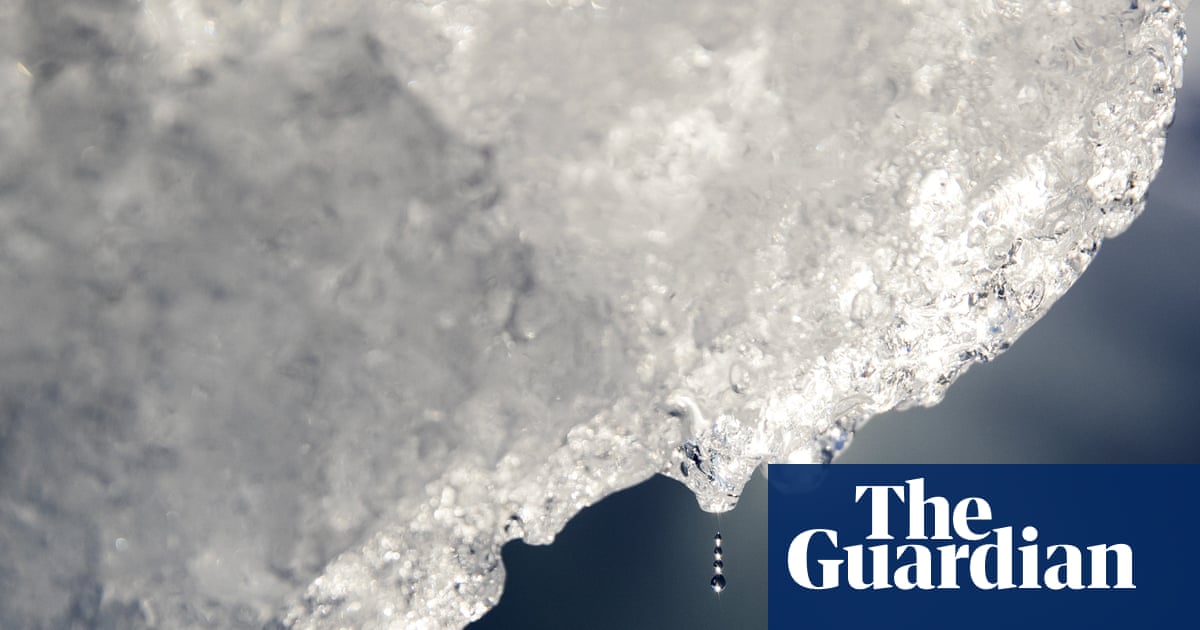
You don’t need an umbrella in Antarctica. With an average of just 16cm of precipitation each year, this continent is the world’s largest desert. But all that could change. A study shows that as the world warms, Antarctica is going to experience more rain, bringing with it fundamental changes to the landscape and wildlife inhabiting this unique environment.
Bethan Davies, a glaciologist at Newcastle University, has been leading a team studying the impact of a warming climate on the Antarctic peninsula. Under faster warming scenarios (2C or more this century) they report in Frontiers in Environmental Science that snow and rain could increase by more than 20%, with increasing amounts falling as rain.
The combination of warmth and rain will lead to shrinking and faster-moving glaciers, weakened ice shelves and more icebergs. This in turn will lead to fewer algae and krill, fewer breeding platforms for penguins and seals and an open invite for invasive crabs and mussels. And heritage will suffer too, with historic structures such as Scott and Shackleton’s wooden expedition huts expected to suffer from the ravages of rainfall. But the research also shows that if warming can be limited to less than 1.5C there will be time to adapt and the worst of these impacts can be avoided.