
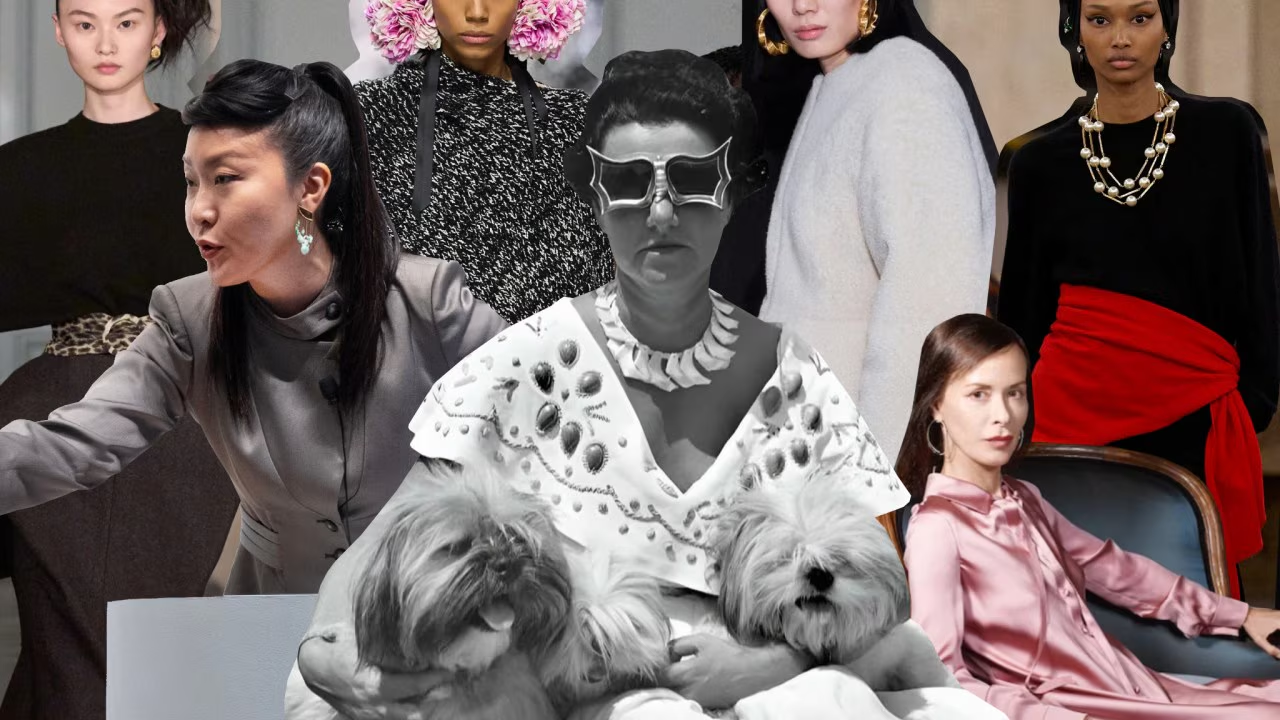
Editor’s note: Lately, the gallerina has been a fixture of fashion discourse. You can point to industry figures like Phyllis Kao—an art auctioneer at Sotheby’s, whose sales of dinosaur fossils and Stradivarius violins have gone internet-viral—for reviving that interest, one that prizes, above all, an intensely personal sense of style. How does a woman who curates art—and whose job, really, is to define taste—apply the same precision to her wardrobe?
Here, we asked Alexandra Leclerc, née Saint Mleux, art history graduate of the École du Louvre and art coordinator, to reflect on the archetype and its mythology, and discuss the designers of today who explore her image best. —Gladys Lai, Vogue head of brand
The gallerina existed long before fashion decided to name her. Figures like Peggy Guggenheim, famed New York art collector, embodied an early version of the archetype: intellectual and fearless, dressing not to blend in but to assert taste as a form of authorship. Her style was personal, radical, and inseparable from her role as an art patron.
Peggy Guggenheim understood that patronage extended beyond collecting; it was also embodied. Her close friendship with Elsa Schiaparelli, whose surrealist designs she frequently wore while championing artists, is a reminder that the link between fine art and fashion has always been intimate rather than incidental. When Guggenheim dressed in Schiaparelli, she wasn’t simply wearing clothes or couture. She was participating in the same avant-garde conversation that animated the artists she collected. Her wardrobe functioned as an extension of her curatorial vision, proof that the gallery and the atelier have long spoken the same language.