
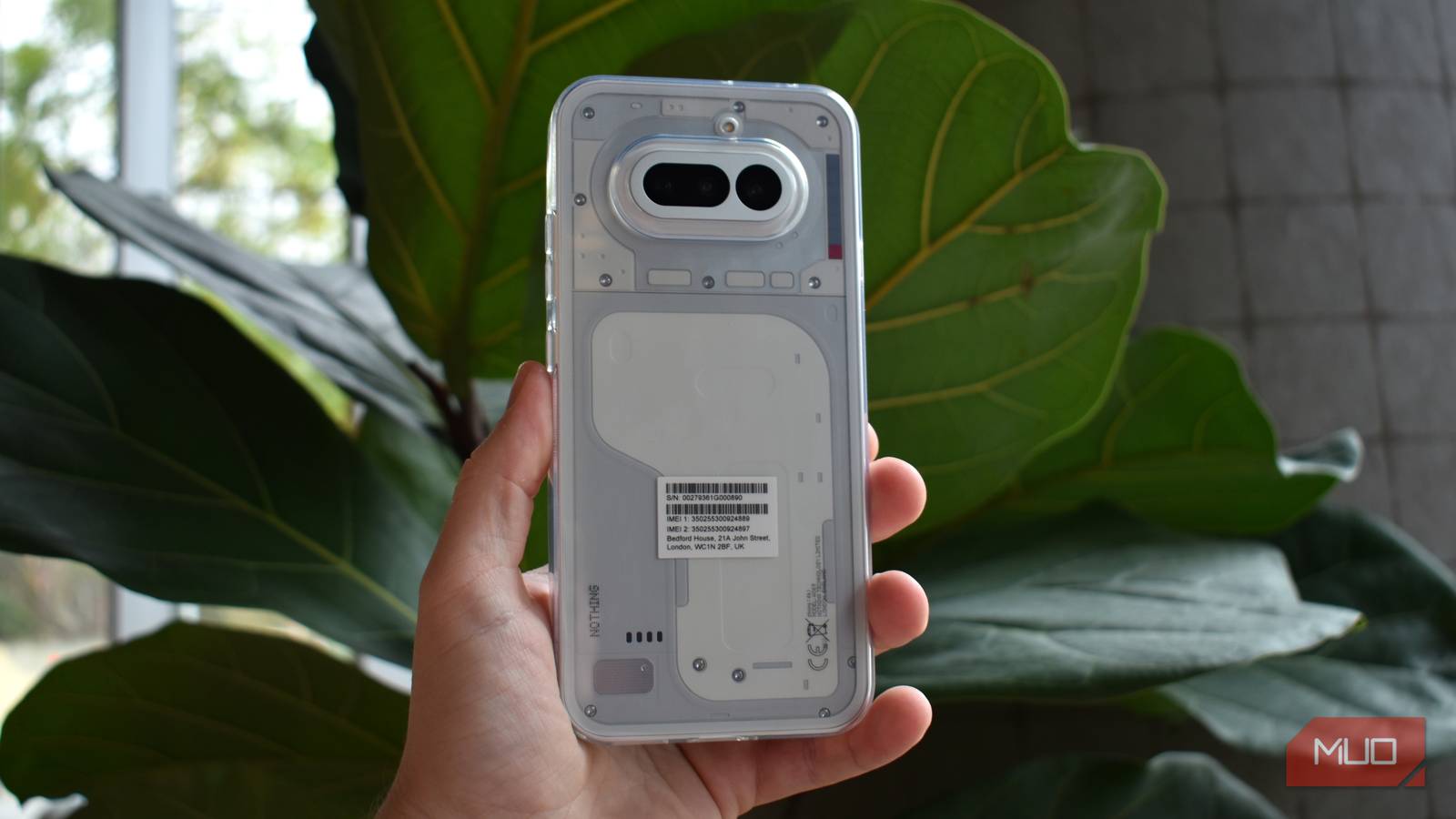
Nothing has finally officially revealed its new Phone (4a), Phone (4a) Pro, and Headphone (a), after weeks of teasing the new phones and new headphones.
Nothing actually showcased the Phone (4a) at MWC 2026, revealing the new unit at its first ever stand at the show, followed up by some hands-on time at an evening event — but there was no sight of the rumored Phone (4a) Pro, or the Headphones (a), the follow up to to last year’s incredibly popular Headphone (1).
But now all has been revealed after Nothing’s London launch party, and we can finally start delving into all the details properly.
Nothing’s Phone (4a) is a budget-focused gem
Tidy specs, lovely design
I’ve been hands-on with the Phone (4a), and think it shows Nothing returning to its roots after last year’s almost-flagship, the Nothing Phone 3.
Specs
The Phone (4a) brings some very tidy specs to this budget-focused device, packing in a Snapdragon 7s Gen 4, plus up to 256GB storage and up to 12GB RAM. It’s not the latest chipset generation, but the Snapdragon 7s Gen 4 is a solid mid-range chip that can deliver decent performance for AI, gaming, and productivity.
I found the Phone (4a) on par in terms of weight and size. It’s 8.6mm thick, which is slimmer than last year’s Nothing Phone 3, but slightly more than the Nothing Phone (3a)’s 8.4mm. It’s not really noticeable either way, and it balances out with the 204g weight. All in all, it feels comfortable to use, which is the most important thing.
The Phone (4a) has a 6.78-inch 120Hz 1.5K (1224 x 2720) AMOLED display, which looks great, and the whole thing is powered by a decent-sized 5080mAh battery with 50W wired charging.
Glyph overhaul
One of the biggest changes, and one that’s sure to split opinions, is the overhauled Glyph Bar, which drastically alters Nothing’s approach to its most iconic feature. The Glyph Interface is out, replaced with six white LEDs and one red (actually comprising 63 mini-LEDs) arranged into a bar configuration. It’s a more subtle approach than the disco-strobe effects we’ve seen on older Nothing handsets, and I’m a big fan of the evolution of the glyph interface into a more mature visual design.
You still get the bag of tricks, such as customizable glyphs that you can use to time things and light up to show specific calls, but to many, it seems like reducing the number of lights will actively harm the Glyph Interface/Glyph Bar’s functionality.
Nothing has also gone a step further with the (4a) series, and introduced different colors to the playground. The (4a) is available in pink, blue, white, and black. I have to say, the blue and pink designs are really nice, and it’s good to see Nothing pushing out a little further in this aspect (though, notably, not an orange phone, like so many I saw at MWC 2026).
Given that this is a budget-focused device, I think Nothing has done a great job with the cameras. It features a 50MP 3.5x OIS periscope lens, a 50MP main ultrawide sensor with OIS, and a 32MP front-facing wide-angle selfie camera on the front.
The Nothing Phone (4a) Pro steps up the specs
It’s also a big departure from Nothing’s design mantra
Credit: Nothing
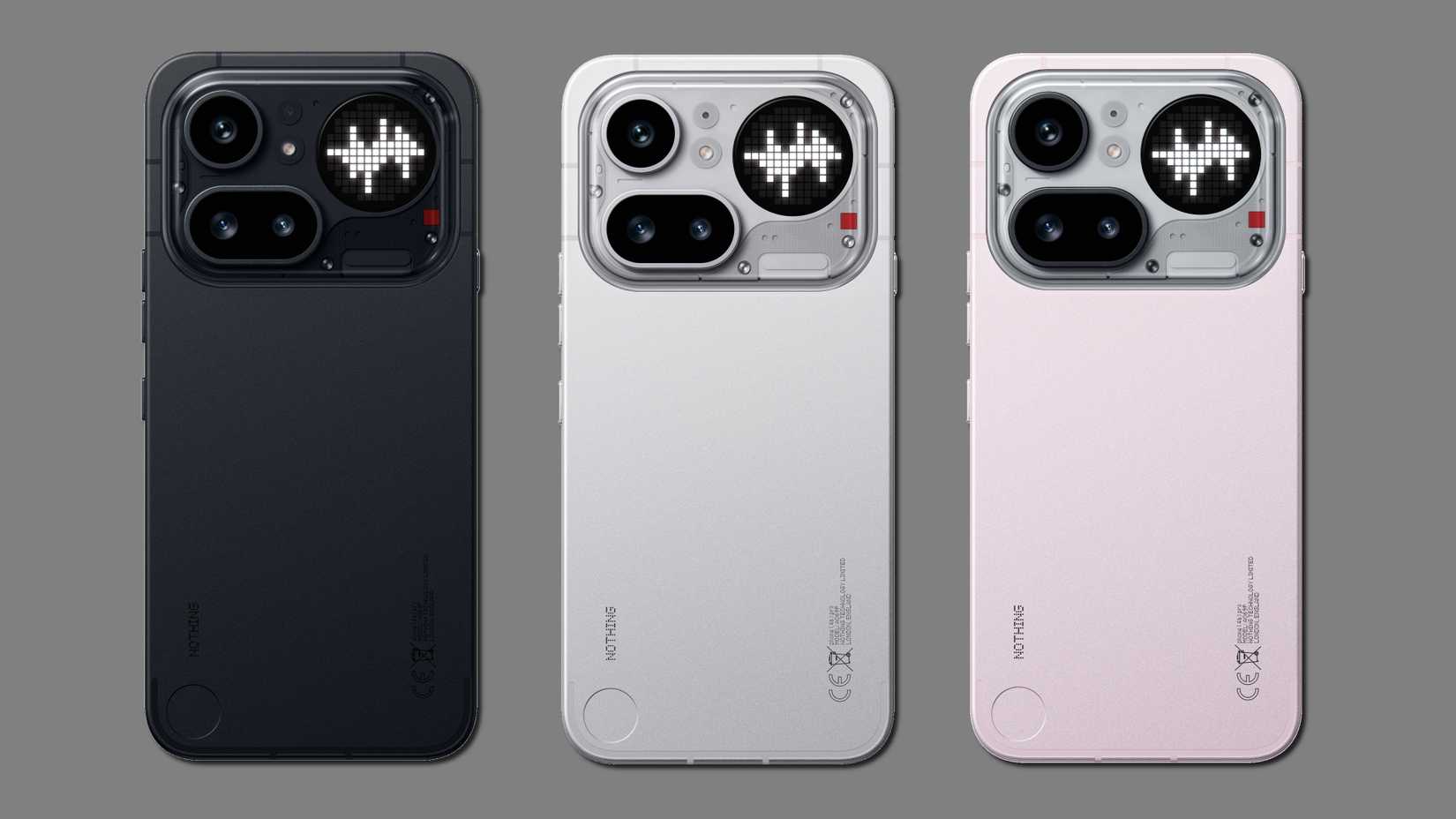
Fans of Nothing’s classic design style, transparent phone backs that offer a tantalising glimpse at the phone’s inner workings, will be left wanting by the company’s switch to a full metal unibody design. With that, the (4a) Pro also brings a big adjustment to the camera housing and Glyph Interface, with the camera unit receiving a complete overhaul.
The camera housing is now an oblong shape that rises slightly from the frame of the device, packing in a triple-camera array and the redesigned Glyph Matrix — more on that in a moment.
By the sounds of it, though, the camera array should deliver some serious quality, featuring a larger 50 MP Sony LYT700c OIS sensor, a 50MP periscope lens, and a slightly smaller 8MP ultrawide. Oddly, though, the selfie camera has been downgraded from 50MP to 32MP, but without some proper hands-on, we can’t see the true difference.
I also note that the Phone (4a) Pro includes a new 12-bit Image Signal Processor that can deliver up to 140x ultra zoom. Again, I’m yet to try this, but it’s a significant upgrade.
More Glyph Interface overhauls
The Glyph Matrix has had yet another change, too. It’s more similar in style to the Matrix on the Nothing Phone 3 launched in 2025 than anything else seen before, and is a real difference between the (4a) and (4a) Pro. The Matrix now comprises 137 mini-LEDs, and while that’s fewer than before, I like that the Matrix display itself is larger.
I’m still using my Nothing Phone (3), and the Matrix display is fun but on the small side. The bigger and brighter display should make it more useful. Talking of the Phone (3), the (4a) Pro takes another leaf from its book and is the second Nothing device to feature an array of Glyph Toys, which can be useful.
However, there is one confusing aspect of the (4a) Pro design, and that’s a small circular cutout in the bottom left corner of the rear of the device. It looks suspiciously like the location of a Glyph Button that didn’t quite make it into production, but perhaps we’ll never know.
At first look, it’s a strange new world for Nothing. But when you look at the Phone (4a) Pro specs, it’s clear that, as I’ve said, Nothing is taking a good look at its core, even if that means some of the style has been removed.
Specs
It also brings more to the party in terms of specs, with the Phone (4a) Pro packing in the Snapdragon 7 Gen 4, which is much more powerful than the “s” version on the regular (4a), plus up to 256GB storage and 16GB RAM. Nothing suggests the upgraded processor will give the (4a) Pro a whole host of performance upgrades, such as a 27 percent faster CPU, 30 percent improved graphics, and, importantly, upgraded AI capabilities compared to the previous generation.
Its screen is also another notable improvement. The Phone (4a) Pro is slightly larger than the (4a), measuring 6.83 inches, but this 1.5K (1224 x 2729) AMOLED display also comes with a higher 144Hz refresh rate and up to 5,000 nits total. It should make it considerably easier to read in bright sunlight, which is a big bonus.
This is also the slimmest Nothing Phone ever, measuring 7.95mm, and while that isn’t delving into iPhone Air or Tecno Modular Concept Phone territory, it’s decently slim, helping the device feel lightweight and suitable for most hands. Notably, it’s the same thickness as the Samsung Galaxy S26 Ultra, and Samsung has been promoting that as its slimmest Galaxy ever.
Let’s talk Nothing Phone (4a) series prices
The Nothing Phone (4a) is available in three different configurations:
8GB RAM, 128GB storage for £349 ($465)
8GB RAM, 256GB storage for £389 ($519)
12GB RAM, 256GB storage for £399 ($533)
Now, here’s the bad news: the Nothing Phone (4a) isn’t expected to come to the US, at least for the time being, hence the prices in pounds rather than dollars. Hopefully, that situation will change in the future.
Unlike the Phone (4a), the Phone (4a) Pro absolutely is coming to the US, with two versions.
8GB RAM, 128GB storage for $499
12GB RAM, 256GB storage for $599
There is a third version with 8GB RAM and 256GB storage, but it appears this is only for the Indian market; again, hopefully that changes in time as Nothing brings more of its hardware to US soil.