
Stay up to speed with stories written by drivers, for drivers.
Get automotive news, DIY tips, market trends, in-depth car profiles, and more right in your email inbox.
Since we first published the Hagerty Price Guide back in 2006, we have issued regular updates to keep it current with the market. Each quarterly revision is a reassessment of each vehicle based on where the market for that vehicle is at the moment. Sometimes it’s up, sometimes it’s down, sometimes it’s flat, and these fluctuations—or lack thereof—are driven by several factors. To help generate a picture of a given car’s value, Hagerty analysts monitor auction results, asking prices, and private sales, all of which help fuel these updates.
This week we’re looking at the Japanese vehicles that moved the most in the latest price guide update, with values reflecting an average of all trims and spec levels for a given model in #2 (excellent) condition.
 Mitsubishi
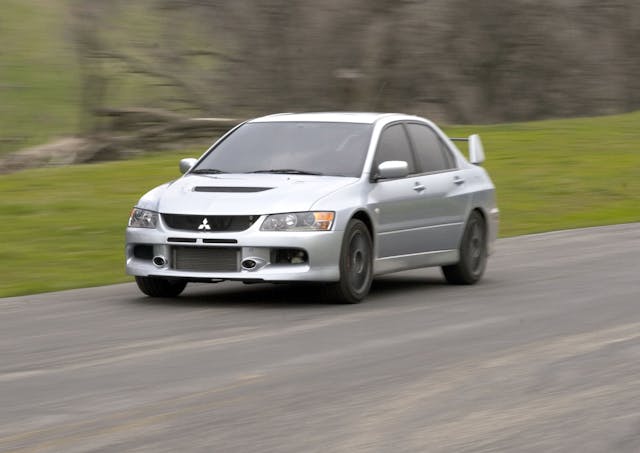
If you’re a fan of cars with Roman numerals in their names but put off by Chevys, Mustangs, Furys, Venturas, and, of course, Lincolns, then the Lancer Evo may be the car for you. The Evo IX was the penultimate model in a line that dated back to 1992 and was rooted in Mitsubishi’s ongoing Group A and rallying efforts abroad. The essential formula of the entire family involved a rather ho-hum small sedan with a 2.0-liter turbocharged four driving all four wheels. As foils for the similarly styled Subaru Impreza WRX, the Evos excelled.
The Evo VIII of 2003 was the first official bite that Americans got of these Japanese rocketships, and when the Evo IX arrived for 2006, it boasted 286 horses from its 4G63 motor. These are loud, harsh, spartan machines, with power windows and locks, A/C, and little else in the way of creature comforts, but the Recaro seats swallow you whole, which is necessary when the going gets fast. And they most certainly are fast.
The U.S. Evo IX lineup includes several trims, with varying degrees of performance equipment and “hardcoreness.” Many have been modified, because it’s easy to do, so always keep that back of mind if you’re in the market. A base Evo IX in #2 (excellent) condition now tops $58,000, while a similar SE is closer to $80,000.
 James Lipman
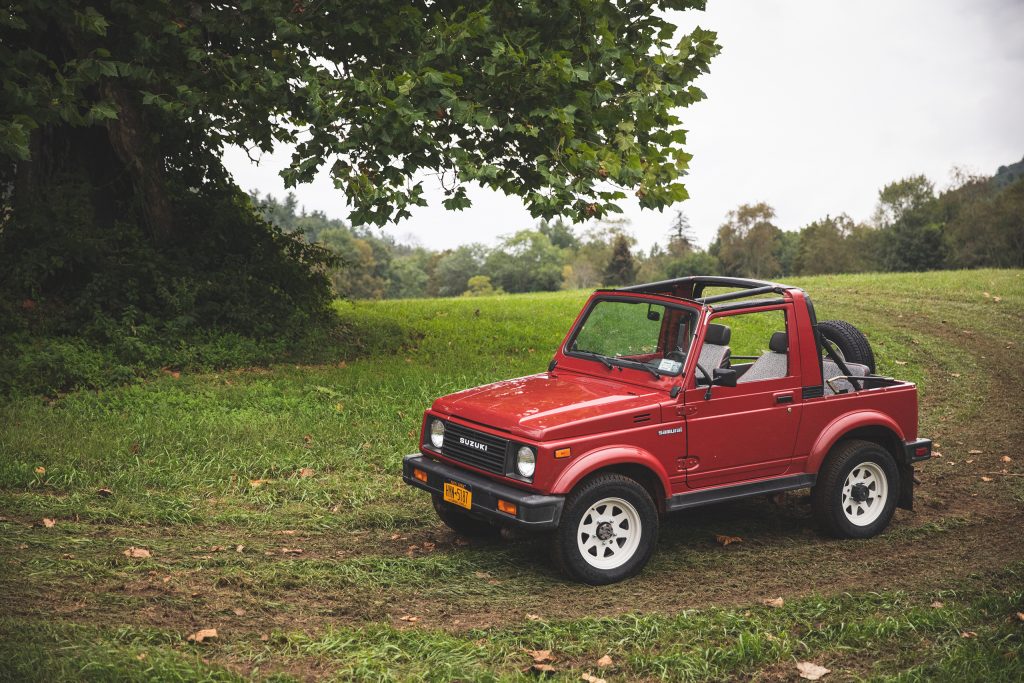
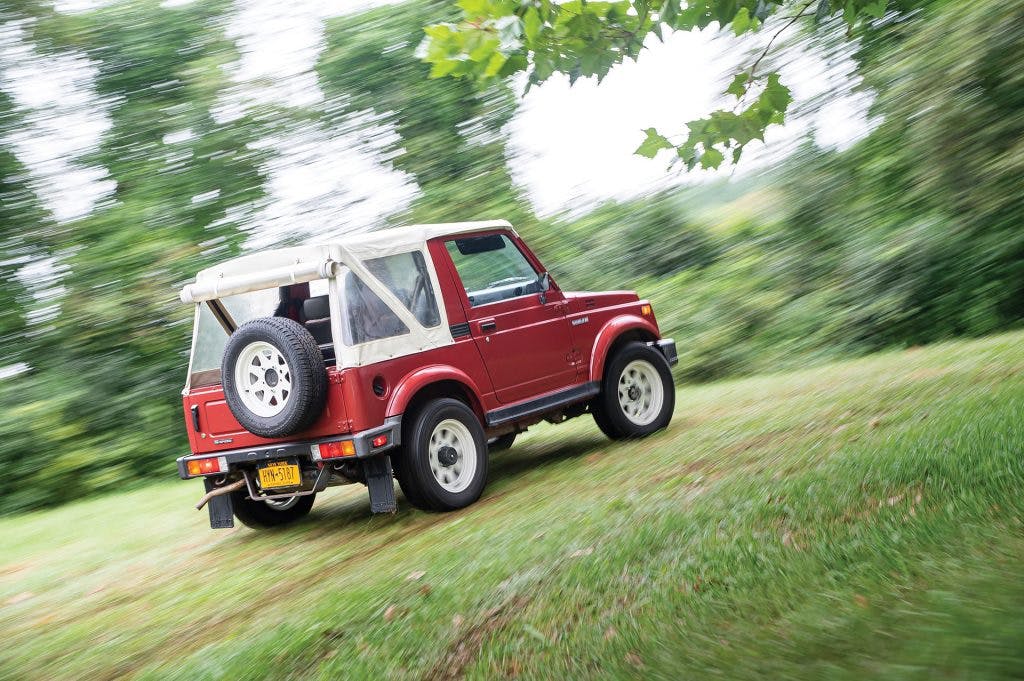
Although it sounds like the setup for a joke about how slow they are, the further in the rearview the Suzuki Samurai gets… the more appealing these tiny Japanese rock crawlers become. Given the frenzied confusion of today’s carmakers, who can’t seem to decide what it is they want to make but are all too happy to shove it full of gadgets, the Samurai is refreshing in its old-fashioned simplicity. From its boxy shape and stout solid-axle underpinnings to its adorable 63-hp 1.3-liter four and tooth-rattling ride, it is a vehicle with zero pretension.
Based on the second-generation Jimny produced for the Japanese market, the SJ413 Samurai four-seater arrived in the U.S. in 1986, priced at just $6550 and available as both a convertible and a hardtop. It was an instant hit and quickly proved itself as a reliable, capable mountain goat off-road. The little trucklet saw few changes in its 10-year span, though 1988.5 models got softer suspensions and better seats, among other small updates. A fiercely contested Consumer Reports rollover claim that same year did the Samurai no favors, but it soldiered on until 1995, by which time more than 200,000 had sold.
Values don’t fluctuate much across the Samurai’s decade of production, with excellent ones selling for roughly $21,000 to $25,000.
 Mazda
Mazda
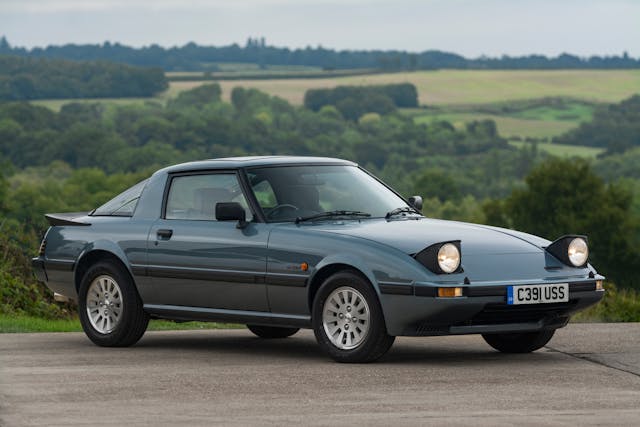
Mazda couldn’t have chosen a better showcase for its nifty little rotary engine than the first-generation “FB” RX-7 coupe. The new car conveniently slotted into the space once occupied by the Datsun 240Z, which by 1979 had morphed into the 280ZX, something altogether more opulent. And it turned out sports car enthusiasts hadn’t lost their appetite for simple, agile, quick little sports cars, no matter what was powering them.
In the RX-7, that meant the 12A, a carbureted 1146-cc twin-rotor engine that had debuted in the RX-3. The 100-hp engine revved enthusiastically, and its placement behind the front wheels helped to give the 2400-pound RX-7 perfect balance.
Some frills eventually entered the mix, including power windows, cruise control, leather upholstery, and a limited-slip differential, while the GSL-SE trim of 1984–85 featured the larger, fuel-injected 135-hp 13B engine. Mazda sold more than 377,000 first-gen RX-7s before releasing the second-gen car in 1986.
Despite the big production numbers, rust, racing, and good ol’ fashioned recklessness have taken many of these cars off the road. As a result, great ones tend to hover around $30,000 today, with later GSL-SEs closer to $35,000.
 Honda
Honda
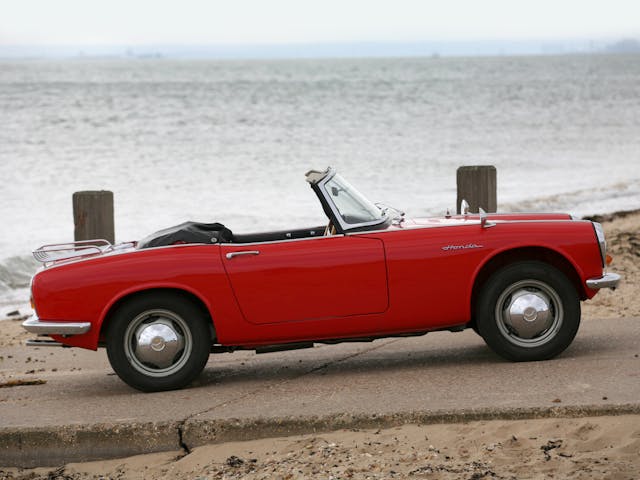
Honda spent a dozen years building a solid reputation for its reliable two-wheelers, and in the summer of 1963, it entered the car business with the tiny utilitarian T360 pickup. That was followed in the fall by an open sports car, the S500, and, in March 1964, by the similarly styled S600. It would become Honda’s first production car for export, available in both right- and left-hand drive.
The 1600-pound roadster featured four-wheel independent suspension, and power came from a 606-cc four-cylinder with a staggering 9500-rpm redline, which it sent its 57 horses to the rear wheels through a four-speed transmission and twin chain drives. A fastback coupe joined the lineup in the middle of 1965, and by the time production gave way in 1966 to the S800, about 13,000 had been built.
A great roadster is roughly $63,000 these days, while the coupes are less—about $54,000.
 Nissan
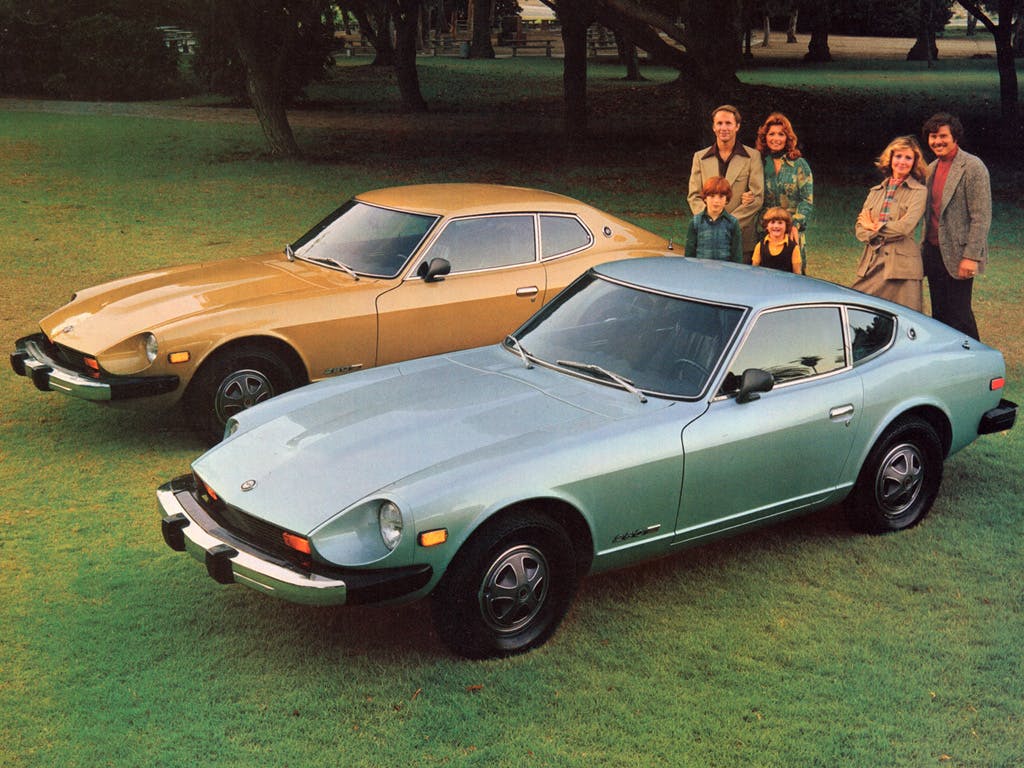
When Datsun introduced the 240Z in 1969, it really did seem like the Japanese carmaker had caught lightning in a bottle. Just a few years later, however, thanks to burdensome emissions requirements, that lightning had turned to static electricity. The larger engine of the one-year-only 260Z, choked by a low compression ratio, did little to improve performance. When the 280Z debuted for 1975, it did so not only with another 200 cc of displacement, but also with Bosch L-Jetronic fuel injection in place of the twin Hitachi carbs, both of which went a long way toward recapturing some of that early magic in the performance department—even if the federally mandated 5-mph impact bumpers sapped a bit of the car’s charm.
Otherwise, the last of the “S30” Z-cars is nearly identical to the first, with improved A/C and, by 1977, a five-speed manual available in addition to the original four-speed and three-speed auto. Like the 260, the final S30s were also available in a 2+2 configuration.
These days, a great 280Z in excellent shape is a $43,000 proposition, while a 2+2 in similar shape commands far less—roughly $28,000.
 Toyota
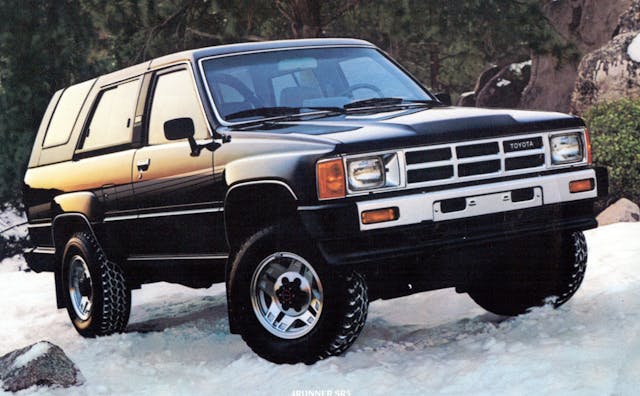
Toyota’s entrant in the emerging small SUV craze of the 1980s proved to have some legs, if the sales success of its six generations is anything to go by. That first-gen 4Runner was a far cry from the current one, of course, but it set the hook. Based on the tough little Toyota pickup, the two-door rig featured a built-in rollbar beneath a removable fiberglass hardtop and a tailgate with a roll-down window. There was a solid front axle up front, with the unkillable 2.4-liter carbureted four-cylinder 22R mounted above it. A year later, the 100-hp mill was upgraded with fuel injection (dubbed 22R-E) and produced 116 horses.
SR5 trims added a back seat and some interior upgrades, and by 1986, the solid front end had been replaced with an independent setup, which increased the track by three inches. There was also a rare 135-hp turbo option for ’86 through ’87, before a 150-hp 3.0 V-6 joined the roster.
Today, the solid-axle 4Runners are coveted by off-roading purists, but any model from this generation is a tough, reliable throwback machine with a ton of versatility, so it’s really just a matter of finding one that speaks to you. Expect to pay about $30,000 for a four-cylinder 4Runner in great shape and a few thousand more for a V-6 or SR5.