
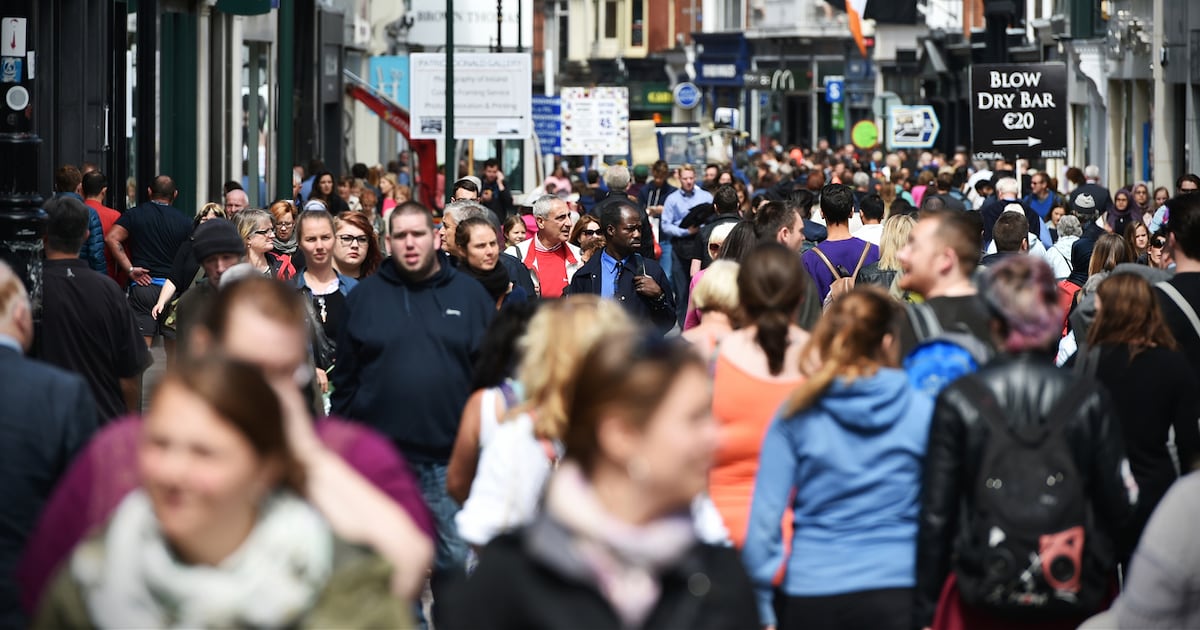
The domestic economy grew by almost 5 per cent last year, buoyed by personal spending growth on goods and services, data from the Central Statistics Office (CSO) shows.
The agency’s quarterly national accounts, published on Thursday, show modified domestic demand (MDD) grew by 4.9 per cent in the year and by 1 per cent in the quarter.
MDD is a measure of underlying domestic activity in the economy that covers personal, government and investment spending.
The CSO data also shows gross domestic product (GDP) grew by 12.3 per cent in the year, but the metric is not regarded as a reliable gauge of economic growth here because it is distorted by foreign multinationals.
The data shows domestic sectors were up 0.9 per cent in 2025, while sectors dominated by multinationals increased by 25.1 per cent.
Personal spending on goods and services, a key measure of domestic economic activity, grew by 2.9 per cent in the year and by 0.9 per cent in the quarter.
 How the conflict in the Middle East is already affecting Irish consumers
The CSO said it was updating its estimated GDP figure for the final quarter of 2025 from a previous deficit of 0.6 per cent to a deficit of 3.8 per cent. It said this was driven by “the globalised sectors of the economy”.
However, there was continued growth in the domestic economy in the quarter. MDD and wages both grew by 1 per cent while personal spending increased by 0.9 per cent.
Minister for Finance Simon Harris welcomed the data, but said the conflict in the Middle East could lead to another jump in prices for consumers.
“I am encouraged that consumer spending grew by a solid 3 per cent last year,” he said. “This reflects rising real incomes and the strength of our labour market, with a record 2.83 million people in employment at the end of 2025.
“Encouragingly, building and construction investment also recorded robust growth, up 9 per cent last year reflecting the solid momentum in the residential sector.
“While today’s figures are positive and reflect the resilience of the Irish economy, we cannot become complacent.
“Indeed, recent developments clearly illustrate that uncertainty is likely to be a feature of the economic landscape for some time.
“The conflict in the Middle East is potentially a significant headwind to global growth and risk to the inflation outlook. The impact on commodity prices will, of course, hinge on the duration and extent of the disruption in supply.”
Thomas Pugh, economist at audit, tax and consulting firm RSM UK and Ireland, said the 3.8 per cent contraction in GDP in the last quarter of the year was “just noise”.
“The domestic economy still grew by 1 per cent and grew almost 5 per cent in 2025 as a whole,” he said. “In any case, the far bigger question now is whether the recent rise in energy prices lasts, which would push up inflation and dampen growth – if sustained.”
Ireland imports almost 80 per cent of its energy from abroad making it particularly exposed to rising wholesale prices.
Pugh said higher oil prices would probably add around 0.2 percentage points to inflation in the coming months. However, he said the bigger impact would come from natural gas prices, which largely determine household energy bills.
“If sustained, the 60 per cent rise in European gas prices over the last few days would feed through over the course of this year and push inflation back over 3 per cent,” he said.
“Higher inflation would drag on real household incomes and therefore consumption which has helped to underpin strong domestic demand in recent years.
“What’s more, around a third of Ireland’s economy is manufacturing, while that’s exacerbated by the activity of multinationals, the sector is far more energy intensive than most making it susceptible to higher energy prices.”
[ Donald Trump’s epic gamble in Iran threatens global economyOpens in new window ]