
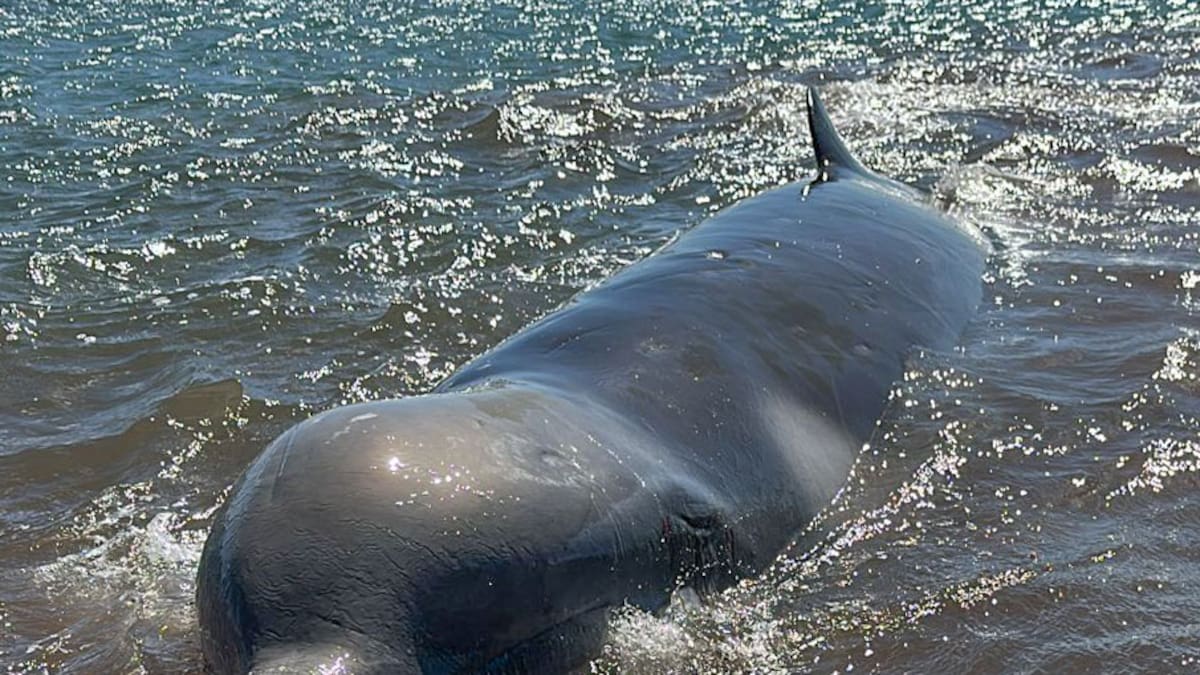
Local iwi Te Kawerau ā Maki were appointed to organise the removal of the carcass, being done today.
“An update on the whale at Scott Point Beach: he will be moved today, with preparation work already underway this morning to ensure this can be done safely.”
The community was thanked for “its care and support shown over the past 48 hours”, but was now asked to stay away due to health hazards.
“We understand that this is a rare and interesting experience, and that many people are curious to come and see him. However, we ask that the community please stay away from the beach today to allow this important mahi to take place safely.
“The whale also poses a toxic hazard, so keeping a safe distance is important for everyone’s well-being.”
Project Jonah confirmed the news of the whale’s death at 9pm on Wednesday.
Te Kawerau a Maki iwi pou taiao environment manager Ashleigh McDonald and a colleague stayed with the dead mammal overnight.
“We slept in sleeping bags on the rocks to make sure we stayed by the whale’s side.”
The whale now poses health hazards as it decomposes. Photo / Michael Craig
McDonald said the death of the whale is being treated as a “cultural experience and process”.
“It’s a very rare whale and a taonga for us.”
The whale had to be towed by jetski closer to shore to stop it from floating away.
Health checks by vets from the Cetacean Ecology Research Group revealed a high breathing rate and surface-level bleeding from the tail.
According to Project Jonah, Shepherd’s beaked whales have only been spotted out at sea four times, with fewer than 50 strandings recorded globally.