
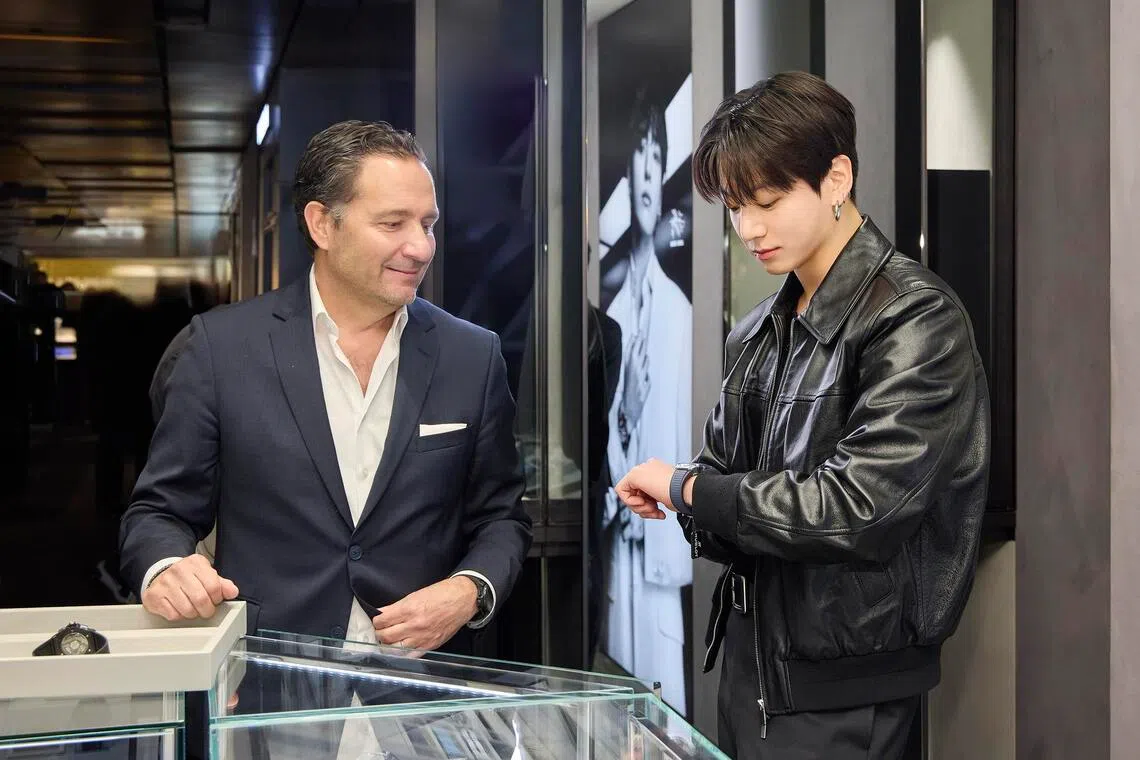
SEOUL – It is a cold February morning in Seoul, but Mr Julien Tornare feels as though it is Christmas Day.
In an elegantly appointed suite at the Josun Palace hotel in the ritzy Gangnam district, the chief executive of Hublot is buzzing with the unmistakable energy of a man about to unveil big news.
For someone who has spent more than 25 years in Swiss watchmaking, that buzz of anticipation is revealing.
Within hours, Hublot will unveil
Jungkook of K-pop phenomenon BTS as its newest global ambassador
– a move that signals not just the band’s return to music after a four-year hiatus, but also the direction Mr Tornare wants to take the brand next.
In a country packed with pop idols, he is clear
why Hublot went straight for Jungkook
.
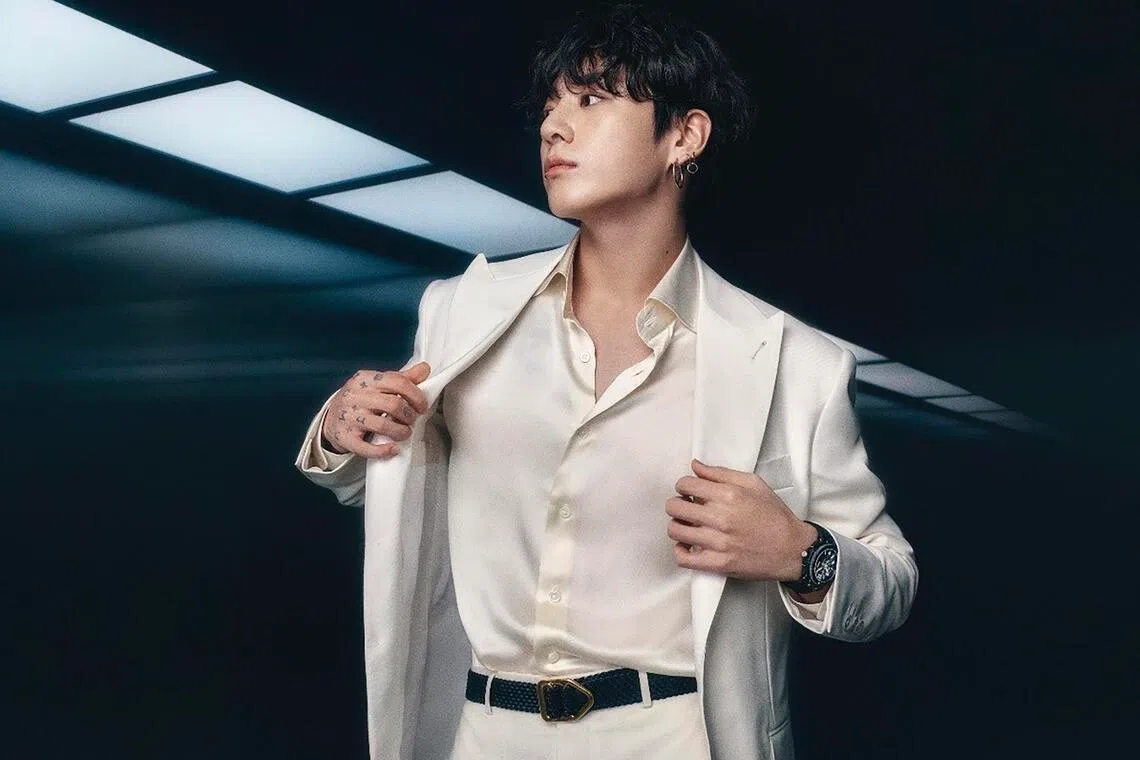
As a Hublot ambassador, Jungkook joins a high-profile roster which includes athletes and a classical pianist.
PHOTO: HUBLOT
Dubbed the Golden Maknae (youngest member with all-round talent), the 28-year-old has dominated global charts with solo releases and fronted major campaigns for fashion labels
including Calvin Klein
. As a Hublot ambassador, he joins a high-profile roster which includes Jamaican sprinting legend Usain Bolt, Serbian tennis star Novak Djokovic and Chinese classical pianist Lang Lang.
Mr Tornare says: “There are a lot of pop idols here, but there are not so many who resonate all over the world.”
For him, creating buzz in South Korea – or even across Asia – is only part of the story. The real prize is tapping a cultural wave that now ripples far beyond Seoul. In Mexico City, he says with a chuckle, President Claudia Sheinbaum recently asked her South Korean counterpart, Mr Lee Jae Myung, if he could help arrange more BTS concert dates in the country.
Hublot’s courtship of Jungkook took about 18 months, beginning just weeks after Mr Tornare joined the company in September 2024. The attraction, he says, goes beyond commercial appeal.
“Dancing, singing, performing the way he does on stage – for me, that’s a fusion of skills,” says the watch industry veteran, who spent 17 years at Vacheron Constantin and six years at Zenith. “That’s exactly what we have at Hublot.”
The announcement also marks the watchmaker’s deliberate return to music as a core brand pillar. Mr Tornare has identified three emotional engines he intends to push at full throttle: sport, contemporary art and music.
Hublot was the first watchmaker to step onto the football field in 2006 and remains the Official Timekeeper at major tournaments.
But, while the sport continues to be important, Mr Tornare is candid about the need to rebalance the mix.
“Emotion is not only football,” he says simply.
By luxury watchmaking standards, Hublot is still a relatively young brand.
It was founded in 1980 by Italian watchmaker Carlo Crocco, who scandalised the industry by pairing a gold case with a natural rubber strap, a radical combination that took three years of research to perfect. The French word for porthole, “hublot”, proved an apt name as the brand offered a new window into what a watch could be.
When industry titan Jean-Claude Biver took over in 2004, he supercharged that spirit of creative disruption. Under his watch, the now-iconic Big Bang collection was born, along with a philosophy summed up in three words: “first, unique, different”.
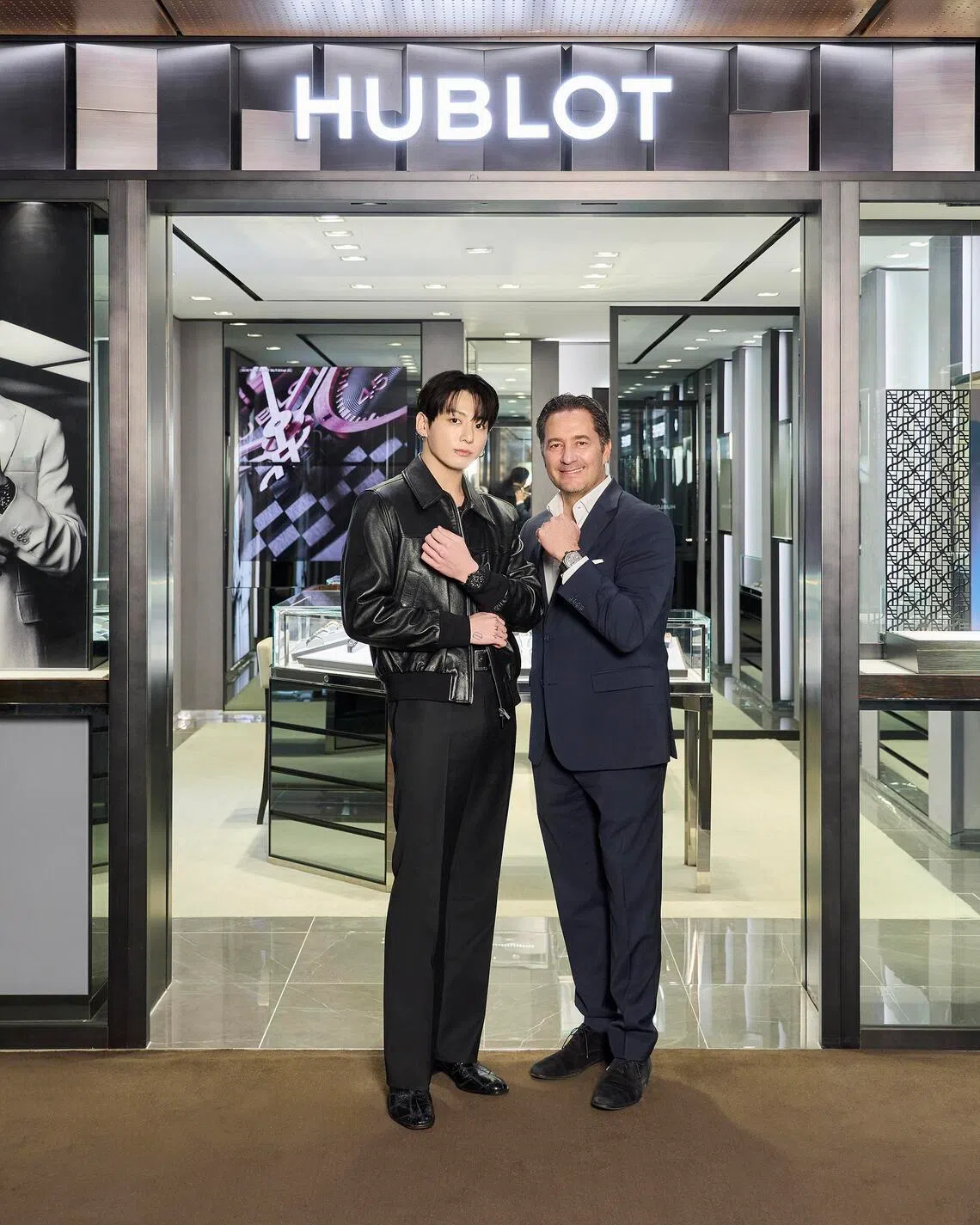
BTS singer Jungkook (left) embodies the fusion of disciplines that defines Hublot, says Mr Tornare (right).
PHOTO: HUBLOT
Hublot soon became synonymous with bold materials – Magic Gold (an ultra-hard 18K gold alloy developed by the brand), sapphire crystal and high-tech ceramics, as well as a marketing playbook built on spectacle.
Mr Tornare inherits this legacy with evident pride. But he is keen to add another dimension to the story: technical credibility.
“We don’t get enough credit for that,” he says, leaning forward. “What we have achieved in such a short time – just 46 years – is remarkable. We have built real expertise in watchmaking.”
He is about to make that expertise visible. A new, significantly expanded manufacture in Nyon, on the shores of Lake Geneva, is in the works. More than doubling the brand’s capacity, it is designed not just for production but also as an immersive destination.
“I want to create a manufacture experience that no other brand has done,” he says, adding that art, sport and music are woven into the journey from the moment visitors step inside.
For now, though, the details remain under wraps. “I put pressure on myself,” he adds with a grin. “Because I have to surprise you.”
He has also unveiled plans to revisit Hublot’s origins, with Mr Crocco – still sharp at 81 – set to speak publicly about how and why the brand was created.
Mr Tornare says: “For the first time, in September, you will hear someone at Hublot speaking about its history.”
Not everyone loves Hublot and he knows it. The brand has its passionate detractors in horological circles including critics who find it too flashy, too loud and too nouveau.
Instead of hiding behind a public relations firewall, he says he engages with detractors directly: “Anybody who hates me or the brand – they can call me. I will have lunch.”
Hate, he argues, is often fear of what one does not know or the laziness of choosing an easy target. Hublot is “unique by essence”, which makes it an easier punching bag than a traditional brand that blends into a conservative crowd, he adds.
He does not find that frustrating. In fact, he enjoys it.
“The more the stadium boos, the stronger some athletes become,” he says, adding that he relishes the challenge of converting haters into lovers.
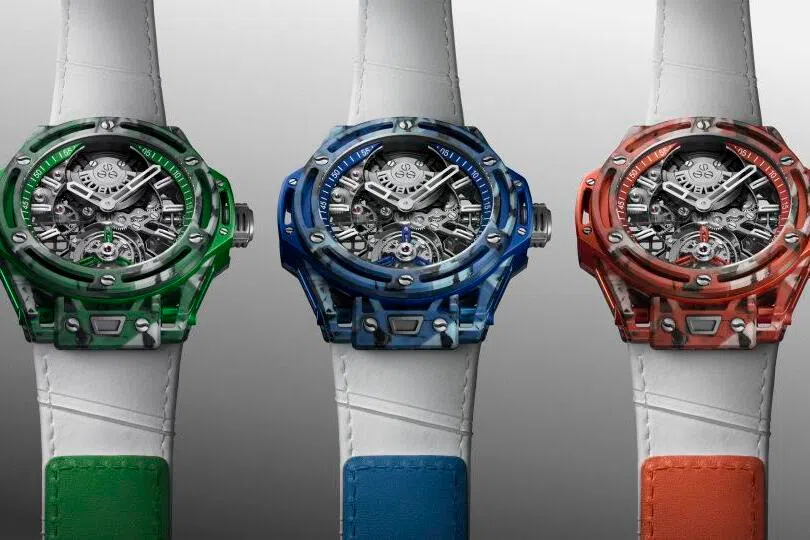
Hublot is known for its creative use of bold materials, including sapphire crystals and high-tech ceramics.
PHOTO: HUBLOT
His invitation to sceptics is straightforward: Come and see the manufacture, then decide. “I want you to decide for a real reason,” he says. “Then I’m fine. We can shake hands, we kiss each other.”
And perhaps that is the essence of his pitch – not that the brand must become less itself to be taken seriously, but that it must become more itself, with better explanations.
He wants three “engines” running at full throttle: innovation and creativity, seen in Hublot’s bold materials and disruptive ideas; emotional marketing, driven by cultural moments and star power; and watchmaking expertise – movements, complications and finishing – which he says will finally receive equal prominence.
He believes this combination can carve out a unique position in the high-end landscape: contemporary and modern, but also legitimately high watchmaking, not conservative for the sake of it.
Mr Tornare is measured but unbothered by the watch industry’s macro environment, which remains uncertain with tariff pressures, geopolitical turbulence and uneven regional demand.
He notes that Hublot is well diversified globally, with no single market carrying undue weight. He expects 2026 to look much like 2025 and wants to focus on what he can control.
“People will always love luxury, love beautiful brands, beautiful things,” he says. “My job now is to emphasise Hublot’s strengths.”