
The spread is frequently volatile but for most of the past decade was below US$10 ($17).
The analysts said the crack spread was at an all-time high on Thursday night of US$140, though it had since fallen about 15%.
High prices may not last long.
Bowley and Lockwood expected an oil market supply response to higher crack spreads.
But they said that could take time because refinery flexibility was typically limited in the short term.
The analysts said they were reticent to extrapolate today’s crack spread given the volatility of oil markets and the ultimate supply response.
But they still estimated Air New Zealand was exposed to an additional daily fuel cost of about $4 million to $5m.
The airline has not confirmed that number.
The International Air Transport Association (Iata) went into this year assuming an average Brent crude price of US$62, and crack spread of US$26.
Bowley and Lockwood said Iran’s Strait of Hormuz blockade was disproportionately impacting jet fuel markets.
“Around 20% of seaborne jet fuel transits the strait.”
They said jet fuel was sensitive to such disruptions because crude had larger inventories and more diverse sources.
“Most refineries operate at high utilisation rates, meaning that there isn’t significant spare capacity to offset lost Gulf refinery output,” they said.
“Refiners may prioritise diesel supply over jet fuel given its role in industrial production, ground transport and power generation.”
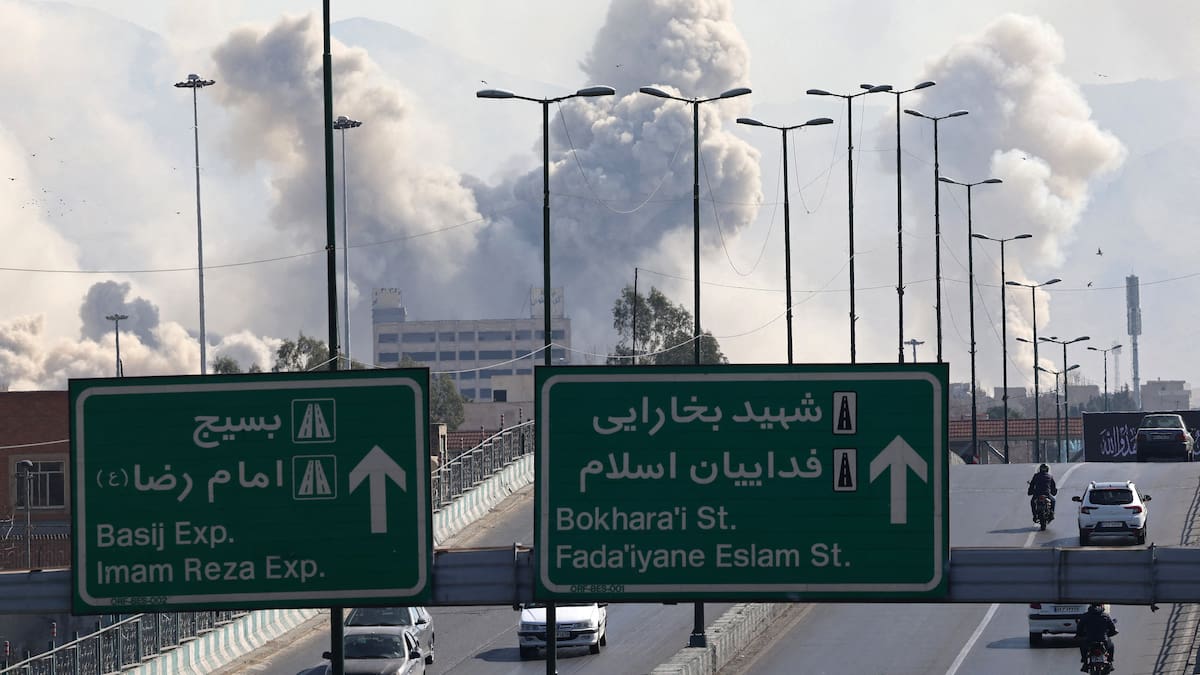
Smoke rises after a military strike on the Iranian capital of Tehran on Thursday, with conflict in the Middle East impacting global fuel prices. Photo / Atta Kenare, AFP
The analysts estimated every US$10 increase above US$20 in the average crack spread through this half, ending June 30, would cost Air NZ an additional $67m.
That was based on Forsyth Barr thinking the airline had assumed an average crack spread of US$20.
Air New Zealand hedged to protect itself from oil price turmoil and in its half-year results provided a simplified version of its hedging profile.
“It said that it had undertaken some ‘opportunistic Singapore jet swaps’ for 2H26, though we understand that these swaps have already expired.”
Swaps are derivatives, or synthetic financial instruments, and are effectively bets on where the price will go.
The airline was already under pressure before war broke out, posting a $40m after-tax loss last week.
It said a “reset” or comprehensive review was happening.
“Higher for longer jet fuel prices may mean greater structural changes as a result of the strategy review,” Bowley and Lockwood said.
Brent crude was up from US$76.27 on Monday to US$84.21 by mid-afternoon Friday.
Airlines for America today said jet-fuel spot prices for Chicago, Houston, Los Angeles and New York were up 58% since last Friday.
Airline stocks down
At about 3pm on Friday, Air New Zealand’s share price was down 10.62% this week and Qantas shares had slipped 8.27%.
The world’s three biggest airlines were faring worse.
American Airlines Group was down 11.49%, Delta Air Lines had dropped 13.05%, and United Airlines was 18.04% lower.
Smaller US carriers Southwest Airlines and Jet Blue were down 13.78% and 21.38% respectively.
US analysts Rothschild & Co Redburn downgraded American Airlines to neutral.
But they voiced more positive views on Delta and United, according to Yahoo Finance.
“Analysts see the main impact coming through fuel inflation, which has forced a reduction in earnings forecasts.”
The analysts reportedly said Delta and United were better positioned because of lower fuel sensitivity.
John Weekes is a business journalist covering aviation and court. He has previously covered consumer affairs, crime, politics and courts.
Stay ahead with the latest market moves, corporate updates, and economic insights by subscribing to our Business newsletter – your essential weekly round-up of all the business news you need.