
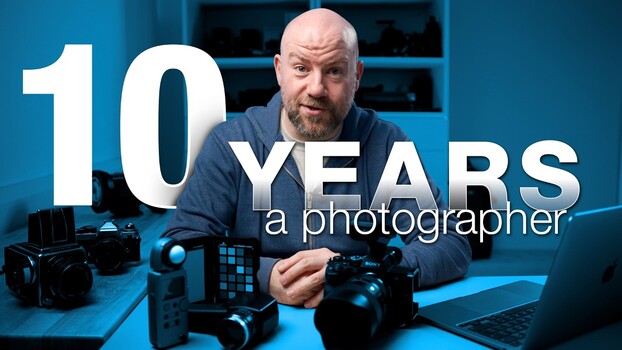
10 years behind a camera will change how you see work, money, and your own limits. If you are trying to turn creativity into income, Mark Duffy’s experience shows where you can waste time and where you can take control early.
Coming to you from Mark Duffy, this reflective video traces Duffy’s shift from graphic designer and traveling drummer to full-time photographer. He started with GoPros shooting time-lapses, then bought a Canon 650D after another photographer pushed him to stop “wasting time” on action cameras. That nudge mattered, but Duffy did not gamble blindly. He redirected money he had already set aside for teaching drums on YouTube and invested it into a camera kit instead. You see how fast a side interest can turn into a deep commitment when the first local time-lapse went viral and landed him in the paper. There is a clear reminder here: the tool matters, but the bigger shift happens when you decide to take the craft seriously.
Duffy walks through his early understanding of editing and promotion, skills he built while working as a designer. He was already using Lightroom and Photoshop together before photography became his main income. That foundation let him move faster than most beginners. He also experimented hard with Instagram, posting behind-the-scenes content at lunch and finished images at night. He treated the platform like a game, studying timing and momentum. That approach grew his audience quickly, but it also created friction with other creatives and exposed how fragile social platforms can be when the rules change. You get a blunt lesson from this period: do not try to please everyone, and do not build your identity entirely on an app you do not control.
One of the most useful sections covers money, especially licensing. Duffy shares details from a €6,000 tourism job that spanned four days. At the time, he charged €100 per image for exclusivity. He would now charge far more. You hear the shift in his tone when he talks about understanding usage rights later on. He explains how businesses slip in buyer clauses dressed up as “share agreements,” and how hobbyists often lose the most because they assume payment does not apply to them. He is direct about watermarking proofs, withholding high-resolution files until payment clears, and standing firm on supplier forms and purchase orders. This is not glamorous advice, but it is the difference between staying afloat and resenting your work.
There is also tension between being a generalist and niching down. Duffy has shot landscapes, headshots, commercial products, and brand campaigns for companies like Skoda and Umbro Ireland. He admits that large followings can blur how clients see you, sometimes labeling you more as an influencer than a commercial shooter. At the same time, handling reflective glassware one day and unpredictable weather the next sharpened his skills across the board. You start to see how each discipline feeds the other. He even questions whether turning landscape work into a full-time print business would remove the pressure that currently pushes him to grow.
He also addresses gatekeeping and education. With no formal qualifications, Duffy built a career through self-teaching and open sharing. Some warned him that teaching would create competition. He disagrees. Techniques can be explained, but mastery still takes hours alone with the work. That mindset shaped his YouTube direction, and he hints at shifting away from heavy gear reviews toward deeper teaching. Check out the video above for the full rundown from Duffy.