
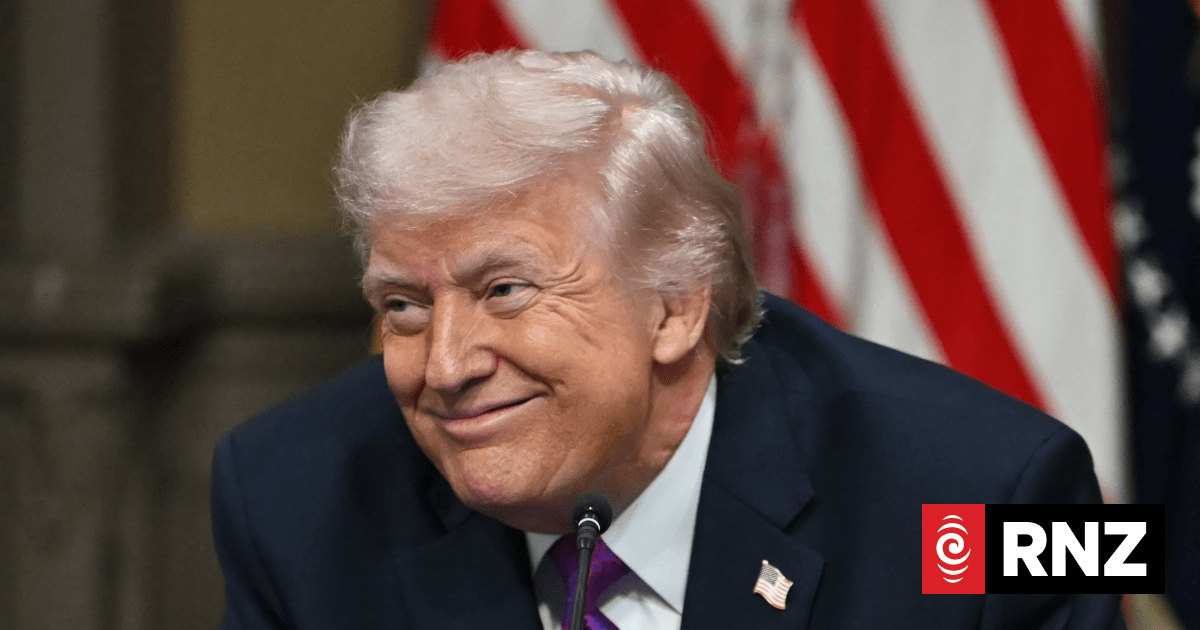
A fireball rises after an Israeli airstrike in Beirut’s southern suburbs on 6 March, 2026.
Fresh attacks on Iran, Israel, Lebanon
Israeli military orders evacuation of Beirut’s southern suburbs
Iran envoy says 1332 Iranian civilians killed in war
The war in Iran has entered its second week with uncertainty growing about when hostilities will end, as US President Donald Trump demanded Tehran’s “unconditional surrender” and Israel traded attacks with Iran and Lebanon.
Trump’s comments came hours after Iranian President Masoud Pezeshkian posted on social media that unnamed countries had begun mediation efforts, briefly raising hopes of a resolution a week after the US and Israel launched strikes on Iran.
“There will be no deal with Iran except UNCONDITIONAL SURRENDER!” Trump wrote on his Truth Social platform on Friday.
“After that, and the selection of a GREAT & ACCEPTABLE Leader(s), we, and many of our wonderful and very brave allies and partners, will work tirelessly to bring Iran back from the brink of destruction, making it economically bigger, better, and stronger than ever before,” he added.
War spreading in Gulf, Lebanon
Trump has offered shifting explanations of his war aims, raising the possibility of an extended conflict that has already spilled well beyond Iran’s borders, shaken global financial markets and sent oil prices soaring.
Iran has responded by hitting Israel and multiple Gulf states that host US military installations.
The US-Israeli attacks have killed at least 1332 Iranian civilians and wounded thousands, according to Iran’s UN ambassador Amir Saeid Iravani. Iranian attacks have killed 11 people in Israel, and at least six US service members have been killed.
Early on Saturday, missiles were seen flying towards Israel as the Israeli military said it had identified missiles launched from Iran towards Israel. Explosions could be heard as Israeli defences activated to shoot down incoming Iranian fire.
Shortly after the barrage, the Israeli army said it had begun a wave of strikes targeting infrastructure in the capital Tehran. Israel also attacked neighbouring Lebanon, where it said it was hitting Iranian and Hezbollah targets.
Smoke and fire rise from the site of airstrikes at Mehrabad International Airport in Tehran on 7 March, 2026.
Photo: AFP/ Atta Kenare
Explosions were heard in several parts of Tehran late on Saturday morning (Iran time), the Iranian Mehr News Agency reported and Tehran’s Mehrabad Airport was struck, the semi-official Tasnim news agency reported. There was no immediate comment from Iran’s Islamic Revolutionary Guard Corps or Lebanon’s Iran-backed Hezbollah militants.
Landings briefly resumed at Dubai International Airport, according to aviation-tracking website Flightradar24, but just hours later, Emirates announced all flights to and from Dubai were again suspended.
Late Saturday morning (UAE time), the United Arab Emirates said its air defence systems were responding to a missile threat, while a witness told Reuters that several loud bangs were heard in Abu Dhabi.
On Friday, Israel said 50 of its warplanes had hit a bunker in Iran still being used by its leadership beneath slain Supreme Leader Ayatollah Ali Khamenei’s destroyed Tehran compound.
Israel has expanded the war in Lebanon, pounding Beirut on Friday after ordering an unprecedented evacuation of the capital’s entire southern suburbs. Israel says its bombing in Lebanon aims to root out Hezbollah, the Shi’ite militia that has been a dominant faction in Lebanese politics since the 1980s.
Israeli airforce pounds Beirut, Lebanon death toll rises
Hezbollah fired on Israel this week to avenge the killing of Khamenei on the war’s first day.
“We’re sleeping here in the streets – some in cars, some on the street, some on the beach,” said Jamal Seifeddin, 43, who fled Beirut’s southern suburbs and spent the night on the streets in the downtown district.
About 300,000 people have been displaced in Lebanon in the past four days, according to the Norwegian Refugee Council. The Lebanese health ministry has reported 123 people killed and 683 wounded as a result of Israeli attacks.
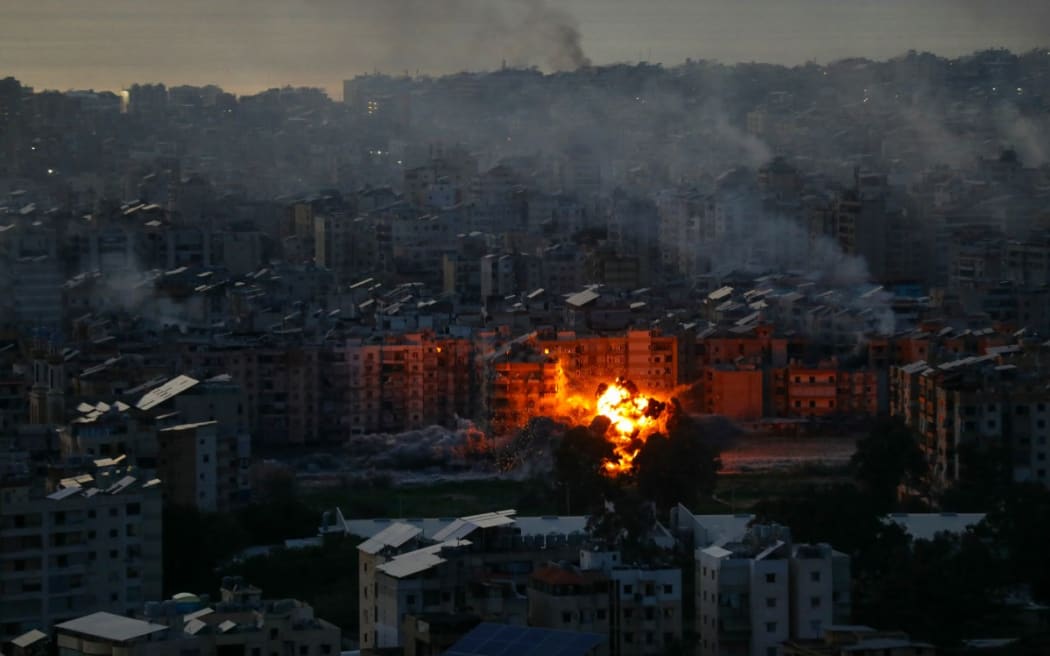
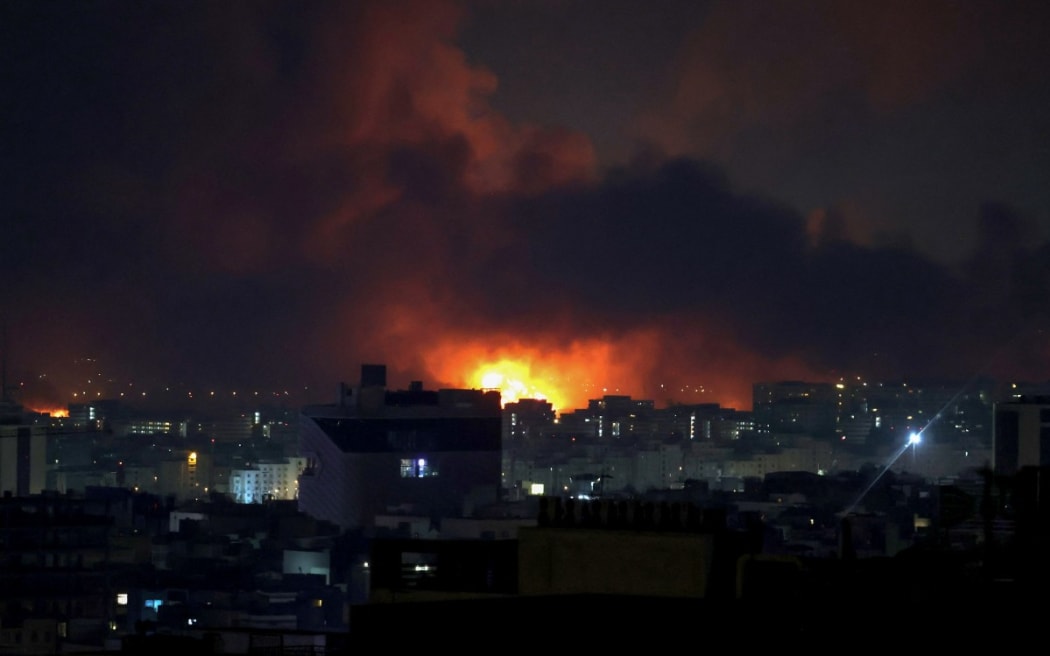
A fireball rises after an Israeli airstrike in Beirut’s southern suburbs on 6 March, 2026.
Photo: AFP
European and US stocks tumbled on Friday, while oil prices hit multi-year highs, with the Strait of Hormuz effectively shut. About one-fifth of global oil moves daily through the strait.
Petrol prices could hit $3 a litre amid conflict in Middle East
Iran rejects Trump call for a say in choosing new leader
Washington will provide reinsurance for losses up to $20 billion in the Gulf region to bolster confidence for oil and gas shippers, the US International Development Finance Corp has said.
Trump has said the US Navy could escort ships in the Gulf. But Iran’s Revolutionary Guards challenged him to do so, with spokesperson Ali Mohammad Naini saying Iran “welcomes” and is “awaiting” any US presence in the strait, state media said.
Russia is providing Iran with locations of US warships and aircraft in the Middle East after Iran’s ability to locate US forces was degraded, the Washington Post reported, citing three officials familiar with the intelligence.
Russian missions in the US did not immediately respond to Reuters requests for comment on the report.
Trump also reiterated his demand to have a say in selecting Iran’s new supreme leader, a notion rejected by Iravani.
The ambassador said new leadership would be selected “in accordance with our constitutional procedures and solely by the will of the Iranian people – without any foreign interference.”
Iran has described the conflict as an unprovoked attack and the killing of Khamenei as an assassination.
The Trump administration is pushing to shore up weapons stocks as the Iran operation draws down supplies. The president met with executives from seven defence contractors on Friday, who he said had agreed to accelerate weapons production.
White House spokesperson Karoline Leavitt said the US had enough weapons for the Iran campaign, which she said would take about four to six weeks to complete.
The State Department on Friday approved $151.8 million in sales to Israel of munitions and support, skipping the usual congressional review. Secretary of State Marco Rubio determined that an emergency existed that required the immediate sale.
US military investigators believe it is likely that US forces were responsible for an apparent strike on an Iranian girls’ school that killed scores of children on the first day of the war, two US officials told Reuters. The investigators have not yet reached a final conclusion.
– Reuters
ub]
By Maya Gebeily, Steve Holland and Pesha Magid, Reuters
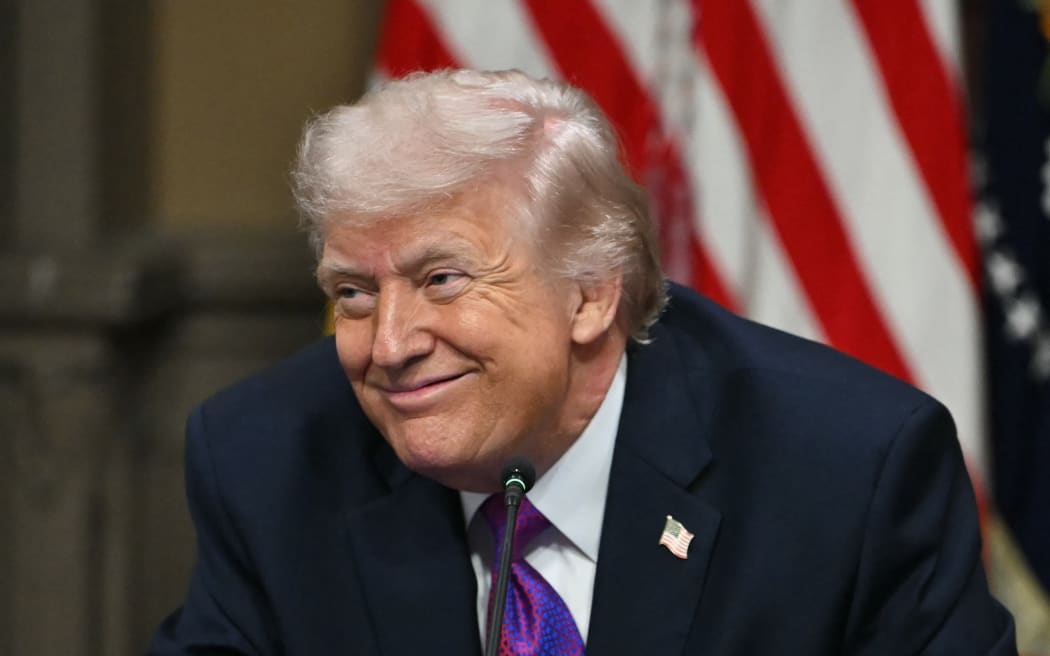
US President Donald Trump on March 4, 2026.
Photo: ANDREW CABALLERO-REYNOLDS / AFP
United States President Donald Trump has demanded Iran’s “unconditional surrender”, a dramatic escalation of his demands a week into the war he launched alongside Israel, which could make it more difficult to negotiate a swift end to it.
Trump made the remarks on social media on Friday (all times local) just hours after Iran’s president announced that unspecified countries had begun mediation efforts, one of the first signals of any diplomatic initiative, as Israel launched fresh attacks on Iran and Lebanon and Iran sent missiles into Israel and Gulf states that host US military bases.
“There will be no deal with Iran except UNCONDITIONAL SURRENDER!” Trump wrote.
“After that, and the selection of a GREAT & ACCEPTABLE Leader(s), we, and many of our wonderful and very brave allies and partners, will work tirelessly to bring Iran back from the brink of destruction, making it economically bigger, better, and stronger than ever before.”
The surrender demand, and the likelihood that this would complicate any quick path to ending a conflict that has interrupted global energy supplies, caused immediate shock in financial markets. European share markets, open at the time of Trump’s post, suffered a sudden swoon. Wall Street opened sharply lower soon after.
On Thursday Trump had told Reuters in a telephone interview that he was demanding the right to help select Iran’s new supreme leader, to replace Ayatollah Ali Khamenei, killed in the war’s first day.
A White House spokeswoman said consideration was already underway.
“I know there’s a number of people that our intelligence agencies and the United States government are looking at, but I won’t get any further on that,” Karoline Leavitt told reporters on Friday at the White House.
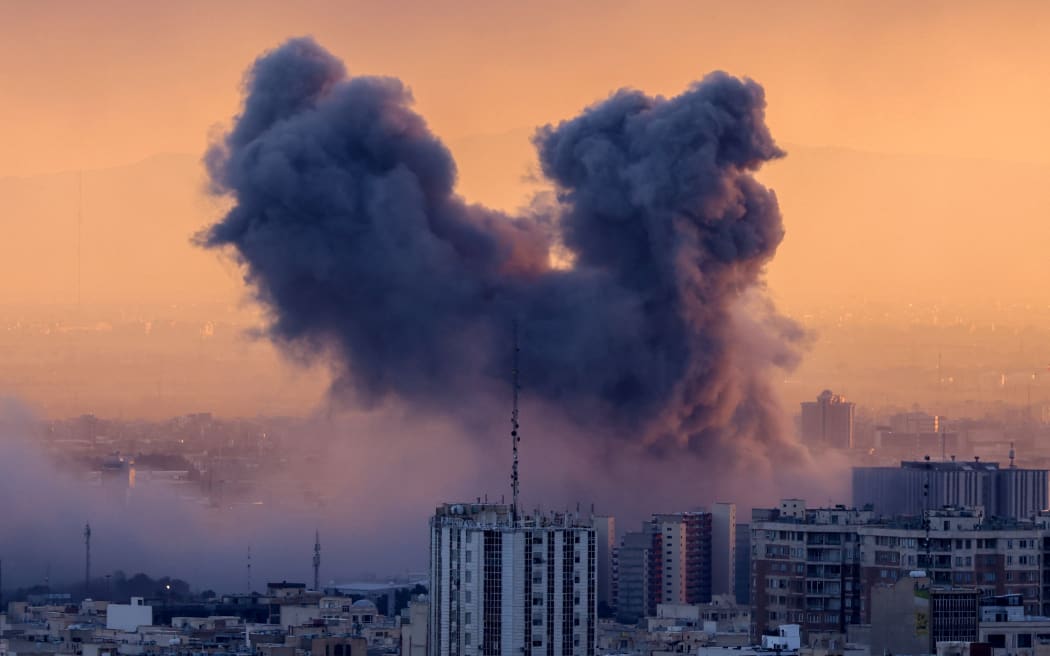
A plume of smoke rises after a strike on the Iranian capital Tehran.
Photo: AFP / Atta Kenare
Israel pounds Beirut after mass evacuation order
On the ground, Israel pursued a major expansion of the war in Lebanon, pounding the capital Beirut on Friday after ordering an unprecedented evacuation of the entire southern suburbs of the city.
It said it had carried out a strike in Beirut targeting a command centre used by the Iranian Revolutionary Guard’s navy unit, along with strikes on command centres that it said were used by the Hezbollah militant group.
There was no immediate comment from Iran’s Revolutionary Guard, or Hezbollah.
It also launched a new wave of attacks on Iran, saying 50 of its warplanes had struck a bunker still being used by Iran’s leadership beneath Khamenei’s destroyed Tehran compound.
Iran’s President Masoud Pezeshkian posted on X: “Some countries have begun mediation efforts.” He did not identify the countries or provide further details.
“Let’s be clear: we are committed to lasting peace in the region, but we have not the slightest hesitation in defending the dignity and authority of our country. Mediation should address those who underestimated the Iranian people and ignited this conflict,” he added.
Under Iran’s system, the president is subordinate to the supreme leader, but Pezeshkian is now serving on a panel that has assumed Khamenei’s duties.
Israel has extended its bombing to Lebanon to root out Hezbollah, the Shi’ite militia allied to Iran that has been a dominant faction in Lebanese politics since the 1980s and part of a wider, but now weakened, “axis of resistance”. Hezbollah fired on Israel this week to avenge the death of Khamenei.
Explosions lit up the night sky over Beirut’s southern suburbs. The Israeli military said it carried out 26 waves of strikes. The southern section of Beirut where Israel ordered evacuations is home to hundreds of thousands of people. During previous campaigns it had ordered only smaller evacuations of specific areas.
“We’re sleeping here in the streets – some in cars, some on the street, some on the beach,” said Jamal Seifeddin, 43, who fled Beirut’s southern suburbs and spent the night on the streets in the capital’s downtown district. “No one even brought a blanket.”
Israel has intervened in Lebanon repeatedly over decades, most recently in a campaign that weakened Hezbollah in 2024. But the ferocity of Friday’s strikes had little precedent even in the long history of war in the Lebanese capital.
About 300,000 people have been displaced in Lebanon in the past four days, according to the Norwegian Refugee Council.
Inside Israel, explosions could be heard as Israeli defences activated to shoot down incoming Iranian fire. The UAE, Kuwait, Qatar, Bahrain and Saudi Arabia all reported fresh drone and missile attacks.
The Israeli military said it has destroyed 80 percent of Iran’s air-defence systems in the first week of the campaign and disabled more than 60 percent of its missile launchers.
Russia is providing Iran with locations of US warships and aircraft in the Middle East after Iran’s ability to locate US forces was degraded, the Washington Post reported, citing three officials familiar with the intelligence.
Russian missions in the US did not immediately respond to requests for comment on the report.
Meanwhile, Trump and Defense Secretary Pete Hegseth expect to meet with major defense contractors on Friday, the White House spokeswoman said. Sources earlier said the Trump administration was set to discuss accelerating weapons production as Iran and other recent operations drew down supplies.
Leavitt said the US has enough weapons stockpiles to meet the needs of its Iran operations, which she said would take about four to six weeks to complete.
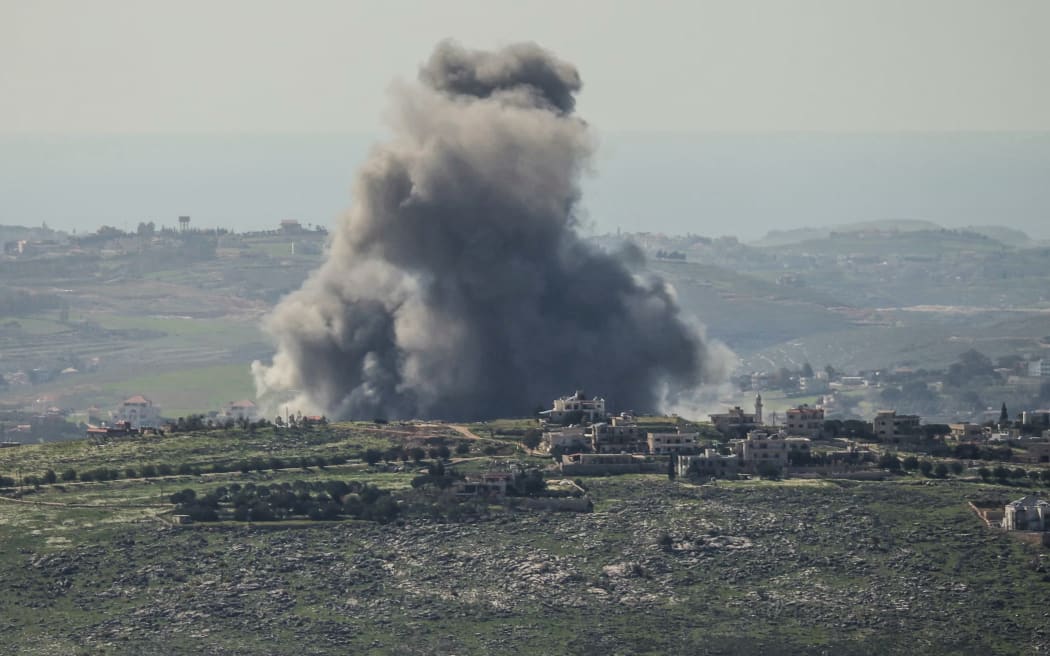
Smoke rises from the site of an Israeli airstrike that targeted the southern Lebanese village of Kfar Tibnit.
Photo: RABIH DAHER / AFP
‘We’re going to have to choose that person’, Trump says
In insisting on the right to help choose Iran’s next leader – meant to be a senior Shi’ite Muslim cleric selected by a panel of religious experts – Trump made his most explicit demand for control over a country of more than 90 million people.
“We’re going to have to choose that person along with Iran. We’re going to have to choose that person,” Trump said on Thursday in a telephone interview with Reuters.
Israel has said openly that it aims to overthrow Iran’s ruling system. Washington has been more circumspect, saying its goal is to eliminate Iran’s ability to project force beyond its borders, while also inviting Iranians to rise up and topple their government.
There was no immediate Iranian response to Trump’s remarks. Iran has cast the war as an unprovoked attack and describes the killing of its leader, Khamenei, as an assassination.
It says the panel that will choose the new leader is conducting its work.
Some Iranians openly celebrated the death of Khamenei, weeks after security forces under his control killed thousands of protesters in the worst domestic unrest since the revolutionary era. But there has been little sign of opposition to the authorities during the airstrikes, with activists saying it is not safe to return to the streets.
At least 1230 people have been killed in Iran since the US and Israel launched strikes on 28 February, according to the Iranian Red Crescent Society. The Lebanese health ministry has reported 123 people killed and 683 wounded as a result of Israeli attacks. Iranian attacks have killed 11 people in Israel since the war started.
Two US officials told Reuters that military investigators believed it was likely that US forces were responsible for an apparent strike on an Iranian girls’ school that killed scores of children on the first day of the war. The investigators have not yet reached a final conclusion.
– Reuters