
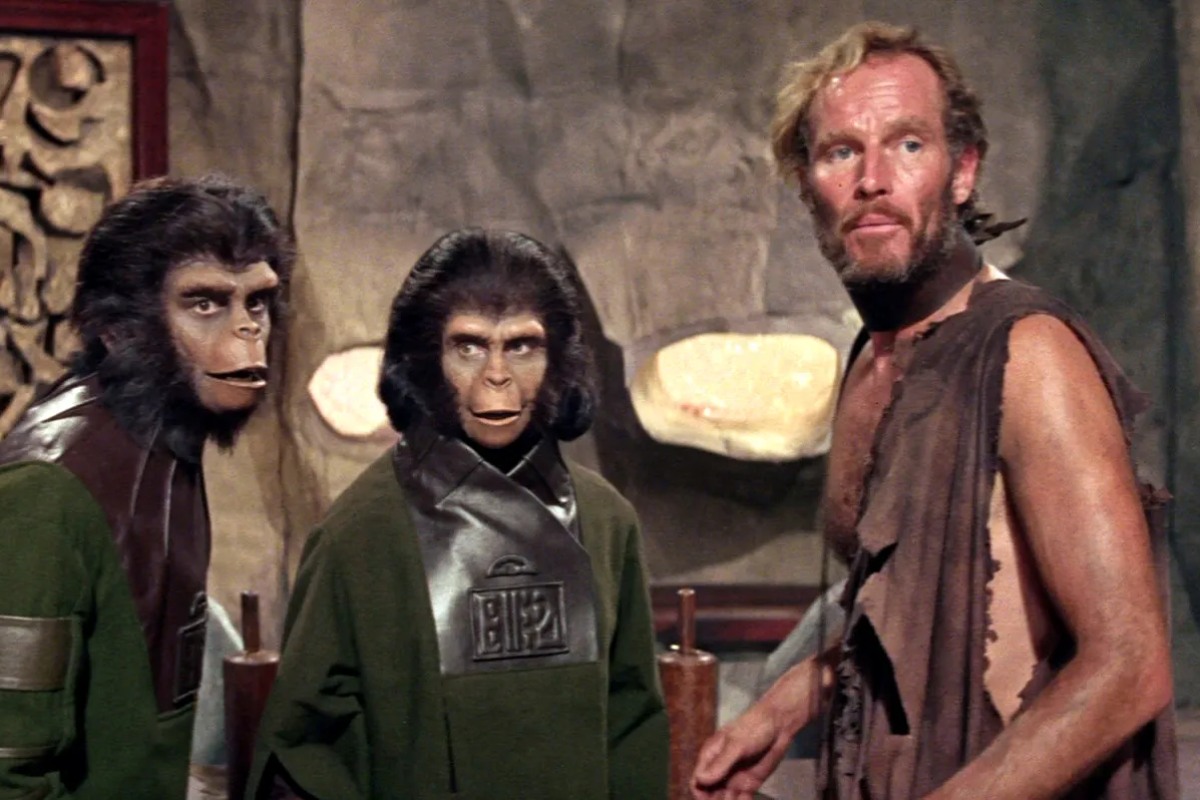
The ending you quote from Planet of the Apes almost wasn’t. Who killed the original finale, and what made it too volatile to survive?
The surf hisses against a ruined shoreline and a jagged crown rises from the sand, an image that seared Planet of the Apes into pop culture. It nearly ended on a different epilogue, weighed down by a pregnancy thread and a sniper’s bullet, before 20th Century Fox and the filmmakers stripped it back. Rod Serling’s appetite for a shattering reveal lingered over the rewrite, steering the story toward that beachside shock. The choice not only sharpened Charlton Heston’s final reckoning, it rewired the film’s legacy and the sequels that followed.
A pivotal change in sci-fi history
Planet of the Apes (1968) is defined by its final image, a ruin half-buried in sand and a man collapsing in despair. That ending feels inevitable today. It was not. Early outlines floated a different capstone that might have softened the shock and diverted the franchise. Peek into those discarded pages, and you see how near we came to losing the Statue of Liberty gut punch. Had it stuck, pop culture might read very differently.
The story’s origins and adaptations
Adapted from Pierre Boulle’s novel, the film fused allegory with striking prosthetics and location work. The screenplay evolved through drafts by Rod Serling and Michael Wilson, sharpening themes of race, war, and hubris. Its reach proved vast, spawning sequels and TV offshoots, plus remakes and a modern reboot cycle (the original and successors now stream on Disney+).
An ending almost lost to time
Serling’s early pages already planted the twist that the ape planet was Earth. What changed was the fallout, as producers weighed shock against coherence.
Taylor is felled by a sniper moments after the beach reveal.
Nova flees into the Forbidden Zone, pregnant with Taylor’s child.
The Liberty remains were once staged in a lush jungle, not a shoreline.
Executives flagged these turns as convoluted, morally queasy, and rhythm-breaking, so the epilogue was scrapped.
How the revised ending shaped its legacy
The chosen finale kept only the beach and the shattered Statue of Liberty, yielding a clean cut to credits. That clarity, encouraged by 20th Century Fox leadership, concentrated meaning and menace. Heston’s howl became a cultural shorthand for self-destruction, a silhouette quoted by blockbusters, spoofed on TV, and studied in film schools. The studio bet on resonance over plot mechanics, and the gamble paid off.
A cultural phenomenon decades later
Would the saga have stretched to 9 films and multiple series without that image? The movie endures because spectacle serves an idea, not the reverse. Today it remains a living text for fans and scholars, accessible at home on Disney+, its final shot reminding us how a single editorial choice can redirect an entire franchise.