
‘City-destroying’ asteroid to miss Moon in 2032
mystery

Express newspaper
06/03/2026 21:55
Good news from NASA – an asteroid that was previously expected to collide with the Moon will avoid it, passing at a safe distance.
Since December 2024, the agency has been tracking the “city-killing” asteroid, dubbed 2024 YR4, as it approached our solar system. The 67-meter-long space rock had alarmed experts after initial measurements suggested a 1 in 32 chance of hitting Earth in 2032.
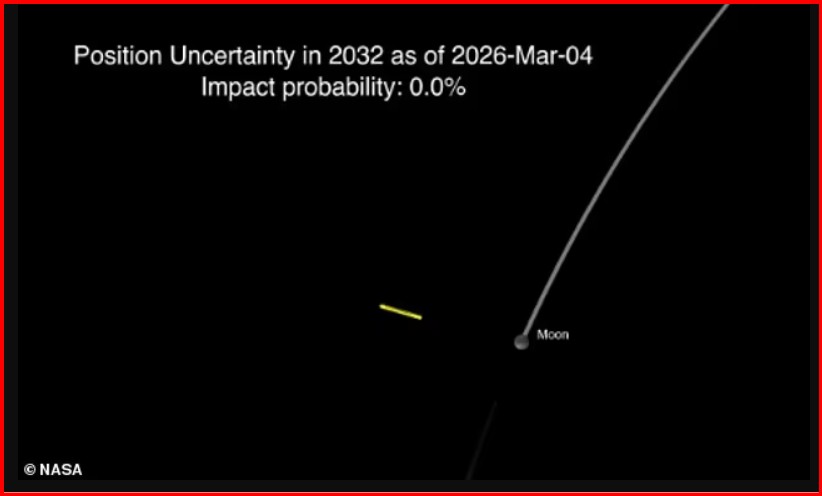
Subsequent analyses late last year showed the Moon had a 4% chance of taking the hit. But now we can breathe easy.
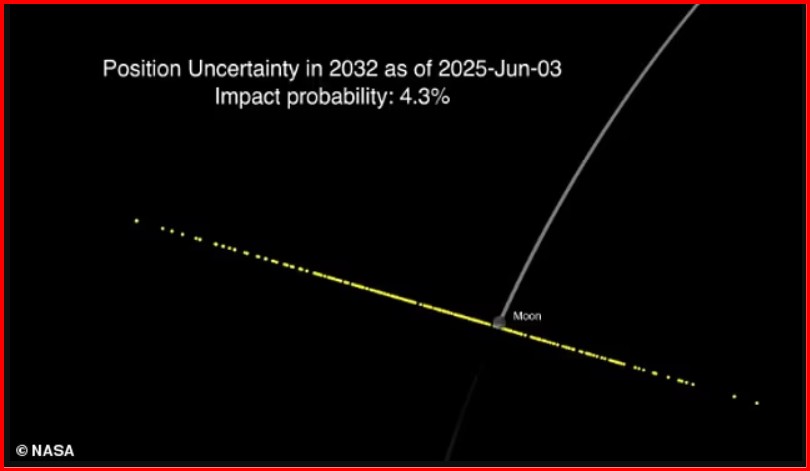
NASA confirmed that the possibility of a collision has been eliminated.
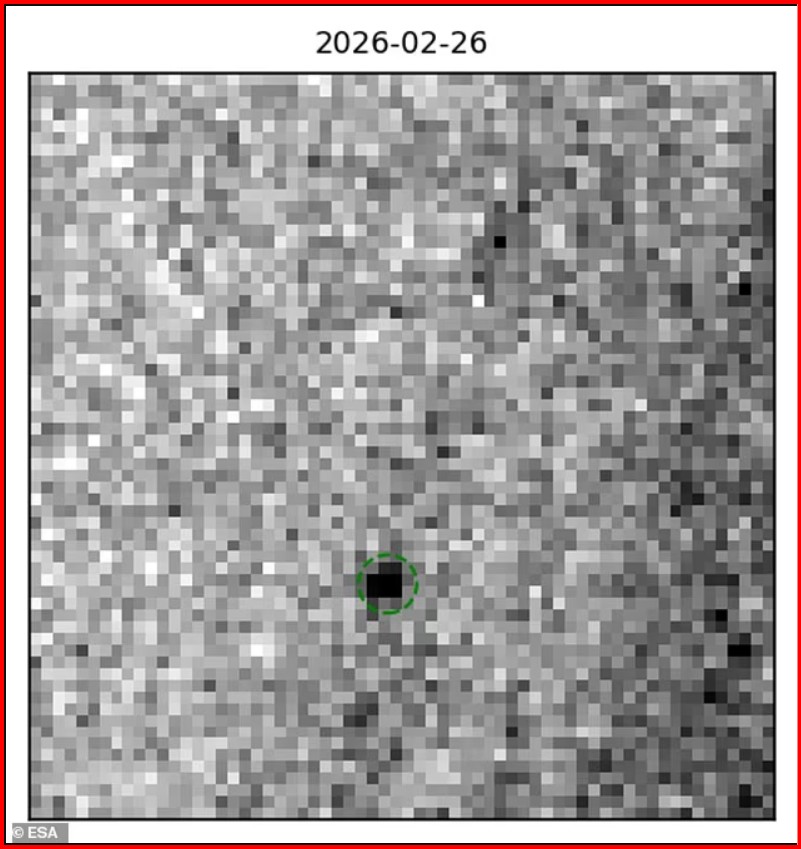
“Using data from NASA’s James Webb Space Telescope collected on February 18 and 26, experts at the Center for Near-Earth Object Studies at the Jet Propulsion Laboratory in California have refined the orbit of asteroid 2024 YR4 and rule out a collision with the Moon on December 22, 2032,” NASA said.
“With this new data, 2024 YR4 is expected to pass close to the lunar surface at a distance of 21,200 km (13,200 miles).”
Since last spring, the asteroid has not been visible from Earth, and it was believed that it would not be seen again until 2028. But an international team, led by researchers at Johns Hopkins University, identified two opportunities to observe the asteroid from the James Webb.
“The challenge was enormous: to use one of the most complex machines man has built to track an almost invisible object millions of kilometers away and then accurately predict its position almost seven years into the future,” the European Space Agency explained.
By comparing the asteroid’s position with background stars, the researchers were able to measure its orbit. This confirmed that the space rock will avoid the Moon, passing by on December 22, 2032 at a safe distance of 21,200 km.
“The Moon is safe, 2024 YR4 poses no risk, but work continues,” ESA warned.
Although a collision with the Moon would not be as devastating as with Earth, it could have been enough to consider the asteroid’s deflection. The asteroid would hit the Moon at over 46,800 km/h, unleashing a blast 500 times more powerful than the atomic bomb dropped on Hiroshima and throwing 10,000 tons of rock into space. If the impact were in the right place, Earth’s gravity could funnel 10–30% of the material thrown toward our planet, threatening low-orbit satellites that support communications and navigation.
Richard Moissl, head of planetary protection at ESA, previously said that a collision with the Moon would not pose a risk to humans, but could threaten space infrastructure.
Although 2024 YR4 no longer poses a threat, we can’t relax completely. Every 2,000 years or so, an asteroid the size of a football field hits Earth, causing significant damage. And occasionally, much larger objects, like the asteroid that wiped out the dinosaurs 66 million years ago, can pose a threat to civilization.
Currently, according to NASA, there are no known asteroids this large that are approaching, but the agency warns that there may be others yet to be discovered.
“While no asteroid larger than 140 meters has a significant chance of hitting Earth in the next 100 years, only about 40% of these asteroids have been discovered so far,” NASA warns. /GazetaExpress/