
I have been chair of Naylor Love since 2022 and a board director since 2018. Naylor Love is New Zealand’s largest privately owned construction company, with roots going back to 1910. I came from human resources (HR) and governance, not from construction, which meant I arrived with no loyalty to the way things had always been done.
But what surprised me was not the male dominance, which I expected. It was the genuine appetite for change alongside it.
The debate about whether diverse leadership teams perform better is over. They do. What is not over is how seriously we act on that knowledge.
Across the sector, women are often well represented in functional or support roles. They are far less visible in positions with full profit-and-loss accountability, the roles that lead to chief executive and major operational leadership.
At Naylor Love, we have got more women now in our senior ranks than in our middle ranks. But while that sounds like progress, it is also a warning the pipeline isn’t filling fast enough from below.
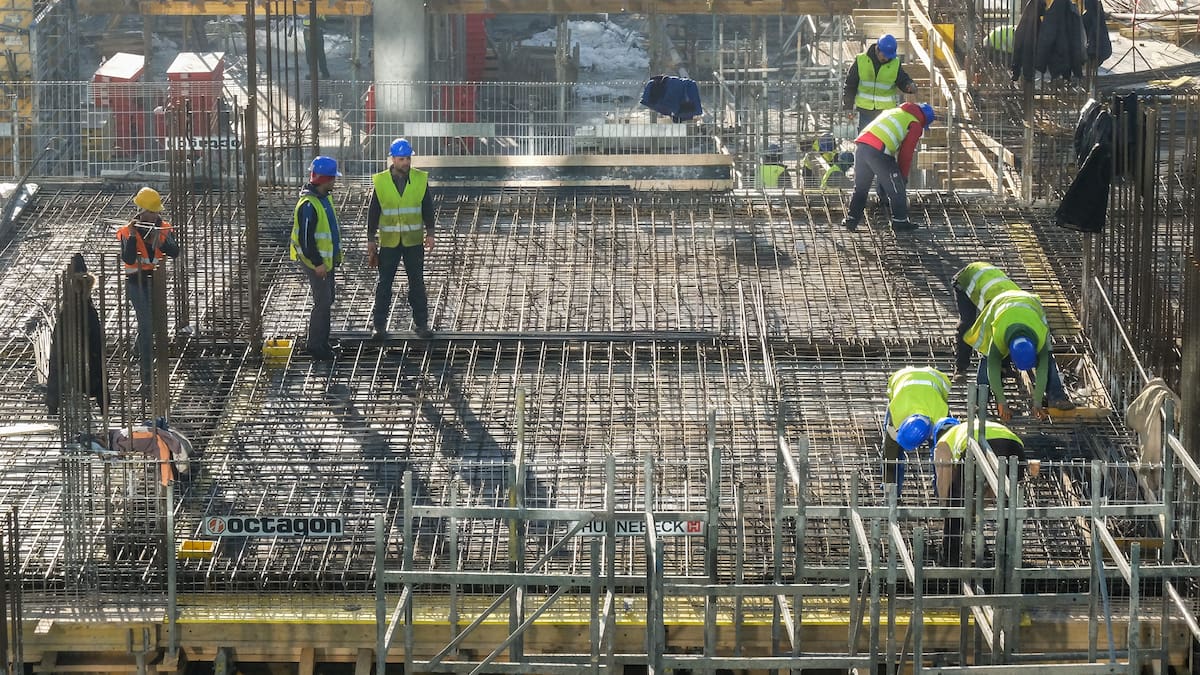
Construction employs over 300,000 people in New Zealand, roughly one in 10 workers. Photo / 123rf
The “best person for the job” is a principle I hold firmly. But it only works if the search process is genuinely rigorous. When senior appointments are made, the question is not whether we chose well from the list in front of us, it is whether we looked hard enough to build the right list in the first place. Where have we looked? Who have we considered? What barriers are we creating that we haven’t even noticed yet?
This is not about quotas, it’s about rigour.
Retention is equally critical. Construction will never be a 9-to-5 industry. Deadlines are real and worksites require presence. This is why I deliberately use the term “work-life interface” rather than balance, because balance implies a steady state that construction will never offer.
What matters is whether practical decisions reflect a real commitment to keeping good people. For example, if someone on parental leave is excluded from a remuneration review, they come back behind. Over time those gaps compound and push talented people away. That is not a women’s issue, it’s a structural leadership failure.
Construction industry leaders need to take seriously their responsibility to actively develop and advocate for women within their teams, as opposed to token mentoring programmes. What actually moves careers though is harder to systematise, the person who shows up and shows faith in you, who holds the mirror up and says go on, you can do that. Every leader should be asking themselves who they are doing that for right now.
Appointment processes must be genuinely open-minded, leaders should consider broadening their searches, challenge assumptions and take considered risks where talent is evident.
Workplaces must recognise a career spans a lifetime, one that includes children, elder care and community responsibilities, for men and women both.
However, there is a wider constraint the industry cannot solve on its own. Construction’s boom-and-bust cycle is real and well understood, and it is also made considerably worse by short political horizons.
New Zealand’s stop-start infrastructure programmes make long-term workforce planning extremely difficult. The Infrastructure Commission has estimated the infrastructure workforce needs to grow from around 40,000 to 97,000 workers over the next 30 years. Obviously, you don’t solve a problem that size without broadening who this industry recruits and retains.
Women make up around 16% of the construction workforce nationwide. Photo / 123rf
A woman who has trained as an engineer has choices. She can go and work for a secure and predictable organisation. Or she can come into construction, where the pipeline is often uncertain and the culture, in many places, is still working out how to include her.
A genuine cross-party political commitment to long-term infrastructure investment would not just benefit construction companies, it would change the risk calculation for everyone considering a career here.
Greater pipeline certainty enables better retention, and better retention enables real diversity. These are not separate problems.
Governance is about stewardship, so when my time at Naylor Love ends, I want to have contributed to a company that is stronger, more capable and more reflective of the country it builds for.
I want to see more women not just visible in construction but running significant parts of it.
Jackie Lloyd is the chair of privately owned construction firm Naylor Love. She is the second female chair in the company’s 116-year history.
Catch up on the debates that dominated the week by signing up to our Opinion newsletter – a weekly round-up of our best commentary.