
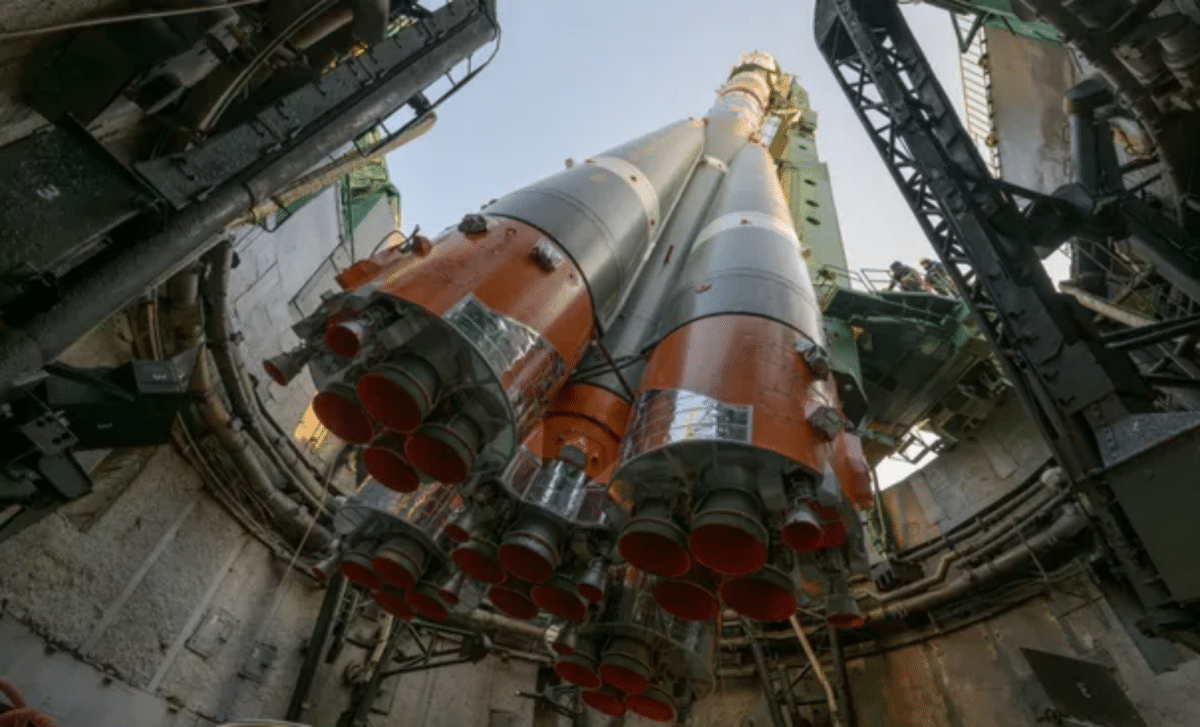
A Soyuz rocket launch that carried astronauts toward the International Space Station (ISS) last November left unexpected damage at Baikonur Cosmodrome’s Site 31, Russia’s only operational pad supporting crewed missions. The powerful blast during the Nov. 27 liftoff damaged critical infrastructure, temporarily halting operations at one of the most important launch complexes used by Roscosmos. The incident forced engineers to assess the site and carry out extensive repairs to restore the facility before future missions could resume.
The Soyuz Launch That Left A Key Space Facility Damaged
The incident occurred when a Soyuz rocket lifted off from Site 31 at the historic Baikonur Cosmodrome in Kazakhstan, sending three astronauts toward orbit and the ISS. While the mission itself proceeded successfully, the powerful thrust and vibration generated during the launch caused unexpected structural damage to parts of the pad infrastructure. The facility’s service cabin, a major structural element supporting launch operations, was among the components that suffered significant impact.
At the time, Russian space officials quickly acknowledged the issue and began evaluating the extent of the damage. Roscosmos explained the situation while emphasizing that repairs were already being considered. As the agency noted,
“The launch pad’s condition is currently being assessed,” Roscosmos stated, adding that “all necessary spare components are available for repair, and the damage will be repaired shortly.”
The situation raised concern within the spaceflight community because Site 31 is not just another launch location. It serves as the only active Russian pad capable of launching crewed missions to the ISS, making it a vital component of international space operations. Any prolonged outage could have disrupted schedules for upcoming Soyuz astronaut flights, which continue to provide critical transport to the orbital laboratory. The unexpected damage also sparked discussion among outside observers about whether quality control or aging infrastructure may have played a role in the incident.
Massive Repair Effort At Baikonur Cosmodrome
Repairing a facility designed to handle one of the most powerful rocket launches in the world is no small task. According to information released by Roscosmos and reported by Space.com, the restoration project required a coordinated effort involving more than 150 specialists from the agency’s Center for Operation of Space Ground-Based Infrastructure, along with teams from multiple contractors.
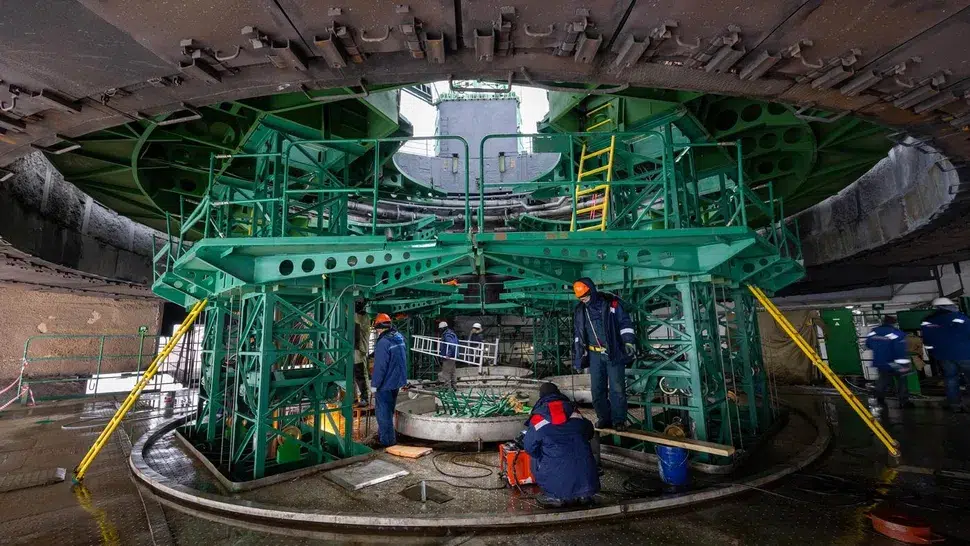 Workers wrap up fixing Site 31 at Baikonur Cosmodrome after a Soyuz rocket launched damaged the pad and made it unusable. (Image credit: Roscosmos)
The scope of the repairs shows how extensive the damage was. Engineers had to rebuild and refurbish large sections of the launch complex, addressing structural elements, electrical systems, and mechanical components that are essential for safe rocket operations. Roscosmos detailed the scale of the work in a statement describing the reconstruction efforts.
“2,350 square meters [25,300 square feet] of structures were prepared and painted, all fastening units were replaced with new ones, electrical equipment was completely replaced and adjusted, inspection and maintenance of service cabin components and mechanisms were carried out, and more than 250 linear meters [820 feet] of welds were completed,” Roscosmos said in a statement, according to Interfax.
One of the most technically demanding aspects involved installing large structural elements of the service cabin, including components measuring more than 60 feet (19 meters) long and weighing roughly 17 tons. Engineers had to maneuver these parts through the pad’s firing aperture, a process that required a specially developed installation technique. The complex operation highlights the delicate balance between maintaining aging launch infrastructure and keeping it ready for continuous missions to orbit.
Site 31 Ready For Its Next Mission
With repairs now complete, Baikonur’s Site 31 is preparing to return to service. The first mission scheduled to use the restored launch complex is an uncrewed Progress cargo spacecraft, designated Progress MS-33, which will deliver supplies to the International Space Station.
The cargo mission is currently targeted for March 22, marking the first launch from the pad since the November incident. Progress spacecraft play a critical role in sustaining the ISS, carrying food, equipment, fuel, and scientific supplies needed to support astronauts aboard the orbiting laboratory.
The successful restoration of Site 31 ensures that Russia can maintain its launch schedule and continue supporting ISS logistics and crew transportation. The rapid turnaround also demonstrates the resilience of the Baikonur Cosmodrome, one of the oldest and most historically significant spaceports on Earth.
For decades, Baikonur has served as the launch point for some of the most iconic moments in space history, from Yuri Gagarin’s pioneering flight to modern Soyuz missions. The latest repairs at Site 31 reinforce the importance of maintaining this infrastructure as international space operations continue to depend on reliable access to orbit.