
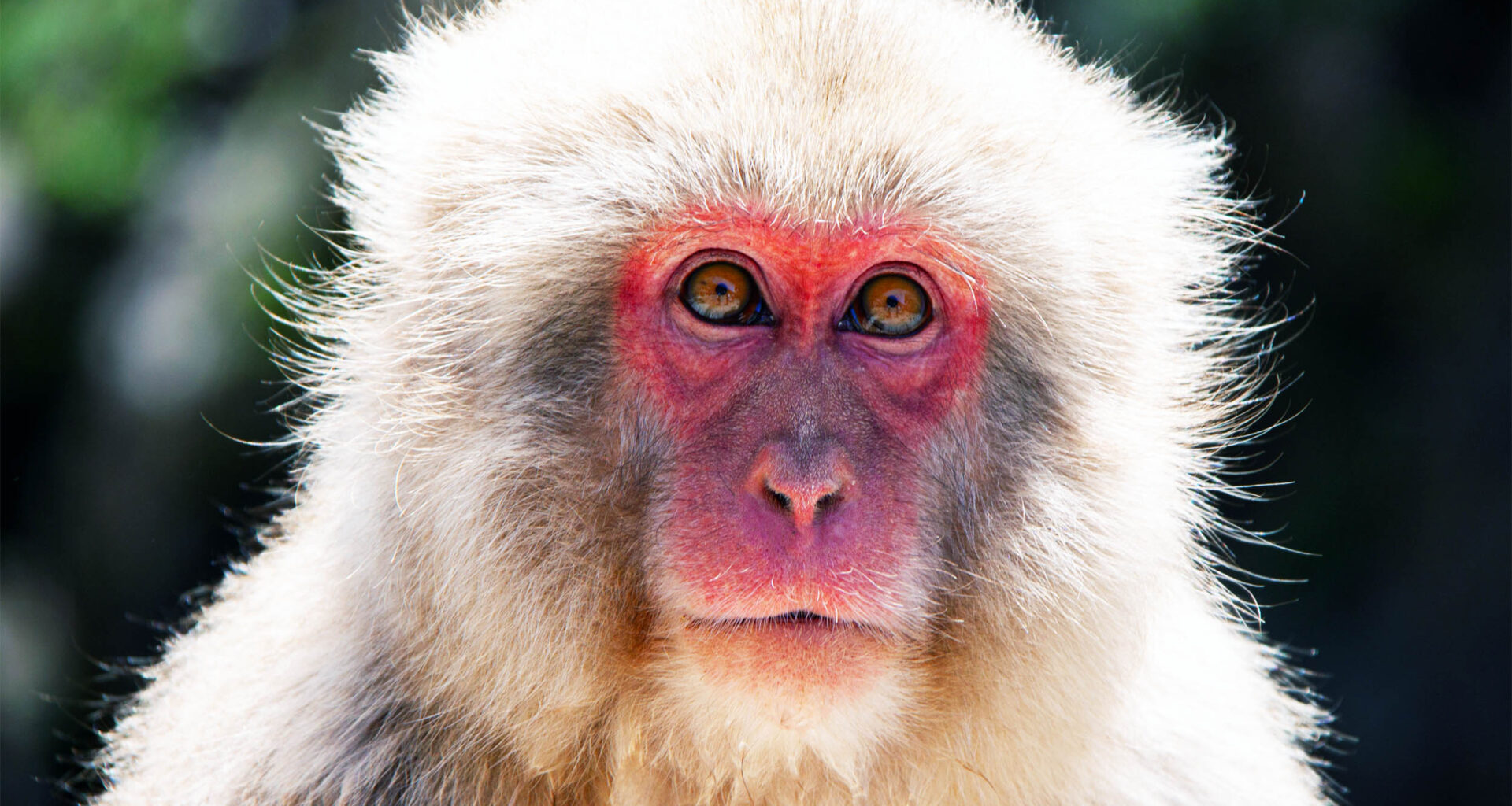
Two macaque monkeys have demonstrated the ability to tap in time with musical rhythms and maintain that timing even when rewards disappear.
The result places a key element of musical timing inside a primate brain, complicating the long-held belief that humans alone move naturally to a beat.
Musical macaques in the lab

Inside a laboratory in Mexico, macaques sat before a touch pad while music with a steady pulse played through nearby speakers.
Tracking the animals’ responses, Dr. Hugo Merchant, a neuroscientist at the National Autonomous University of Mexico (UNAM), documented taps that aligned closely with the underlying beat.
Repeated trials showed that the macaques settled into the same rhythmic timing humans perceive in music rather than reacting to individual sounds.
That consistency left one central question unresolved, whether the taps reflected simple training or a deeper capacity for synchronizing movement with musical rhythm.
Training set the pace
Before any pop song played, the monkeys practiced with a metronome, a device that clicks at a steady tempo.
Each correct tap earned a sip of juice, which strengthened the link between hearing a pulse and moving a finger.
Over time, the animals learned to anticipate the next click, so their taps landed close to the target beat.
Only after that routine held steady did the team challenge the monkeys with full songs where the beat was harder to hear.
Songs without payoff
Once the clicks stopped, the speakers played three songs chosen for beats that people can follow without thinking.
To tap in time, the monkeys had to extract a pulse from melody and vocals, not from a single click.
Later, the macaques kept time with ‘You’re The First, The Last, My Everything,’ ‘A New England,’ and ‘Passe & Medio Den Iersten Gaillar.’ That performance showed the animals could treat real music as a timing cue, not just a stream of pleasant noise.
Predicting the next beat
Keeping time with music demands more than hearing a repeating click, because the beat can hide inside other sounds.
Brains manage entrainment, syncing movement timing to an outside rhythm, by predicting when the next beat should arrive.
Small errors matter, so listeners correct midstream, speeding up or slowing down to match changes in tempo.
Seeing macaques do that after training suggests their hearing and movement systems can cooperate in a surprisingly flexible way.
Rare outside humans
Outside humans, dependable beat syncing appears in only a small set of species, which is why the macaque result stands out.
A sulphur-crested cockatoo, a white parrot native to Australia known for its yellow crest, spontaneously adjusted its dance moves as the song tempo changed across a wide range.
Across hundreds of species, parrots showed the clearest spontaneous timing, while most other animals never matched music reliably.
Even a trained sea lion learned to bob in time, proving that practice can unlock timing in unexpected brains.
Rethinking vocal learning
For years, many scientists backed the vocal-learning hypothesis, a claim that beat syncing needs sound-mimicry circuits.
Under that view, monkeys should struggle, because they do not copy new calls the way parrots and humans can.
After metronome training, Merchant’s team reported that macaques kept pace with music, weakening the idea of a hard boundary.
Even so, the study did not show that untrained monkeys move to music on their own in everyday settings.
Comparing monkeys and people
Alongside the monkeys, 18 people tapped to the same music clips, and the dataset captured every tap time.
Humans usually locked onto the beat quickly, while the macaques relied on training to keep their taps steady.
To check that rhythm, not loud sounds, drove behavior, the team also tested scrambled versions that broke musical structure.
Those trials helped separate true beat tracking from simple reacting, because random tapping could not stay aligned once structure vanished.
Data behind the claims
Just two monkeys carried the main result, so individual quirks could still matter more than species-wide biology.
With enough repetition, habit formation, the brain process that turns practice into automatic action, can mask how hard a task began.
One monkey later tapped during six new songs in free sessions, which hinted that the skill can spread beyond rehearsed clips.
Bigger studies, plus tests that start without months of coaching, will show whether most macaques can do this at all.
Musical roots of macaques
Fossils cannot capture a drumbeat, so living animals offer rare evidence about how rhythm could emerge in evolution.
Because macaques share much of our brain layout, UNAM researchers can probe how sound timing connects to movement timing.
In future work, electrodes and brain scans could track which circuits predict beats, and which circuits correct mistakes in real time.
That clearer understanding may also guide studies of human rhythm disorders, where some people hear a beat yet struggle to act on it.
Where rhythm research goes
Macaques learned to treat full songs as timing cues after long practice, and their success broadens the picture of which animal species have this musical ability.
More animals, fewer rewards, and brain recordings will decide whether this skill reflects a rare trick or a common primate capacity.
The study is published in Science.
—–
Like what you read? Subscribe to our newsletter for engaging articles, exclusive content, and the latest updates.
Check us out on EarthSnap, a free app brought to you by Eric Ralls and Earth.com.
—–