
Whenever stars are born, their masses determines their fates.
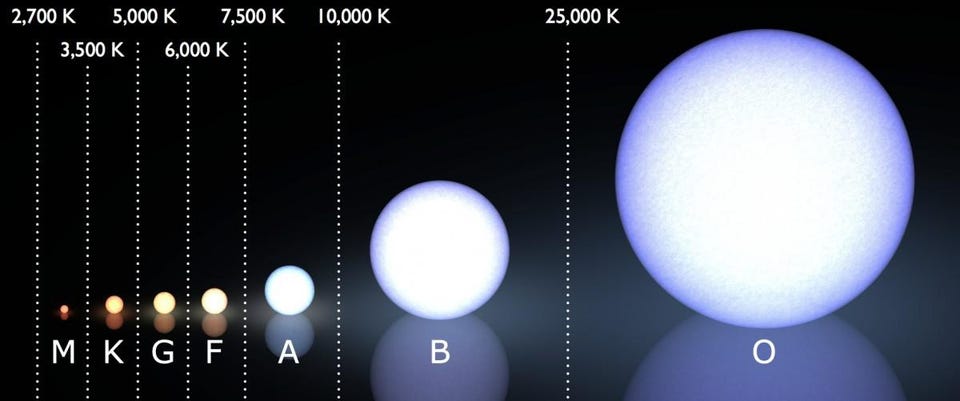
The (modern) Morgan–Keenan spectral classification system, with the surface temperature range of each star class shown above it, in kelvin. The overwhelming majority of stars today are M-class stars, with only 1 known O- or B-class star within 25 parsecs. Our Sun is a G-class star, along with about 5-10% of total stars. However, in the early Universe, almost all of the stars were O- or B-class stars, with an average mass 25 times greater than average stars today. In general, more massive stars live shorter lives, and die in more explosive fates.
Credit: LucasVB/Wikimedia Commons; Annotations: E. Siegel
Sun-like stars evolve into giants, blow off their outer layers, and contract: forming white dwarfs.
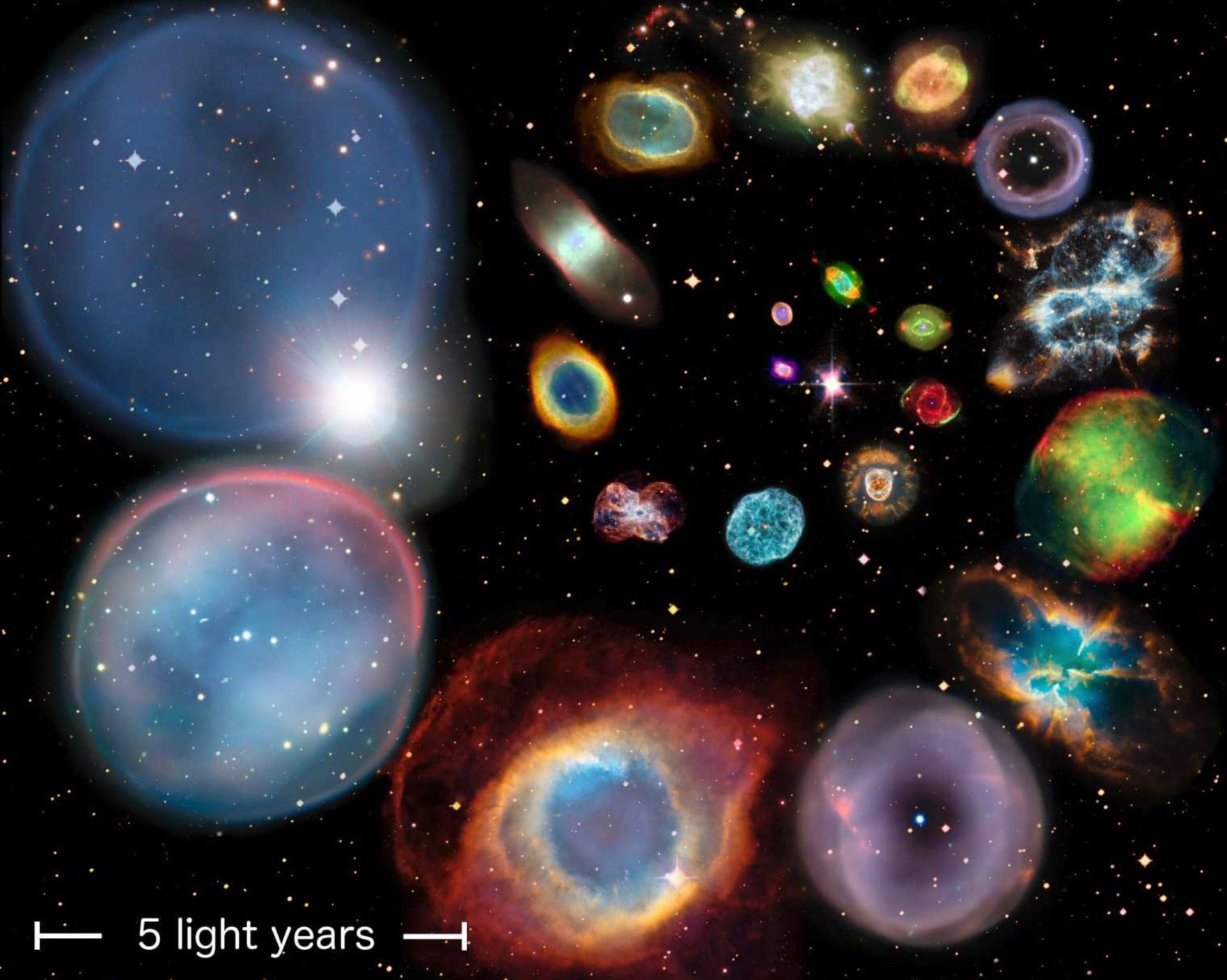
From their earliest beginnings to their final extent before fading away, Sun-like stars will grow from their present size to the size of a red giant (~the Earth’s orbit) to up to ~5 light-years in diameter, typically. The largest known planetary nebulae can reach approximately double that size, up to ~10 light-years across. Typically, stars born with 8 solar masses or under can experience this fate, but observing an evolved Sun-like star is often ambiguous as far as determining its ultimate demise.
Credit: Ivan Bojičić, Quentin Parker, and David Frew, Laboratory for Space Research, HKU
Significantly more massive stars become supergiants, destined to violently die in supernovae.
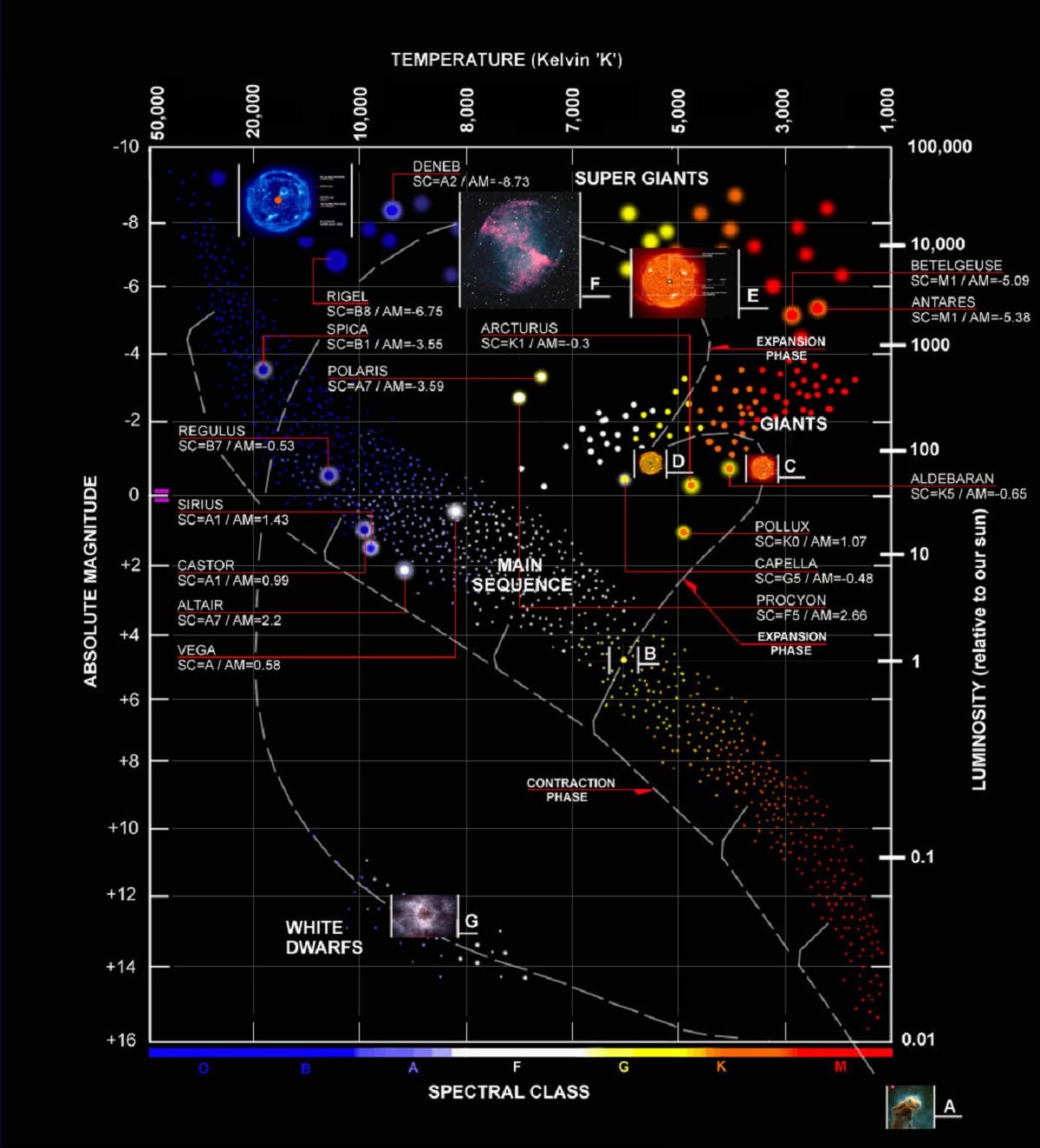
When stars run out of hydrogen in their cores, they evolve off of the main sequence, becoming subgiants, then red giants, then igniting helium in their cores (which is the tip-of-the-red-giant branch phase), and then evolving onto the horizontal branch and eventually into supergiants (for high-mass stars) or into the asymptotic giant branch (for non-high-mass stars) before dying. The mass of a star determines its ultimate fate, but the rate of fusion is set by other internal properties.
Credit: Starhuckster.com
The line separating the two is blurry, as both star types experience winds and ejecta before dying.
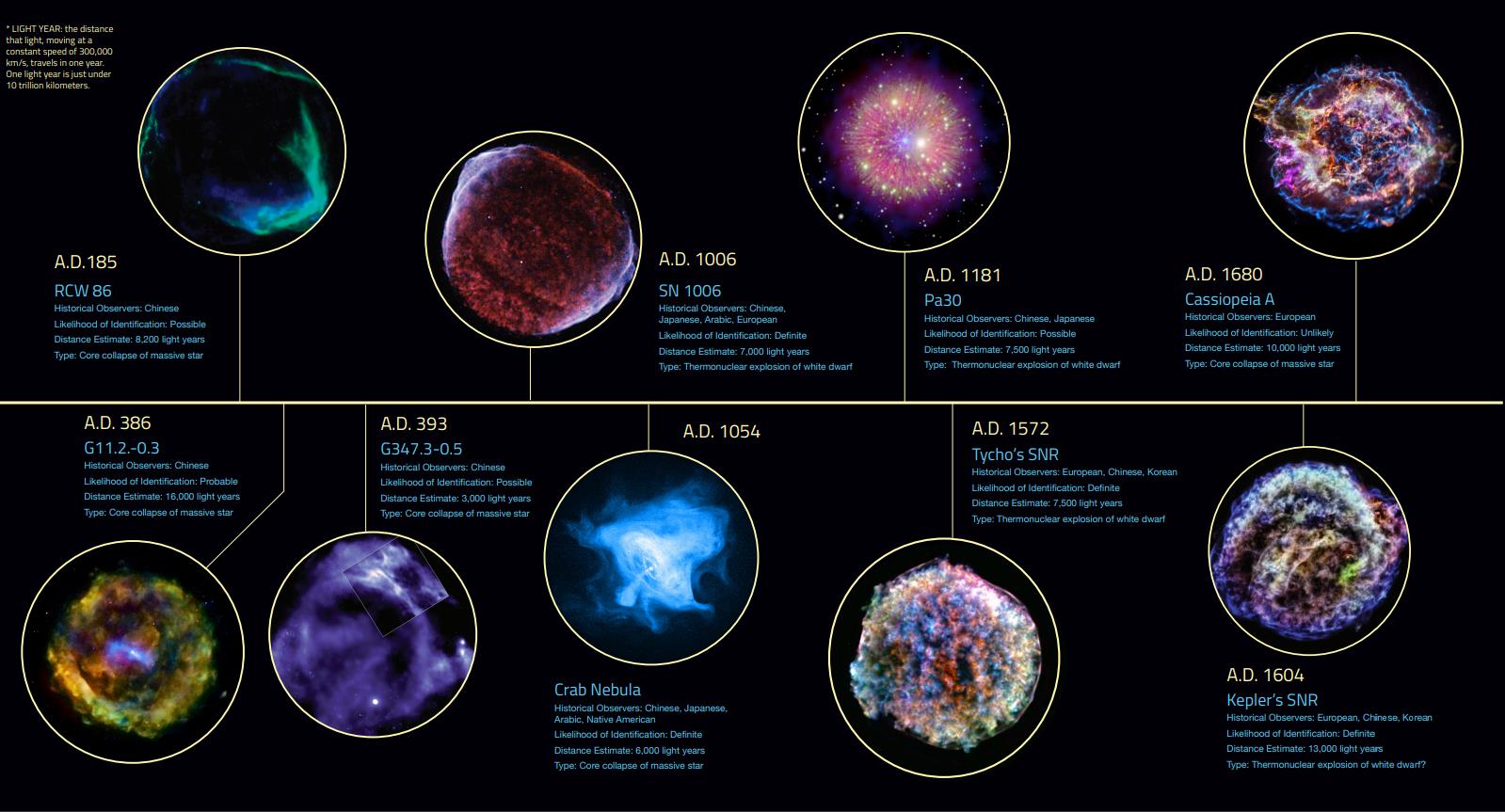
This infographic shows nine of the ten historical supernovae, along with remnants, that have been identified over the past 2000 years within the Milky Way. Not shown is G1.9+0.3, which occurred near the galactic center approximately 155 years ago, but was only discovered posthumously in 1985. Our best supernova remnant observations all come from NASA’s Chandra X-ray telescope.
Credit: NASA/Chandra X-ray telescope
Around 5000 light-years away, the faint nebula PMR 1 hides a star whose fate is not yet known.
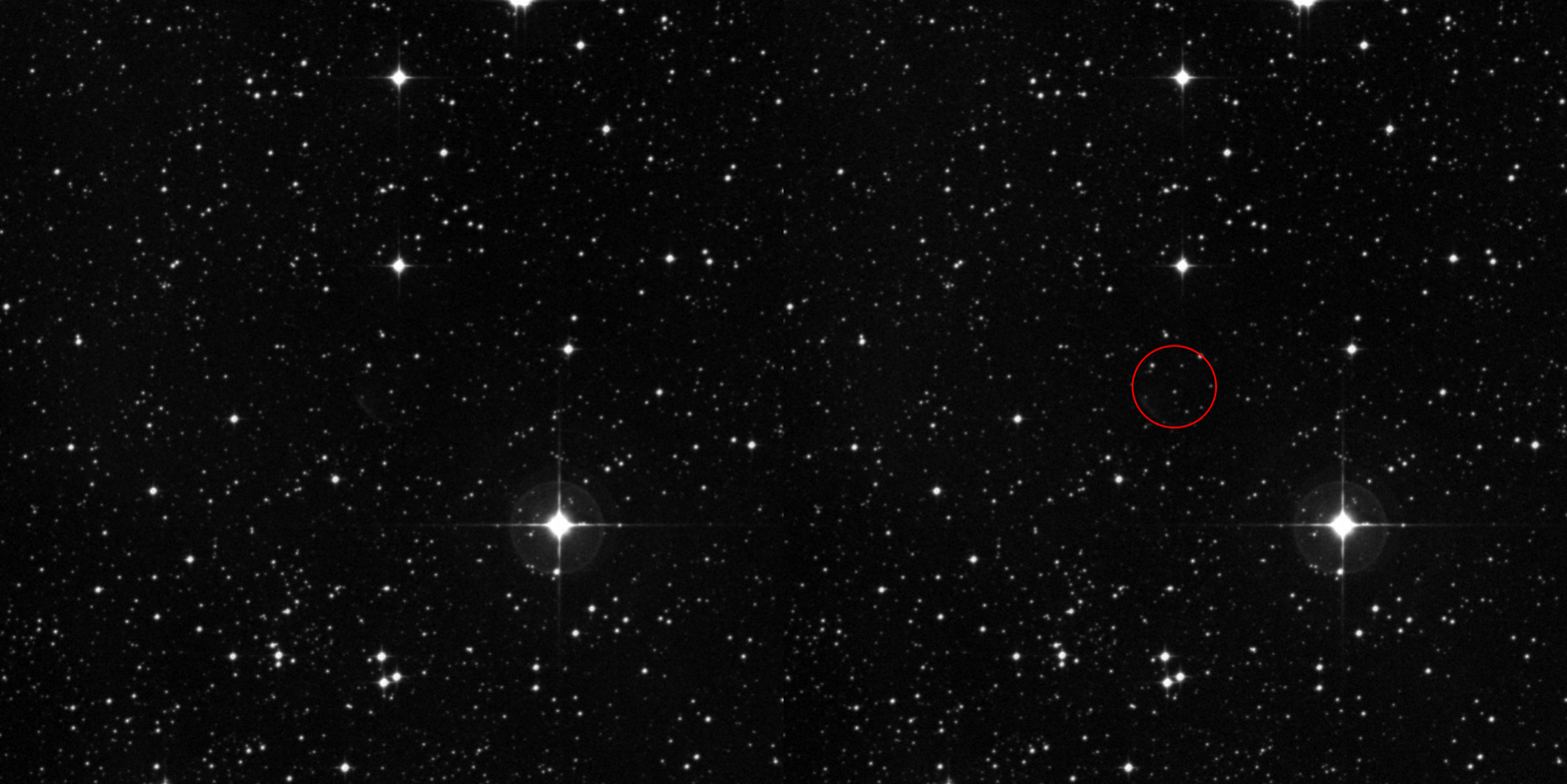
This view from the Digitized Sky Survey shows the area of the sky where nebula PMR 1, also known as the Exposed Cranium Nebula, is located. Note that almost no visual signature of the Nebula’s existence can be spotted in visible light wavelengths.
Credit: Digitized Sky Survey/Association for Universities for Research in Astronomy; Animation: E. Siegel
NASA’s Spitzer revealed its structure in 2013, bestowing a nickname: the Exposed Cranium Nebula.
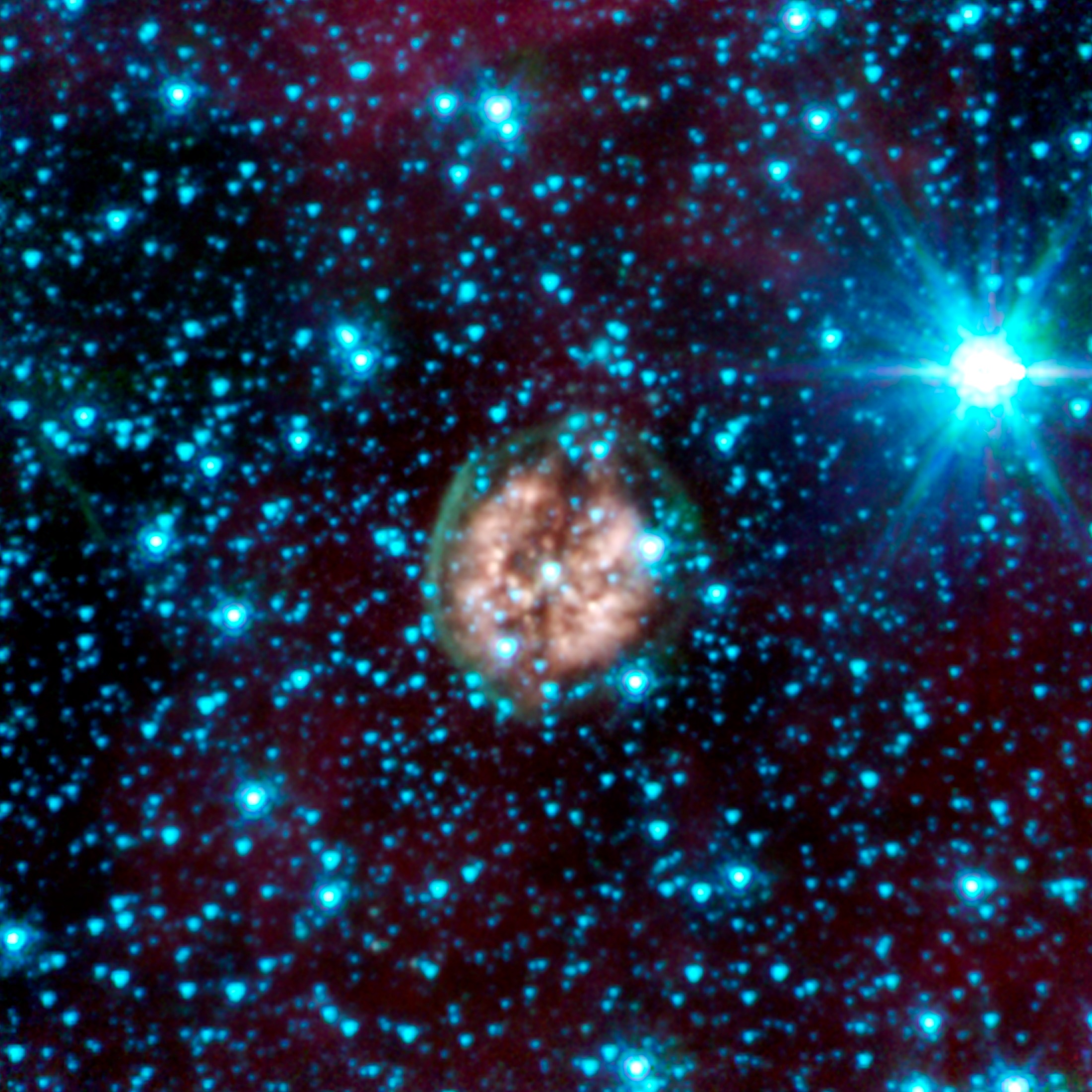
This was the first high-quality image of the structure of the nebula surrounding the star at the center of PMR 1. Taken by NASA’s Spitzer in 2013, it was Spitzer scientists who coined the name “Exposed Cranium Nebula” on account of the object’s shape. The ionized gas at the center is surrounded by a glowing reservoir of hydrogen gas: reflecting the maximum amount of science extractable from the Spitzer data.
Credit: NASA/JPL-Caltech/J. Hora (Harvard-Smithsonian CfA)
Gaia data, although powerful, showcased nothing of visual interest.
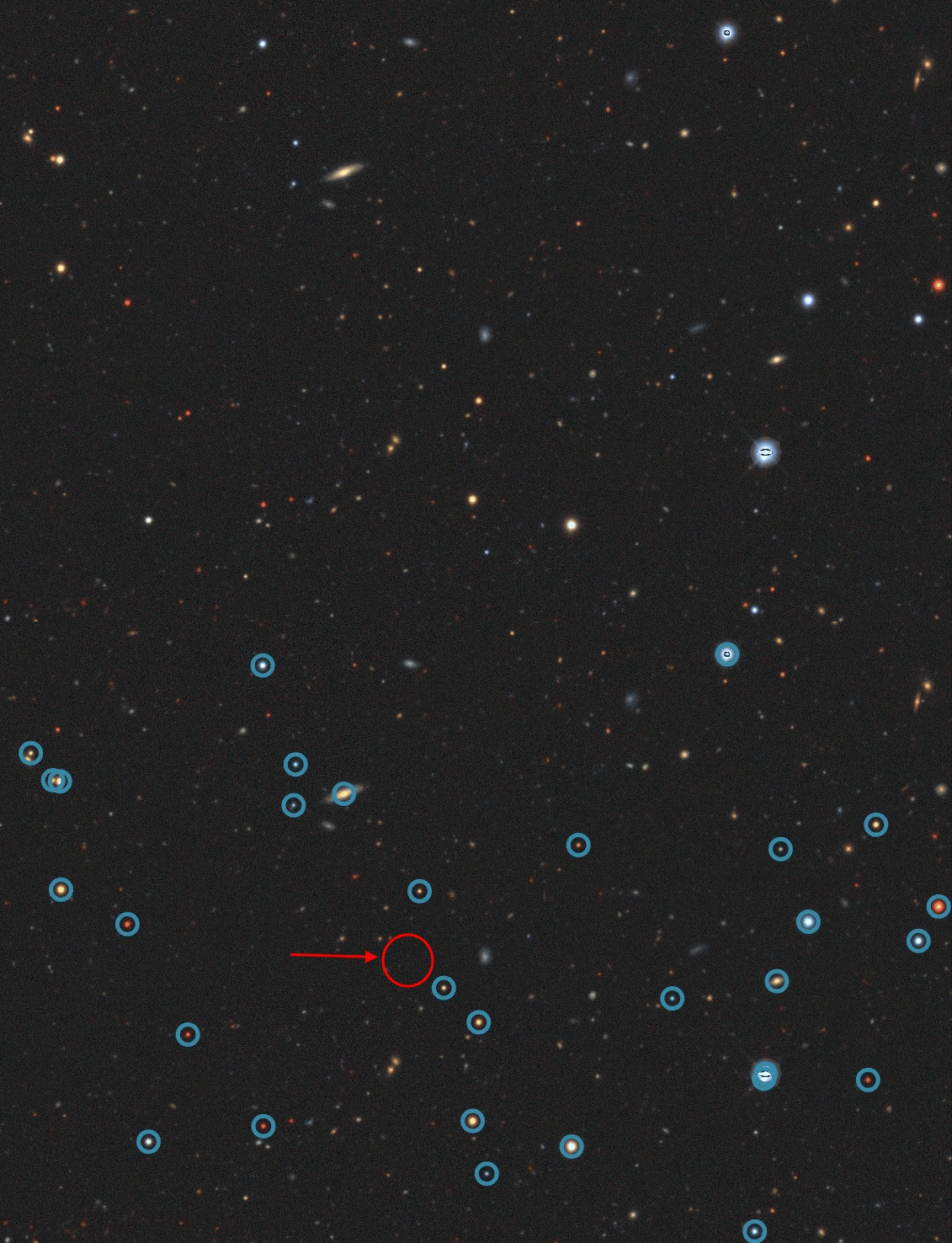
This view of a specific region of space shows data from the Gaia mission, with many objects of interest highlighted in blue circles. The red circle, added for clarity, shows the location of PMR 1 and the Exposed Cranium Nebula, which does not exhibit a visually interesting signature in Gaia data.
Credit: ESA/Gaia, Legacy Surveys/D. Lang (Perimeter Institute); Animation: E. Siegel
All it revealed was a reddened core: evidence of its dust-rich nature.
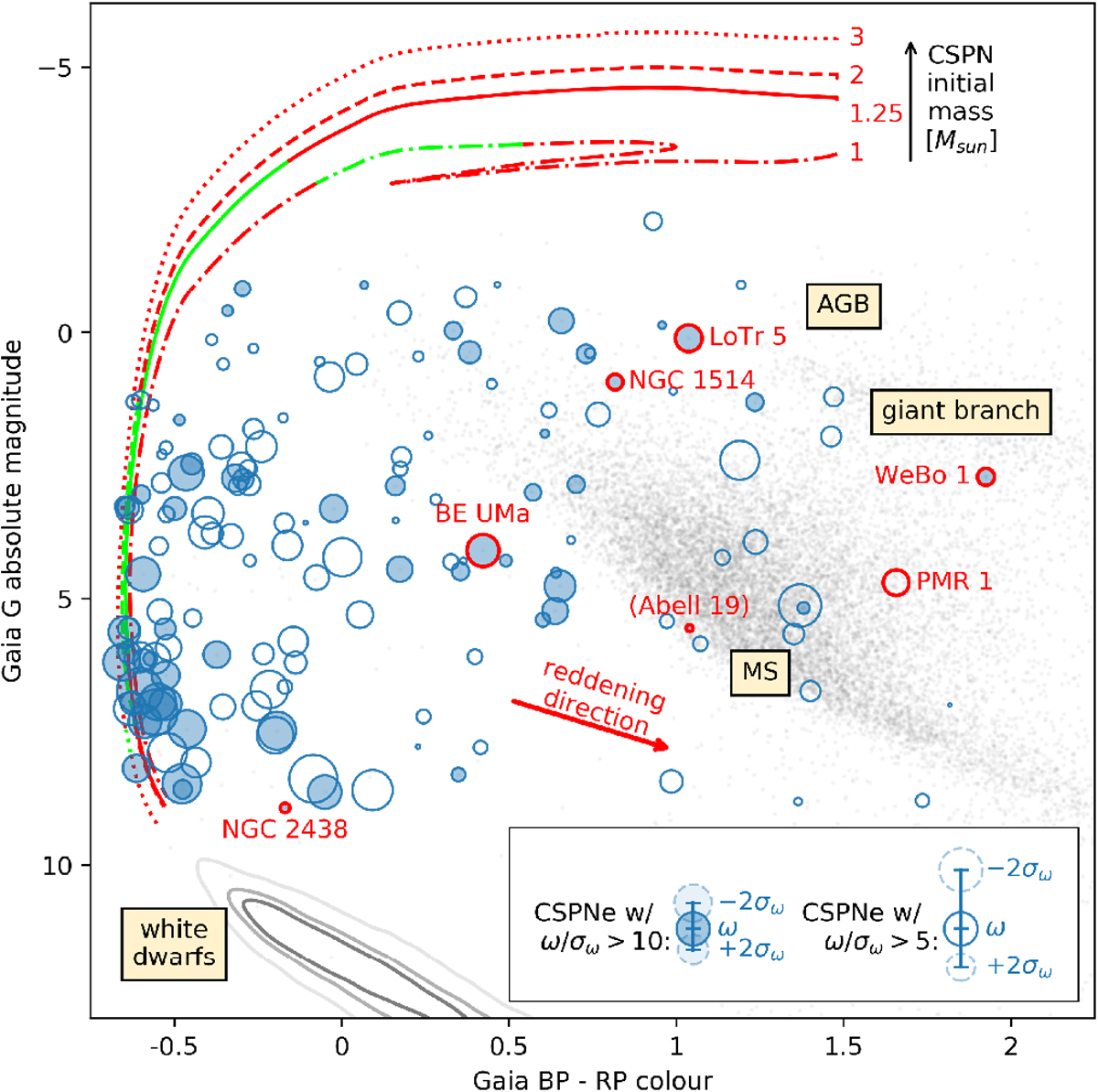
Using data from Gaia, the central stars of many nebulae were catalogued and had their properties extracted, including the core of the Exposed Cranium Nebula, marked as PMR 1 here. It is one of the most severely reddened objects, as indicated by its present far to the right on this graph, of all the stars found at the cores of nebulae.
Credit: N. Chornay and N.A. Walton, Astronomy & Astrophysics, 2020
However, JWST just imaged it across many wavelengths, with both NIRCam and MIRI.
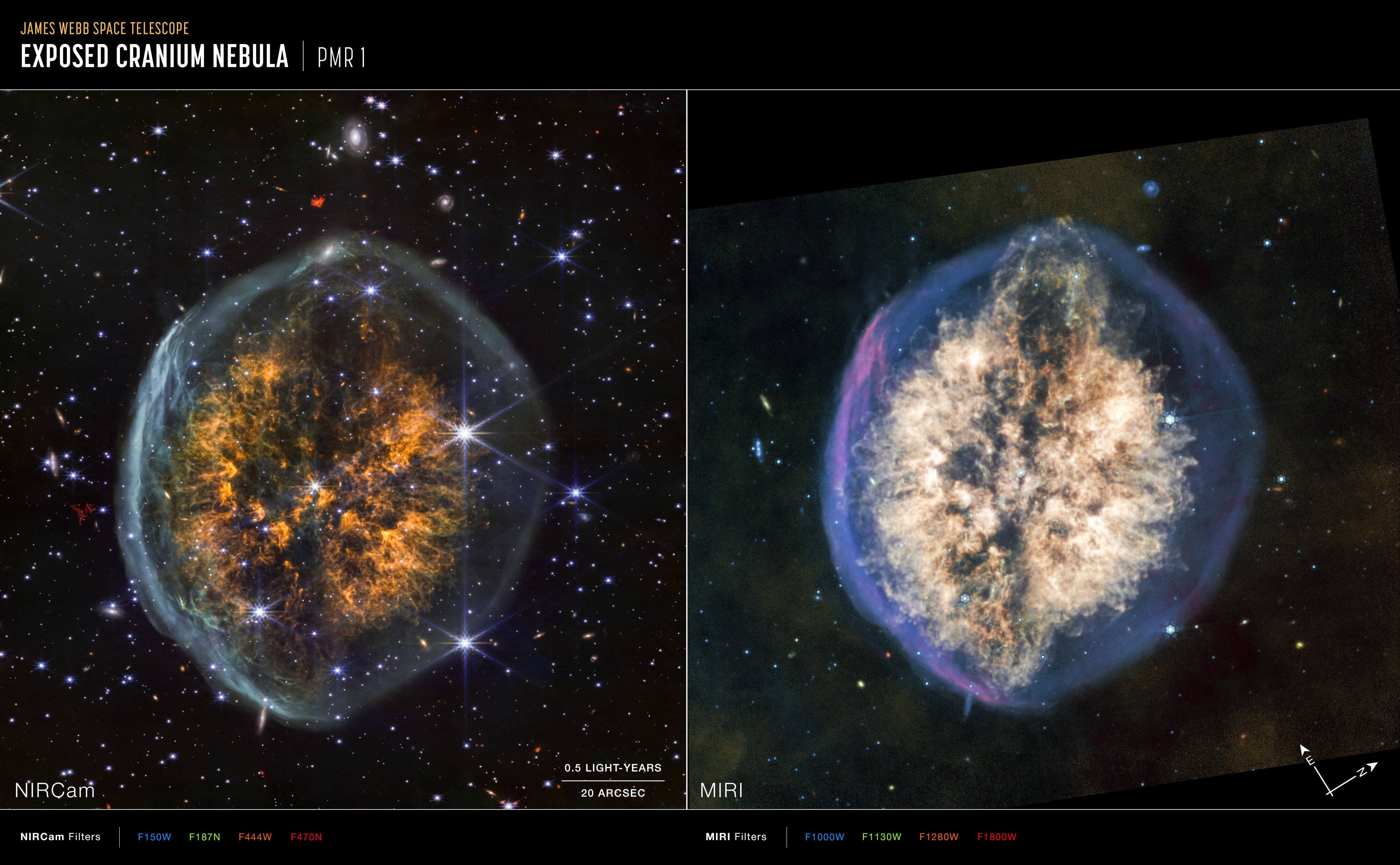
All told, the Exposed Cranium Nebula was imaged in a total of 8 different filters by JWST: at 1.5, 1.87, 4.44, and 4.70 microns in near-infrared wavelengths, as well as 10.0, 11.3, 12.8, and 18.0 microns by the mid-infrared instrument. The nebula itself is about two light-years in diameter, although NIRCam and MIRI views showcase vastly different details from one another: about the Nebula as well as what lies behind/around it.
Credit: NASA, ESA, CSA, STScI; Image Processing: Joseph DePasquale (STScI)
Near-infrared views showcase early hydrogen ejecta and complex, dusty internal structure.
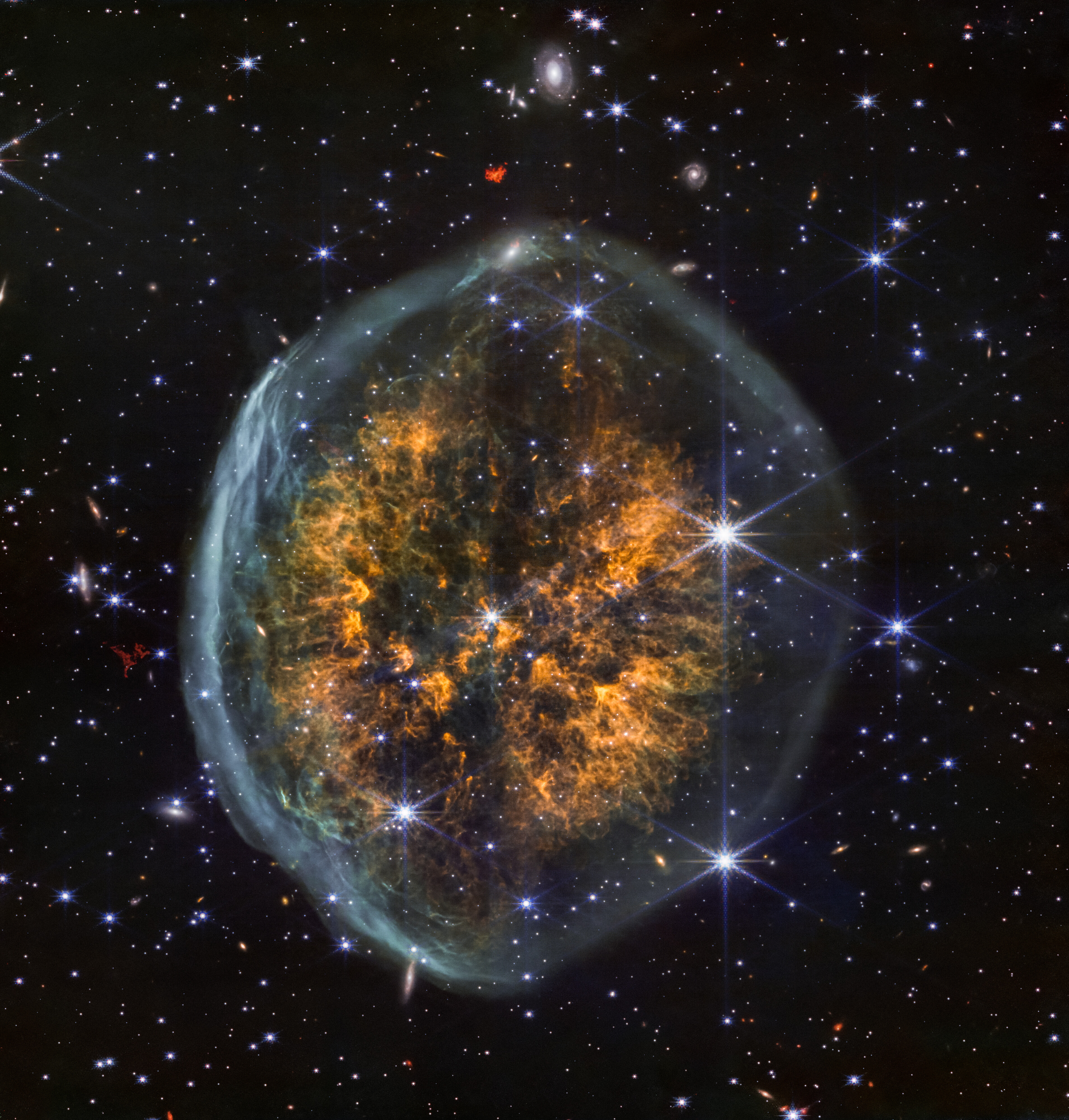
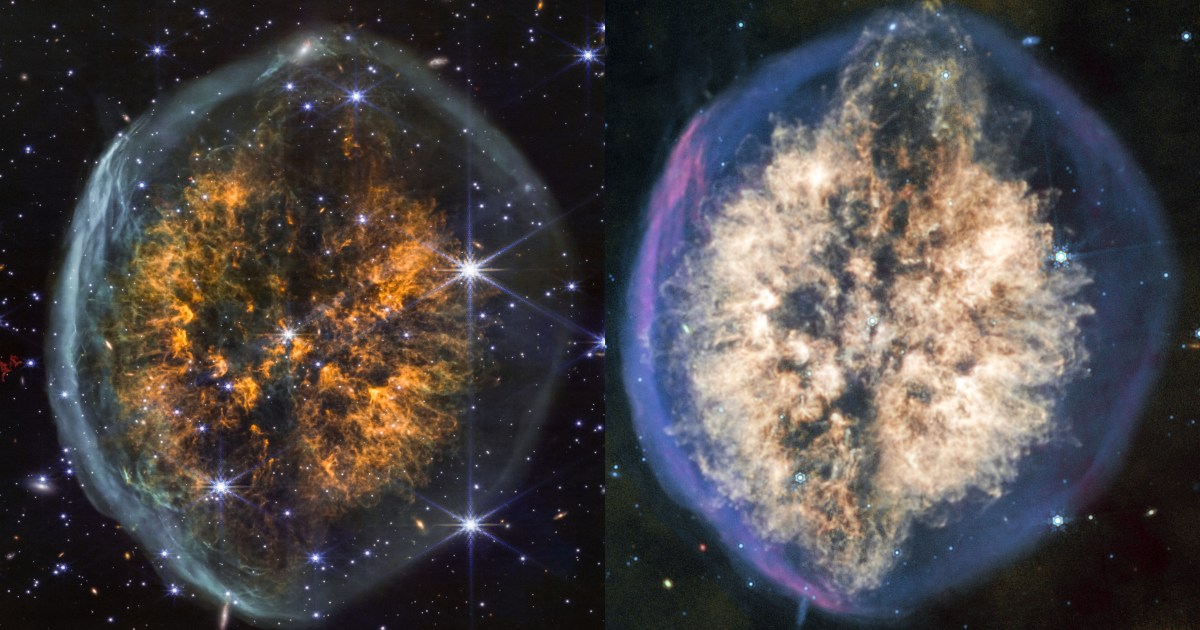
At the heart of the Exposed Cranium Nebula is a massive star: several times more massive than the Sun, close to the border of stars that die to form planetary nebulae and white dwarfs versus those that explode in supernovae and leave neutron stars behind. The multi-layered ejecta that enshrouds the central star creates enough uncertainty that despite the quality of JWST imagery, we still do not know this star’s future fate for certain.
Credit: NASA, ESA, CSA, STScI; Image Processing: Joseph DePasquale (STScI)
Meanwhile, mid-infrared views highlight the heated dusty innards, including along the dust lanes.
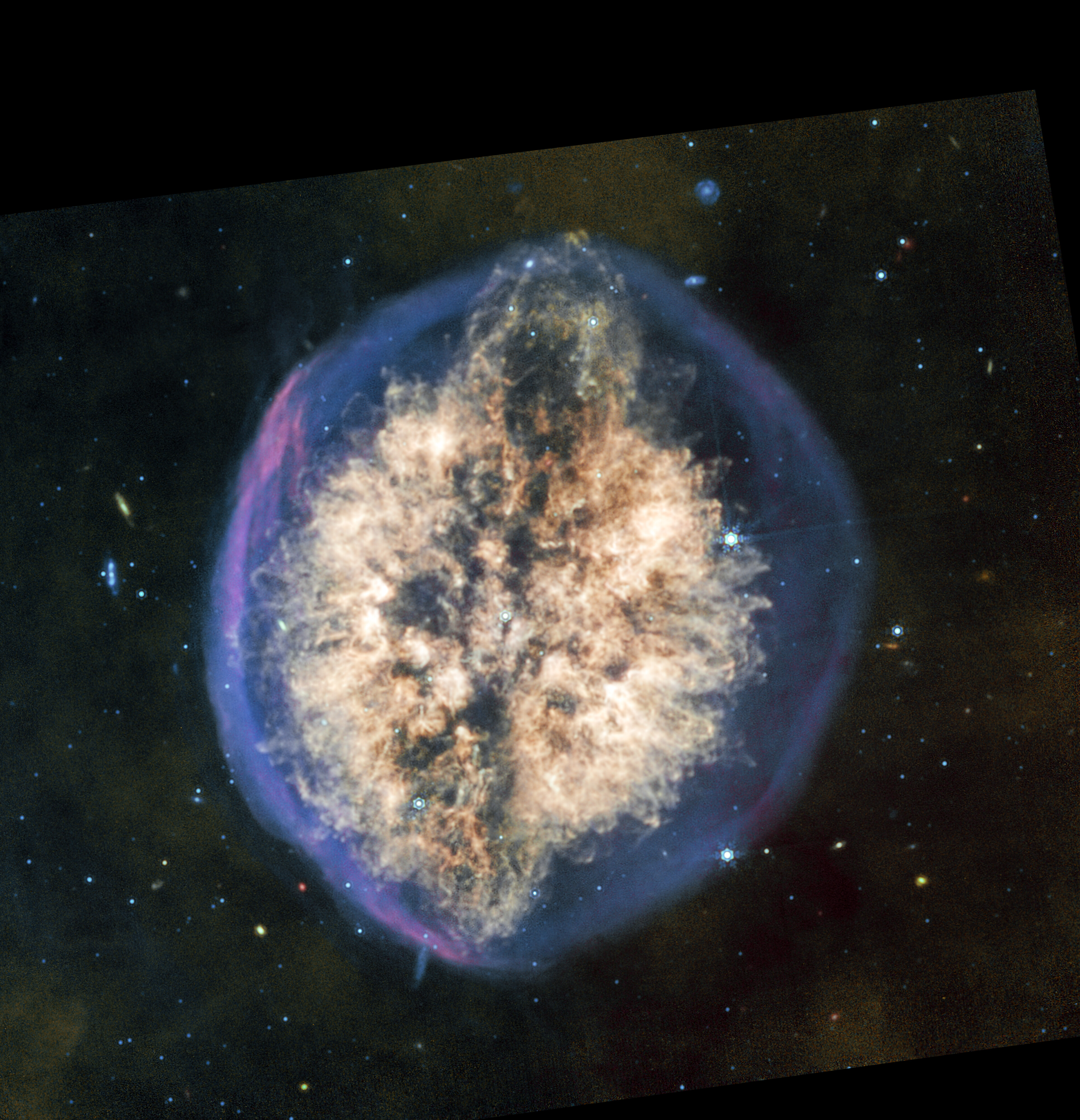
This mid-infrared view of the Exposed Cranium Nebula from JWST’s MIRI instrument shows off two distinct phases from how the nebula was formed: an earlier stage where mostly hydrogen was expelled, followed by a more complex mix of material, rich in wispy structure, found closer to the nebula’s center. More ejected material is seen in MIRI’s views than NIRCam’s views, highlighting the asymmetric nature of the nebula.
Credit: NASA, ESA, CSA, STScI; Image Processing: Joseph DePasquale (STScI)
Dividing the exposed cranium’s “hemispheres” in NIRCam data, the MIRI data instead unifies them.
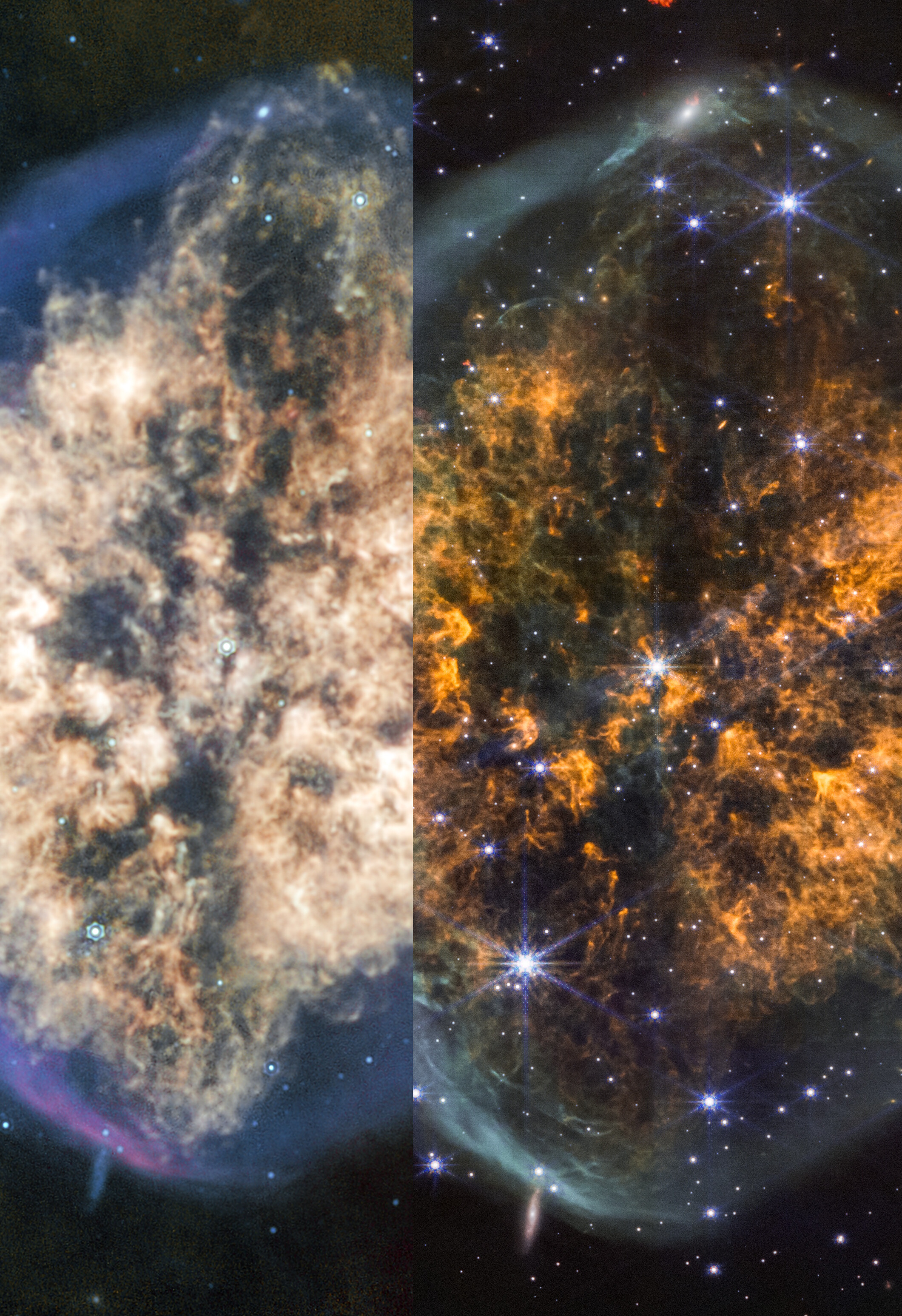
The central dust lane that bisects the Exposed Cranium Nebula appears very different in mid-infrared views (left) versus near-infrared views (right) with JWST. While the dust lane is present in both, MIRI’s views focus on the heated material within or behind the dust, showing a significantly extended structure. Meanwhile, the dust blocks most of the near-infrared light in NIRCam’s views, dividing the cranium into two hemisphere-like structures.
Credit: NASA, ESA, CSA, STScI; Image Processing: Joseph DePasquale (STScI)
The central star’s fate and nature remains unknown.
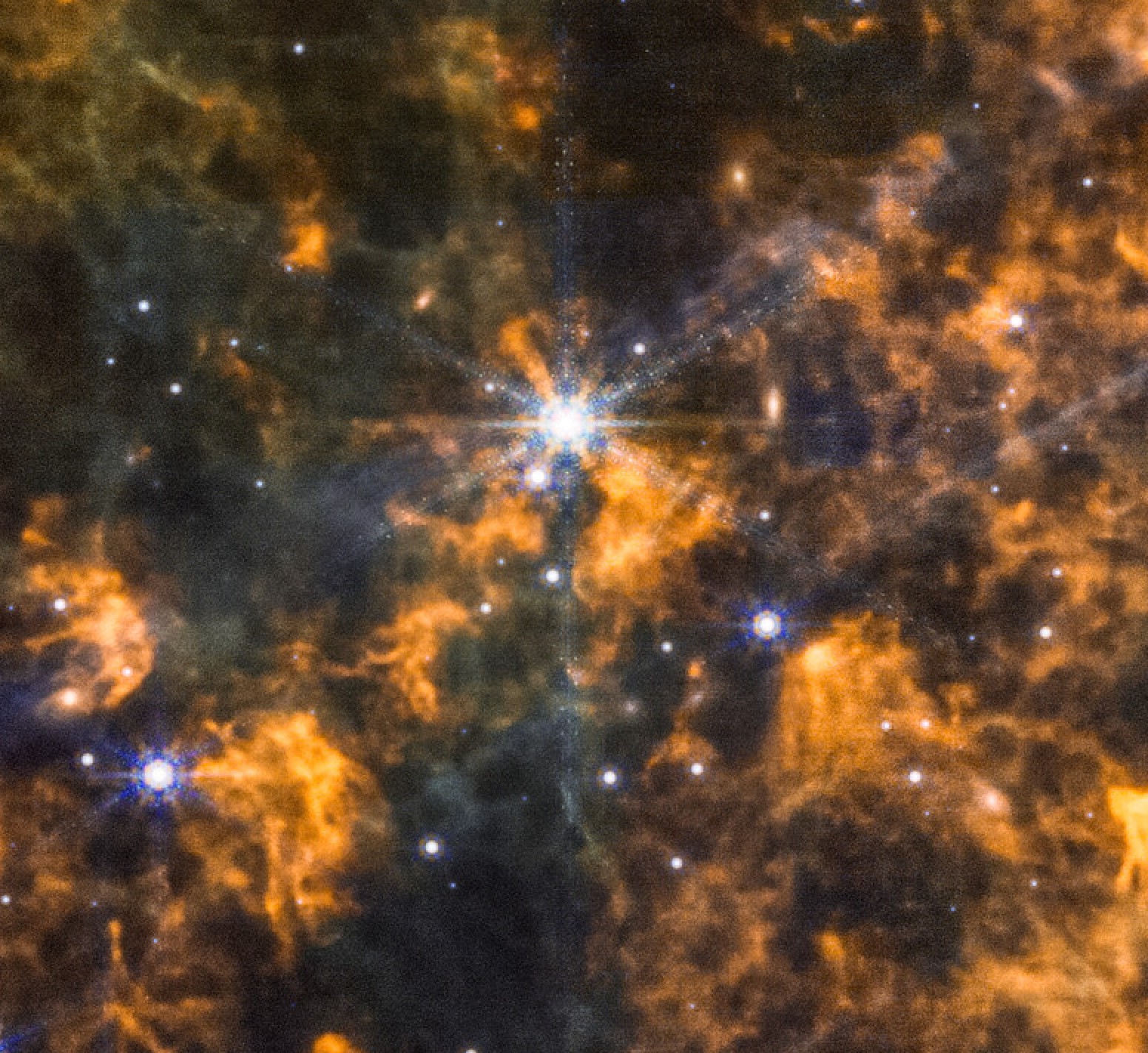
This view of the central core of the Exposed Cranium Nebula shows the brightest star found in/near the extreme center, which may be either a red giant or a red supergiant that’s behind the central dust lane separating the cranium’s two so-called “hemispheres.” The star’s mass, nature, and ultimate fate remains uncertain at this time.
Credit: NASA, ESA, CSA, STScI; Image Processing: Joseph DePasquale (STScI)
It may yet be a Wolf-Rayet star that will die in a supernova.
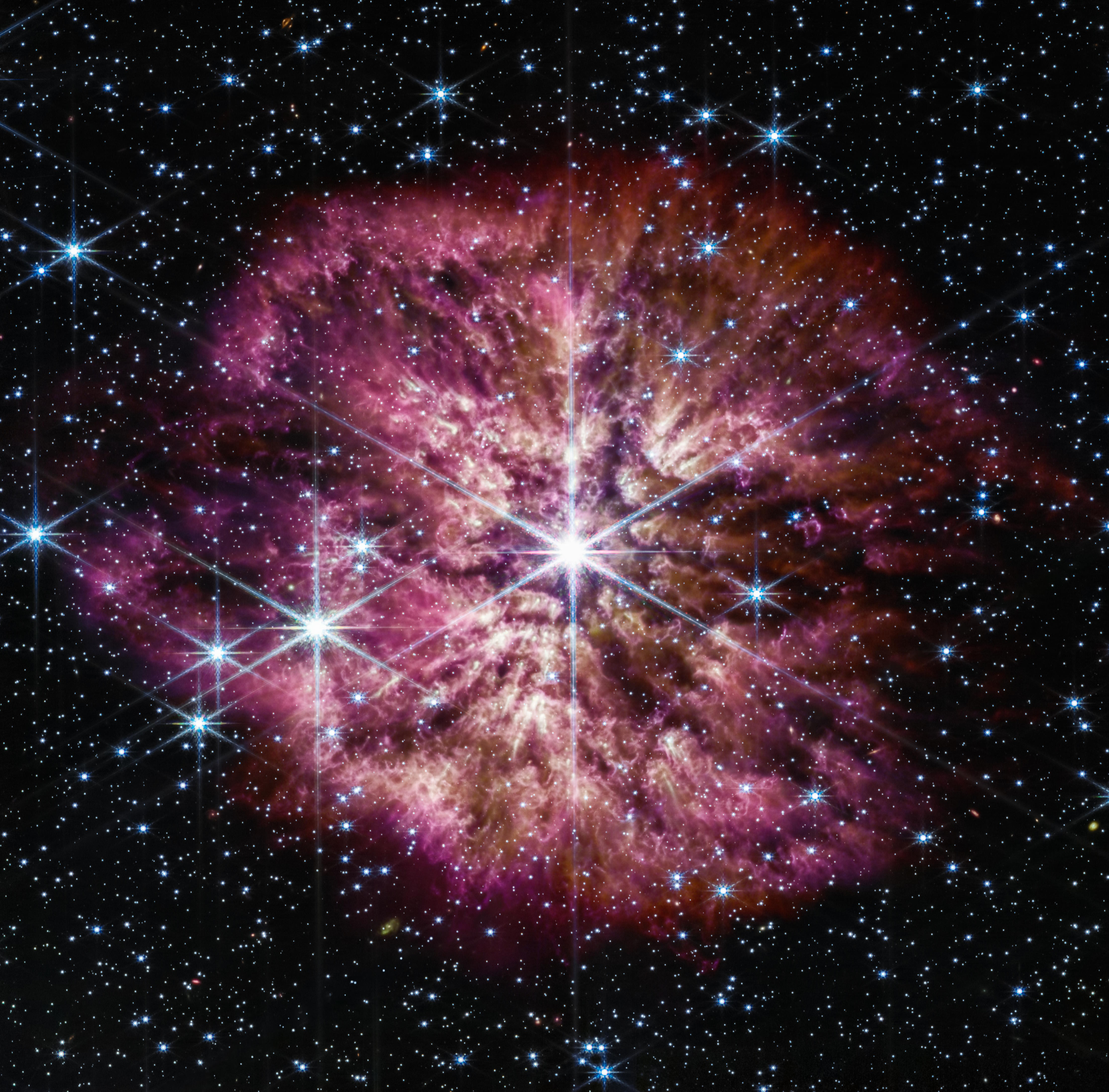
The luminous, hot star Wolf-Rayet 124 (WR 124) is prominent at the center of this James Webb Space Telescope’s composite image, which combines near-infrared and mid-infrared wavelengths of light from Webb’s Near-Infrared Camera and Mid-Infrared Instrument. This star, radiating at about 120,000 K, weighs in at about 30 solar masses, with 10 solar masses already expelled. Its future fate is not known for certain, but is expected to be a supernova. It is possible that the Exposed Cranium Nebula may follow a similar evolutionary track.
Credit: NASA, ESA, CSA, STScI, Webb ERO Production Team
Alternatively, it may soon form a pre-planetary nebula, eventually becoming a white dwarf.
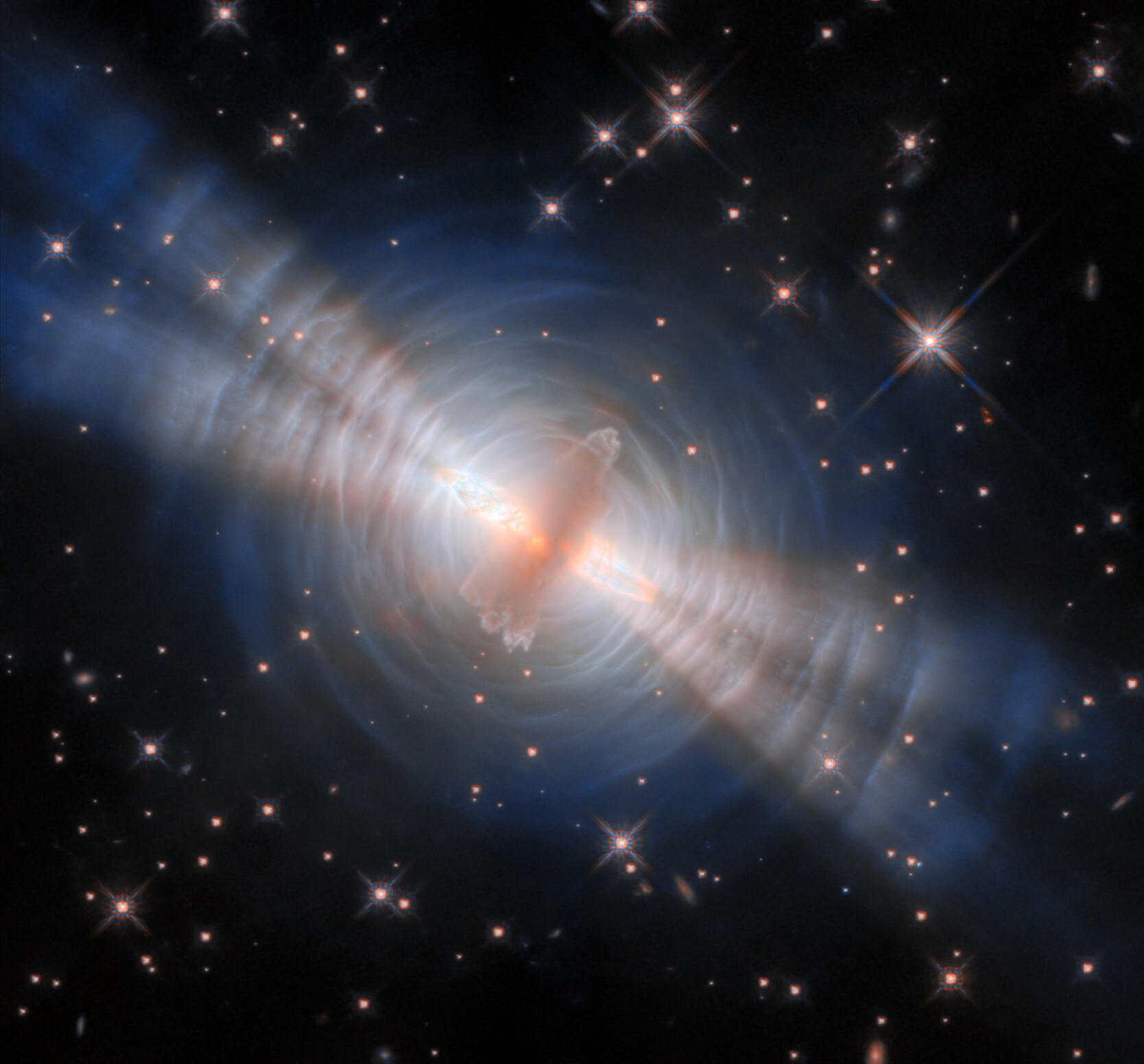
This image of the Egg Nebula from the Hubble Space Telescope, the newest and most comprehensive one ever assembled, showcases freshly ejected stardust from a post-AGB star that’s then illuminated by a contracting central star whose light pokes out from a dense cloud of dust. While the Exposed Cranium Nebula is presently in an earlier evolutionary stage than this pre-planetary nebula, it may yet evolve into one before eventually becoming a white dwarf.
Credit: NASA, ESA, Bruce Balick (UWashington)
Either way, JWST’s power has unveiled unprecedented cosmic details.
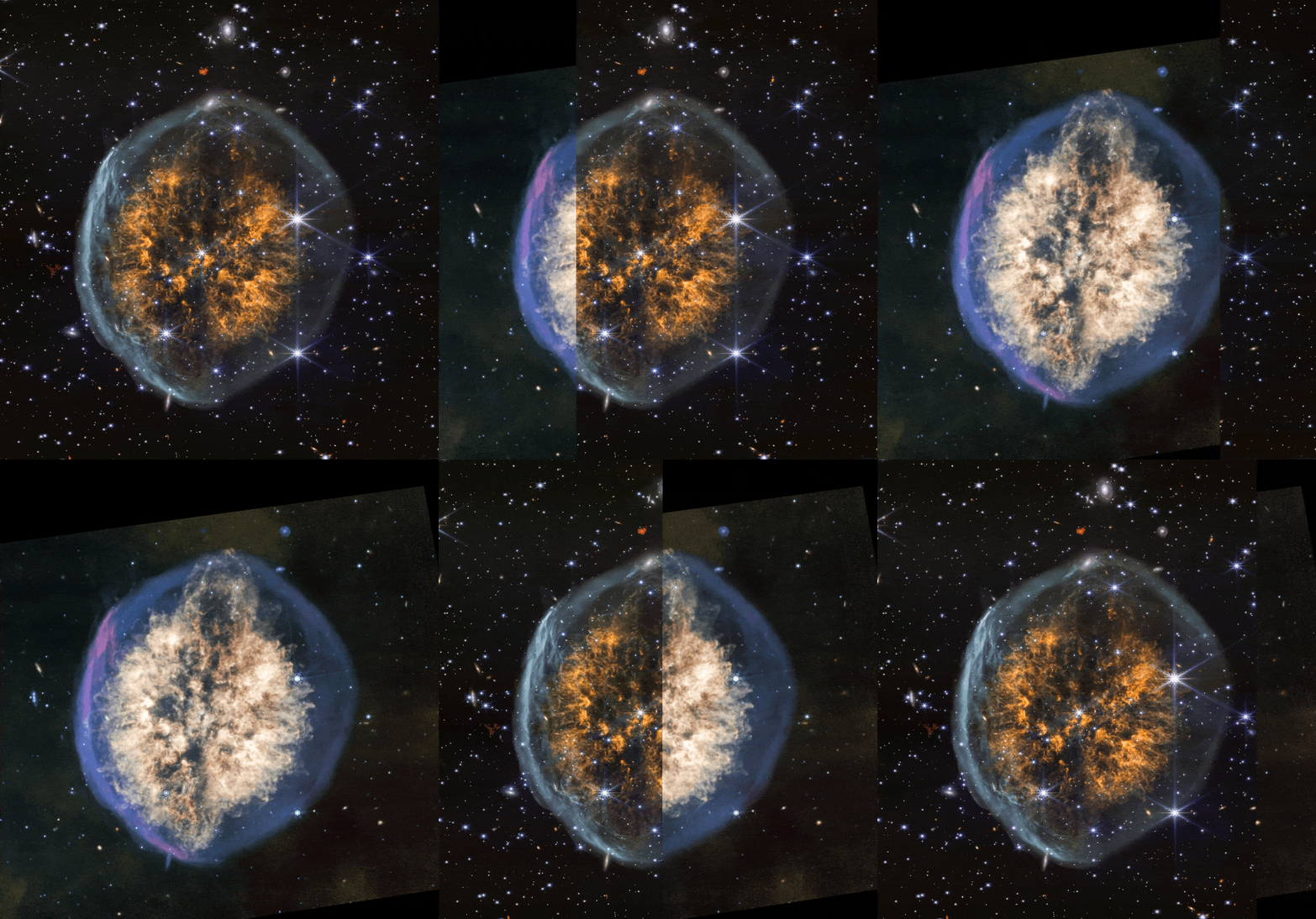
This view alternates between the NIRCam and MIRI views of the Exposed Cranium Nebula with practically perfect alignment. Whereas the near-infrared views showcase the central dark dust lane and highlight many stars and background objects, the mid-infrared views highlight the heated internal material, which shows very little evidence for the underlying dust lane in a visual way. By looking at the Universe in a variety of wavelengths, a diversity of details are revealed.
Credit: NASA, ESA, CSA, STScI; Image Processing: Joseph DePasquale (STScI); Animation: E. Siegel
Mostly Mute Monday tells an astronomical story in images, visuals, and no more than 200 words.