
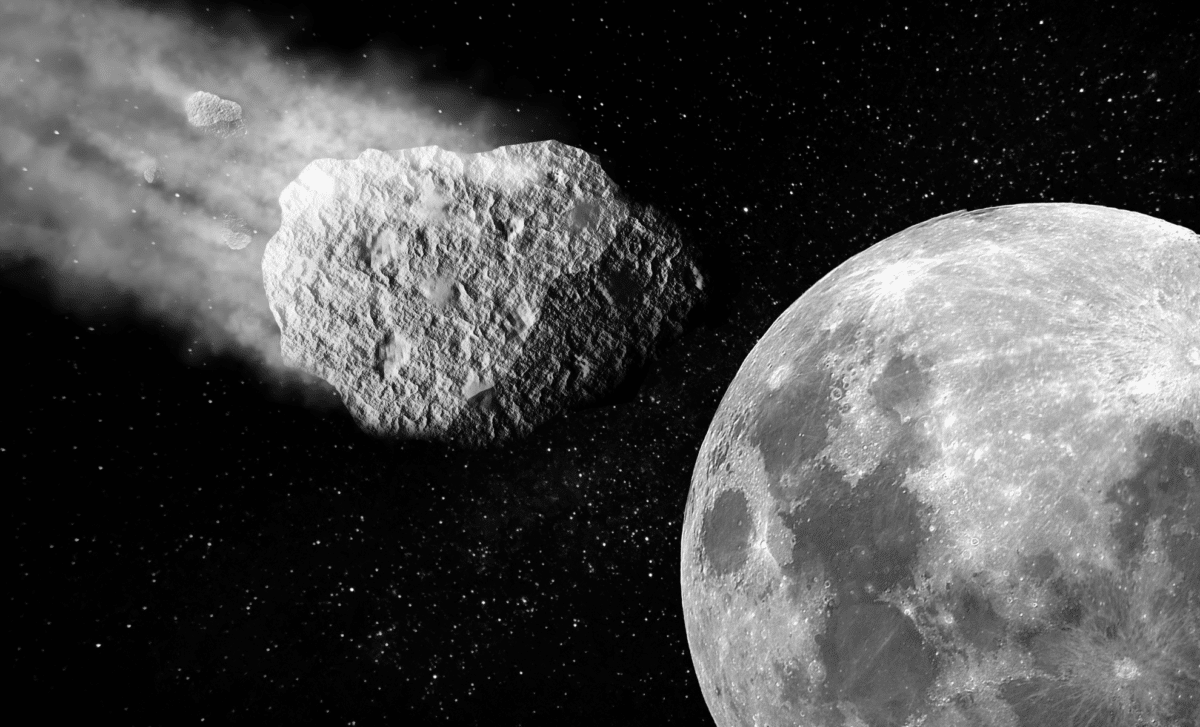
In a recent update on March 5, NASA has confirmed that asteroid 2024 YR4, often referred to as a “city killer,” will not collide with either the Earth or the Moon as initially feared. Thanks to new, extremely sensitive observations made using the James Webb Space Telescope (JWST), the space agency was able to refine predictions regarding the asteroid’s trajectory, alleviating concerns over a possible lunar impact in 2032. This breakthrough marks a significant milestone in both asteroid research and planetary defense.
NASA’s Latest Findings: The Asteroid That Was Never Meant to Hit Earth or the Moon
Asteroid 2024 YR4 first garnered attention due to its immense size and potential to wreak havoc if it collided with Earth. The space rock, measuring between 174 and 220 feet (53 to 67 meters), is large enough to be classified as a “city killer,” capable of releasing energy equivalent to 500 Hiroshima bombs if it impacted a populated area. When initially discovered, it was predicted to be on a trajectory that could bring it dangerously close to Earth and the Moon. In fact, predictions made shortly after the asteroid’s discovery in late 2024 suggested a slight possibility of collision with Earth, with an estimated risk peak of 3.1%. At the time, the chance of a lunar impact was put at a much lower 4.3%. These numbers raised alarms within the scientific community, especially as 2024 YR4’s path appeared to take it on a dangerously close approach in 2032.
However, recent observations made by the James Webb Space Telescope (JWST) have drastically revised these predictions. According to a March 5 NASA statement, the chances of the asteroid impacting the Moon have been reduced to zero. NASA officials confirmed that since spring 2025, the asteroid had been unobservable from both Earth and space-based observatories, and this latest data from JWST was crucial for refining the asteroid’s trajectory. The agency described these new observations as “among the faintest ever observations of an asteroid” in history. This achievement not only allayed fears about an impending lunar collision but also allowed scientists to make more accurate predictions about the asteroid’s path in the future.
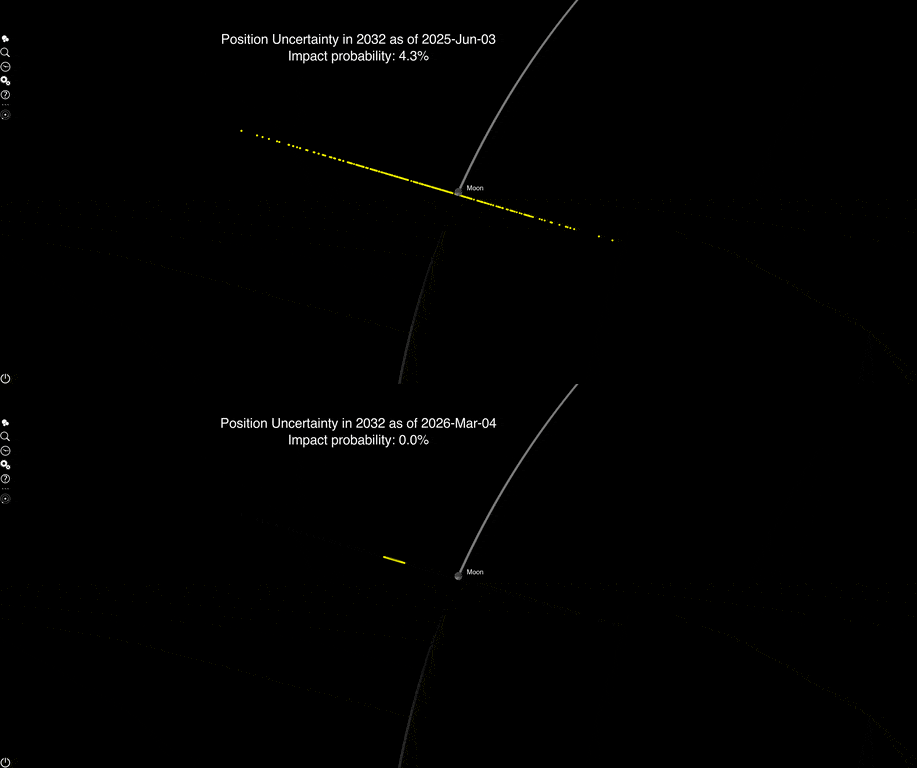 Animation of asteroid 2024 YR4’s potential locations on December 22, 2032. The animation demonstrates how the additional data from the February 2026 James Webb Space Telescope observations have increased the certainty of where the asteroid will be in the future and decreased the range of possible locations. With this new data, 2024 YR4 is expected to pass by the Moon at a distance of 13,200 miles (21,200 km) and lunar impact is no longer a possibility.
NASA/JPL Center for Near-Earth Object Studies
The Role of James Webb Space Telescope in Asteroid Monitoring
The James Webb Space Telescope, one of the most advanced instruments ever built, has proven invaluable in tracking and analyzing space objects, especially those like asteroid 2024 YR4, which are difficult to observe. NASA’s statement emphasized that these new snapshots were “among the faintest ever observations of an asteroid,” underlining the impressive capabilities of the telescope. The infrared instruments aboard JWST allowed astronomers to observe 2024 YR4 with unparalleled precision, even though the asteroid was otherwise unobservable.
JWST’s ability to capture such faint details about the asteroid is a testament to the telescope’s extraordinary sensitivity and its potential to monitor objects that were previously out of reach. This breakthrough is not only significant for understanding 2024 YR4 but also for advancing planetary defense techniques. By accurately tracking such objects, scientists can develop better models to predict and, if necessary, deflect potential threats in the future. As NASA continues to refine its tracking methods, this data provides a crucial foundation for planetary defense strategies.
Understanding the Asteroid’s Trajectory and Impact on Future Space Research
While asteroid 2024 YR4 no longer poses a risk to Earth or the Moon, its close approach in 2032 presents an important opportunity for continued observation. NASA plans to use the data gathered from JWST’s observations to study the asteroid’s composition and trajectory further. The space rock’s trajectory will be monitored during its next close pass in 2028, when it will once again approach Earth. This presents a prime opportunity for scientists to continue developing predictive models for asteroid movement, which could be essential for future space exploration and defense.
The asteroid will be closely monitored as part of ongoing efforts to test planetary defense systems. Understanding the behavior and characteristics of near-Earth objects is vital for ensuring the safety of our planet. The recent discoveries about asteroid 2024 YR4 are a reminder of the importance of ongoing space research, and the role that advanced technologies like the JWST play in protecting Earth from potential threats. Additionally, the asteroid could serve as a testing ground for new planetary defense strategies that might one day be used to prevent impacts from other objects.
NASA’s Continued Commitment to Asteroid Detection and Planetary Defense
NASA’s proactive approach to asteroid detection and planetary defense underscores the agency’s ongoing commitment to planetary safety. The new data on asteroid 2024 YR4 exemplifies the agency’s preparedness and ability to respond quickly when a potential threat is identified. The advanced capabilities of JWST have given scientists unprecedented insight into the asteroid’s path, and this new information helps ensure that Earth and the Moon will be safe during its closest approaches in the coming years.
Furthermore, this update highlights NASA’s strategic focus on enhancing its asteroid monitoring systems, including future collaborations with other observatories and international partners. As new objects are discovered regularly, these efforts are crucial for mitigating any potential risks that may arise from space debris or unknown asteroids. NASA’s continued monitoring of 2024 YR4 will not only help protect Earth but also contribute to broader planetary defense research that could one day lead to methods for deflecting asteroids should they pose a real danger in the future.
What Could Have Happened If 2024 YR4 Hit the Moon?
Had asteroid 2024 YR4 impacted the Moon, the consequences would have been significant. While the Moon has experienced numerous impacts throughout its history, a large asteroid like 2024 YR4 could have caused a dramatic explosion, creating a visible event visible to the naked eye from Earth. Astronomers speculated that such a collision might have resulted in a spectacular display of debris, potentially creating a meteor shower that would rain down on Earth.
The presence of such an event would have been an exciting spectacle for skywatchers, but it would have also had scientific significance. The impact would have provided astronomers with the opportunity to study how a large asteroid affects the lunar surface in real time. This could have given scientists valuable information about the composition and structure of the Moon, as well as how asteroids interact with planetary bodies. While we can now breathe easy knowing that the Moon is safe, these theoretical scenarios remind us of the fragility of our celestial neighbors and the importance of continued observation.