
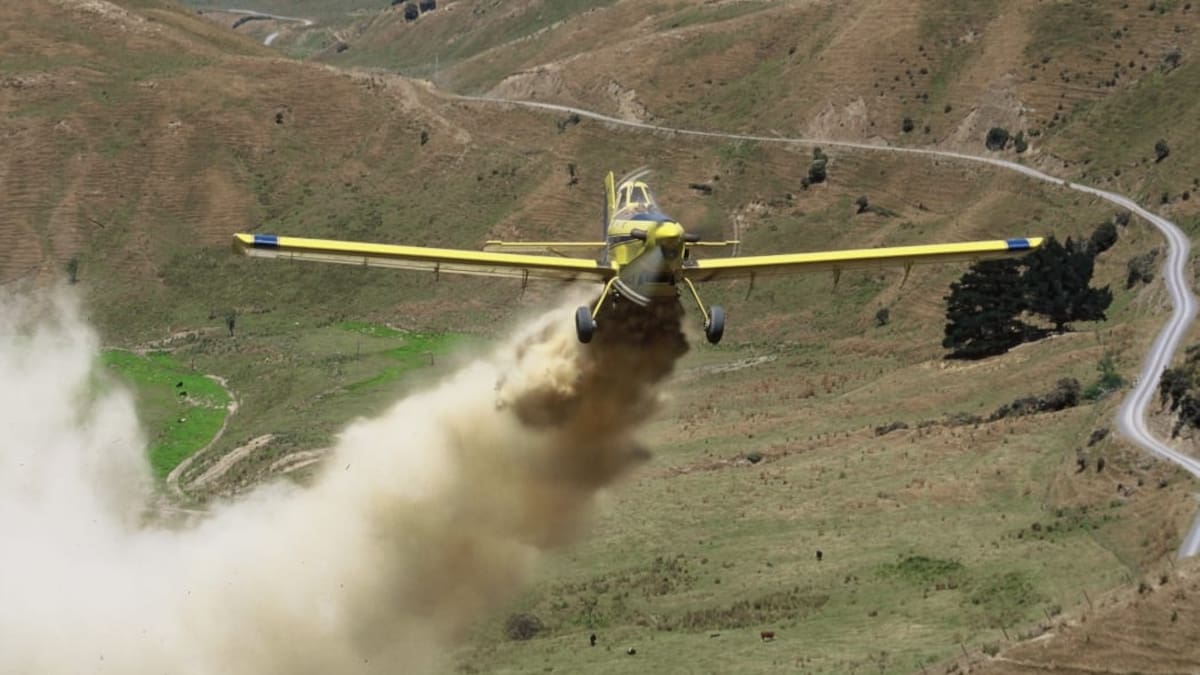
Much of the Middle East’s fertiliser production – like crude oil and gas – has to pass through the narrow Strait of Hormuz, which has been virtually closed since the conflict began on February 28.
“Nitrogen fertiliser is the key booster of efficient crop growth, of pasture growth,” Sydney-based Vítor Caçula Pistóia, senior grains and oilseeds analyst at Rabobank, said.
“There are some calculations that say that because of nitrogen fertiliser we can feed eight billion people [the world’s population]. It’s only because of that,” he told the Herald.
“If fertilisers disappeared, we wouldn’t be able to produce as much food as we need,” he said.
Fertiliser for crop growth and diesel for farm machinery are the two key input prices for food production.
Pistóia said fresh produce – which can take up to two months to grow – would be the first market sector to feel the impact of higher fertiliser prices, while crops that require processing can take six to nine months.
“Potentially we are on a track of higher fertiliser prices and continued higher prices because there is no clear solution to the vessel-flow in the Strait of Hormuz,” he said.
Pistóia said the supply chain issues arising from the war could become as serious as they were in the midst of the Covid-19 pandemic.
“In our opinion, those problems will stack up and create a snowball effect.
“Of course, the question is how big this snowball will be, and that depends on the war and the insurance of the vessels.”
Secondary to the higher fertiliser prices would be higher fuel costs – and higher maritime fuel costs in particular – and their impact on freight costs.
Before the conflict ship insurance was about 0.15% to 0.25% of the value of the vessel.
Rates now are 1 to 3% – compared with 5% in the tanker wars of the 1980s – when Iran and Iraq attacked each other’s shipping in the Gulf.
Insurance would add another layer of inflation.
“There will be a clear upward trend in food prices that will be defined by the duration of the conflict,” Pistóia said.
“It’s quite problematic for inflation, to the cost of the business, and as long as there is no solution to the attack on vessels or the risk of having attacks on vessels, we will not solve it,” he said.
Mike Whitty, chief operating officer at fertiliser company Ravensdown, said fertiliser pricing in New Zealand followed the seasons.
“Of course, there’s not much demand over the winter but we’re in a really good position with either stock in New Zealand or on the water, for the autumn.
“What we’ve seen historically from previous conflicts is a quick ramp up [in prices] and then it tends to come back to more normal levels.”
Whitty said there is a lag time of three to four months between when product is ordered to when it is shipped.
“In the shorter term, there’s nothing to be concerned about from a supply point of view and the length of the conflict will determine where it ends up in the medium term.”
New Zealand gets its urea from several sources around the world but the Middle East is a significant supplier.
Rabobank said the crisis in the Gulf may further tighten farm margins because of higher input costs.
Any closure or disruption to shipping in the Strait of Hormuz would limit shipments from Iran, Iraq, Kuwait, Bahrain, Qatar and the UAE, and to a lesser extent Oman and Saudi Arabia, it said.
Qatar exports about 10% of global urea via the Strait of Hormuz, and Saudi Arabia ships a large portion of its roughly 8% of global urea exports through the same route.
Iranian retaliation against countries in the region could also affect urea supplies indirectly; in Egypt, production depends on natural gas sourced from Israel.
Egypt accounts for about 8% of global urea exports.
Historical precedents suggest the risk of sharp urea price moves is significant.
During the early stages of the Russia-Ukraine war, urea prices in New Zealand dollar terms shot up by 67% from February to March in 2022.
At the time, Russia accounted for 12% of the global urea trade.
Rabobank said Chinese urea exports are slowing and are unlikely to return meaningfully until the second quarter, because of strong domestic demand in the first quarter.
“The outbreak of war raises longer-term questions about whether the other major exporters may introduce protectionist measures to safeguard domestic supply amid heightened geopolitical uncertainty,” the bank said.
Jamie Gray is an Auckland-based journalist, covering the financial markets, the primary sector and energy. He joined the Herald in 2011.
Stay ahead with the latest market moves, corporate updates, and economic insights by subscribing to our Business newsletter – your essential weekly round-up of all the business news you need.