
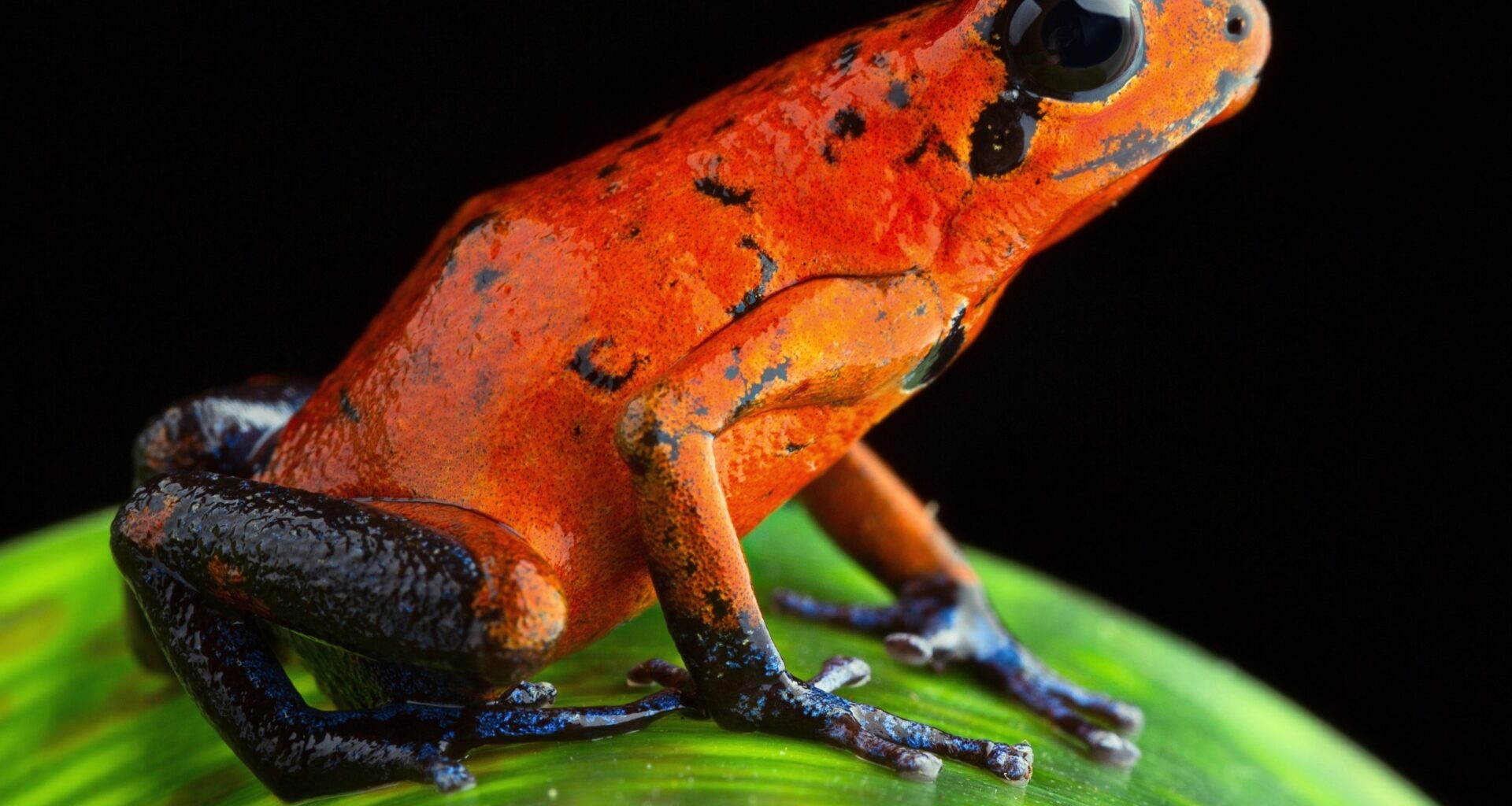
A tiny sting from a wasp can cause sharp pain. The skin of some frogs can irritate predators in seconds. Scientists now understand that both animals use a powerful chemical toxin that looks surprisingly similar to a molecule found in humans and other vertebrates.
An international research team led by The University of Queensland’s Institute for Molecular Bioscience discovered that certain wasps and frogs produce a peptide that behaves like bradykinin.

Bradykinin exists naturally in vertebrates and plays an important role in pain and inflammation. At first glance, scientists believed these animals borrowed the same evolutionary pathway.
New research now shows that this assumption was wrong, and the real story is far more interesting.
Pain-causing toxin in frogs and wasps
For many years, researchers believed that bradykinin-like peptides in frogs and wasps came from the same biological origin as the vertebrate molecule.
This explanation seemed logical because the molecules looked very similar and triggered similar reactions in the body.
However, the new study revealed that these molecules formed through completely separate evolutionary paths.
“The findings overturn decades of assumptions about the origins of these peptides,” said study lead author Dr. Sam Robinson.
“Scientists previously believed bradykinin-like peptides in wasp venom and frog skin secretions were simply their versions of the vertebrate peptide.”
“Instead, our research shows they are evolutionary doppelgängers – molecules that look the same but evolved independently.”
Scientists often expect similar traits to come from a shared ancestor. In this case, nature arrived at the same solution through different genetic routes.
A pain molecule used for defense
Bradykinin plays an important role in vertebrate bodies, especially during injury. When tissues suffer damage, this molecule sends signals that trigger inflammation and pain.
The body uses this response to alert the nervous system and begin the healing process.
Because bradykinin produces strong pain signals, the molecule also makes an effective defense tool. The new study found that wasps and frogs evolved chemicals that mimic this same reaction inside predators.
The researchers also discovered that the animal versions of these molecules come from toxin gene families. These toxin genes differ from the vertebrate kininogen gene that normally produces bradykinin.
Wasp venom causes pain in predators
Many animals eat insects, so survival often depends on strong defenses. Some wasp species rely on venom that contains bradykinin-like toxins.
When a predator such as a mammal or bird encounters the venom, the toxin activates bradykinin receptors in the predator’s body. These receptors trigger a sharp pain response that feels similar to the effect of natural bradykinin.
A predator that experiences sudden intense pain quickly learns an important lesson. Attacking that insect again will bring the same unpleasant result. Over time, this painful memory helps protect the wasp from future attacks.
Frogs defend themselves through pain
Frogs use a different approach, yet the strategy works in a similar way. Instead of injecting venom, frogs release chemicals through skin secretions.
Scientists discovered that these secretions contain bradykinin mimics that closely match the bradykinin systems of several predators, including mammals, birds, and fish.
When a predator bites or touches the frog, these chemicals can cause irritation or pain.
The researchers ran experiments to understand how these molecules affect frogs themselves. Frog bradykinin receptors did not react to the chemicals at all.
This result shows that the molecules evolved specifically to affect predators rather than the frogs producing them.
Convergent evolution in action
The discovery highlights a powerful process in biology known as convergent evolution. This type of evolution occurs when completely different species develop similar features or solutions while facing similar challenges.
Wasps and frogs live in very different environments and belong to distant branches of the animal kingdom. Yet both groups developed molecules that mimic bradykinin because this chemical strategy helps stop predators.
“The study shows convergent evolution – when different species develop similar features – plays a critical and previously underestimated role in the evolution of life,” noted Dr. Robinson.
“Convergent evolution demonstrates that life is not a random, unpredictable, muddle of improbable outcomes but is in fact progressing in an ordered, constrained, predictable, perhaps even inevitable, way.
Predicting evolution helps science
“Our ability to predict evolutionary outcomes has important practical applications. In agriculture, pest- and weed-resistance management strategies can be designed proactively rather than reactively,” said Dr. Robinson.
“Similarly, doctors can anticipate resistance routes for various infections and diseases to design combination or adaptive treatments.”
“Convergent evolution could even allow us to predict what extraterrestrial life might look like and design detection methods accordingly.”
The research suggests that evolution can lead different species to the same solution when they face similar threats.
Even along separate evolutionary paths, frogs, wasps, and other animals can arrive at the same strategy: using molecules that trigger intense pain to deter predators.
The study is published in the journal Science.
—–
Like what you read? Subscribe to our newsletter for engaging articles, exclusive content, and the latest updates.
Check us out on EarthSnap, a free app brought to you by Eric Ralls and Earth.com.
—–